

Why Your Ragdoll Kitten May Prefer Beside You
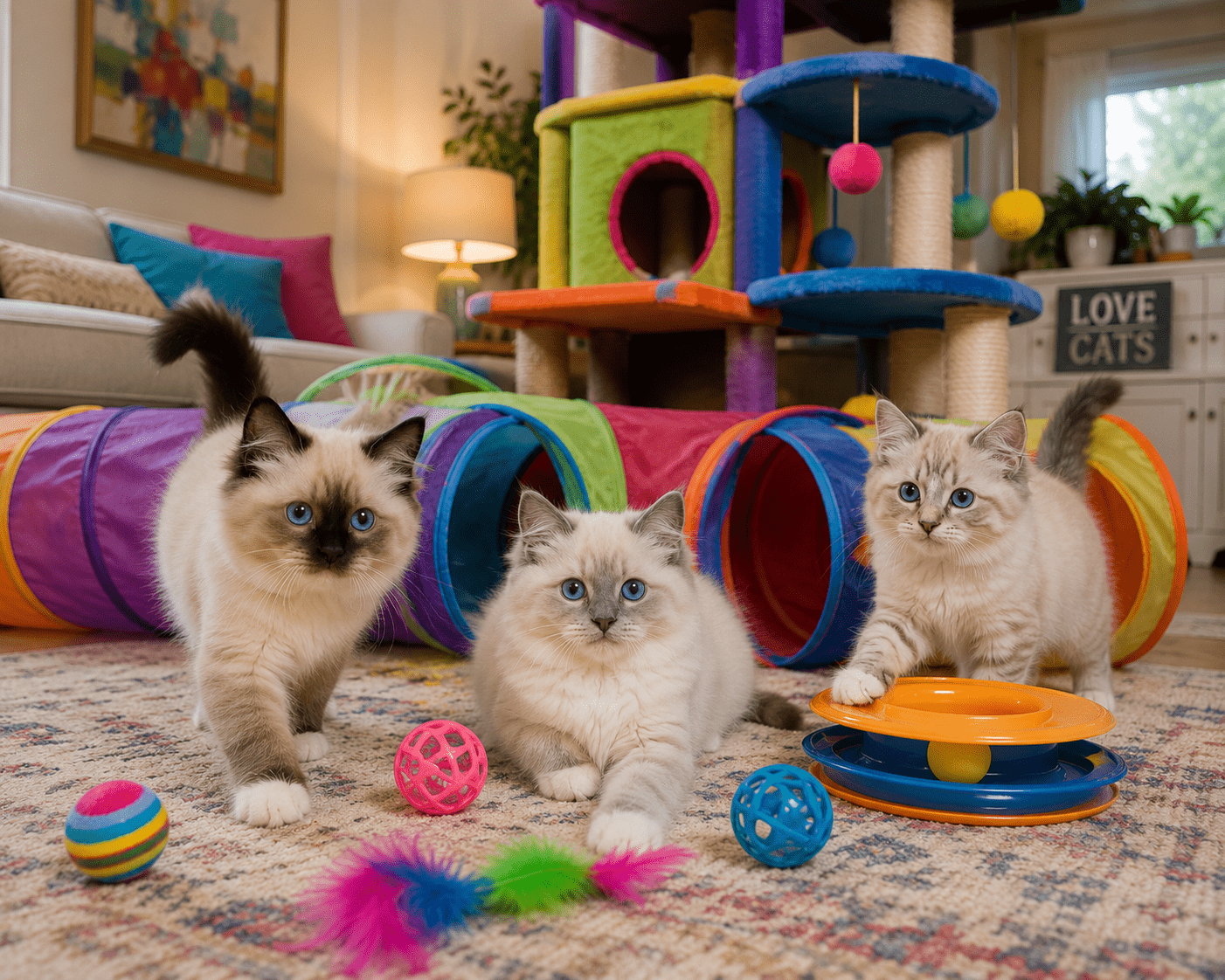
A Ragdoll kitten can adore your company without wanting to be carried everywhere. One kitten may climb into your lap, another may settle against your leg, and a third may follow you from room to room but step away when you reach down. All three can be showing affection.
This is one of the most useful details to understand about Ragdoll kitten behavior: a breed reputation for gentleness does not erase individual personality. If you learn to distinguish social closeness from physical restraint, daily interactions become more comfortable for both of you.
The Ragdoll reputation can hide personal preferences
Ragdolls are often associated with relaxed temperaments and a willingness to remain near their people. Those tendencies can make them appealing to households that want a companionable indoor cat. However, “affectionate” is a broad description. It might mean greeting you at the door, sleeping on the nearby sofa, leaning into a hand, or accepting a short lift before asking to return to the floor.
Age also matters. A young kitten is still developing coordination, confidence, and a sense of what human hands mean. A kitten that squirms during a lift may not be rejecting you; it may simply prefer contact when all four paws are supported. Another kitten may enjoy being held for several seconds but dislike having its position changed suddenly.
Instead of asking whether your kitten is cuddly, ask a more precise question: Which kind of closeness does this individual choose?
Three forms of closeness worth noticing
In ordinary household life, affection can appear in forms that are easy to overlook:
- Nearby companionship: Your kitten chooses the chair beside you, waits outside the bathroom, or settles under the desk while you work. The kitten wants shared space, not necessarily hands-on attention.
- Brief contact: A head bump, a shoulder lean, or a few seconds of stroking may be enough. The kitten leaves and returns later because the interaction ended comfortably.
- Self-selected holding: Some kittens climb onto a lap or chest and arrange themselves before you touch them. Their willingness is clearer because they initiated the position.
These preferences can coexist. A Ragdoll kitten might avoid being scooped up but happily sleep across your feet every evening. That is not a contradiction. It is information about control, balance, and timing.
What being lifted feels like from a kitten’s point of view
People usually experience a cuddle as warmth and reassurance. For a small kitten, a lift also means the floor suddenly disappears. The kitten’s body may be supported by one arm while the hind feet search for a stable surface. Even a calm kitten can become uncertain if its back legs dangle or its position changes quickly.
This is why stillness should not be treated as automatic approval. A relaxed kitten may go loose in your arms, but a quiet kitten may also be waiting to understand what will happen next. Look at the whole interaction rather than one sign. Does the kitten soften into your body, adjust comfortably, and remain engaged? Or does it brace its paws, turn its head away, stiffen, or try to regain the floor?
For a short lift, keep the kitten close to your body and support both the chest and the hindquarters. Approach from the side or front rather than grabbing from above. Lower the kitten as soon as it begins asking for space. Ending contact while it is still calm helps prevent handling from becoming something it must escape.
Preferences can change across an ordinary day
A kitten’s answer is not always the same at breakfast, after a lively play session, and during a quiet evening. Right after waking, a kitten may welcome gentle contact but dislike being repositioned. After energetic play, it may want to stretch, drink, or investigate rather than settle in your arms. During a calm household moment, it may climb beside you because the surrounding activity has slowed.
Busy homes make these differences especially visible. A Ragdoll kitten may seek one person’s lap when visitors arrive but choose a more sheltered spot when children are moving through the room. It may enjoy being stroked by an adult who sits still and avoid a well-meaning person who repeatedly reaches toward it. This is not necessarily fear or dislike; the speed, height, and predictability of the interaction matter.
Try observing before intervening. Notice where your kitten goes after greeting you, whether it returns after a brief touch, and what happens when you pause your hand instead of continuing to stroke. These small observations often reveal more than repeatedly testing whether the kitten will tolerate a cuddle.
Signs that contact is welcome or complete
No single body signal tells the entire story, but several details become meaningful when viewed together.
- Contact is often welcome when your kitten approaches, leans toward your hand, keeps a loose posture, or returns after you pause.
- The interaction may be complete when the kitten turns its head away, braces its paws, shifts repeatedly, flicks the tail, or focuses intensely on leaving.
- A kitten that walks away and then returns may be regulating the length of the interaction, not rejecting the relationship.
- Regularly choosing the same nearby place can show a preference for shared company even when lap sitting is rare.
Children should be taught to invite contact rather than chase, carry, or hold a kitten in place. Floor-level interaction is often easier for a small Ragdoll because it preserves the kitten’s sense of balance and gives it a clear way to move away.
Persian versus Ragdoll kittens: handling preferences
In this specific area, many Ragdoll kittens are known for seeking easy social proximity and may be comfortable relaxing near a person, although individual kittens vary widely. Persian kittens are also often devoted companions, but their preferred interaction may center on quiet, predictable contact at ground level or beside their person. A Persian may appreciate a calm hand near the face and shoulders without wanting frequent repositioning, while a Ragdoll may be more likely to remain close during household activity. Neither breed guarantees a lap cat, and neither breed should be judged by how long it tolerates being held. The useful comparison is not which kitten is “more cuddly,” but how each individual communicates comfort, choice, and the need for a pause.
Let the relationship become more specific
The most rewarding Ragdoll kitten relationships are not built by making a kitten perform affection. They develop as you learn the difference between following, leaning, waiting nearby, climbing up, and accepting a lift. A kitten that prefers the chair beside you may be offering exactly the companionship it wants to give.
Respecting that preference can even lead to more contact over time. When your kitten discovers that your hands do not trap it and that leaving is allowed, it has less reason to avoid them. Pay attention to the small choices, provide steady support when handling is necessary, and let affection be something your kitten helps shape.
For more breed-specific guidance on living comfortably with a Ragdoll kitten, explore the helpful resources at CTkittens.com.

Rachel Cohen is a journalist and producer with a passion for audio storytelling, health and science reporting, and feline companions.
A graduate of Middlebury College, Rachel spends her weekends exploring the mountains and when she isn’t outdoors or chasing a story, she can usually be found hanging out with her cats.
The distinction between a kitten walking away and returning versus rejecting affection is especially useful. Letting them control the length of contact seems like a simple way to build trust without turning cuddles into a test.
I’ve noticed with my own cats that the ones who follow me everywhere are often less interested in laps. Framing that as a preference for shared space rather than rejection feels both kinder and more accurate.