

Why a Ragdoll Kitten May Follow, Not Cuddle
Many people imagine a Ragdoll kitten greeting the household by melting into the first available lap. Some do exactly that. Others appear at the bedroom door, trail behind you while you make breakfast, and settle nearby without asking to be picked up. This quieter pattern can be easy to overlook, especially if you are considering the breed because you want a companionable cat.
Understanding this distinction is useful. A Ragdoll kitten may be seeking company rather than constant physical contact. In fact, a morning spent following and observing can tell you more about the kitten’s social style than a single cuddly moment.
The overlooked difference between closeness and contact
Ragdolls are often described as affectionate, relaxed, and people-oriented, but those qualities do not produce one fixed greeting ritual. A kitten can value being close to its person while still choosing when touch happens. It may walk beside you from the bedroom to the kitchen, sit several feet away as you prepare breakfast, and then approach only after the household becomes still.
From the owner’s point of view, this can look like indecision. From the kitten’s point of view, it may be a way of staying socially connected while retaining control over its body and surroundings. The kitten knows where you are, can watch what you are doing, and can close the distance whenever it feels ready.
That is one of the most important realities for a prospective Ragdoll owner: a friendly kitten is not necessarily a kitten that wants to be held on demand. The breed’s reputation for gentleness should not be mistaken for a promise of unlimited handling.
What a Ragdoll kitten may be doing during a morning greeting
Morning is a series of transitions. Lights come on, doors open, water runs, clothing rustles, and familiar human movements begin again. A Ragdoll kitten may use this period to gather information before deciding how actively to participate.
Watch for small choices rather than waiting for a dramatic cuddle:
- Following without climbing: The kitten stays close as you move between rooms but does not immediately seek your hands. This often reflects social interest without a request for restraint.
- Pausing at doorways: It may stop at the kitchen entrance or bedroom threshold, look toward you, and then continue. These pauses can be opportunities to check your location and the changing activity of the room.
- Choosing a nearby resting place: A chair, rug, or the far end of a sofa may be preferable to your lap during the busiest part of the morning. Nearness still matters, even when touch does not.
- Approaching after the activity ends: Once you sit down, the kitten may finally rub against your legs or climb beside you. The delayed greeting is not necessarily reduced affection; the timing may simply suit the kitten better.
These observations are more informative than labeling the kitten “cuddly” or “not cuddly.” They show how the individual manages social contact.
Why forcing the affectionate moment can backfire
When a kitten follows its owner, it is tempting to scoop it up as a reward. Some Ragdoll kittens enjoy being carried, but others follow because they want to move freely with their person. If every approach results in being lifted, the kitten may begin to hesitate before coming close.
A better response is to make contact easy without making it unavoidable. Sit down, offer a hand at the kitten’s level, and allow it to decide whether to investigate. If it brushes against you and then walks away, that interaction still counted. Brief contact chosen by the kitten can build more trust than a longer session imposed by the owner.
This does not mean you should ignore the kitten. A soft greeting, a calm verbal response, or a few gentle strokes when the kitten remains nearby can acknowledge its presence. The useful habit is to respond to the invitation you actually receive instead of assuming that proximity automatically means “pick me up.”
What this reveals about living with a Ragdoll
For someone choosing a breed, this morning pattern offers a practical way to think about lifestyle fit. Ragdolls are often a good match for people who enjoy an involved companion but do not need every interaction to be energetic or theatrical. Many like to participate in household life at a calm distance, then become more tactile when the pace slows.
That can work well in a home where the owner appreciates a cat that keeps them company while they prepare for the day. It may be less satisfying for someone expecting a kitten that will reliably remain in their arms whenever invited. Even within the breed, personality, early social experiences, age, and the individual kitten’s comfort with handling all matter.
There is also a useful long-term lesson here. A kitten’s preferred distance may change throughout the day and as it matures. A morning observer may become an afternoon lap companion. Another may remain a beside-you cat rather than an on-you cat. Neither pattern is a failure to bond.
Persian kittens compared with Ragdoll kittens in this situation
Persian and Ragdoll kittens can both be affectionate, but their morning social styles may look different. Many Ragdolls show their interest by trailing a person from room to room or positioning themselves where household activity is visible. Their social presence can feel mobile, even when they are not seeking touch. Persian kittens are often more content to greet from a settled spot, approach during quieter moments, or invite attention through a close, calm presence. That is a tendency, not a rule: individual Persians may be highly interactive, and individual Ragdolls may prefer independence. For this particular question, the distinction is less about which breed is “more loving” and more about how affection is expressed. A Ragdoll may demonstrate connection by accompanying your movements, while a Persian may more often build the interaction around stillness and focused attention.
How to read the greeting without overinterpreting it
Give the kitten several mornings before drawing conclusions. One day may be affected by a late bedtime, an exciting household event, or simple changes in mood. Look for repeated choices:
- Does the kitten voluntarily reduce the distance between you?
- Does it remain after you stop moving, or does it prefer to continue exploring?
- Does it accept a stroke and ask for more, or does it turn away after a brief touch?
- Does it return later when the room is quieter?
The answers help you discover the individual behind the breed description. They also make daily interactions more rewarding because you stop measuring affection by one narrow standard. A kitten that watches you from the doorway may be participating in your morning in a way that is subtle but meaningful.
A calmer expectation for new owners
The most realistic expectation is not that every Ragdoll kitten will be a permanently available lap cat. It is that many will want a relationship with their people, while expressing that relationship in different ways and at different times. Some will greet you with full-body enthusiasm. Some will shadow your routine before settling beside you. Others will alternate between the two.
When you notice the difference between following and cuddling, you gain a more accurate picture of your kitten’s preferences. Let the morning greeting unfold at the kitten’s pace, and you may find that quiet companionship is one of the breed’s most endearing qualities.
For more thoughtful guidance on choosing and enjoying life with a Ragdoll kitten, explore the helpful resources at CTkittens.com.

Rachel Cohen is a journalist and producer with a passion for audio storytelling, health and science reporting, and feline companions.
A graduate of Middlebury College, Rachel spends her weekends exploring the mountains and when she isn’t outdoors or chasing a story, she can usually be found hanging out with her cats.
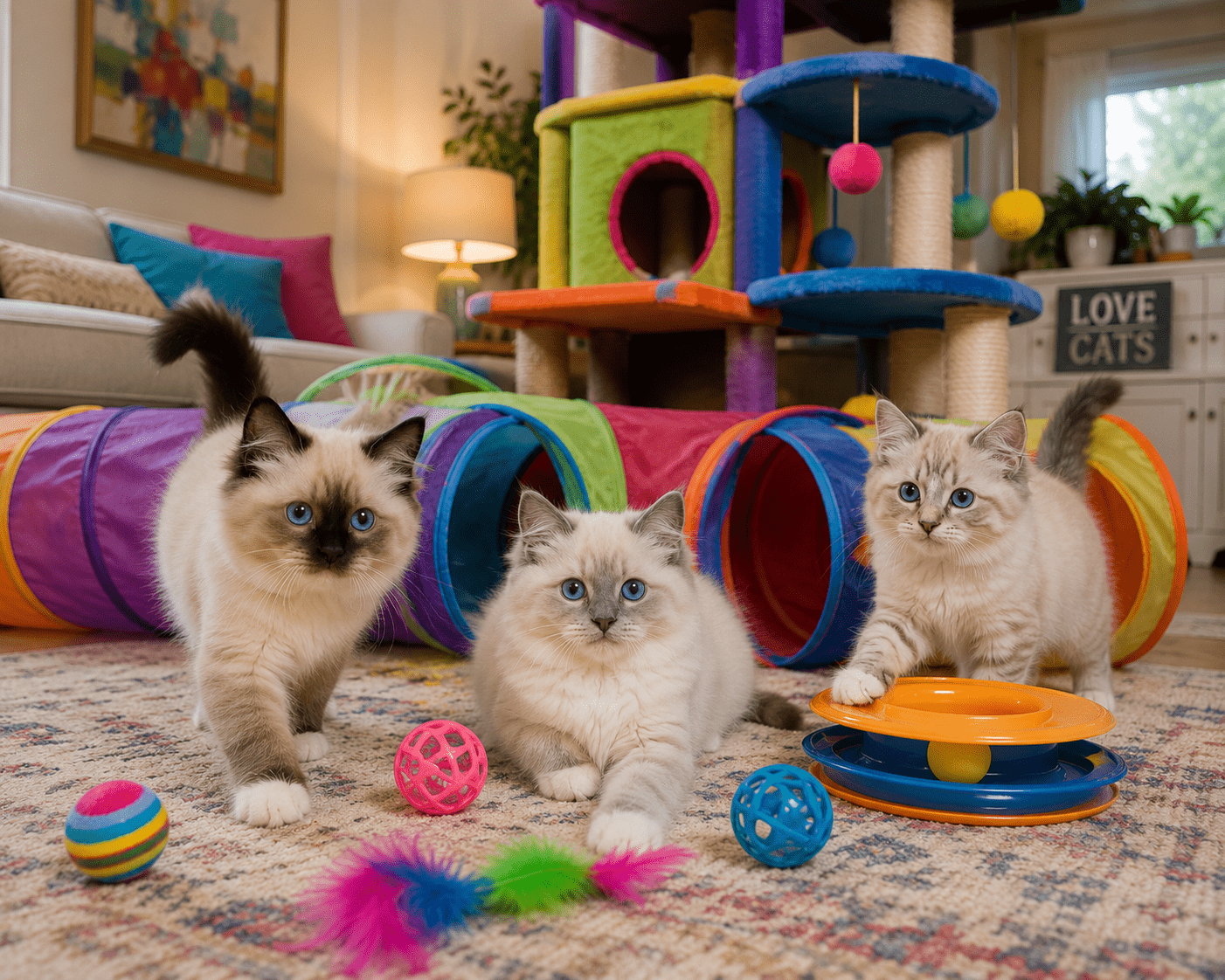

How can new owners distinguish a kitten’s natural preference for nearby companionship from early signs that handling has become stressful? The suggestion to watch several mornings seems especially useful for avoiding snap judgments.
How might new owners distinguish a kitten that prefers autonomy from one that is simply still adjusting to a new home? The suggestion to observe several mornings feels especially useful for avoiding snap judgments.