

Why Your Ragdoll Kitten Looks Different in Autumn Light
Autumn often changes the way a Ragdoll kitten appears before it changes the kitten itself. Lower afternoon sunlight, warmer indoor bulbs, drier air, and a developing pointed coat can make the same kitten look creamier, darker, fluffier, or more strongly marked from one week to the next.
For owners who already know their kitten’s face and habits, these small visual differences are easy to notice. The useful question is not simply whether your Ragdoll kitten coat color has changed. It is what kind of change you are actually seeing: color, texture, silhouette, lighting, or the way the fur is lying.
Start by deciding what has changed
When a Ragdoll kitten looks different in autumn, begin with a close comparison rather than a quick impression. Look at the kitten in the same room, from the same side, and preferably at the same time of day. A coat can appear significantly different under a cool window, a warm lamp, and a phone camera’s automatic color correction.
- Only the photograph looks different: suspect lighting or camera white balance first.
- The face, ears, legs, or tail look gradually deeper in color: this may be normal development of the Ragdoll’s pointed pattern.
- The outline looks wider or more feathery: texture, coat direction, or seasonal fullness may be affecting the silhouette.
- The coat looks uneven after a nap: flattened and lifted sections can reflect light differently.
This simple separation prevents you from treating every visual difference as a permanent color change.
Why Ragdoll kitten coat color can seem to deepen
Ragdolls are colorpointed cats, so their coloring is usually strongest on the cooler parts of the body, including the ears, mask, legs, and tail. The main body often remains lighter by comparison. Kittens commonly develop more visible point contrast as they mature, although the pace and final appearance vary between individuals.
That gradual development can become especially noticeable in autumn because the coat is being viewed against different backgrounds. A pale body may look almost white beside a darker sofa, then noticeably warmer beside a bright window. The same facial markings may appear soft in direct daylight and more defined under a ceiling light.
Autumn itself is not a reliable switch that suddenly darkens every Ragdoll kitten. A kitten’s age, genetics, coat pattern, and indoor conditions matter more than the calendar. However, the season can draw attention to changes that were already developing.
Three overlooked reasons the coat looks different
1. Fur direction changes the apparent color
Longer fur does not reflect light in one perfectly even layer. When your kitten has just woken up, rolled on a blanket, or turned its head, individual hairs may point in different directions. The result can be a face that looks darker on one side and softer on the other.
This is particularly noticeable around a Ragdoll’s ruff, cheeks, and tail. A neatly separated ruff may show more shadow between strands, while a flattened ruff can look like one pale surface. Before deciding that the color has shifted, view the kitten after it has moved naturally and compare both sides.
2. Indoor autumn air affects texture, not necessarily color
As homes begin using heating, some kittens develop a slightly more static, flyaway, or fluffy-looking outline. Individual Ragdolls respond differently, and indoor temperature and humidity vary widely. Even a modest change in texture can make the coat look less sleek and can soften the boundaries between pale and darker areas.
Gentle, regular coat care appropriate for a semi-longhaired kitten can help you see the natural pattern more clearly. The goal is not to force the coat into a particular appearance. It is simply to avoid mistaking flattened, clumped, or static-affected fur for a change in pigmentation.
3. Autumn shadows exaggerate pointed markings
Low-angle sunlight creates longer shadows beneath the chin, along the chest, and behind the legs. On a Ragdoll kitten, those shadows can make the mask or body points appear richer than they do at midday. Warm bulbs can also add a golden cast to a pale body, especially in photographs.
If you are tracking your kitten’s Ragdoll kitten coat color for your own records, take occasional pictures in indirect daylight without filters. Consistent images are far more useful than comparing a sunny-window photograph with a nighttime snapshot.
Ragdoll versus Persian: what changes visually in autumn?
Ragdoll and Persian kittens can both look different as autumn light and indoor conditions change, but the reasons are not identical. A Ragdoll’s pointed pattern makes contrast especially important: the ears, face, legs, and tail may appear more prominent as the kitten matures, while the body stays comparatively pale. Its semi-long coat can also change the apparent outline when the ruff or tail fur lifts.
A Persian kitten usually presents a more even overall color field, so autumn lighting is more likely to alter the perceived warmth, shadow, and fullness of the coat than to highlight point contrast. The Persian’s long, dense coat can make surface texture and facial shadows visually dominant. In both breeds, individual genetics and indoor conditions matter, but Ragdoll owners should pay particular attention to the difference between true point development and seasonal-looking lighting.
Use a simple viewing routine before making a decision
An owner decision guide is most useful when it leads to a calm, practical choice. When you notice a new visual impression, ask these questions:
- Does it appear in more than one type of light? If not, the room or camera may be responsible.
- Is the change gradual and concentrated on the points? That is more consistent with developing color than with a sudden whole-coat shift.
- Does the coat look different after movement or gentle care? If so, fur direction and texture may be the main explanation.
- Are you comparing like with like? A wet-looking window reflection, a dark background, or a close-up lens can all alter color perception.
Keeping these observations in mind helps you appreciate your kitten’s changing appearance without expecting a perfectly fixed coat. Ragdolls often become more visually expressive as their points, ruff, and tail develop, and autumn provides a changing backdrop that makes those details easier to notice.
Enjoy the details instead of chasing a perfect color match
Your Ragdoll kitten’s coat is not a static swatch. It is a combination of developing pigment, reflective fur, changing posture, indoor light, and individual genetics. The pale body may seem warmer beside autumn furniture, the mask may look stronger in a low window, and a fluffy tail may appear darker simply because more strands are casting shadows.
Observe those differences over time, use consistent daylight when comparing photographs, and care for the coat gently rather than trying to make it look uniform. The small variations are part of what makes living with a Ragdoll so visually rewarding.
For more thoughtful guidance on living with Ragdoll and Persian kittens, explore CTkittens.com.

Rachel Cohen is a journalist and producer with a passion for audio storytelling, health and science reporting, and feline companions.
A graduate of Middlebury College, Rachel spends her weekends exploring the mountains and when she isn’t outdoors or chasing a story, she can usually be found hanging out with her cats.
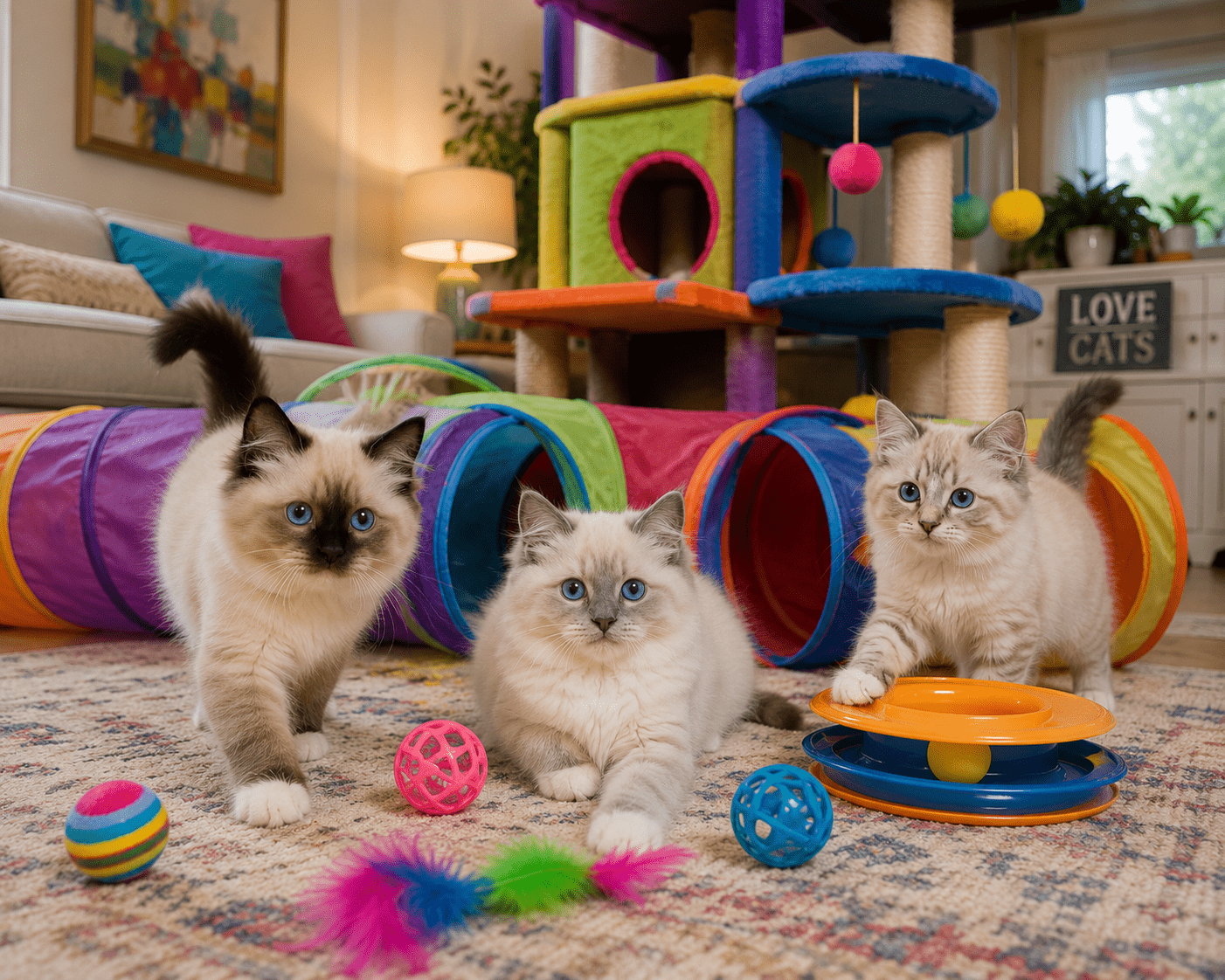

I’m going to start taking my kitten’s photos in the same indirect daylight each month. That seems far more reliable than judging a cream coat under evening lamps.
I’m going to start taking monthly photos by the same window.