

Why Your Ragdoll Kitten Keeps Changing Spots in a Small Apartment
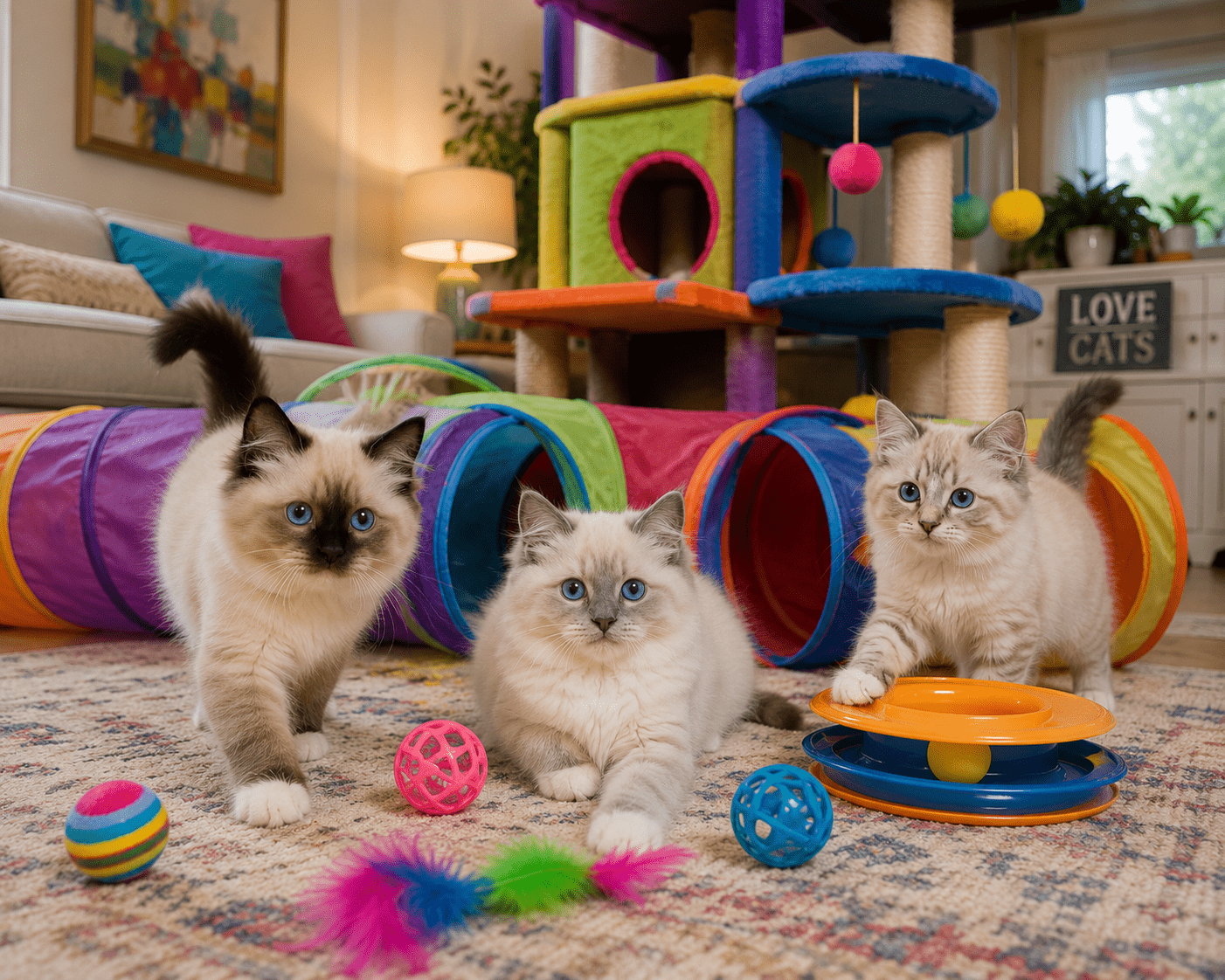
In a small apartment, a newly arrived Ragdoll kitten may seem to change locations constantly during the evening. One minute, the kitten is sitting in the bedroom doorway. A few minutes later, it is beside the sofa, then under a chair, then back in the hallway watching you.
This movement is easy to interpret as restlessness, but that is not always what is happening. Ragdoll kitten behavior is often shaped by the kitten’s wish to observe people, track household activity, and choose a comfortable distance from it. A compact home simply makes those choices easier for people to notice.
Ragdolls are often described as social and easygoing, but they are not identical. One may follow a person closely, while another prefers to watch from a few feet away. The most useful question is not, “Why will my kitten not settle?” but, “What is each location helping my kitten do?”
Seven small-space clues hidden in evening wandering
1. A doorway may be a viewing position, not a destination
A kitten sitting across a doorway is occupying one of the most informative places in a small home. From there, it may be able to see the living room, hear activity in the kitchen, and keep track of a person moving between rooms.
Notice whether your Ragdoll kitten turns its head toward different sounds or watches you without approaching. That combination suggests the doorway is functioning as a lookout point. It is a way to remain involved without committing to one room.
Keep the area free from doors that could swing suddenly into the kitten. Otherwise, there is no need to coax the kitten elsewhere if it is calm and safe.
2. Moving to a new edge can mean the room changed
Some kittens do not leave a room when the environment changes. Instead, they move from the middle of a rug to the edge of the sofa, or from beside your chair to a spot behind it. The change may reflect a new level of activity, lighting, conversation, or movement around them.
This is one reason individual personality matters. A confident, outgoing kitten may remain near the center of activity. A more watchful Ragdoll may choose a border where it can observe without being approached from every direction.
In a small apartment, provide more than one comfortable position in the same room. A washable rug, a stable ottoman, and an open space beside the sofa can give a kitten choices without requiring extra furniture.
3. Following you does not always mean wanting to be held
Ragdolls are often people-oriented, which can lead owners to assume that a kitten who follows them wants constant physical contact. Sometimes the kitten is simply maintaining social proximity. It may settle near your feet, move when you move, and then choose a separate resting spot once you sit down.
This is a useful distinction. Companionship and handling are not the same preference. Letting the kitten decide whether to climb onto your lap can build trust more effectively than repeatedly lifting it into position.
Watch the distance your kitten chooses after following you. A kitten who consistently settles one or two feet away may be expressing, “I want to be with you, but I also want control over my space.”
4. Broad, low surfaces may be more useful than tall ones
Many Ragdolls grow into substantial cats, and some kittens seem to appreciate surfaces that feel wide and steady beneath them. In a compact apartment, a low bench, firm chair, or broad sofa arm may be more appealing than a narrow high perch.
This does not mean every Ragdoll prefers staying on the floor. It means height is only one part of a location’s appeal. Stability, room to turn around, and a clear view of people can matter just as much.
Before adding more climbing furniture, notice what your kitten already chooses. A secure, low surface that fits naturally into the room may be used more often than an elaborate perch placed away from household activity.
5. A repeated route may be about confidence, not excess energy
Some kittens repeatedly travel between two or three points: the sofa, the hallway, and a chair, for example. The route may look aimless, but repetition can help a kitten learn the distances and boundaries of a new home.
In an unfamiliar apartment, the kitten is learning where footsteps appear, which surfaces are stable, and how quickly it can move from an exposed area to a more sheltered one. The route becomes familiar through use.
Try not to interrupt every pass. Instead, keep the main walkway clear and observe whether the kitten eventually pauses for longer at one location. A route that gradually becomes slower and more settled may show growing confidence.
6. The quietest spot may become important when evening activity rises
Small apartments can become surprisingly busy at night. Lights come on, dishes move, televisions start, and people shift between rooms. A Ragdoll kitten that retreats behind a chair or beneath a side table during this period may not be rejecting the household.
It may simply be choosing a place where activity is visible but less direct. This is especially common in kittens that are still learning the household’s evening rhythm.
Do not pull a calm kitten out of its chosen retreat just to prove that it is comfortable. Make sure the space is safe, then allow it to reappear on its own. A nearby alternative, such as an open carrier or a covered bed, can provide privacy without leaving the kitten inaccessible.
7. Location changes over the first few weeks can reveal growing familiarity
A new Ragdoll kitten may initially stay close to walls, furniture edges, or the person it trusts most. Later, it may begin resting in the center of the room, crossing open floor more confidently, or choosing a spot that is farther from its original safe area.
That shift can be mistaken for inconsistency. In reality, the kitten may be using more of the apartment because the space has become predictable. A kitten who once watched from beneath a chair may later watch from the rug because the rug now feels equally secure.
Record these small changes mentally rather than expecting a fixed personality to appear immediately. Quiet observation often shows more than a single dramatic interaction.
What to notice before rearranging the apartment
When your kitten changes spots, look at the details surrounding the decision:
- Line of sight: Can the kitten see you, a doorway, or more than one room?
- Distance: Is the new position closer to people, or does it create a little more space?
- Surface: Is it soft, broad, elevated, cool, or protected on one side?
- Timing: Did the move happen after lights, sounds, visitors, or household movement changed?
- Return pattern: Does the kitten come back willingly after a short pause?
These observations help separate a genuine preference from a random walk across the room. They also prevent owners from constantly changing furniture when the kitten may simply be experimenting with distance and visibility.
Persian and Ragdoll kittens in the same small-space situation
Persian and Ragdoll kittens may use a compact home differently, although individual preferences always matter more than breed labels. Many Persians are drawn to calm, predictable positions where they can rest without being in the middle of traffic. A quiet corner, low cushion, or familiar piece of furniture may become especially valuable.
Many Ragdolls, by contrast, are inclined to keep social contact within view. A Ragdoll kitten may move between rooms or choose a broad spot near people while still keeping enough distance to relax. This can make evening wandering look more noticeable. Neither pattern means one breed is more confident or affectionate. A Persian may follow a favorite person, and a Ragdoll may prefer a private corner. The useful comparison is whether the kitten’s chosen space provides the kind of calm, visibility, or companionship that it currently prefers.
Let the kitten explain the space
Your Ragdoll kitten’s changing locations are small pieces of information. A doorway can offer visibility, a sofa edge can offer controlled closeness, and a repeated route can make a new apartment easier to understand. These choices become particularly revealing in the evening, when household activity changes from one room to another.
Offer safe, stable options, keep pathways practical, and resist the urge to direct every movement. When you watch where your kitten settles—and what changed just before it moved—you begin to see a personality developing rather than a problem that needs correcting.
For more guidance on understanding Ragdoll and Persian kitten personalities, home life, and everyday preparation, explore the helpful resources at CTkittens.com.

Rachel Cohen is a journalist and producer with a passion for audio storytelling, health and science reporting, and feline companions.
A graduate of Middlebury College, Rachel spends her weekends exploring the mountains and when she isn’t outdoors or chasing a story, she can usually be found hanging out with her cats.

Watching a kitten choose that one- or two-foot distance really changes how you read their body language.
Seeing those little circuits as map-making makes the evening wandering feel much less worrying.