

Why a Ragdoll Kitten’s Coat Looks Different at Home
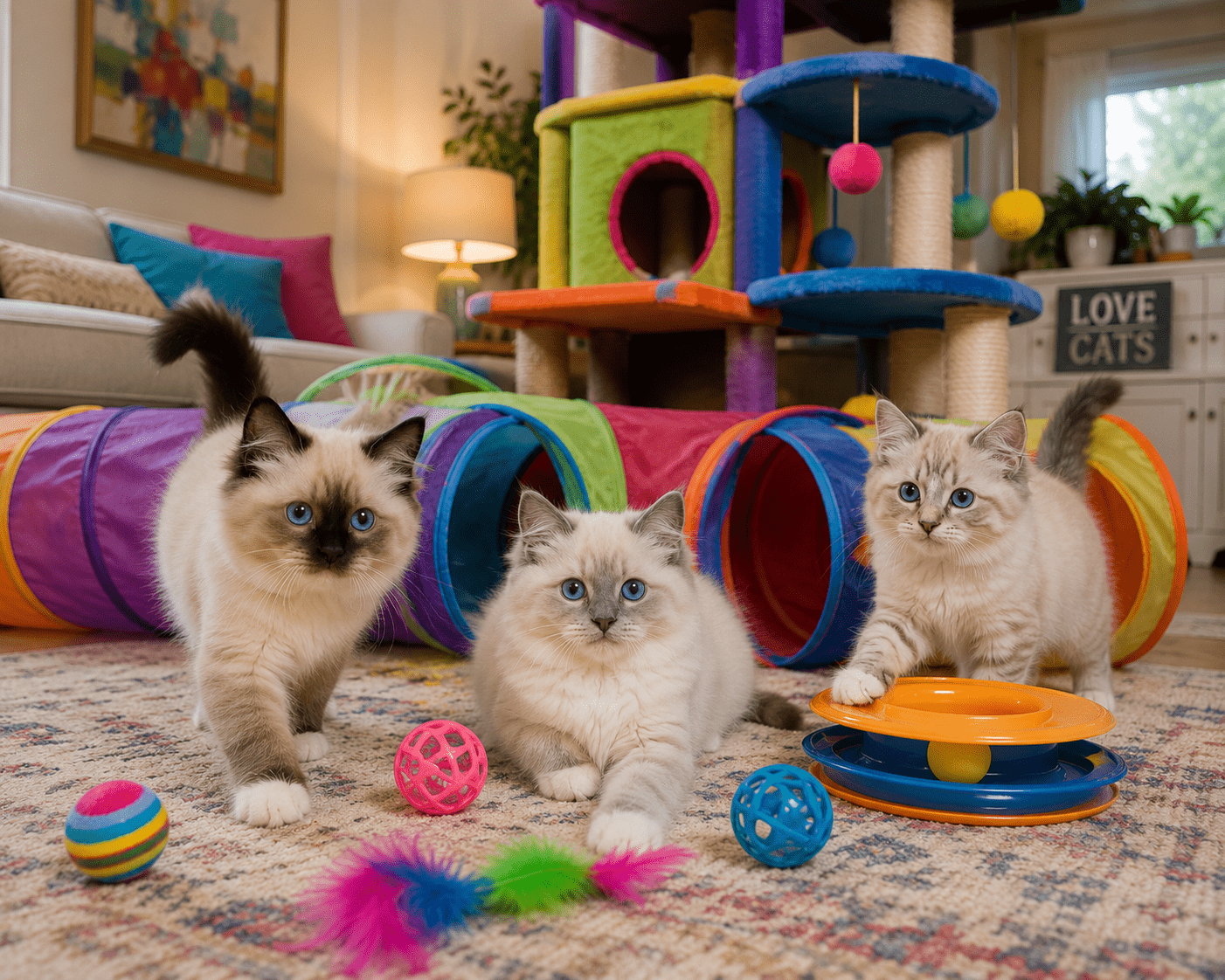
In an active household, a Ragdoll kitten may seem to have a slightly different appearance from one part of the day to the next. In the morning window light, the body can look pale and creamy. Under a warm ceiling lamp, the same kitten may appear more golden. After being picked up, its coat may lie flatter, while a few minutes of walking can make the tail and chest fur look much fuller.
These changes do not usually mean the kitten’s coat is changing by the hour. They are clues about age, color development, texture, posture, and the way human eyes and cameras interpret light. For someone considering a Ragdoll kitten, an ordinary busy home can actually provide a useful setting for understanding what the kitten may look like as it matures.
The color you see may not be the finished color
Ragdolls are colorpoint cats, so their coat appearance develops in a particularly noticeable way. Many Ragdoll kittens are born very pale because pigment develops differently on the warmer central areas of the body than on the cooler extremities. Over time, the ears, face, legs, paws, and tail generally show more of the kitten’s point color, while the body remains lighter.
This means an early photograph can understate the contrast that will become visible later. A kitten with softly shaded ears and a lightly marked face may develop a richer, more defined appearance as it grows. The timing and intensity vary with the kitten’s color, pattern, genetics, and individual development, so an exact future appearance cannot be predicted from one visit.
A useful question for a prospective owner is not simply, “How dark is this kitten today?” It is, “How old is the kitten, and how has this color developed so far?” Seeing photographs of the parents and older relatives may provide context, although it still cannot guarantee the precise adult result.
Why an active home changes the impression
A busy household creates many small visual changes that people rarely notice in themselves. Moving from a bright hallway to a shaded room can make a cream body look cooler or warmer. A yellow-toned lamp can soften the contrast between the body and the points, while indirect daylight may make blue eyes and darker markings appear clearer.
Photography adds another layer. Phone cameras automatically adjust exposure and white balance, and a flash can create bright reflections in a Ragdoll kitten’s eyes. A close-up taken against a dark sofa may make the coat look lighter than it does against a pale wall. Two pictures taken minutes apart can therefore give a surprisingly different impression without either image being inaccurate.
Posture matters as well. When a kitten is curled up, the long fur around the neck and sides may overlap, making the body look compact and especially plush. When the kitten stands and stretches, the same coat can look more streamlined. Being carried can part the fur along the back, briefly revealing a different layer and reducing the impression of fullness.
These are practical details to remember when viewing breeder photographs or meeting a kitten in person. A single posed image is useful, but it should not be treated as the complete picture.
What a busy household can teach you about the kitten
The appearance of a Ragdoll kitten is only one part of the observation. An active home also shows how the kitten’s coat and body language look during normal transitions rather than during a carefully arranged portrait.
- Watch the kitten standing in ordinary light. This gives you a better sense of the distribution of body color and point markings than a heavily edited image.
- Notice the coat while the kitten walks. Movement can reveal the softness and length of the fur around the tail, chest, and hindquarters.
- Look again after a period of calm. A relaxed kitten may settle into a very different silhouette from the alert, upright kitten who greeted a visitor.
- Separate appearance from personality. A kitten that sits quietly may simply be observing a new room, not displaying a permanent temperament.
That last point is especially important. Ragdolls are often described as gentle and people-oriented, but individual kittens still vary. One may follow activity from room to room, while another may watch first and approach later. The kitten’s coat may look most impressive while it is moving, but its behavior in that moment should not be judged only by how photogenic it appears.
How to assess a Ragdoll kitten coat realistically
If you are considering a Ragdoll kitten, try to view the coat in more than one ordinary situation. Natural, indirect daylight is useful, but it is also worth seeing the kitten under the type of lighting used in a normal home. Ask whether the photographs show the kitten’s current age and whether they have been filtered or color-corrected.
Look for the features that are likely to remain meaningful beyond a temporary change in presentation: the general point placement, the pattern on the face and legs, the texture of the fur, and the way the coat falls when the kitten is standing naturally. Do not expect a young kitten’s color contrast or body fullness to represent its final adult appearance.
It is also sensible to see the kitten when the fur is dry and in its normal condition rather than freshly styled for a photograph. A clean, well-kept coat should have a soft, flowing appearance, but no owner should need to make a kitten look artificially perfect for its natural beauty to be apparent. If the kitten will join a lively home, observing it around normal household movement may tell you more than a silent studio-style portrait.
Persian versus Ragdoll kittens: why their coats read differently
In relation to visual changes at home, Persian and Ragdoll kittens create different impressions. Many Persian kittens have a denser, fuller coat that can look rounded and plush even when the kitten is sitting still. Their coat color and eye color vary by variety, so lighting can change the overall effect without the distinctive colorpoint development seen in most Ragdolls. A Ragdoll kitten’s semi-long coat often moves more visibly around the tail, chest, and sides, while its developing points can make its contrast deepen with age. Ragdoll eyes are characteristically blue, but reflections still alter how bright they look in photographs. A Persian may appear visually mature because of coat volume, whereas a young Ragdoll may reveal more of its eventual pattern gradually.
The practical takeaway for prospective owners
A Ragdoll kitten’s appearance is best understood as something developing in context, not as a fixed image. Age changes the points. Lighting changes the apparent warmth and contrast. Posture changes the silhouette. Movement shows how the semi-long coat falls, and cameras can exaggerate or soften all of these effects.
When you visit or view photographs, take a moment to look past the most flattering pose. See the kitten standing, walking, settling, and responding to normal household activity. That ordinary sequence can help you form a more accurate impression of both the coat and the individual kitten beneath it.
For more thoughtful guidance on choosing a Ragdoll kitten and preparing for life with one, explore CTkittens.com.

Rachel Cohen is a journalist and producer with a passion for audio storytelling, health and science reporting, and feline companions.
A graduate of Middlebury College, Rachel spends her weekends exploring the mountains and when she isn’t outdoors or chasing a story, she can usually be found hanging out with her cats.

I hadn’t considered how being carried can briefly part the back fur and make a Ragdoll look less plush. That explains plenty of inconsistent kitten photos.
The point about a carried kitten’s fur parting along the back was especially useful. It explains why an in-person cuddle can make the coat seem less plush than photos.