

Why Your Ragdoll Kitten Can Look Different Each Morning
Some mornings, your Ragdoll kitten appears almost silver. On another day, the ears and tail seem darker, the blue eyes look brighter, or the face markings appear more pronounced. This can feel like a surprising change, especially when you have seen the same kitten every day.
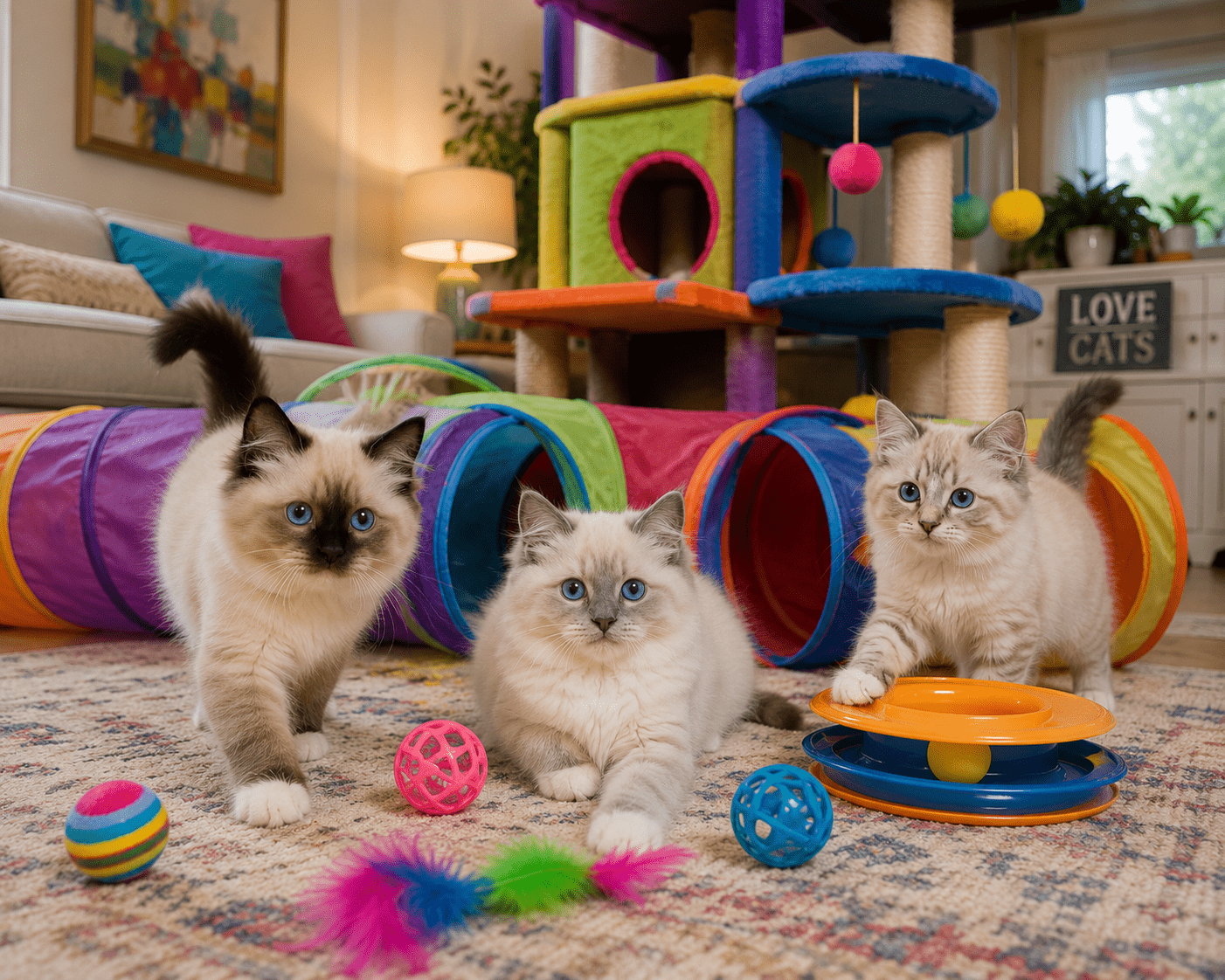
Usually, the kitten has not changed dramatically overnight. What changes is the combination of morning light, coat position, posture, camera settings, and the gradual development of a colorpoint coat. Ragdolls are particularly interesting to observe because their lighter body and darker extremities create strong visual contrasts. Here are five overlooked reasons your kitten’s appearance may seem different before breakfast.
1. Morning light changes the way color is perceived
Early daylight often enters a room at a lower angle and with a warmer or cooler tone than midday light. That can make a blue Ragdoll kitten look silvery, while seal coloring may appear chocolate-brown in one corner and nearly black in another. Cream and red shades can also look richer under warm indoor bulbs than beside a cool window.
This is especially noticeable in Ragdolls because the body is generally lighter than the ears, mask, legs, and tail. The eye naturally compares those areas with one another. A small change in illumination can therefore make the whole kitten appear darker or paler, even though the coat itself is unchanged.
When comparing photographs, look at the wall, blanket, or floor around the kitten. If those colors look different too, the light is probably influencing the image. A phone camera’s automatic white balance can exaggerate the effect.
2. Sleeping can temporarily rearrange the coat
A Ragdoll kitten that has just woken from a nap may not display its coat in the same way as a kitten sitting upright. Soft, semi-long fur can lie flat along one side of the body, lift around the neck, or separate into small sections after contact with a blanket. Flattened fur usually reflects less light and can look darker or more heavily shaded.
The ruff is a good place to notice this. When the neck fur is settled after sleep, the face may look narrow and the mask more dominant. Once the kitten stretches, turns its head, and moves around, the ruff can loosen and make the head appear softer or more rounded.
This is one reason a sleepy morning photograph can look quite different from an afternoon picture taken during play. The difference is not necessarily a new color; it is the way individual hairs are lying and catching the light.
3. A Ragdoll’s posture can alter the balance of its markings
Colorpoint patterns are read visually as a whole, but kittens rarely hold the same pose for long. When your Ragdoll crouches, the darker front legs may be tucked under the chest. When it stretches, the contrast between the pale body and darker legs becomes more obvious. A raised tail can suddenly add a large dark shape to the outline of the kitten.
Markings such as white mitts, a pale chin, or a white blaze can also seem more or less prominent depending on head position. A kitten looking down may show mostly the top of its head and ears. A kitten looking toward a window may reveal more of the pale throat and chest.
This is a useful observation for owners who worry that a marking “looks uneven” from one image to another. Before comparing photographs, compare the kitten’s position. The angle may be responsible for much of the apparent difference.
4. Ragdoll point color develops gradually during kittenhood
Ragdoll kittens are born with very pale coats, and their characteristic darker points become more visible as they mature. The ears, face, legs, and tail usually provide the strongest early clues, while the body remains lighter. Because this development happens gradually, a kitten may appear to have a new level of contrast every few weeks.
The biology behind pointed coloring is also part of the explanation. In broad terms, the pigment-producing process is more active in the cooler extremities than in the warmer central body, which contributes to the familiar point pattern. That does not mean a room becoming cooler overnight will repaint your kitten by morning. It means the pattern naturally has different visual intensity across the body.
Individual Ragdolls mature at different rates. Littermates can show noticeably different levels of point definition, and a kitten with lynx striping, tortie coloring, or white patterning may change visually in a different way from a solid-colored point. The most useful approach is to notice the gradual direction of change rather than expecting a fixed appearance at every age.
5. Your kitten’s eyes and expression affect the whole picture
Ragdolls are known for blue eyes, but the way those eyes appear depends heavily on the surrounding light and expression. A relaxed kitten may have half-closed eyes and a soft facial expression, making the mask seem broader. An alert kitten may open its eyes widely, creating more contrast between the blue irises, the darker face, and any pale markings.
Morning is often a time when kittens move between drowsiness and curiosity. Your Ragdoll may look sleepy on a blanket, then suddenly appear intensely bright-eyed after hearing a familiar household sound. Human observers tend to describe that as a coat or color change because the face has become the visual focus.
Try watching the transition without immediately reaching for your phone. Notice whether the perceived change comes from the fur, the light, or the kitten’s expression. This small pause can help you learn your individual kitten’s normal visual “range” without treating every difference as significant.
What to observe when your kitten looks different
If you want a clearer sense of your Ragdoll kitten coat color and pattern as it develops, compare observations under similar conditions. You do not need a formal routine; a few consistent details are enough:
- Notice whether the kitten is freshly awake, stretched out, or sitting upright.
- Compare the ears, face, legs, and tail with the lighter body rather than judging the whole coat at once.
- Look for changes in lighting, especially warm lamps, direct window light, and shaded corners.
- Pay attention to markings that become visible only when the kitten turns its head or changes position.
- Use occasional photographs from a similar distance instead of comparing every image taken on a different phone or in a different room.
These observations can reveal something more interesting than a simple color shift: how much of your kitten’s visual identity comes from movement and context. A Ragdoll sitting in a pale morning room may present a completely different picture from the same kitten curled against a dark sofa later in the day.
Persian versus Ragdoll: why their morning appearance differs
Persian and Ragdoll kittens can both look dramatically different from one photograph to the next, but the reasons are not quite the same. A Persian’s full, long coat and rounded facial structure can change the apparent shape of the face as the fur settles or lifts after sleep. A Ragdoll’s appearance is more strongly shaped by contrast between a lighter body and darker pointed areas, along with markings such as mitts or a blaze. Ragdolls also bring blue eyes into the visual effect, particularly in cool natural light. In short, Persian owners may notice changes in silhouette and coat fullness, while Ragdoll owners often notice changes in contrast, pattern visibility, and the apparent depth of the points.
Enjoy the small changes
Learning to read your Ragdoll kitten’s appearance is less about finding one “correct” color and more about understanding how the coat presents itself in real life. Morning light, a flattened ruff, a stretched tail, and a developing point pattern can all tell a slightly different visual story.
Those small differences are part of what makes living with a Ragdoll rewarding. Instead of constantly trying to capture the perfect photograph, take time to observe how your kitten looks in ordinary moments. For more guidance and thoughtful breed content, explore the Ragdoll kitten resources at CTkittens.com.

Rachel Cohen is a journalist and producer with a passion for audio storytelling, health and science reporting, and feline companions.
A graduate of Middlebury College, Rachel spends her weekends exploring the mountains and when she isn’t outdoors or chasing a story, she can usually be found hanging out with her cats.

movement, and expectation can make familiar things seem entirely new from one moment to the next.
The changing light, pose, and expression make a kitten’s appearance feel almost like a tiny daily study in photography.