

Why Your Ragdoll Kitten Chooses the Hallway Over the Bed
Your Ragdoll kitten has a soft bed, a quiet room, and several comfortable places to settle. Yet when the house is calm, you may find the kitten stretched across the hallway or sitting beside a doorway instead.
This does not necessarily mean the bed is uncomfortable or that your kitten wants to be in the busiest part of the home. Ragdoll kitten behavior is often easier to understand when you consider position as well as comfort. A hallway edge can offer a useful view of people, rooms, and movement while still allowing the kitten to remain close to the household.
Comfort is only one part of the decision
Humans tend to judge a resting place by softness, warmth, and privacy. A kitten also considers what can be seen from that place, how quickly it can leave, and whether an approaching person is visible before arriving.
A plush bed with tall sides may feel cozy to you but limit a kitten’s view. By contrast, a plain rug near a doorway can provide a wide visual angle. From there, a Ragdoll kitten may be able to watch the living room, notice someone entering the kitchen, and keep track of your location without committing to one room.
Many Ragdolls show interest in being near their people, but being near does not always mean sitting on a lap. Some prefer a position that preserves a little independence. The hallway may be a compromise: social connection without being handled or enclosed.
Two resting situations, seen from kitten height
The tucked-away bed
A bed placed in a corner offers shelter and a clear sense of boundaries. It may suit a kitten that wants uninterrupted sleep, especially after an active period or when household activity increases. If the opening faces a room rather than a wall, the bed can provide both protection and awareness.
However, a tucked-away bed may be less attractive during a quiet period if its walls block the kitten from seeing you. This is particularly noticeable when your Ragdoll leaves the bed as soon as you begin moving around. The kitten may not be rejecting the bed; it may be choosing better information.
The open doorway or hallway edge
An open position gives the kitten more than a view. It creates options. From a threshold, the kitten can move toward you, retreat into a room, or change direction if something unexpected happens. The location also makes a person’s approach predictable because footsteps and body movement are visible sooner.
Watch whether your kitten lies across the threshold or just beside it. A kitten stretched across the opening may be comfortable with household movement and interested in observing it. A kitten sitting to one side with its body angled toward the room may be keeping an easy exit available. Neither posture has one fixed meaning, but the architecture helps explain why the spot is appealing.
What the chosen location may be communicating
The connection between home layout and communication is easy to overlook. Your kitten’s resting place can quietly show how much interaction it wants at that moment.
- Facing the room while staying near the doorway: your kitten may want visual contact without an immediate invitation to touch.
- Moving to the side of the hall nearest you: the important feature may be your position, not the floor surface.
- Changing locations when a door closes: access and visibility may matter more than the room’s temperature or furniture.
- Remaining in place as you pass: the kitten may regard the traffic as predictable and non-threatening.
- Leaving when you approach directly: the spot may be for observation rather than interaction.
One especially useful observation is to compare two equally comfortable places at different distances from you. If your kitten consistently chooses the one with a clear line of sight to your chair or desk, the behavior is probably socially relevant. The kitten may be monitoring your routine while deciding whether to join you.
Why a quiet household makes these choices easier to notice
In a quiet home, small changes carry more information. A cupboard opening, a person standing up, or footsteps moving from one room to another can be enough to attract a kitten’s attention. There may be no loud event to explain the movement, so the kitten’s position becomes part of its way of staying informed.
Quiet homes can also make open spaces feel more useful. A hallway is not necessarily a stressful thoroughfare when people move slowly and predictably. It can become a calm observation point. Your Ragdoll may settle there because the home is peaceful enough to watch without needing to hide.
This is also why a kitten may appear to follow you without actually following every step. It may relocate from the bedroom doorway to the hall, then to the edge of the room where you sit. The pattern can look restless, but it may simply be preserving a comfortable viewing relationship as the household changes position.
How to respond without taking over the choice
You do not need to turn every preferred location into a special project. Instead, treat the choice as useful information about what your kitten values.
- Keep a favored doorway edge free from unstable objects, cords, and items that could block a quick retreat.
- Offer a low-sided resting place with an open view near, but not directly in, the main walking line.
- Notice whether your kitten prefers a wall at its back, an unobstructed view, or a position facing the room where you spend time.
- Avoid repeatedly carrying the kitten to the bed you selected. Repositioning the bed is less intrusive than repositioning the kitten.
- Observe the location at different times of day before deciding that it reflects a permanent preference.
A small change in furniture can alter the meaning of a familiar spot. Moving a chair may open a view; closing a door may remove an escape route; placing a tall basket beside a bed may make the space feel enclosed. When your kitten changes locations, first look at what changed around the location.
Persian and Ragdoll kittens in the same home layout
Persian and Ragdoll kittens can both appreciate calm, predictable spaces, but their choices around household architecture may look different. Many Persians are content with a sheltered, close-to-the-floor location that feels private and quiet, although individual personalities vary. A Persian may use a doorway as a retreat at the edge of activity rather than as a place to monitor several rooms. Ragdolls are often more inclined to remain socially connected to people, so an open threshold or room edge may appeal when it gives them a view of human movement. That is not a rule: some Ragdolls prefer enclosed beds, and some Persians are avid observers. Compare the kitten’s posture, line of sight, and response to your approach instead of assigning meaning from breed alone.
Let the home reveal your kitten’s preferences
The next time your Ragdoll kitten abandons a luxurious bed for a strip of hallway, look beyond the surface. Ask what the kitten can see from there, which rooms remain accessible, and whether the position keeps you within view.
These small choices can make your home feel less like a collection of furniture and more like a landscape of connections. Your kitten is not simply selecting a place to lie down. It may be choosing how much of family life to observe, how close to remain, and how much control to keep over the next interaction.
For more thoughtful guidance on living with Persian and Ragdoll kittens, explore the breed resources and everyday kitten insights at CTkittens.com.

Rachel Cohen is a journalist and producer with a passion for audio storytelling, health and science reporting, and feline companions.
A graduate of Middlebury College, Rachel spends her weekends exploring the mountains and when she isn’t outdoors or chasing a story, she can usually be found hanging out with her cats.
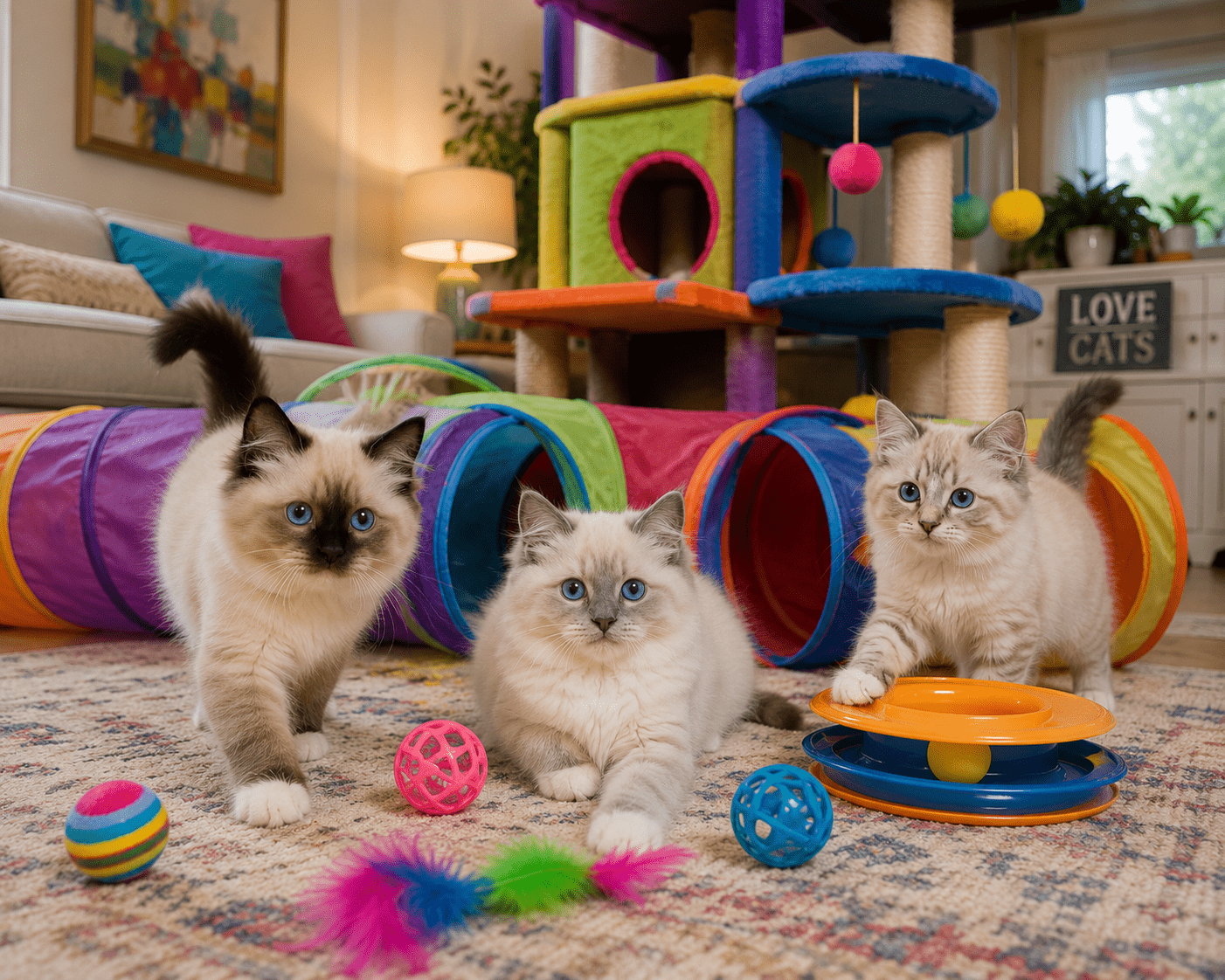
Reading posture alongside room layout feels far more useful than assuming every hallway nap means the same thing.
That small posture detail makes the advice feel more useful than simply assuming every hallway nap means the same thing.