

How a Ragdoll Kitten Reads Your Home Through the Day
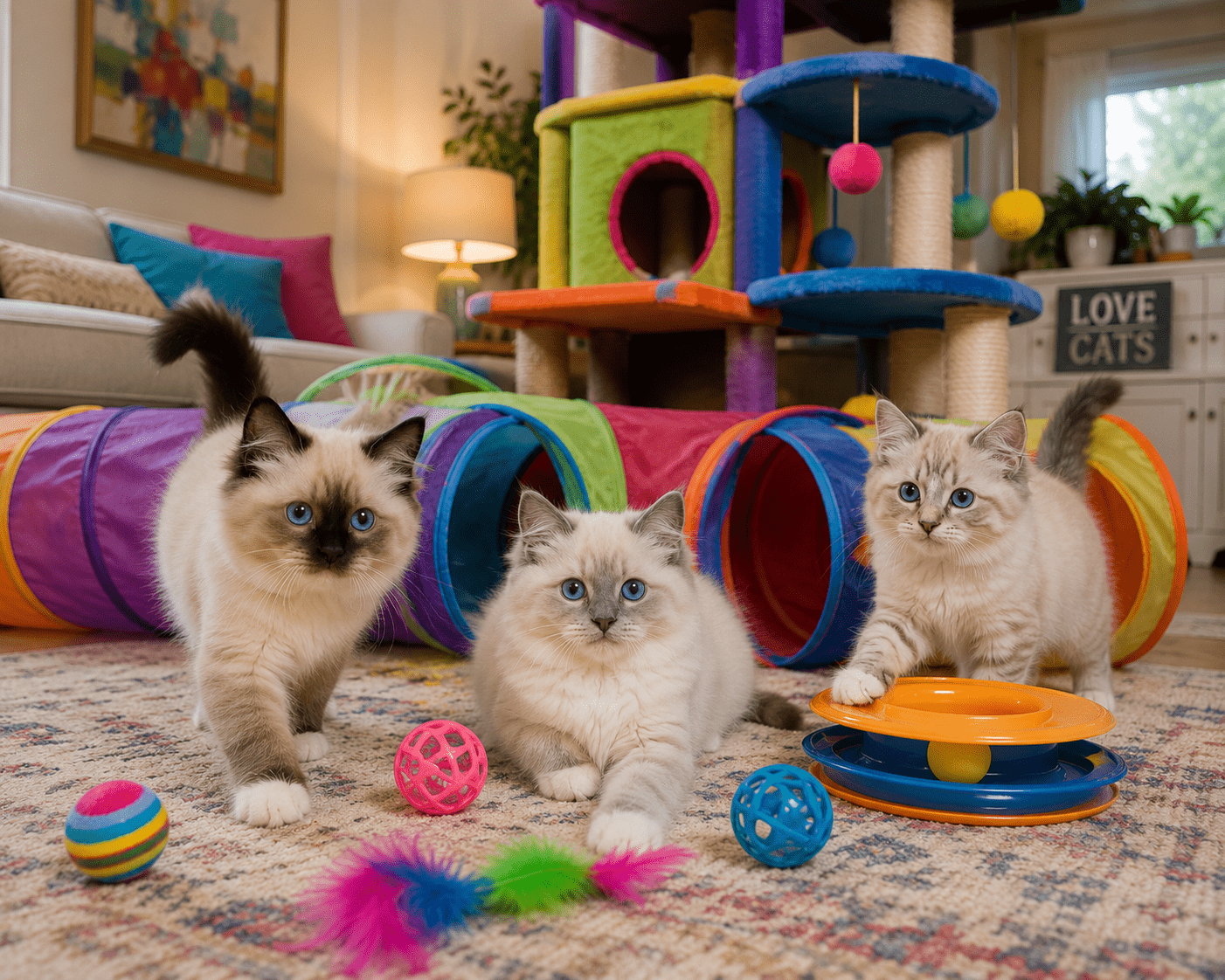
To people, a home is divided into rooms with practical purposes. To a Ragdoll kitten, it is more like a series of connected viewpoints: a hallway that reveals where you are, a doorway that carries new scents, a rug that feels different underfoot, and a chair that offers a better view of the room.
This is one reason Ragdoll kitten behavior can seem both social and surprisingly thoughtful. Many Ragdolls enjoy staying close to their people, but they do not necessarily move through the home randomly. Their choices are often shaped by what they can see, how easily they can retreat, and whether a person or household activity is nearby. A spring day makes these changes especially easy to notice as sunlight, airflow, and household routines shift.
Early morning: the hallway becomes a viewing point
When the household begins to stir, a Ragdoll kitten may appear in a doorway rather than immediately joining the activity. That pause is easy to misread as hesitation. It may simply be a useful position: the kitten can watch movement in more than one direction while deciding whether to follow.
Hallways and door openings matter because they connect spaces without requiring a kitten to commit fully to either one. A kitten standing just beyond the bedroom door can observe a person getting ready, hear activity elsewhere, and still return to a familiar resting place within seconds.
Notice whether your Ragdoll chooses the center of a room or its edge. Some kittens prefer a broad, open position where they can see everyone. Others settle beside a wall, under a table, or near the corner of a sofa. These are not necessarily signs of shyness. A partly sheltered location can provide a clear view while reducing the number of directions from which someone can approach.
Late morning: furniture creates routes, not just obstacles
As people move between rooms, a Ragdoll kitten may follow in stages. Instead of walking directly behind someone, it may pause beside a table leg, cross to the next piece of furniture, and then reappear near the kitchen or home office. From above, this can look like wandering. From the kitten’s lower viewpoint, furniture creates a chain of visual checkpoints.
This is particularly interesting with Ragdolls because many individuals are people-oriented without being constantly demanding. A kitten may want social contact while also choosing a position that allows it to observe rather than participate. The space beneath a desk, the side of a bookcase, or the open area beside a sofa can keep the kitten close to a person without placing it in the middle of footsteps and moving objects.
One overlooked clue is the direction in which your kitten approaches a person. If it repeatedly comes from the side rather than straight ahead, the layout may be influencing that choice. The side route may offer a wider view, a more stable surface, or an easier way to turn around.
Afternoon: spring light changes the useful parts of a room
By afternoon, spring sunlight can transform the same room. A bright patch may move across the floor, shadows may appear under furniture, and an open interior door may bring in different outdoor scents and sounds. Your Ragdoll kitten may change positions several times without any obvious event.
Rather than assuming the kitten is simply chasing warmth, watch the relationship between light and visibility. Some kittens choose the edge of a sunny patch, where they can enjoy the brightness while still seeing the darker part of the room. Others leave a favorite place when glare makes it harder to watch people. This small preference reveals that comfort is not only about temperature; it can also involve contrast, movement, and a clear line of sight.
Spring is also a good time to notice how secured windows, screened doors, and curtains alter the indoor experience. A kitten may sit near a window because of shifting light, passing movement, or new sounds rather than because it wants to go outside. The window area becomes part of the home’s changing visual landscape, even when the kitten remains indoors.
Late afternoon: the best place may be wherever you are
For many Ragdoll kittens, household architecture becomes less important when a favorite person settles down. A chair, sofa, or work area can suddenly become the most valuable location because it combines a familiar human scent, predictable movement, and an opportunity for contact.
Still, closeness does not always mean sitting directly on a lap. A kitten may choose the floor beside a chair, the far end of a sofa, or a nearby low surface. This arrangement lets the kitten remain socially connected while controlling how much handling it receives. If the kitten shifts away after a brief greeting but stays in the same room, it may be communicating a preference for proximity without continuous touch.
For owners, the useful question is not simply, “Where does my kitten like to sit?” Ask instead, “What can my kitten see from there, and who is easiest to reach?” The answer often explains why a location is preferred even when it does not look especially comfortable to a human.
Evening: rooms become social crossroads
When people gather in one room during the evening, a Ragdoll kitten may repeatedly enter, leave, and return. This pattern can be mistaken for restlessness. Often, the kitten is comparing several locations as the social scene changes.
A spot near the edge of the group may offer the best balance: enough activity to remain involved, but enough distance to avoid sudden hands, feet, or loud movement. If someone moves from the sofa to the kitchen, the kitten may relocate because the important feature was not the furniture itself. It was the person’s position and the new sightline that person created.
Some Ragdolls will follow a household member from room to room, while others prefer to remain stationed where they can monitor the most activity. Both patterns can fit a socially interested kitten. Individual temperament, confidence, age, and previous experience all influence whether a kitten participates directly or watches from a nearby boundary.
Small architectural details worth observing
Over several days, look for patterns rather than trying to direct every movement. These observations can tell you how your kitten experiences the home:
- Threshold pauses: Notice whether your kitten stops at doorways, especially when a room has changed light, sound, or activity.
- Surface decisions: Compare choices between smooth floors, rugs, low furniture, and elevated narrow surfaces. Broad, predictable footing may matter more than height.
- Human sightlines: See whether your kitten chooses a place from which it can watch your face, hands, or movement between rooms.
- Retreat distance: Observe how close your kitten stays when the home is busy and whether it selects a location with an easy exit.
- Seasonal changes: In spring, check whether moving daylight or newly opened interior spaces changes the kitten’s preferred route.
Persian and Ragdoll kittens in the same home
Persian and Ragdoll kittens may both enjoy calm, familiar spaces, but they can read household architecture differently. Many Ragdolls are inclined to keep people within view, so a low place beside a chair or a doorway overlooking the main room may be especially attractive. Persian kittens are often more deliberate observers; some may prefer a quiet, stable position with a clear view but less passing traffic. A Persian may remain settled while activity changes, whereas a Ragdoll may relocate to stay near the person who moved.
These are tendencies, not rules. An outgoing Persian can be highly involved, and a Ragdoll can prefer solitude. The useful comparison is not which breed is more social, but whether the kitten values direct participation, a protected observation point, or a combination of both.
Let the kitten explain the home
Watching a Ragdoll kitten move through the day can reveal features of your home that human eyes ignore. A doorway may be a lookout, a sofa may be a boundary, and a patch of spring light may be useful only when it leaves the rest of the room visible.
Instead of constantly rearranging the space, begin by observing what your kitten already chooses. Those choices can help you understand its personality and make small, sensible adjustments that support confidence without turning the home into a project.
For more thoughtful guidance on life with Persian and Ragdoll kittens, explore CTkittens.com.

Rachel Cohen is a journalist and producer with a passion for audio storytelling, health and science reporting, and feline companions.
A graduate of Middlebury College, Rachel spends her weekends exploring the mountains and when she isn’t outdoors or chasing a story, she can usually be found hanging out with her cats.
Still, watching doorway pauses and side approaches is a smart way to distinguish exploration from a real preference.
I hadn’t considered that a doorway pause could be a strategic lookout rather than uncertainty. Watching whether a kitten favors room edges or open centers seems like a simple way to understand its comfort level without interfering.