
Where Should a Persian Kitten Sleep First?
During the first nights home, a Persian kitten may sleep behind a chair, under a table, in a carrier, or somewhere you never expected. That does not mean the kitten dislikes your carefully chosen bed. New surroundings bring unfamiliar smells, sounds, people, and routines, so a young cat often chooses the place that feels most protected rather than the place that looks most comfortable to us.
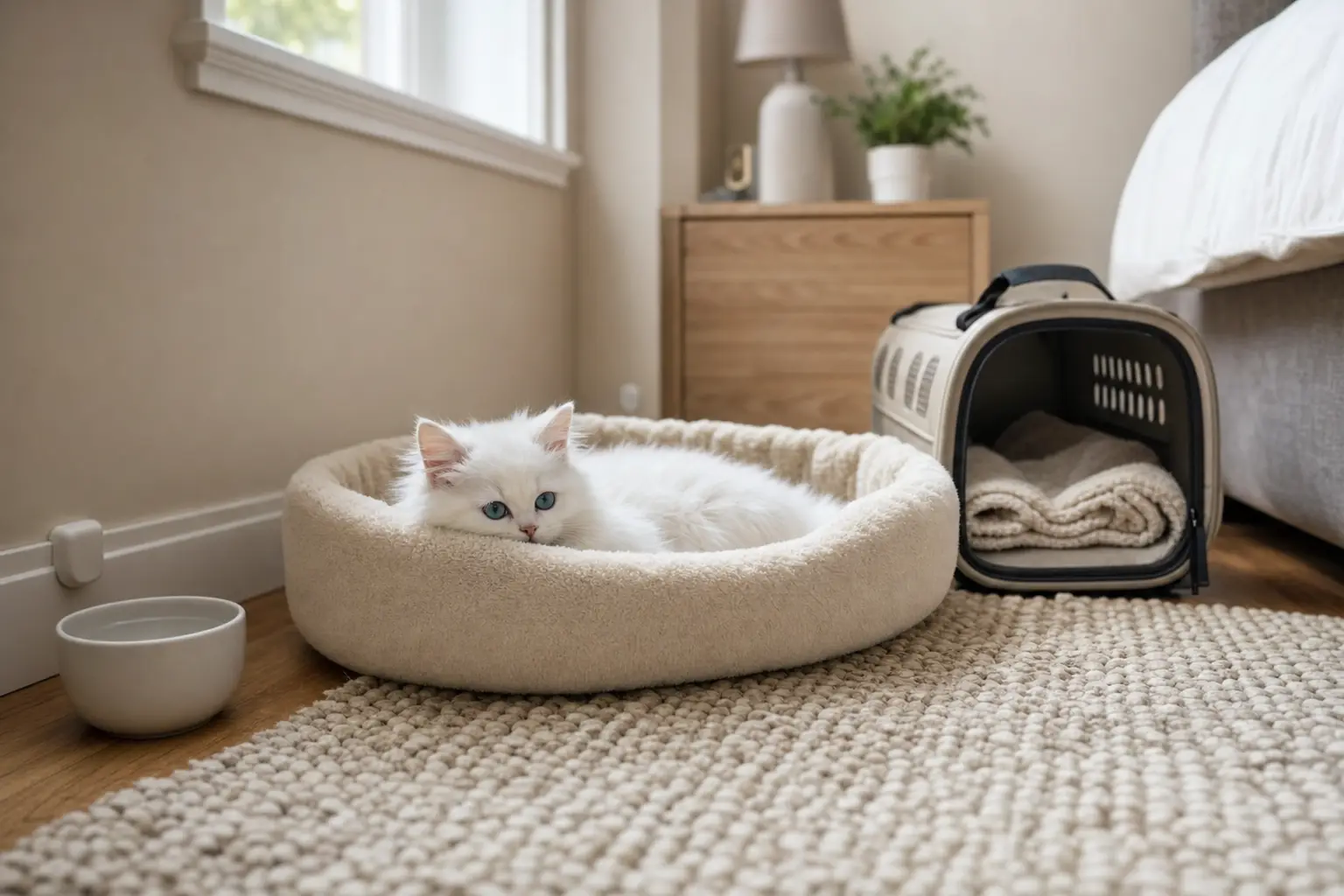
So, where should a Persian kitten sleep? Start with one quiet, kitten-proofed room and provide two or three safe options within it. A low-sided bed, an open carrier, and a covered hideaway give your kitten control without giving it an entire house to navigate. Let the kitten choose. The first goal is not to establish a permanent favorite nook; it is to make the first nights predictable, warm, and safe.
Why choosing a sleeping nook can feel difficult
A kitten arriving at a new home is making several decisions at once: where it can hide, which sounds are harmless, where people move, and which smells belong to its new territory. Sleeping requires vulnerability, so a kitten may select a tucked-away location with a good view of the room or an easy escape route.
This is why a plush bed in the middle of a busy room can lose to a plain cardboard box beside the sofa. The box may offer better shelter and less foot traffic. A kitten also may change locations from one night to the next as it becomes more confident.
Persian is a breed, not a guaranteed personality. Some Persian kittens are outgoing; others need more time before they relax. Coat length, facial structure, age, previous handling, household noise, and individual temperament can all affect how a kitten settles. Avoid treating a preferred nook as a personality test or assuming that a kitten who hides is being unhappy with you.
Set up one safe base camp before bedtime
For the first few nights, a smaller area is usually easier to manage than unrestricted access to the whole home. A spare bedroom, quiet office, or other secure room can serve as a temporary base camp. The room should be comfortably ventilated and free from hazards such as open windows, dangling cords, unstable furniture, toxic plants, and narrow gaps behind appliances.
Keep the room calm, but do not make it completely isolated from normal household life. Ordinary, quiet sounds can help a kitten gradually learn the rhythm of the home. Children and other pets should not be allowed to crowd the room or reach into hiding places.
Arrange the basics before bringing the kitten in:
- A comfortable, washable sleeping option with no loose threads, frayed edges, or small parts.
- An open carrier or sturdy box that can serve as a sheltered retreat.
- A litter tray placed well away from food and water.
- Fresh water and the food recommended by the breeder or veterinarian.
- A low-risk toy or two, without long strings left unattended.
- A stable room temperature and a place away from direct drafts or intense heat.
Do not place every item in one crowded corner. Cats generally benefit from having resting, eating, drinking, playing, and toileting areas that are not piled together. The room does not need to be large; it needs to be easy for a small kitten to understand.
Offer choices without creating confusion
Three sleeping options are usually enough for the first night:
- An open bed: Choose one with a low entrance so a small kitten can step in and out easily.
- A covered retreat: An open carrier with the door secured safely open, or a sturdy box with a large entrance, can provide privacy.
- A familiar-smelling layer: If the breeder or previous caregiver provided a safe blanket or cloth, place it in one option. Familiar scent may make the room feel less strange.
Place the options in different parts of the room rather than directly beside one another. One can be near a wall, one under a table with plenty of clearance, and one in a quiet corner. Do not block the kitten’s route to the litter tray, food, or water.
Some kittens prefer a firm surface, while others settle into fleece or a padded bed. You can learn more by watching where the kitten rests during the day. If it repeatedly chooses a particular safe spot, improve that location rather than repeatedly carrying the kitten to a bed it has rejected.
A sleeping nook and a hiding place are not always the same thing. A hiding place should allow easy breathing, movement, and exit. Avoid sealed containers, deep laundry baskets, recliners, sofa mechanisms, gaps behind appliances, and any space where a kitten could become trapped or overheated.
How to make the first nights easier
Keep the routine simple
Offer food, a quiet play session, and gentle interaction at roughly consistent times. A short play session before settling can help a kitten transition to rest, but it should not become a loud or vigorous event just before bedtime. Lower the lights and reduce activity as the household winds down.
Show the kitten the litter tray and sleeping choices once. There is no need to repeatedly place it in the bed. Repeated handling can make the bed feel like a place where the kitten loses control.
Respond to crying calmly
Some nighttime vocalizing is expected while a kitten adjusts. First check practical needs: is the kitten stuck, cold, unable to reach water, or showing signs of illness? If everything is safe, speak softly and keep the interaction boring and brief. Turning every cry into an exciting play session may make it harder for the kitten to settle.
Do not punish hiding, crying, or an accident. Fear-based responses can make the room and the people in it feel less safe. If the kitten settles in a carrier or box, leave the retreat available rather than pulling it out to encourage socializing.
Expand access gradually
Once the kitten is eating, using the litter tray, resting, and exploring the base camp with reasonable confidence, you can introduce another room at a time. Keep the original safe room available so the kitten can retreat when the rest of the home feels overwhelming.
If there are resident cats or dogs, the kitten should not be given immediate free access to them. Separate spaces, scent exchanges, and gradual introductions are safer than expecting animals to share the same sleeping area on the first night. For broader guidance about bringing a new cat home, see the Cornell Feline Health Center’s new-cat guidance.
Persian kitten details worth considering
A Persian kitten’s long, fine coat makes bedding maintenance especially worthwhile. Wash or replace fabric that becomes damp or soiled, and inspect it for loose threads that could catch on claws or be swallowed. A simple, washable surface is often more practical than a heavily decorated bed.
Keep the sleeping area away from direct heaters, fireplaces, hot sun through a window, and strong drafts. If your kitten has a very short face, noisy breathing, or difficulty staying comfortable, ask a veterinarian for individual advice rather than trying to solve the problem with extra blankets or heat.
Persian kittens can also look especially peaceful when sleeping, but appearance should not be the only way you judge how they are doing. A kitten should have periods of normal alertness, eat and drink appropriately for its age, and use the litter tray. Contact a veterinarian promptly about breathing difficulty, repeated vomiting or diarrhea, marked weakness, injury, or a kitten that is not eating or drinking. Very young kittens can become unwell quickly, so do not wait for a sleeping nook to solve a health concern.
What if the kitten ignores every bed?
That is common. Before buying another bed, check the location rather than the product. Is the area exposed to footsteps, television noise, drafts, or a curious dog? Is the bed too high-sided, too soft, too warm, or strongly scented from manufacturing or detergent?
Try moving one option beside the place the kitten already selected. You can also put a clean towel over part of a bed to create more shelter, as long as the fabric is secure and the kitten cannot become entangled. Avoid forcing the kitten into the bed or placing food inside the sleeping area. Food can attract the kitten temporarily, but it does not necessarily make the spot feel safe for rest.
Many kittens change their favorite location after a few days. A nook beside you may become appealing once the kitten trusts your movements; a private corner may remain preferred for daytime naps. Both patterns can be normal. A successful first-night setup is one that gives the kitten a safe choice, not one that produces a particular photograph or sleeping position.
Quick first-night checklist
- Use one quiet, kitten-proofed room at first.
- Provide an open bed, a sheltered retreat, and a familiar-smelling safe layer.
- Keep litter, food, and water accessible but not crowded together.
- Remove cords, toxic plants, unstable objects, loose threads, and trapping hazards.
- Allow the kitten to hide and choose its own resting place.
- Keep nighttime responses quiet and predictable.
- Expand the kitten’s territory only after it is comfortable in the base camp.
- Call a veterinarian promptly if there are signs of illness or the kitten is not eating or drinking.
Frequently asked questions
Should a Persian kitten sleep in my bedroom?
It can, if the bedroom is kitten-proofed and the kitten has access to its litter tray, water, and a safe retreat. A separate quiet room may be easier during the first nights, especially in a busy household or when other pets need to be introduced gradually.
Should I let my kitten sleep on my bed?
You can decide later, but a young kitten should not be left on a high bed if it could fall or become trapped in bedding. An independent floor-level nook is the safer default until you know how the kitten moves around at night.
How long will it take for my kitten to choose a favorite sleeping nook?
There is no reliable timetable. Some kittens settle quickly; others explore several locations over days or weeks. If the kitten is eating, toileting, alert when awake, and gradually becoming more comfortable, changing sleeping spots is usually not a problem.
The simplest answer
For the first nights, give your Persian kitten a secure room, a few sensible sleeping choices, and the freedom to decide. The best nook is the one that is safe, easy to leave, and comfortable enough for the kitten to relax. As trust and familiarity grow, the favorite spot may change—and that is part of settling in.
For more practical guidance on preparing for life with a Persian kitten, explore CTkittens.com.
Further reading

Rachel Cohen is a journalist and producer with a passion for audio storytelling, health and science reporting, and feline companions.
A graduate of Middlebury College, Rachel spends her weekends exploring the mountains and when she isn’t outdoors or chasing a story, she can usually be found hanging out with her cats.


Honestly the bit about improving the weird spot they already picked instead of buying bed number six is gonna save folks some cash lol.