Quick answer: The best Ragdoll kitten litter box location for the first week is a quiet corner of a small, kitten-proof room, such as a spare bedroom or home office. Keep the box away from food, water, loud appliances, fireplaces, drafts, and doors that may be closed. It should be easy for a young kitten to find, reach, and leave without feeling trapped.
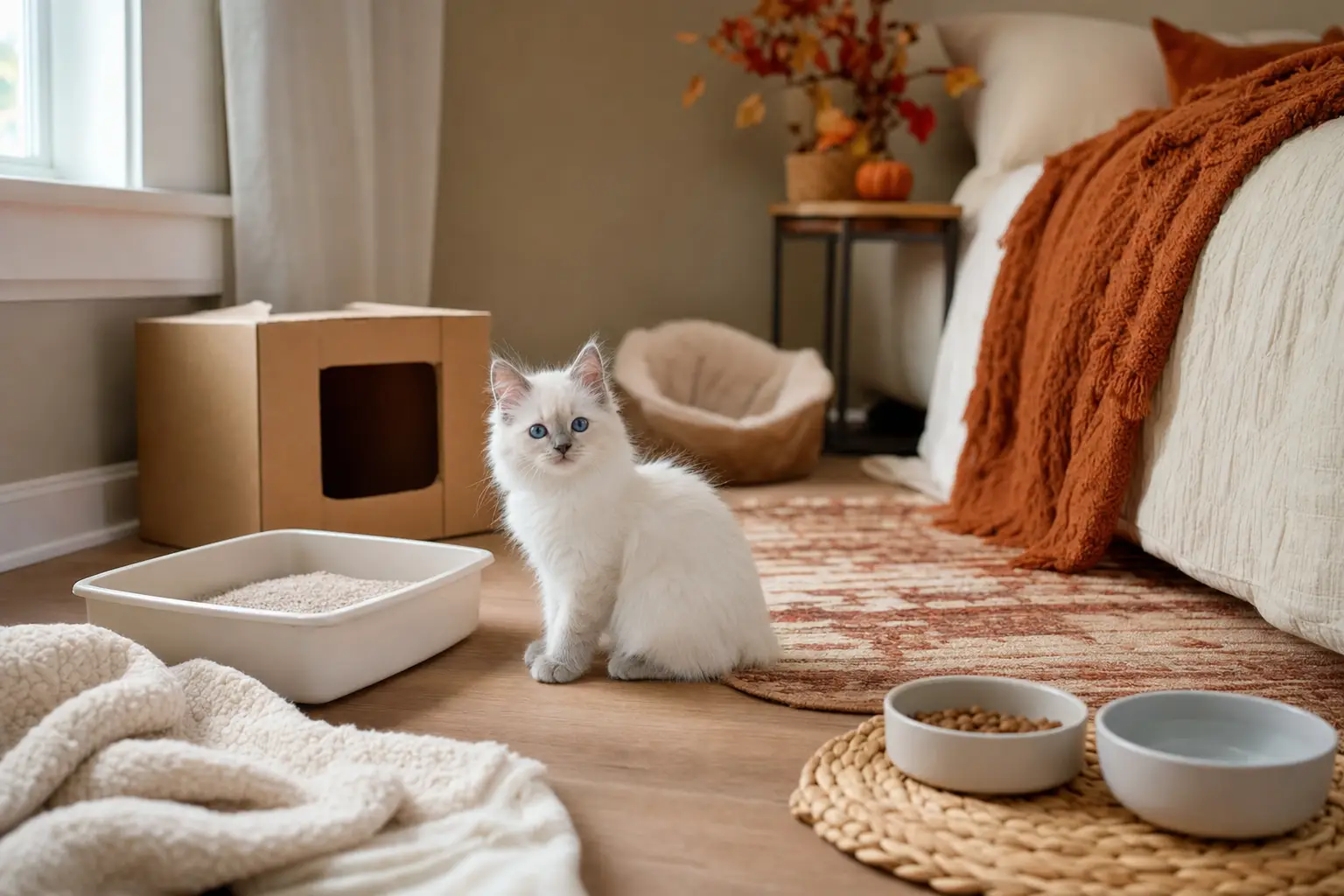
A cozy autumn room can be an excellent landing space, but cozy should not mean crowded, heavily scented, overheated, or hidden. Your goal is a calm home base where your kitten can rest, eat, drink, play gently, and use the litter box without having to cross the whole house.
The best location: quiet, visible, and easy to escape
For the first several days, place the litter box inside the kitten’s main safe room. Choose a low-traffic area with enough light to make the tray easy to locate, but do not put it in the center of activity. A corner beside a short wall or piece of furniture can provide a little privacy while still leaving a clear approach and exit.
Quiet does not mean isolated. A kitten may avoid a box placed at the far end of a basement, behind a closed door, or inside a closet. Young kittens are still learning the layout of their new home, and a long journey to the tray can create avoidable accidents.
| Location | First-week verdict | What to check |
|---|---|---|
| Spare bedroom | Usually excellent | Keep the tray away from the bed, food, and water, with a clear path around it. |
| Quiet home office | Often suitable | Protect cords, limit visitors, and make sure the door cannot accidentally close. |
| Bathroom | Possible | Leave the door open, remove cleaning products, and avoid placing the tray beside a loud fan or toilet. |
| Laundry room | Usually a poor choice | Washers, dryers, vibration, heat, and closed doors can make the area unsettling or inaccessible. |
| Mudroom or entryway | Use caution | Foot traffic, cold drafts, wet footwear, and frequently opening doors may disturb a new kitten. |
| Living room | Acceptable if calm | Choose a quiet edge rather than a busy walkway, and provide a nearby hiding bed. |
Build a one-room autumn landing zone
Before your kitten arrives, sit in the room at floor level and look at it from a kitten’s perspective. Can the tray be reached without climbing over obstacles? Is there a place to hide that is not behind an appliance? Could a door swing shut? This simple check often reveals problems that are easy to miss from standing height.
Set up the room with separate zones:
- Litter zone: Place the tray on a stable, washable surface with space around it. A small mat can catch scattered litter.
- Food and water zone: Keep bowls well away from the litter box. Cats generally prefer not to eliminate beside their eating area.
- Resting zone: Offer a soft bed or blanket in a quiet corner. It should be warm but not directly beside a radiator, heater, or fireplace.
- Comfort zone: Add a safe hiding place, such as an open carrier or sturdy box with a large entrance. Do not block the kitten’s route back out.
- Play zone: Use a few age-appropriate toys, but put away string, ribbon, elastic, and wand toys when no one is supervising.
Autumn details can make the space welcoming without creating hazards. Choose washable blankets rather than loose, fraying fabrics. Keep candles, wax melts, potpourri, essential-oil diffusers, and strongly scented sprays out of the room. A kitten does not need a fragranced litter area, and unfamiliar smells may make the tray less appealing.
Also check windows, screens, heaters, electrical cords, and decorative plants. A room that feels warm and peaceful to you may contain a tempting climbing route or chewing hazard for a curious kitten. The International Cat Care guidance on bringing a cat home offers a useful framework for starting with a calm, limited area and expanding access gradually.
Choose a kitten-friendly box and litter
For week one, an uncovered, low-sided tray is often the simplest starting point. A low entry helps a small kitten get in and out easily, while an uncovered design lets the kitten see the surrounding room. A covered box is not automatically wrong, but some kittens may find a hooded or enclosed tray less inviting, especially if it has only one narrow exit.
Ragdolls grow into substantial cats, so avoid a tray that is so small your kitten can barely turn around. At the same time, a very tall-sided adult box may be difficult for a young kitten to enter. Look for a compromise: a spacious interior, a low entrance, and sides high enough to reduce scatter.
Whenever possible, start with the same litter your breeder or rescue has been using. Familiar texture and smell can make the transition easier. If you want to change products, wait until your kitten is settled and then introduce the new litter gradually rather than changing everything on the first day.
Unscented litter is generally a sensible starting point. Avoid adding deodorizing powders or perfumes to the tray. Ask the breeder, rescue, or your veterinarian which litter is appropriate for your kitten’s age, especially if the kitten is very young and tends to investigate new materials with its mouth.
For one kitten, two trays can be useful if you have room: one in the safe room and a second nearby once supervised exploration begins. General feline-care guidance commonly recommends one box per cat plus one extra, but the practical priority during the first week is that every box remains easy to find, clean, and accessible.
A gentle first-week routine
When your kitten arrives, show the room without overwhelming it. Let the kitten come out of the carrier at its own pace. You can place the carrier near the tray so the location is visible, but do not push the kitten into the box or hold its paws in the litter.
After a nap, meal, or period of play, make sure the kitten can reach the tray. If it begins sniffing, circling, or scratching, quietly guide it toward the box and then give it space. Praise calm exploration in a gentle voice. Never punish an accident; fear can make a kitten less willing to use the tray in front of you.
Scoop waste at least daily and check the tray more often during the first week. Keep the litter depth consistent while your kitten is learning. When cleaning the box, use mild, unscented products, rinse thoroughly, and avoid leaving strong chemical smells behind. The Cornell Feline Health Center’s guidance on litter box problems explains why cleanliness, box access, litter preference, and medical issues can all affect litter habits.
When to expand access around the house
There is no need to rush beyond the safe room. Consider opening one additional area at a time when your kitten is eating, drinking, resting, playing, and using the tray comfortably. Supervise early exploring and keep the original box in place.
If you eventually want the litter box somewhere else, do not move it across the house in one step. Put a second box at the preferred location first. Once your kitten is using it reliably, move the original tray a short distance at a time or remove it only after the new location is clearly established.
Keep at least one box available on each level your kitten can access. A kitten should not have to navigate a long staircase, closed hallway, or busy room whenever it needs the tray.
If your kitten has an accident
One accident during a move does not mean your kitten is untrainable. Quietly clean the area with a pet urine enzymatic cleaner according to the product label, then review the setup. The tray may be too far away, too dirty, difficult to enter, strongly scented, or positioned where the kitten feels cornered.
Do not scold, chase, or rub a kitten’s nose in a mess. Instead, make the correct option easier. Add a second tray, reduce the kitten’s roaming area temporarily, or ask your veterinarian for advice if the pattern continues.
Call a veterinarian promptly if your kitten repeatedly strains, cries while trying to urinate, produces little or no urine, has blood in the urine, develops diarrhea or vomiting, becomes unusually tired, or suddenly stops using the box. Inability to urinate can be an emergency. Do not assume that every change in litter behavior is simply first-week stress.
Frequently asked questions
Can the litter box be in my bedroom?
Yes, if the room is quiet, ventilated, and easy for the kitten to access. Keep the tray away from food and water, scoop it regularly, and make sure you will not close the door while the kitten is inside.
Should I use a covered litter box?
You can try one later, but an uncovered, low-entry tray is usually easier for a new kitten to locate and leave. If you use a covered box, keep an uncovered alternative available and watch which one your kitten chooses.
How long should the kitten stay in one room?
Use the safe room until your kitten appears comfortable with the space and is using the tray reliably. Some kittens are ready to explore after a few days; others need longer. Confidence and consistent litter use matter more than a fixed schedule.
What is the single biggest placement mistake?
Putting the tray somewhere that is quiet but inaccessible, such as a laundry room with a door that closes. A good location must balance privacy with visibility, safety, and dependable access.
A calm start makes the whole house easier
The ideal first-week litter spot is not necessarily the most hidden place in your home. It is a predictable, low-stress location where your Ragdoll kitten can find the tray quickly, use it without interruption, and return to a warm resting area afterward. Keep the autumn atmosphere simple, remove strong scents and hazards, and expand your kitten’s world at a pace it can manage.
Preparing for a new kitten? Explore CTkittens.com for more practical guidance as you get ready for life with your Ragdoll kitten.

Rachel Cohen is a journalist and producer with a passion for audio storytelling, health and science reporting, and feline companions.
A graduate of Middlebury College, Rachel spends her weekends exploring the mountains and when she isn’t outdoors or chasing a story, she can usually be found hanging out with her cats.