
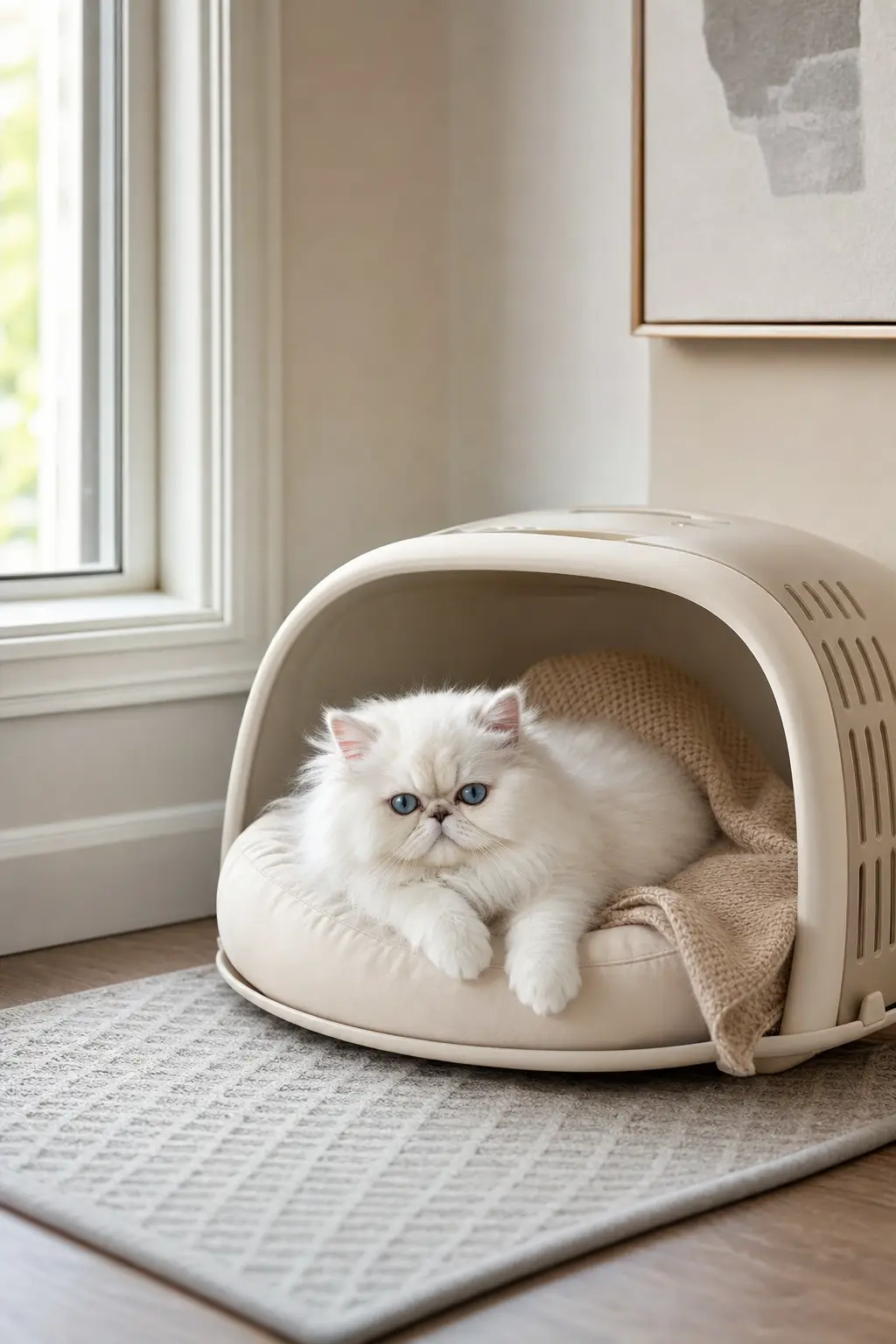
A Persian kitten does not need an elaborate room to feel comfortable. A quiet floor-level spot, a washable base, a soft bed, and a partially covered retreat are usually enough to create a cozy corner that looks polished and is practical to maintain.
This walkthrough shows how to build a washable cozy corner for a Persian kitten in layers. The goal is a space that photographs beautifully in neutral tones but still works for real life: fur, muddy paws, eye discharge, spilled water, and the occasional accident.
What you need before you begin
- A washable, non-slip mat or low-pile rug with a wipeable underside
- A machine-washable bed cover or tightly woven blanket
- A low, stable bed or open-sided hideaway
- A spare cover so one can be used while the other is being washed
- Fragrance-free laundry detergent and a soft brush or lint roller
- One or two secured decorative elements, such as framed art mounted out of reach
Choose materials with smooth surfaces and finished edges. Persian coats are long and can tangle, so avoid fringe, loose loops, rough seams, ribbons, and shaggy fabrics that may catch claws or collect debris.
Choose the right location
Start with the room, not the decor. Pick a quiet corner where the kitten can observe household activity without being in the middle of it. Avoid direct drafts, hot radiators, strong sunlight, busy doorways, and places where a dog or young child may corner the kitten.
A floor-level location is usually the easiest choice for a small kitten. It is accessible, simple to clean, and less likely to create a fall hazard. Leave a clear route in and out rather than pushing the bed tightly into a narrow recess.
Keep the cozy corner separate from the litter box. Food and water should also have their own clean area. Cats can have individual preferences about where they rest, eat, eliminate, and hide; offering distinct resources supports a calmer setup. Cornell’s guide to environmental needs for cats provides useful background on creating a suitable home environment.
Step-by-step photo walkthrough
Step 1: Photograph the empty corner
Measure the space before buying anything. You want enough room for the bed and mat, with a few inches around them for cleaning. If the corner is beside a window, check that curtain or blind cords are secured well away from the floor.
Natural light can make cream, oatmeal, taupe, and warm gray look inviting, but direct sun can overheat a small enclosed bed. Soft indirect light is a better choice than a bright sunbeam that moves across the corner during the day.
Step 2: Add a washable foundation
The foundation protects the floor from tracked litter, fur, food crumbs, and accidents. A low-pile washable rug gives a softer appearance, while a wipeable mat is more practical for kittens still learning household routines. Whichever you choose, test it by gently nudging it with your foot. If it slides easily, add a pet-safe non-slip layer that does not create loose edges.
Do not use a crinkly material that startles the kitten or a folded towel with a corner that can bunch beneath the bed. Flat and stable is the priority.
Step 3: Build the soft sleeping layer
Place a low-sided bed or firm cushion on the mat. A removable, machine-washable cover is more useful than a decorative cushion that cannot be cleaned properly. Cotton canvas, tightly woven cotton, and smooth washable fleece can all work when they are intact and free of loose threads.
For a flexible arrangement, use two layers: a fitted cover underneath and a thin throw or towel on top. The top layer can be changed quickly after grooming, wet paws, or a spill. Keep the fabric flat rather than creating a deep nest with folds that may make it harder for a very young kitten to climb out.
Step 4: Add a simple retreat
Many cats appreciate a place where they can rest partly out of view. A low-sided hide or a washable canopy can provide that feeling without turning the corner into a sealed box. Offer a clear entrance and avoid heavy blankets draped over furniture, where they could slip or trap heat.
For a Persian kitten, ventilation matters. Some Persian cats have brachycephalic facial anatomy, which can be associated with breathing and heat-management concerns. Keep the retreat cool and well ventilated, and never use it to contain a kitten that is breathing with difficulty. The International Cat Care guidance on brachycephalic cats explains why owners should pay attention to heat, breathing, and overall comfort.
Step 5: Style the neutral decor safely
Neutral decor works best when it comes from washable textiles and one or two larger, stable pieces rather than a collection of small accessories. A framed print secured to the wall, a washable basket with a broad base, or a simple wooden side table can add warmth without filling the kitten’s path.
Avoid placing ceramic vases, glass objects, dried flowers, beads, tassels, or tiny decorative items beside the bed. Live plants also deserve caution: several common houseplants are toxic to cats. Check the ASPCA cat-safe and toxic plant list before bringing greenery into the room.
Do not use scented candles, plug-in fragrances, or essential-oil diffusers to make the corner smell fresh. A clean, unscented space is the safer choice for a kitten with a sensitive respiratory system.
Step 6: Let the kitten inspect it
Set the corner up before introducing the kitten, then allow natural curiosity to do the work. Do not place the kitten inside and hold it there for a photo. Some kittens settle immediately; others prefer to sniff the edges, play nearby, and return later.
If the kitten ignores the bed, check the basics before buying another one. The location may be too exposed, the fabric may carry a strong laundry scent, or the bed may wobble. Moving it a short distance or adding a clean, familiar-smelling blanket can be more effective than adding more decor.
Material choices at a glance
| Layer | Practical choice | What to avoid |
|---|---|---|
| Foundation | Flat washable mat with a stable underside | Loose towels, slippery plastic, curled edges |
| Bed cover | Removable, tightly woven, machine-washable fabric | Fringe, open loops, exposed zippers or threads |
| Retreat | Low, ventilated hide with a wide opening | Unstable boxes, narrow tunnels, heat-trapping covers |
| Decor | Secured wall art or broad-based furniture | Small ornaments, glass, cords, toxic plants |
Make the corner easier for a Persian kitten to live with
Long coats make maintenance part of the design. A smooth sleeping surface helps you spot loose fur, litter, and damp areas quickly. Check the bed and surrounding mat regularly, and gently remove knots before they become larger mats. International Cat Care’s grooming guidance can help owners understand why regular, gentle grooming is useful for cats with longer coats.
Keep a second clean cover ready. Wash soiled fabric according to its care label with a fragrance-free detergent, rinse thoroughly, and dry it completely before returning it to the corner. Avoid adding fabric softener or strong scent boosters. A washable setup only saves time if the components can be cleaned without leaving irritating residue.
Inspect the bed after each wash for separated seams, exposed stuffing, or damaged fasteners. Replace anything the kitten can pull apart. Even a small loose thread can become a chewing or entanglement hazard.
How to tell whether the setup is working
A successful corner does not have to be used every hour. Look for relaxed visits: the kitten chooses the area, settles with a loose posture, grooms, naps, or watches the room from the bed. Occasional use is normal because cats often rotate between several preferred resting places.
If the kitten avoids the corner, change one factor at a time. Try removing the canopy, moving the bed farther from household traffic, replacing a thick blanket with a thin one, or washing the cover with an unscented product. If a kitten suddenly hides, stops eating, seems unusually tired, or shows breathing difficulty, treat that as a health concern rather than a decor problem and contact a veterinarian.
FAQ
Will every Persian kitten use a covered bed?
No. Some prefer an open cushion or a cool floor. Offer a choice without forcing the kitten into a hide. Comfort and access matter more than a particular bed style.
How often should the bedding be washed?
Wash it whenever it is visibly dirty, damp, or noticeably odorous, and keep a spare cover available. Kittens with messy eyes, digestive accidents, or heavy shedding may need more frequent changes.
Can the cozy corner go beside the litter box?
It is usually better to keep resting, eating, and toileting areas separate. Choose a quiet sleeping location away from litter odor, scattered litter, and sudden foot traffic.
Final styling check
- The mat and bed stay flat when the kitten moves.
- The entrance is open, stable, and easy to leave.
- Every soft layer can be removed and cleaned.
- There are no loose cords, strings, small objects, or strong fragrances nearby.
- The corner is cool, ventilated, and away from litter-box traffic.
- The neutral decor frames the kitten without crowding the resting space.
A thoughtful corner should look calm in a photograph and remain uncomplicated on laundry day. Start with safe, washable layers, watch what your Persian kitten actually prefers, and adjust the styling around that behavior.
Looking for more kitten-care inspiration? Explore CTkittens.com for additional ideas on welcoming and caring for your new companion.

Rachel Cohen is a journalist and producer with a passion for audio storytelling, health and science reporting, and feline companions.
A graduate of Middlebury College, Rachel spends her weekends exploring the mountains and when she isn’t outdoors or chasing a story, she can usually be found hanging out with her cats.

