
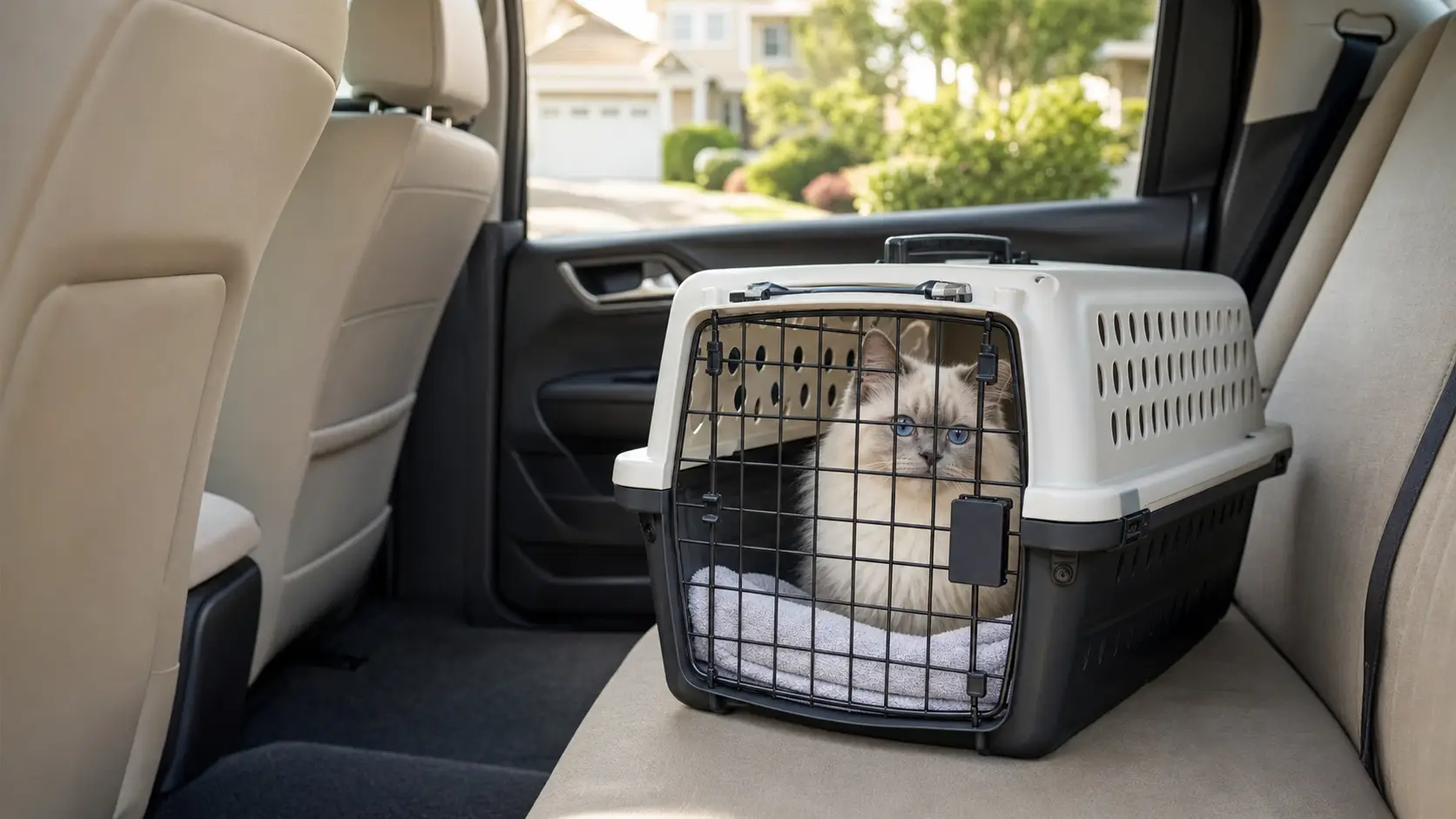
A Ragdoll Kitten Car Ride Before the First Vet Visit
Short answer: Yes, a five-minute practice car ride can help a Ragdoll kitten prepare for the first vet visit—but only after the carrier has become familiar. The goal is not to make a kitten love driving in one afternoon. It is to build a series of small, repeatable experiences that feel safe enough to handle.
Editorial note: The family in this article is an illustrative composite, created to show a practical training process rather than to present an unverified personal testimonial.
The small-wins story
The family’s first plan sounded simple: place their new Ragdoll kitten in the carrier, drive around the block, and return home before the first veterinary appointment. The kitten had other ideas. As soon as the carrier appeared, she disappeared beneath a chair.
That reaction did not mean she was difficult or that she would always hate car travel. It meant the family had combined several unfamiliar events at once: a carrier, being lifted, a closing door, engine noise, movement, and a new destination.
They reset the plan. For several days, the open carrier stayed in a quiet room with a familiar blanket inside. Treats were placed near the entrance, then just inside, but nobody pushed the kitten in. When she began entering voluntarily, the family briefly closed the door, opened it again, and rewarded calm behavior.
Only after those steps felt ordinary did they add movement. One person carried the closed carrier around the house. Another day, they placed it in the parked car with the engine off. Then they started the engine without leaving the driveway. The eventual five-minute drive was not perfect—the kitten vocalized for part of it—but she recovered quickly once they returned home. That was their small win.
Why a five-minute ride can be useful
A short practice trip gives a kitten a chance to experience the sounds, motion, and smells of the car without also having to endure a long journey. It can also show the family what needs adjustment before appointment day: an unstable carrier, excessive heat, loud music, or signs of motion sickness.
Still, the length of the ride is only one part of the preparation. A calm five-minute trip after a week of gentle carrier practice is more useful than a sudden five-minute trip that begins with chasing and force.
Ragdolls are often described as relaxed cats, but breed reputation cannot predict an individual kitten’s response. Temperament, previous handling, age, health, and past experiences all matter. Treat the kitten in front of you as an individual rather than assuming blue eyes and a placid personality will make travel easy.
A gradual plan for a Ragdoll kitten car ride
There is no required calendar. Move forward when the kitten is reasonably settled at the current step, and repeat an easier step if she becomes distressed.
1. Make the carrier part of the room
Leave the carrier open in a familiar area, away from sudden household traffic. Add a washable towel or bedding that smells like home. If the carrier is new, allow the kitten to investigate it without immediately closing the door or taking her outside.
Reward curiosity, looking inside, stepping in, or resting nearby. Food treats can help, but they are not the only reward. A gentle voice, play, or simply ending the interaction can also reinforce a positive moment.
2. Practice the door and brief lifts
Once the kitten enters comfortably, close the carrier door for a few seconds, then open it before she becomes upset. Gradually extend the time. Next, lift the carrier a short distance, set it down, and offer a break.
This stage matters because a kitten may tolerate the carrier on the floor but object to being carried in it. Keep your movements smooth, support the carrier from underneath, and avoid swinging it by the handle.
3. Rehearse the parked car
Place the secured carrier in the car with the engine off. Let the kitten experience the new space for a short period, then return indoors. On a later attempt, start the engine while remaining parked. Keep the car at a comfortable temperature and avoid loud music or sudden movements.
Do not open the carrier outdoors, even if the kitten cries. A frightened cat can escape quickly in an unfamiliar area. The carrier should remain closed until you are inside a secure room or the veterinary team directs you otherwise.
4. Take the five-minute loop
Choose a quiet route and have the driver focus on driving. The kitten should not ride loose, sit on someone’s lap, or travel in the front passenger seat. Place the carrier on a stable surface in the rear of the vehicle and follow the carrier manufacturer’s instructions for securing it. A towel over part of the carrier may reduce visual stimulation, but airflow must remain unobstructed.
Keep the first trip deliberately ordinary. There is no need to add a drive-through stop, unfamiliar visitors, or a long wait. Return home, bring the carrier inside, and allow the kitten to decompress before deciding whether to repeat the trip.
5. Build from the kitten’s response
A successful practice ride does not require complete silence. Look at the whole picture: Is the kitten breathing normally? Does she settle after the car stops? Is she willing to accept a treat later? Does she return to normal behavior at home?
If the answer is no, shorten the next session or return to carrier-only practice. Progress is not linear, and stopping before the kitten becomes overwhelmed is a useful result—not a failure.
The family’s small-wins ladder
| Stage | What they practiced | What counted as a win |
|---|---|---|
| Carrier nearby | Open carrier with bedding and treats | The kitten investigated without hiding |
| Door practice | Closing the door for a few seconds | She stayed composed and recovered quickly |
| Movement | Briefly lifting and setting down the carrier | The carrier remained steady |
| Parked car | Engine off, then engine on | The kitten tolerated the new sounds |
| Short drive | A quiet five-minute route | She returned home and settled |
Making the first vet visit easier
On appointment day, prepare the carrier before bringing the kitten into the room. Use familiar bedding, bring vaccination or adoption records, and pack a few treats if your veterinarian approves them. Follow the clinic’s instructions about feeding, especially if your kitten has a medical condition or the visit may involve sedation. Do not withhold food simply because you are traveling unless the veterinary team tells you to.
Keep the carrier closed in the car and in the waiting area. If the clinic offers a quieter waiting location or can take you directly into an exam room, ask when booking. Some cats feel more secure when the carrier is partly covered; others become hotter or more agitated, so monitor the kitten rather than treating a cover as mandatory.
If the carrier has a removable top, ask the veterinary team whether they prefer to examine the kitten in the bottom half. Never force a frightened kitten through a small carrier door when a safer handling option is available.
Tell the veterinarian about any vomiting, heavy drooling, persistent open-mouth breathing, collapse, or unusually prolonged distress. Open-mouth breathing that continues after the car stops can signal a serious problem and warrants prompt veterinary advice. Never give human medication or an old prescription to calm a kitten. If travel anxiety or motion sickness is a concern, discuss options with the veterinarian before the appointment.
What not to expect from a practice ride
- It is not a guarantee. A kitten may handle one drive well and struggle with the next, especially when the destination is a clinic.
- Quiet does not always mean relaxed. Some cats freeze rather than vocalize. Watch posture, breathing, facial tension, and recovery afterward.
- Longer is not automatically better. Extend the route only when short trips are manageable.
- Food is not a cure-all. A kitten who feels nauseated may not want treats. Do not pressure her to eat in the car.
- Breed is not a shortcut. Ragdolls can be affectionate and easygoing, but every kitten still needs individualized handling.
Quick checklist before leaving home
- Use a well-ventilated carrier large enough for the kitten to stand, turn, and lie down naturally.
- Line it with a secure, washable towel or pad that will not bunch under the kitten.
- Secure the carrier in the rear of the vehicle according to the manufacturer’s guidance.
- Keep the temperature comfortable and the route as quiet as possible.
- Bring records, clinic contact information, and a spare towel.
- Keep the kitten inside the carrier until you are in a secure veterinary setting.
Frequently asked questions
When should carrier and car practice begin?
Begin once the kitten has settled into the home and your veterinarian has not advised limiting activity. Start with the carrier indoors. There is no need to wait until the night before the first appointment.
What if my kitten cries during the five-minute drive?
Vocalizing can be a stress response, but it does not tell you everything by itself. Continue only if the kitten remains physically stable and recovers quickly. If distress escalates, return home safely, allow recovery, and discuss the reaction with your veterinarian before trying a longer trip.
Should I practice the exact route to the clinic?
Not necessarily. A quiet, short route is enough for early practice. Once the kitten is comfortable with brief drives, one rehearsal of the clinic route can help you estimate timing and identify traffic or parking problems.
The real goal is a manageable routine
The family did not turn their Ragdoll kitten into a fearless traveler. They made the next step predictable: carrier, secure car, short route, calm return home. That distinction is useful. A first vet visit can still feel unfamiliar, but a kitten who has practiced the individual pieces has fewer surprises to process at once.
For more guidance on choosing and using a carrier, preparing a kitten for veterinary care, and bringing home a Ragdoll companion, explore CTkittens.com.
Trusted guidance
This article is general educational information, not a diagnosis or substitute for veterinary advice. For additional cat-care and transport guidance, consult your veterinarian and resources from Cat Friendly Homes and the American Veterinary Medical Association.

Rachel Cohen is a journalist and producer with a passion for audio storytelling, health and science reporting, and feline companions.
A graduate of Middlebury College, Rachel spends her weekends exploring the mountains and when she isn’t outdoors or chasing a story, she can usually be found hanging out with her cats.


Honestly, the bit about quiet cats possibly freezing instead of relaxing got me, cuz I always assumed no meowing meant they was totally fine.