Scent Swapping After a Vet Visit: A Ragdoll Kitten Guide for Connecticut
A Ragdoll kitten may come home smelling like the clinic, disinfectant, medication, or unfamiliar animals. That changed scent can make a resident cat hesitate, hiss, or behave as though the returning kitten is a stranger.
The safest approach is simple: let the kitten recover separately, begin scent swapping after the kitten is alert and medically stable, and follow your veterinarian’s instructions before encouraging contact. A scent swap is not a way to cover up a smell or force cats to accept one another. It is a gradual way to restore familiar household scent without adding the pressure of a face-to-face reunion.
This guide is for routine post-visit transitions. Your veterinary clinic’s discharge instructions take priority, especially after surgery, anesthesia, treatment for a contagious illness, or application of a flea and tick product.
Why a veterinary visit can change the relationship between cats
Cats use smell to identify people, animals, and safe places. A kitten returning from a veterinary hospital may smell different enough that a resident cat becomes cautious. The reaction is often called non-recognition aggression. It does not necessarily mean the cats have developed a lasting conflict.
Ragdolls are often described as social and gentle, but breed traits do not predict how an individual kitten will respond to stress. A young kitten may be tired, sore, or unsettled after travel. Its longer coat may also hold unfamiliar odors. The resident cat may be stressed by the carrier, the disruption to routine, or the kitten’s unusual behavior.
Giving both animals time to process the change is kinder and safer than holding them nose-to-nose. The goal is to let the familiar home scent return gradually while protecting the kitten’s recovery.
Prepare before you leave for the appointment
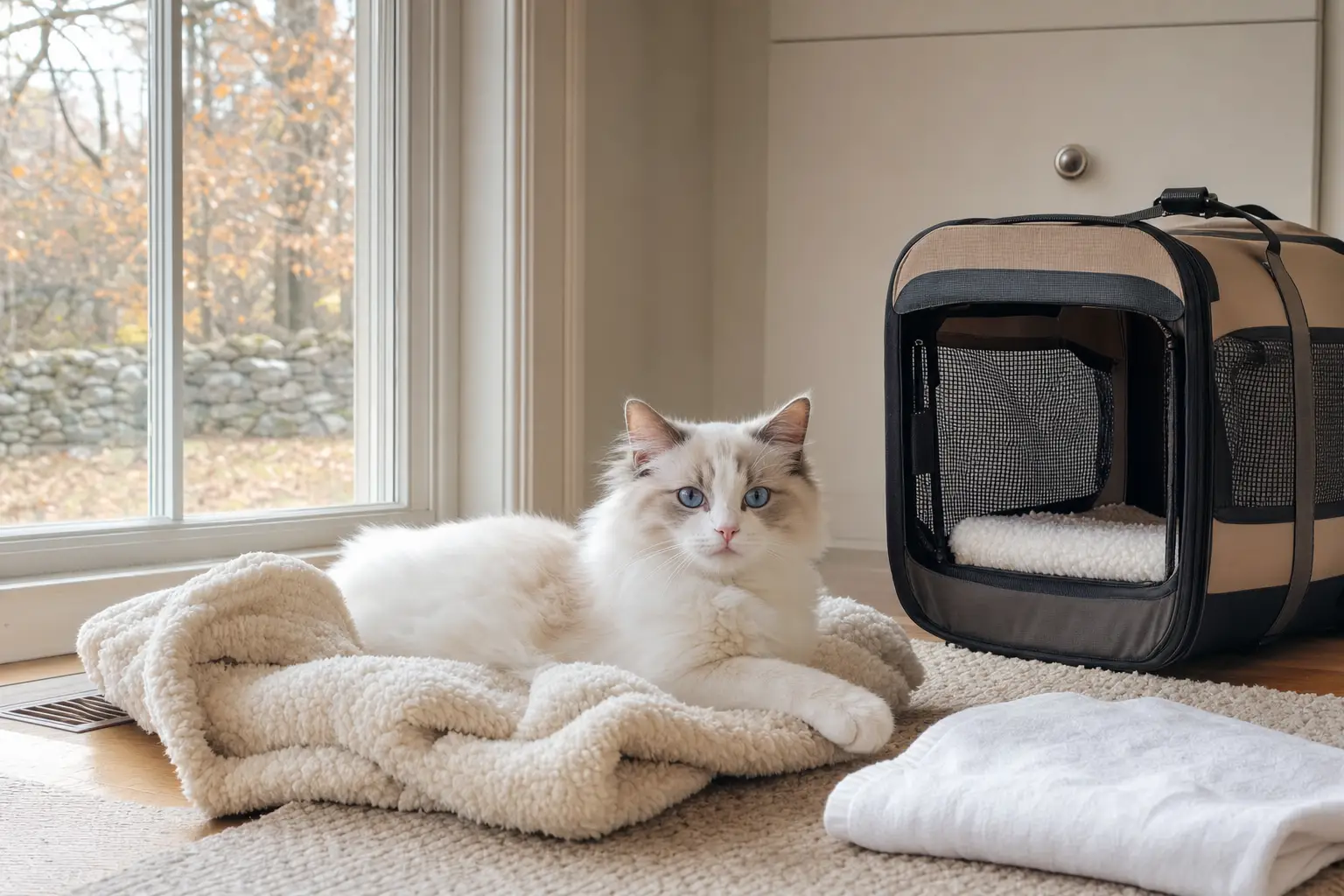
If you know your Ragdoll kitten will be visiting the veterinarian, prepare a quiet recovery area before leaving. Use a room with a closing door and provide water, a litter box, comfortable bedding, and food if the clinic says normal feeding is appropriate. After surgery or another procedure, remove climbing opportunities and follow any activity restrictions.
Ask the clinic before you leave:
- When can the kitten eat, drink, walk, and interact with other pets?
- Does the kitten need medical isolation?
- Are there restrictions related to an incision, bandage, medication, anesthesia, or topical parasite treatment?
- Which symptoms should prompt a call or emergency visit?
Have a clean, unscented cotton cloth available for scent work. Do not perfume it, wash it with strongly scented products, or use essential oils. Strong fragrances can add another unfamiliar smell and some essential oils are unsafe for cats.
How to start scent swapping after a vet visit
1. Separate the kitten while you assess recovery
Bring the kitten directly to the prepared room instead of opening the carrier in a busy shared area. Keep the resident cat away from the carrier entrance. Let the returning kitten rest, and check that it is breathing comfortably and responding normally according to the clinic’s instructions.
Sleepiness can be expected after some procedures, but do not assume every behavior is a normal side effect. Call the veterinary clinic promptly for breathing difficulty, collapse, uncontrolled bleeding, pale or bluish gums, repeated vomiting, severe distress, or any concern about the incision. If the kitten is too groggy or uncomfortable to participate, postpone scent work.
2. Offer a small, familiar scent exchange
Once the kitten is alert and the veterinarian has not required isolation, take a clean cloth and gently rub it over the kitten’s cheeks, chin, or shoulders if the kitten accepts handling. Avoid the incision, bandage, injection sites, eyes, ears, and any painful area. Never restrain the kitten for this exercise.
Place the cloth near, but not directly beside, the resident cat’s food or resting area. The resident cat should be able to investigate or walk away. Then place a separate cloth carrying the resident cat’s scent in the kitten’s room. If either cat becomes tense, remove the cloth and try again later from a greater distance.
A calm glance, sniff, or quiet departure is a good response. Hissing, growling, hard staring, crouching, tail lashing, or swatting means the scent is too close or the session is moving too quickly.
3. Pair the scent with something positive
When each cat can notice the other’s scent without becoming distressed, offer a small meal, treat, quiet play session, or gentle attention. Keep the reward far enough away that the cat can remain relaxed. This teaches the cats that the other animal’s smell predicts something safe rather than an unwanted confrontation.
Do not withhold food to make a cat approach the scent. A kitten recovering from illness or anesthesia may have special feeding instructions, and appetite changes should be discussed with the clinic.
4. Gradually exchange bedding
After the cloth exchange goes well, try swapping small blankets or beds for short periods. Use items that are clean and dry. Do not move bedding between animals if the veterinarian suspects a contagious disease, external parasites, or another condition that could spread through shared materials. Ask the clinic how to handle laundry and isolation first.
You do not need to make the cats smell identical. The useful goal is a gradual return to a shared household scent, not the removal of every clinic odor immediately.
5. Add controlled visual contact
When both cats are eating, resting, and behaving normally on opposite sides of a closed door, consider a brief visual introduction through a secure barrier. A baby gate may not safely contain a determined kitten, so use the setup that prevents climbing, squeezing through, or pawing. Keep the session short and end while both cats are still calm.
If the kitten had surgery or a serious illness, do not allow visual contact to turn into chasing or jumping. Physical recovery rules come before social progress.
6. Return to supervised contact
When barrier sessions are uneventful, allow a brief reunion in a quiet room with escape routes and no crowding. Keep your hands out of a fight; use a barrier or calmly separate the cats if tension rises. Do not punish hissing. Punishment can make the other cat and the room feel less safe.
Some pairs are comfortable again within hours. Others need a day or several days of gradual exchanges. Progress is measured by relaxed behavior, not by a fixed timetable.
A seasonal scent-swap guide for Connecticut
The basic routine stays the same throughout the year, but Connecticut’s weather and household patterns can affect recovery and reintroduction.
| Season | Helpful adjustment |
|---|---|
| Winter | Keep the recovery room warm and draft-free, and bring the kitten indoors promptly after travel. Avoid heating pads unless the veterinarian specifically recommends one, because a sedated or weak kitten may not move away from excessive heat. Holiday visitors and strong fragrances can make a quiet room especially valuable. |
| Spring | Outdoor pollen, muddy paws, and the start of flea and tick activity can add unfamiliar smells. Use only parasite prevention recommended for the kitten by your veterinarian. If a topical product was applied, ask when contact with other pets is safe. |
| Summer | Never leave a kitten in a parked car. Travel directly to a cool, ventilated home, then provide a comfortable recovery room away from hot windows and heavy household activity. Heat stress can look different from ordinary post-visit tiredness, so call the clinic if the kitten seems weak, pants persistently, or cannot settle. |
| Fall | Shorter days, storms, visitors, candles, and seasonal decorations can change the indoor environment. Keep the scent routine simple and avoid scented candles, potpourri, and essential oils near either cat. |
Seasonal smells are not a reason to mask the clinic odor with sprays or fragrances. Clean, familiar bedding and a predictable routine are safer tools.
Common scent-swapping mistakes to avoid
- Forcing a reunion: Placing cats together before both are ready can create a stronger negative association.
- Bathing immediately: A bath can add stress and may be unsafe after a procedure. Do not bathe or heavily groom a kitten unless the veterinarian approves it.
- Touching a surgical area: Collect scent only from comfortable, unaffected areas.
- Ignoring medical isolation: Scent swapping does not replace precautions for infection, parasites, or other transmissible conditions.
- Moving too fast after one calm moment: A cat may tolerate a cloth but not a close encounter. Increase contact in small steps.
- Interpreting hissing as failure: Hissing is communication. Increase distance, allow recovery, and try again later without punishment.
When to contact your veterinarian or a behavior professional
Call your veterinarian if the returning kitten seems painful, unusually withdrawn, refuses food or water beyond the period your clinic described, has trouble urinating, or develops any concerning post-treatment symptom. Pain and illness can make a normally tolerant cat defensive.
For behavior concerns, seek help if the cats repeatedly attack, cannot relax even when separated, stop eating, avoid the litter box, or remain highly distressed after gradual reintroduction. A veterinarian can check for medical causes and, when needed, recommend a qualified feline behavior professional.
Frequently asked questions
How soon can I begin scent swapping?
Begin only after the kitten is awake enough to respond normally, comfortable enough to handle gentle contact, and cleared for interaction under the clinic’s instructions. For some routine visits that may be later the same day; after surgery or illness, it may be longer.
What should I do if my resident cat hisses at the cloth?
Move the cloth farther away or remove it and let the resident cat settle. Try again later with a smaller item or a shorter session. Never push the cloth toward the cat’s face or punish the reaction.
Can I use this routine after spaying or neutering?
Yes, scent exchanges can be useful, but protect the incision and follow all restrictions on handling, jumping, play, and contact with other pets. Ask your veterinarian when supervised interaction is appropriate.
What if the clinic suspects something contagious?
Follow the clinic’s isolation and cleaning instructions before sharing bedding, cloths, litter tools, or grooming items. Ask whether scent work should be postponed or limited to items that can be safely cleaned.
Further reading and veterinary guidance
For additional context, see the VCA overview of non-recognition aggression in cats, the ASPCA’s general post-surgery care guidance, and the Cornell Feline Health Center. These resources do not replace instructions from the clinic treating your kitten.
Preparing for life with your Ragdoll kitten
A calm recovery space, gradual scent exchanges, and patience can make the return from a veterinary visit much easier for every cat in the home. When you are planning for a Ragdoll kitten in Connecticut, explore CTkittens.com for more guidance and information.

Rachel Cohen is a journalist and producer with a passion for audio storytelling, health and science reporting, and feline companions.
A graduate of Middlebury College, Rachel spends her weekends exploring the mountains and when she isn’t outdoors or chasing a story, she can usually be found hanging out with her cats.