Short answer: Yes, vertical space can work beautifully for two Persian kittens—but the goal is not to make them share one high perch. The calmer approach is to provide several stable, easy-to-reach resting places, separate routes, and enough floor-level resources that neither kitten has to compete.
A good setup gives each kitten the option to climb, watch, nap, or leave. It should feel like an invitation, not a test of athletic ability.
Can vertical space work for two Persian kittens?
Vertical enrichment can make a home feel larger by giving cats more places to rest and observe. It may also help a cautious kitten move away from activity without disappearing completely. The key is choice: one kitten should be able to use a perch while the other passes by, approaches, or settles somewhere else.
Two cats do not automatically want to share every resource. Even kittens who play together may prefer separate beds, food stations, litter areas, or elevated viewpoints. A single cat tree can be useful, but it should not be the only retreat in the room.
Persians also vary widely in confidence, coordination, and energy. Breed alone cannot tell you whether a particular kitten will enjoy height. Some will climb readily; others will prefer a low platform beside a sofa. Plan for the individual cats in front of you rather than trying to create a dramatic tower they may not use.
These ideas reflect the choice, safety, and resource-distribution principles described in the feline environmental-needs guidelines published in the Journal of Feline Medicine and Surgery.
Start with a cat-friendly design brief
Before buying shelves or rearranging furniture, decide what the space needs to accomplish. A practical design brief for two Persian kittens includes:
- Two or more resting options: Give each kitten a comfortable place to settle, with at least one option that is not directly beside the other.
- More than one route: Avoid a high platform that can only be reached or exited through a narrow bottleneck.
- Low, stable steps: Kittens are still developing coordination. Broad platforms and short jumps are safer than narrow ledges and long leaps.
- A clear retreat: Each kitten should be able to move away without being cornered behind furniture or in a dead-end cubby.
- Easy cleaning: Choose washable covers and surfaces that do not trap long fur, loose litter, or food crumbs.
- Separate essential resources: Elevated beds do not replace separate access to food, water, litter boxes, scratching areas, and quiet resting spaces.
Think of the room as a small network rather than a single destination. If one kitten is on the highest shelf, the other should still have a comfortable route through the room without having to pass directly underneath or push past it.
Designing beautiful vertical space for two cats
Use visual symmetry with functional independence
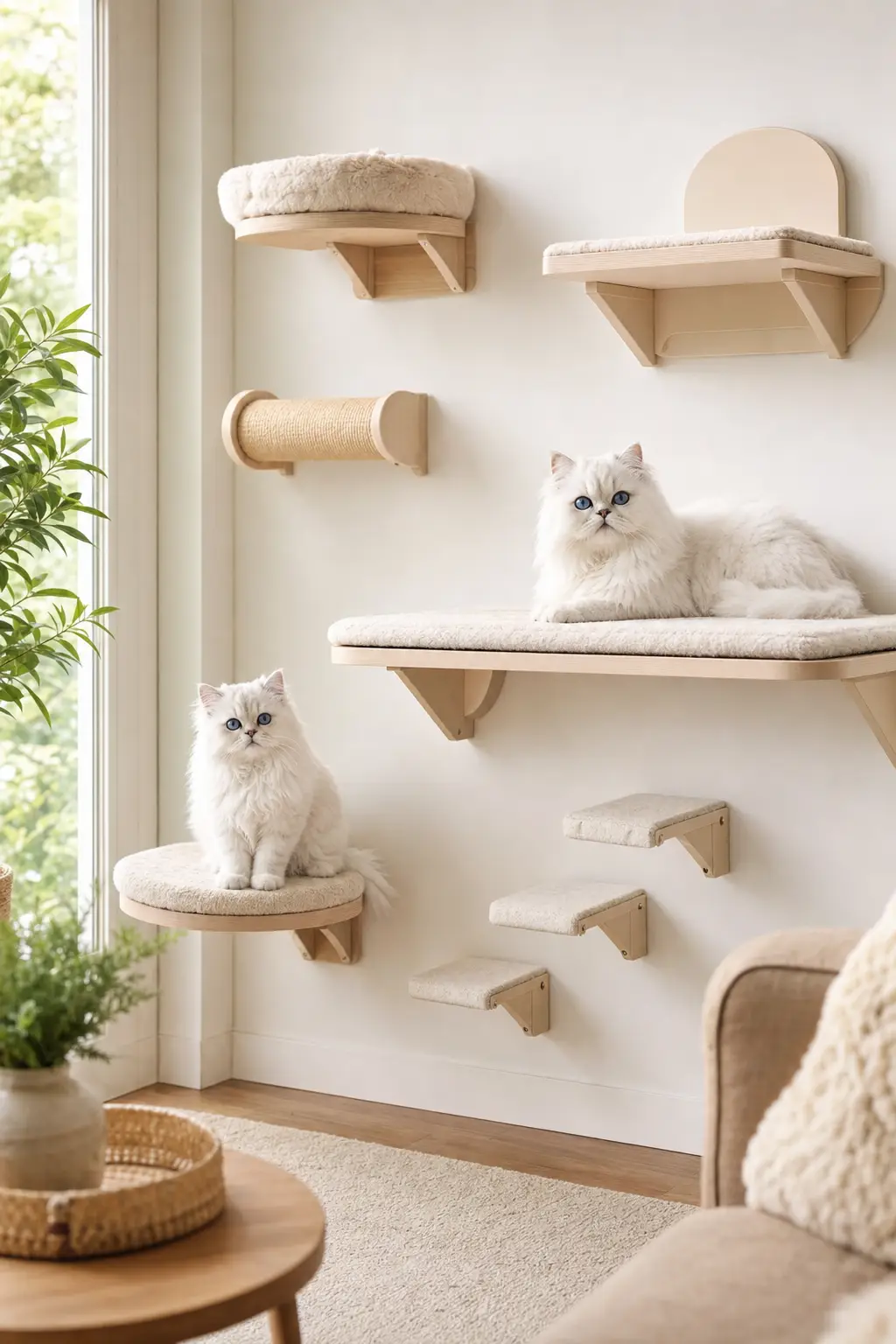
A balanced arrangement can look elegant while still giving the kittens different choices. For example, place two broad wall shelves on the same wall, but stagger them slightly so the cats are not forced to sit nose-to-nose. Add a lower platform near a window and a floor-level bed beneath, leaving the window shelf optional rather than essential.
This creates visual harmony without making one narrow landing the only attractive spot. A shared, wide bed can be included as a bonus for kittens who choose to cuddle, but do not count it as both cats’ only sleeping area.
Build a gentle height ladder
Begin with a low step that a kitten can reach from the floor or from sturdy furniture. Add a second platform only if both kittens use the first comfortably. The final height should be based on the room, the construction of the furniture, and the cats’ coordination—not on an arbitrary number.
Every landing should be large enough for a kitten to turn around, settle, and leave without slipping. Use secure wall anchors for mounted shelves, check freestanding towers for wobbling, and choose non-slip surfaces. A pretty perch that shifts when a kitten lands on it can quickly become an object to avoid.
Keep the best routes open
Do not place a shelf where it blocks a doorway, traps a kitten beside a window, or forces one cat to cross another cat’s favorite path. A perch near a window can be enriching, but use secure screens and keep cords, blind pulls, and dangling toys out of reach.
A useful rule is to provide a choice of direction at important points. If a kitten can climb up but has only one narrow way down, the platform may become a guarding point. Moving a nearby piece of furniture, adding a lower step, or opening a second route can make the same arrangement much less stressful.
Gentle fixes when one kitten dominates the setup
Resource competition is not always dramatic. One kitten may quietly sit in the best location, block a route with its body, stare at the other kitten, or rush toward a perch whenever the other approaches. The second kitten may respond by avoiding the area rather than fighting.
Try these adjustments in order:
- Watch before changing everything. Notice when the tension occurs, which resource is involved, and whether the same kitten is always giving way.
- Add a nearby alternative. A second bed across the room may help, but a similar perch close to the popular one is often more useful because it preserves the view or height the kittens value.
- Remove bottlenecks. Move baskets, stools, or decorative items that turn a wide route into a narrow passage.
- Spread out daily resources. Feed kittens in separate locations if meals create tension. Provide multiple water bowls and scratching areas. For litter boxes, a commonly used starting point is one box per cat plus one, placed in quiet locations with easy exits.
- Reward voluntary exploration. Place a treat, toy, or familiar blanket on a low platform and let the kitten investigate. Avoid repeatedly lifting a reluctant kitten onto a high shelf; that can make the area feel unpredictable.
- Give each kitten individual attention. Short, separate play sessions can reduce the pressure to compete for your hands, toys, or praise.
Do not punish hissing, swatting, or avoidance. Those behaviors are communication. Scolding can increase anxiety while leaving the original problem—a blocked route or scarce resource—unchanged.
Persian-specific safety details
Persian kittens often have long, fine coats that can collect on fabric, carpet, and textured platforms. Vacuum or wash resting surfaces regularly, and inspect for loose threads or loops that could catch claws. Smooth, wipeable materials with a secure, non-slip covering are usually easier to maintain than deep shag or unraveling fabric.
Some Persian cats have shortened facial structures that can make breathing more difficult, especially in warm or poorly ventilated spaces. Avoid enclosed perches beside heaters or in direct, intense sun. Watch how each kitten breathes during play and after climbing. Open-mouth breathing, obvious breathing effort, bluish or gray gums, collapse, or severe lethargy requires urgent veterinary attention.
Plan for adult size even when the cats are tiny. A shelf that seems roomy today may become cramped as the kittens grow. Avoid placing a high platform above fragile decorations, hot appliances, or furniture with sharp edges. Inspect the setup regularly because kittens can loosen coverings, chew cords, and turn safe-looking objects into hazards.
How to tell whether the arrangement is working
A successful setup does not require the kittens to use every shelf together. Look for relaxed, flexible behavior: each kitten can rest, groom, play, and leave; play includes pauses and role changes; and neither cat consistently hides or waits for the other to move.
Slow down and reassess if you see repeated chasing, hard staring, blocking, cornering, persistent hissing, swatting that escalates, or one kitten abandoning a room. Less obvious signs can include hiding more than usual, reduced appetite, changes in litter-box use, overgrooming, or urine marking. These signs can have medical causes as well as behavioral ones, so a veterinary examination is sensible when a change is sudden, persistent, or severe.
If the kittens are repeatedly fighting, separate them safely rather than reaching between them. Give each cat its own resources and speak with a veterinarian or qualified feline behavior professional about a gradual behavior plan. More shelves alone will not resolve significant conflict.
FAQ
Can two Persian kittens share one cat tree?
They can, especially if they choose to rest together, but one cat tree should not be their only elevated option. Add a separate low bed or perch and make sure neither kitten can block the other’s way down.
What if one kitten ignores every shelf?
That is not necessarily a problem. Try a lower platform near a favored resting place, use a familiar blanket, and reward small steps such as looking at or touching the platform. Some cats prefer floor-level comfort and should not be pressured to climb.
Should I put food on a high shelf?
Usually, no. Food and water should be easy to reach and placed where kittens can eat without being watched or cornered. Elevating a bowl does not solve tension between cats and may make access harder for a kitten with limited confidence or mobility.
A calmer home starts with more than height
The most beautiful vertical space for two cats is not the tallest one. It is the arrangement that gives both Persian kittens safe choices, comfortable landings, clear exits, and room to be together or apart.
Start low, observe carefully, and make one change at a time. For more guidance on welcoming and caring for kittens, explore the helpful resources at CTkittens.com.

Rachel Cohen is a journalist and producer with a passion for audio storytelling, health and science reporting, and feline companions.
A graduate of Middlebury College, Rachel spends her weekends exploring the mountains and when she isn’t outdoors or chasing a story, she can usually be found hanging out with her cats.