
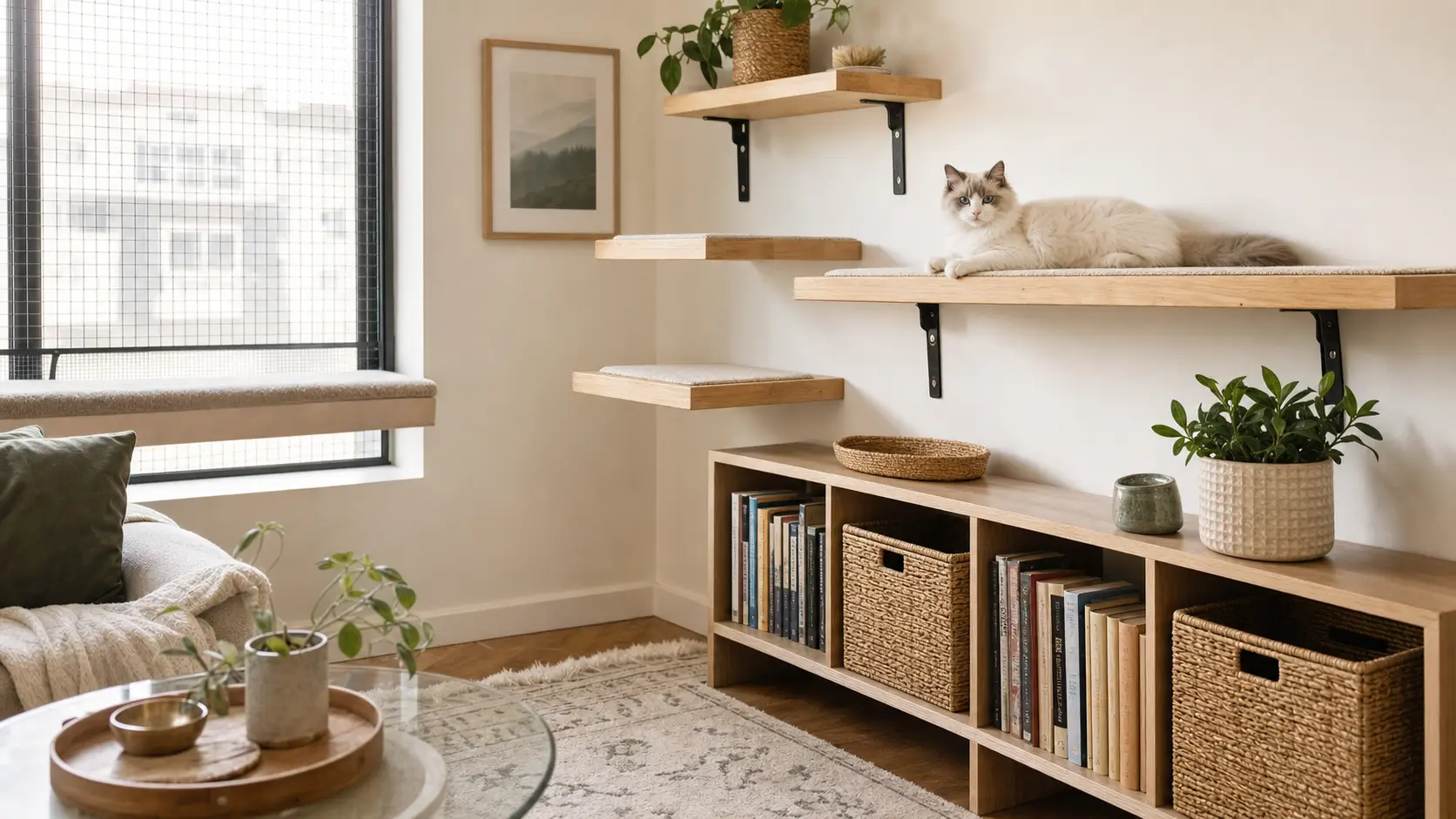
Ragdoll Kittens: A Weekend Reset for Vertical Space on a Modest Budget
When floor space is limited, the best place to expand your kitten’s world may be above it. Creating vertical space for Ragdoll kittens does not require a custom cat wall or a room full of bulky equipment. With one stable piece of furniture, a few well-anchored platforms, and careful styling, you can build a safer climbing route in a single weekend.
The goal is not to make your home look like a pet store. It is to give your Ragdoll kitten choices: a low place to launch, a middle perch for watching household activity, and a comfortable retreat where nobody will accidentally step or sit on them. The setup should also remain useful as your kitten grows into a much larger adult cat.
Why vertical space matters to Ragdoll kittens
Cats often feel more secure when they can observe a room from above. A raised perch can provide distance from busy foot traffic, dogs, young children, or other cats without removing the kitten from family life. It also adds opportunities for climbing, stretching, scratching, resting, and gentle play.
That does not mean every Ragdoll wants the highest shelf in the house. Ragdolls are often described as calm and people-oriented, but individual personalities vary. Some kittens prefer a low window bed; others want a tall lookout. Offer several options and let your kitten choose.
The AAFP and ISFM feline environmental needs guidelines describe safe places, separated resources, play, scratching, rest, and positive human interaction as important parts of a cat-friendly environment. A vertical setup supports those needs, but it does not replace floor-level food, water, litter, hiding, and play areas.
Start with a cat-eye audit of the room
Before buying anything, spend ten minutes looking at the room from kitten height. Sit on the floor and identify what your kitten can already climb, what looks unstable, and where a route could begin and end.
- Find the natural launch point. A low, sturdy bookcase, ottoman, bench, or broad cat tree can serve as the first step.
- Choose a quiet observation zone. A wall near a window or family seating area often works better than a busy hallway or a place beside a loud appliance.
- Locate wall studs and power cords. Mark safe fixing points before drilling. Keep platforms away from hot radiators, cooking surfaces, ceiling fans, and dangling cables.
- Protect an escape route. Do not create narrow gaps behind furniture where a kitten could become trapped. Leave a clear way down instead of designing a route that ends at one high ledge.
Think in terms of a gentle staircase rather than a single dramatic tower. A kitten that is still developing coordination benefits from intermediate landings. If your kitten hesitates, add another step or lower the highest platform rather than encouraging a risky leap.
A simple weekend plan
Friday evening: measure and plan
Choose one wall or corner rather than trying to redesign the entire room. Measure the available width and sketch a route with three zones:
- Launch zone: a low, stable surface that cannot rock or slide.
- Climbing zone: one or two shelves, a secured bookcase, or a compact cat tree.
- Resting zone: a broad perch or padded platform with a view and enough room for an adult Ragdoll.
For a shelf system, choose platforms deep enough for your cat to stand, turn, and settle comfortably. A surface that suits a tiny kitten may feel cramped once the cat is fully grown. Check the manufacturer’s weight rating, and remember that a moving cat puts more force on a shelf than a motionless object does.
Sketch the route before shopping. This prevents the common mistake of buying attractive shelves that do not connect into a usable path.
Saturday: build the safe structure
If you already own a sturdy bookcase, begin there. Secure tall furniture to the wall with appropriate anti-tip hardware, remove anything fragile from the upper levels, and use the shelves as broad landings. A low bookcase can provide more useful climbing space than a narrow decorative ladder.
For wall shelves, follow the hardware manufacturer’s instructions. Fix brackets into studs when possible, or use wall anchors rated for the surface and expected load. Adhesive strips alone are not a reliable support system for a growing cat. Before introducing the kitten, press down on every platform, check for movement, and inspect for exposed screws, sharp corners, splinters, and unfinished edges.
Add traction with washable mats or pieces of low-pile carpet secured so they cannot slide. Avoid loose blankets that bunch underfoot. A small amount of texture helps a kitten feel confident without turning each shelf into a difficult-to-clean cushion.
Keep spacing conservative. There is no universal height that is safe for every kitten, so begin with modest steps and observe how your cat moves. A route with several close landings is usually more practical than shelves separated by ambitious gaps.
Sunday: make it attractive and test it
This is where function and style can meet. Repeat one or two finishes—such as light wood, black brackets, or neutral fabric—so the setup feels intentional. Use a washable cushion on the resting platform, and place baskets on the floor or lower shelves to store toys and grooming supplies.
Keep decorative objects away from the route. A ceramic vase, framed glass, or trailing plant can become a falling hazard when a kitten starts exploring. If you keep houseplants nearby, check each variety against the ASPCA’s cat plant safety list.
Introduce the route gradually. Place a treat or toy on the lowest platform, then allow the kitten to investigate at its own pace. Do not lift the kitten onto a high shelf and leave it there. For the first several days, watch how the kitten climbs down as carefully as how it climbs up. A setup is successful when the cat can use it confidently without constant intervention.
Design details that work especially well in a modest home
A beautiful cat area usually looks less like a separate installation and more like a thoughtful extension of the room.
- Use one visual line. Align shelves with nearby artwork or the top edge of a bookcase instead of scattering them randomly.
- Choose washable materials. Removable mats and zippered covers make fur, dust, and occasional accidents easier to manage.
- Keep the palette calm. Natural wood, cream, charcoal, or muted green can blend with existing furniture while letting a blue-eyed Ragdoll remain the focal point.
- Include a hiding option. A covered basket or enclosed cubby on a low or middle level gives the kitten privacy without forcing it to climb high.
- Leave some wall empty. Negative space makes a small room feel more open and gives the climbing route visual breathing room.
Ragdolls can become substantial cats, so favor wide, stable platforms over delicate-looking ledges. A simple shelf with a well-fitted washable mat is often more useful than an ornate perch that is too narrow.
Illustrative modest-budget breakdown
Costs vary by region, materials, and what you already own. The following is a planning example rather than a fixed shopping list:
| Item | Illustrative cost |
|---|---|
| Existing bookcase or sturdy console | $0 if already owned |
| Two or three shelves with brackets | $30–$70 |
| Wall anchors or anti-tip hardware | $10–$20 |
| Washable traction mats | $10–$20 |
| Window perch or padded resting surface | $20–$40 |
If you already have a stable piece of furniture, you can build the first version for roughly $50–$110 and add improvements later. A secondhand item can reduce the cost, but inspect it carefully for wobbling, damaged hardware, splinters, peeling finishes, and odors that do not disappear after cleaning.
Common mistakes to avoid
- Building for the kitten instead of the adult cat: Recheck the weight rating and platform size as your Ragdoll grows.
- Using height without a route: One high perch is less useful if the kitten has no comfortable way to reach or leave it.
- Skipping window safety: A window perch is not a substitute for a secure, properly fitted screen. Never rely on the perch to prevent a fall.
- Putting resources all in one place: Keep litter, food, water, sleeping areas, and scratching options sensibly separated rather than creating one crowded cat corner.
- Leaving string toys out: Interactive toys should be put away after play unless they are specifically designed for unsupervised use.
- Assuming a quiet kitten is always comfortable: A kitten that stays hidden, avoids the route, or shows reluctance may need a lower setup, a quieter location, or veterinary advice if the change is sudden.
FAQ
Does every Ragdoll kitten need wall-mounted shelves?
No. Vertical enrichment can be a secure cat tree, a reinforced bookcase, a window bed, or a combination of low furniture. Wall shelves are useful when floor space is tight, but they are not essential if another arrangement gives your kitten safe choices.
How high should the shelves be?
There is no single correct height. Start low, add intermediate landings, and watch the kitten’s confidence, balance, and route down. The best setup is one your cat uses comfortably, not the one that reaches closest to the ceiling.
Can renters create vertical space without drilling?
Yes. Consider a wide, stable cat tree or a properly secured freestanding bookcase. Tension-pole products should be installed exactly as directed and checked often for movement. Do not use an unstable stack of boxes or furniture as a substitute for a designed climbing structure.
What if my kitten ignores the new setup?
Give it time and make the lowest level appealing with a familiar blanket, a treat, or a short play session. You may also need to move the setup closer to a favorite window or family seating area. Never force the kitten onto a high platform; choice is part of the enrichment.
A small reset with a lasting payoff
A weekend is enough to make a meaningful change: secure one existing piece of furniture, add a few well-planned landings, soften the surfaces, and remove hazards. The result gives your Ragdoll kitten more room to climb and observe while keeping your home calm, attractive, and practical.
For more thoughtful kitten-care ideas and inspiration, explore CTkittens.com.

Rachel Cohen is a journalist and producer with a passion for audio storytelling, health and science reporting, and feline companions.
A graduate of Middlebury College, Rachel spends her weekends exploring the mountains and when she isn’t outdoors or chasing a story, she can usually be found hanging out with her cats.


My takeaway is to plan the route down before chasing height, cuz kittens be fearless going up and suddenly forget how gravity works lol.
My takeaway is to plan the route down before adding height, cuz my cat can climb anything but suddenly forgets how gravity works lol.