
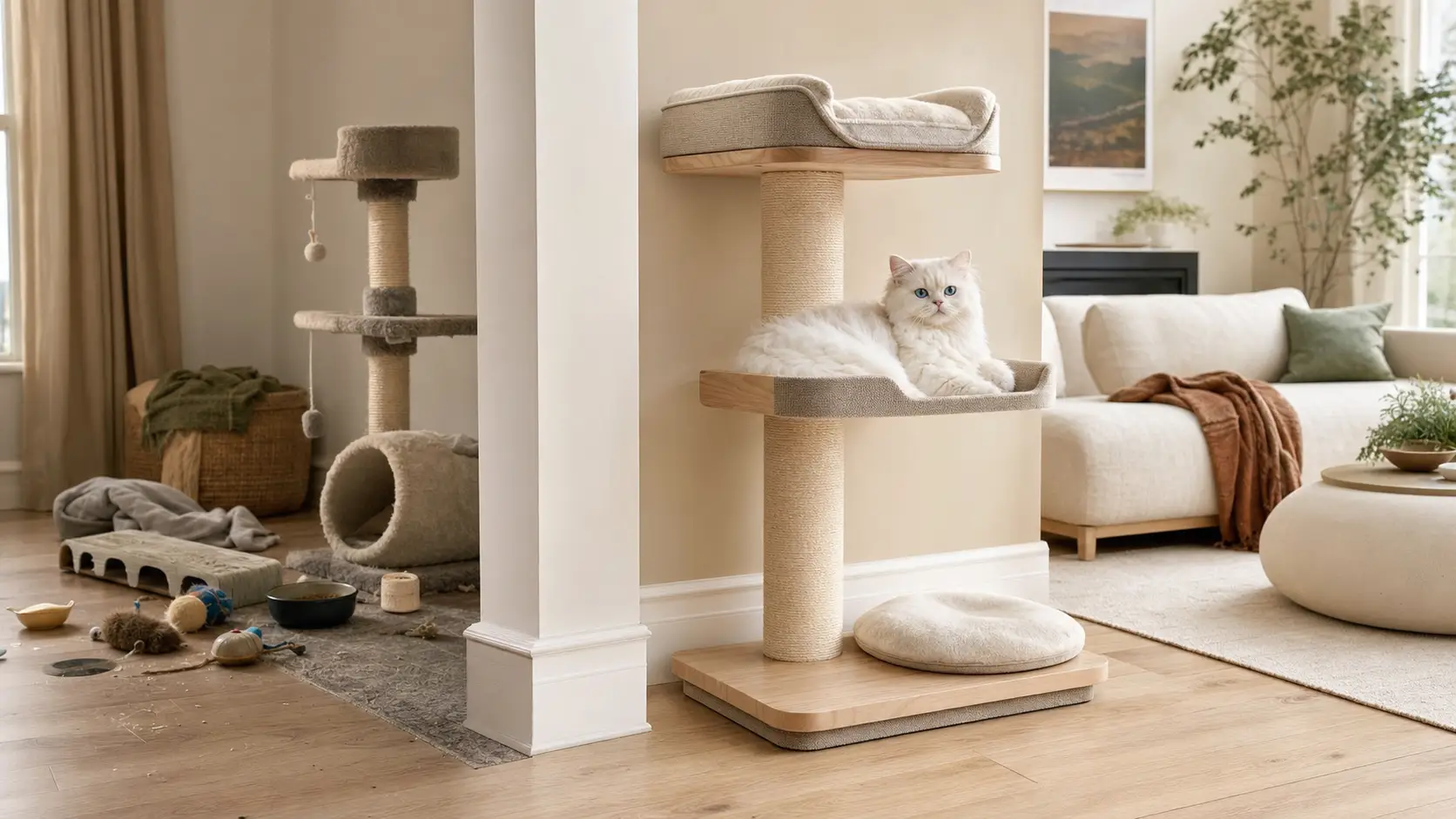
Persian Kittens Before and After: An Elegant Cat Tree in the Family Room
The best Persian kitten cat tree does not have to look like a brightly colored pet-store obstacle course. In a shared family room, it can work as a quiet piece of furniture: attractive enough to sit beside the sofa, useful enough to provide climbing, scratching, hiding, and resting spaces, and practical enough to clean when a long coat sheds.
This before-and-after story is a design concept rather than a report of one particular home. The goal is simple: turn a visually busy cat corner into a calm, intentional part of the room without asking the kitten to give up the features that make a cat tree worthwhile.
The design brief: elegant for people, useful for a kitten
Start with the room rather than the product. A shared family room usually has several competing needs: clear walkways, comfortable seating, television sightlines, storage, and a place where a kitten can retreat when the room becomes noisy. The cat tree should support those needs instead of creating another obstacle.
For a Persian kitten, comfort and access deserve special attention. Persian cats have long coats that can collect dust and become tangled, while some have shortened muzzles that make heat, exertion, or stuffy enclosed spaces less comfortable. Individual cats vary, so the tree should offer both open resting platforms and a low, easy-to-reach retreat.
- A stable base: Choose a broad, heavy design that does not wobble when a kitten jumps or changes direction.
- Multiple elevations: Include a low platform for easy access and a higher perch for observation, rather than relying on one tall leap.
- A real scratching surface: Sisal or another durable scratching material gives the tree a job beyond decoration.
- Washable comfort: Removable cushions or wipeable surfaces are more useful than delicate upholstery.
- A calm visual presence: Neutral fabric, warm wood, and simple lines help the tree blend with existing furniture.
Before: the cat tree is present, but the room feels divided
Imagine the “before” scene: a tall cat tower is pushed into the nearest corner, partly blocking a floor lamp. Its platforms are covered in several competing colors, a dangling toy hangs near the sofa, and a blanket has been draped over the base to make it softer. The family can see the tower from every seat, but the kitten does not have a clear route to it.
Nothing is necessarily wrong with the cat tree itself. The problem is the relationship between the tree and the room. The corner feels accidental, the walking path is narrow, and the soft accessories make the tower harder to clean. If the tree rocks or the top perch is too close to a curtain, the arrangement also creates avoidable safety concerns.
The first improvement is not a new color. It is editing. Remove loose ribbons, excessive cushions, and decorative objects that can fall or become chewable. Then observe how the family actually uses the room. A cat tree that looks perfect in an unused corner may be ignored if it is far from the household’s activity.
After: a quiet cat zone that belongs to the room
In the “after” version, the tree sits beside the edge of the family’s activity rather than in the middle of it. A sofa arm or low cabinet visually frames the space, while the tree remains far enough from the main walkway to avoid being bumped. A washable ivory or oatmeal cushion echoes the room’s textiles, and one muted accent—such as sage, clay, or charcoal—connects the cat zone to the rest of the palette.
The result is not a showroom display. It is a small piece of functional architecture. The kitten can climb, scratch, watch the room, and step away from noise. Adults can pass through without catching a shoulder on a platform. The color scheme is restrained, but the cat still has texture and choice.
| Before | After |
|---|---|
| The tower is placed wherever space is left over. | The tower is positioned beside family activity but outside the main traffic path. |
| Several colors and loose accessories compete for attention. | One neutral base and one accent color make the cat zone feel intentional. |
| The highest perch is the only appealing resting spot. | Low, middle, and high options allow the kitten to choose how exposed it feels. |
| Soft items are difficult to remove and clean. | Fabrics are washable, replaceable, or easy to vacuum. |
How to style a Persian kitten cat tree without losing function
1. Pick the position before choosing the accessories
Look for a location with natural visibility. Many cats like to monitor the household, so a tree beside the sofa, near a quiet window, or opposite the family’s usual seating may be more appealing than an isolated corner. Avoid placing it directly beside a frequently opened door, a heater, or an unsecured window.
Leave enough room around the base to vacuum and to inspect the structure. If the tree is tall, follow the manufacturer’s anchoring instructions. A discreet wall strap can be more valuable than an extra decorative platform because it reduces the chance of tipping.
2. Match the scale to the room
A very tall tower can dominate a small family room, while a tiny scratcher may not provide enough usable space as the kitten grows. Measure the available width, depth, and ceiling height before shopping. Also measure doorways and stair turns if the tree arrives assembled.
For an elegant look, choose one strong vertical shape rather than several small towers scattered around the room. A design with a wide lower cabinet, a central scratching post, and two or three platforms often reads more like furniture than a collection of separate pet accessories.
3. Use texture instead of visual clutter
Persian cats are visually luxurious, so the room does not need an elaborate cat tree to feel special. Let texture do the work: a matte wood finish, tightly woven fabric, natural sisal, and one soft removable pad are enough. Avoid long fringe, thin cords, and decorative tassels that can become tangled or chewed.
A pale tree can look beautiful beside a white Persian kitten with blue eyes, but it is not the only successful palette. If the cat has a dark or patterned coat, warm taupe, walnut, olive, or dusty blue can provide contrast. The most practical choice is a surface where loose fur is visible enough to notice but not so delicate that every hair becomes a design emergency.
4. Create three cat-friendly zones
Think of the tree as a vertical room with separate purposes:
- Ground level: scratching, stepping up, and retreating. This is also the easiest area to clean and inspect.
- Middle level: a comfortable resting platform near the family’s eye line. It can help the kitten feel included without being handled constantly.
- Upper level: observation. Keep it stable and accessible, and make sure the kitten cannot reach unsafe cords, fragile shelves, or an open window from it.
If the tree includes a cave, keep the opening generous and the interior ventilated. A soft, enclosed bed may be inviting, but an overly warm or cramped space is not ideal for every Persian. Give the kitten the option to rest in the open as well.
5. Make grooming part of the room plan
Long-haired Persian coats need regular maintenance, and loose fur will eventually appear around any favorite perch. Place a lidded grooming basket or a small washable mat near—but not on—the cat tree. Store a comb, lint roller, and spare cushion cover there so routine care is easy to remember.
Do not turn the cat tree into a grooming station unless the kitten already enjoys being handled there. The perch should remain a place associated with rest and choice. Grooming can happen nearby, with the cat allowed to leave when the session is over.
Safety details hidden inside the polished look
Good styling should make safety easier, not disguise problems. Before considering the room finished, check every platform, fastener, rope, and toy. Shake the structure gently, look for loose parts, and repeat the inspection after the kitten begins using it regularly.
- Secure a tall tree according to the manufacturer’s instructions, particularly in a home with children or active dogs.
- Remove toys with loose threads, small detachable pieces, or long loops when the kitten is unsupervised.
- Keep electrical cables, blind cords, and fragile decorations out of jumping range.
- Use screens or other appropriate window safeguards; never treat a high perch as protection from a fall.
- Skip strong fragrances and check every plant near the cat zone against a reliable safety database, such as the ASPCA toxic and non-toxic plants list.
- Watch for wobbling, torn fabric, exposed staples, or frayed rope and repair or replace the affected part promptly.
Persian cats can be sensitive to heat and may have individual breathing limitations related to facial structure. A kitten that seems unusually distressed, struggles to breathe, or cannot settle comfortably needs veterinary advice rather than a change in décor. The safest design is one that offers choice and does not force the cat into a hot, enclosed, or difficult-to-exit space.
A simple before-and-after styling checklist
Use this short edit when the cat tree is assembled:
- Photograph the room from the family’s usual seating positions.
- Remove anything loose, fragile, strongly scented, or difficult to clean.
- Check the walking path around the base and the jumping path above it.
- Choose one washable cushion and one visual accent that already appears elsewhere in the room.
- Add a scratching surface at a level the kitten can reach easily.
- Secure the tower and test it before inviting the kitten to explore.
- Observe which platform the kitten actually chooses, then adjust comfort—not just appearance—around that preference.
FAQ
Should a Persian kitten cat tree be covered in white fabric?
Not necessarily. White or cream fabric creates a soft, elegant look, especially in a room styled around a white Persian, but washable taupe, gray, or patterned fabric may hide everyday marks better. Prioritize secure construction and easy cleaning over color.
Where should a cat tree go in a busy family room?
Place it near normal household activity but outside the main route between doors, seating, and storage. The kitten should be able to see the family while retaining a quiet retreat and a clear way down.
How can I stop the cat tree from looking out of place?
Repeat one material or color already used in the room, limit accessories, and choose a silhouette that matches the furniture. A washable cushion in the same tonal family as a throw or rug is usually enough to connect the pieces.
Final look: a room that works for everyone
The most successful transformation is not the one with the most luxurious tower. It is the one where the cat has real choices and the family can live normally around them. A stable structure, thoughtful placement, washable materials, and a restrained palette can make a Persian kitten cat tree feel like a considered part of the home rather than an interruption.
For more ideas on Persian kitten care, home setup, and beautiful cat-friendly living, explore the rest of CTkittens.com.

Rachel Cohen is a journalist and producer with a passion for audio storytelling, health and science reporting, and feline companions.
A graduate of Middlebury College, Rachel spends her weekends exploring the mountains and when she isn’t outdoors or chasing a story, she can usually be found hanging out with her cats.


The bit about placing it near the family but outta the traffic path is lowkey the smartest tip, my cat ignores anything tucked away like she’s been evicted lol.
The bit about placing the tree near family activity but outta the traffic path is legit, my cat ignored hers till we moved it beside the couch lol.