
Introducing a Ragdoll Kitten to a Calm Dog: A Spring Scent-Swap Routine
Short answer: When introducing a Ragdoll kitten to a dog, begin with separate spaces and gentle scent exchanges before allowing visual or physical contact. Let the kitten keep a secure room, reward the dog for calm behavior, and move forward only when both animals remain relaxed.
Spring can be a convenient time to begin because households often settle into brighter, more predictable routines. It also brings open windows, visitors, outdoor smells, and more activity at the door—so preparation matters. A scent-swap routine gives a kitten and dog a low-pressure way to become familiar before they have to share the same room.
Ragdolls are often described as easygoing, but breed reputation is not a guarantee of temperament. A kitten is still small, unfamiliar, and vulnerable, while even a gentle dog can become overexcited by quick movements. The goal is not to make them interact immediately. The goal is to build a pattern in which each animal notices the other and nothing worrying happens.
Before introducing a Ragdoll kitten to a dog
Set up the kitten’s safe room before bringing the kitten home. Choose a quiet room with a solid closing door, then provide food, water, a litter tray, a bed, hiding places, and a raised resting spot. Keep the litter tray away from food and water. The room should be comfortable enough for the kitten to remain there for several days if needed.
Use secure window screens and manage the entrance to the home carefully. A kitten can slip through an open door surprisingly quickly, especially when a delivery, guest, or excited dog creates a distraction. In spring, wash or wipe muddy paws and let the dog settle after outdoor activity before beginning a session. Ask your veterinarian about suitable vaccinations, parasite prevention, and any health concerns for both animals.
Before the kitten arrives, think honestly about the dog’s behavior. “Calm” should mean the dog can notice something interesting, respond to its handler, take a treat, and disengage. A dog that becomes rigid, fixated, stalks, lunges, or repeatedly chases wildlife needs a more cautious plan. If the dog has a strong prey drive, a history of aggression, or serious resource guarding, speak with a qualified veterinary behavior professional before attempting an introduction. Permanent separation may be the safest option for some households.
How scent swapping helps
Scent swapping is not a test and it is not a shortcut to friendship. It simply allows each animal to investigate the other’s smell without the pressure of direct contact. Cats depend heavily on scent information, and a gradual introduction gives them time to process a new household member while they remain in familiar surroundings.
Use small, clean items such as a washable cloth, blanket corner, or toy. Avoid strongly scented detergent, air freshener, essential-oil products, or anything that could irritate the animals. Do not use food bowls, litter, or items that are soiled with urine or feces.
- Collect a normal scent. Place a soft cloth near the dog’s sleeping area, or use a small piece of bedding the dog has recently used. For the kitten, a clean cloth placed in the safe room can pick up the kitten’s scent naturally. There is no need to rub the cloth forcefully over either animal.
- Offer one scent at a time. Put the dog-scented item in the kitten’s room at a distance from food, water, the litter tray, and hiding places. Offer the kitten’s item to the dog in a quiet area.
- Pair the smell with something positive. If the dog sniffs and then relaxes, looks away, or responds to its name, offer a small treat. For the kitten, leave the item nearby and allow investigation to happen voluntarily. A kitten that ignores the cloth and continues eating or playing is often giving you useful information: the scent is not currently a major concern.
- Remove the item if either animal becomes distressed. You can try again later with a smaller item placed farther away. Do not trap an animal with the other’s scent.
Repeat the exchange once or twice daily rather than constantly moving bedding back and forth. The scent should become ordinary, not an unavoidable feature of every interaction.
A flexible spring scent-swap routine
There is no reliable number of days that suits every kitten and dog. Some pairs are ready to progress after several calm sessions; others need weeks. Use the stages below as a guide, not a deadline.
Stage 1: Separate rooms and scent items
For the first sessions, keep the kitten behind a closed door and let the dog maintain its normal routine. Swap small scent items and reward calm investigation. Keep the dog’s walks, meals, and rest periods predictable. Avoid beginning the process on a day when the home is full of guests or noisy spring cleaning.
Stage 2: Calm time on opposite sides of the door
Once both animals are comfortable with the scent, feed treats or part of a meal on opposite sides of the closed door. Start far enough away that both can eat normally. Over several sessions, move the bowls a little closer only if neither animal shows stress. Never push a bowl toward the door if the kitten stops eating or the dog becomes intensely focused.
This stage builds a useful association: the other animal’s presence predicts calm, ordinary rewards. It also lets you observe how each animal handles sound and movement on the other side of the door.
Stage 3: Brief barrier viewing
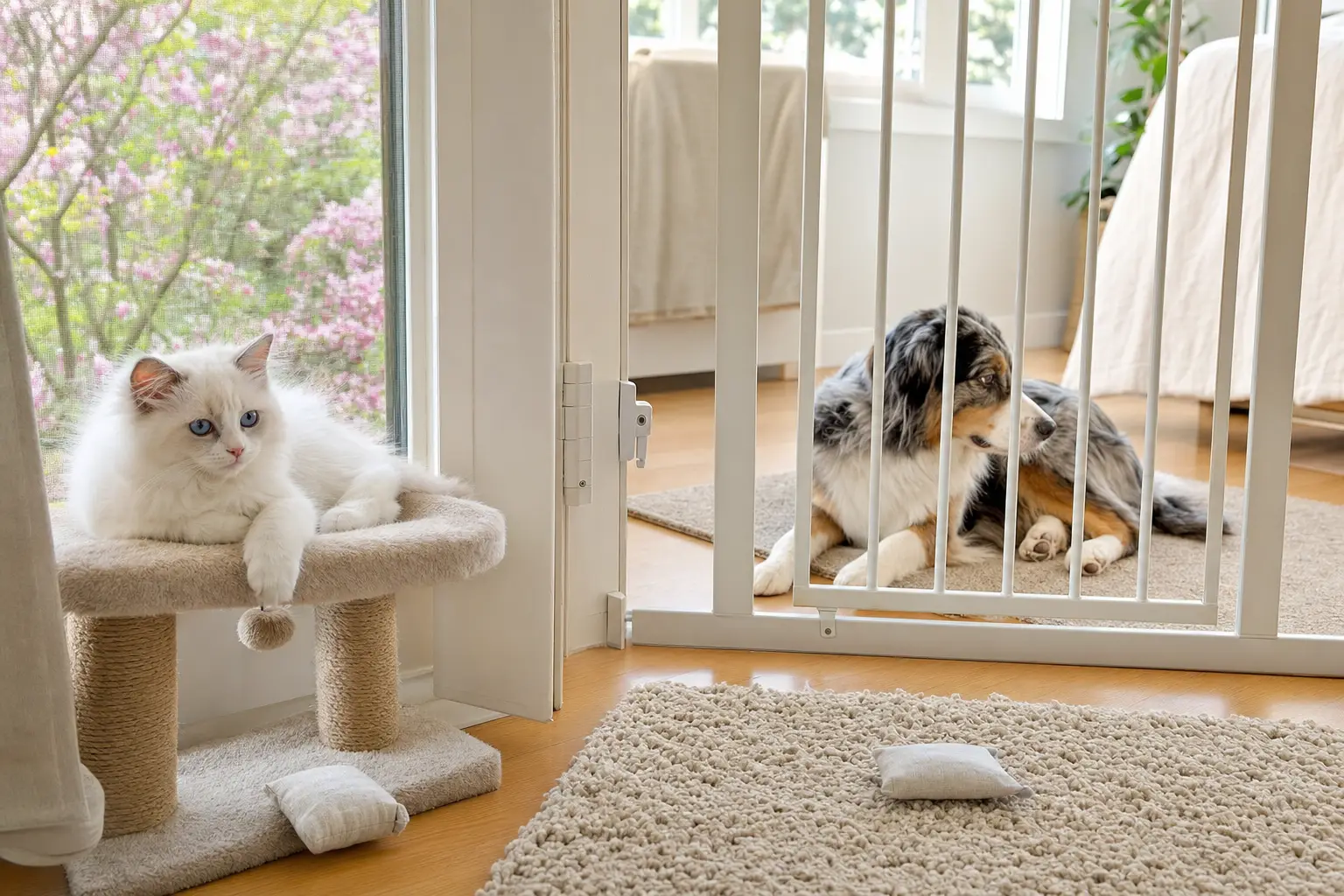
Use a secure baby gate, screen barrier, or another setup that prevents contact. A single gate may not be enough for a determined dog, and a kitten should have an escape route and a high place to retreat. Keep the dog on a regular leash, not a retractable one, and keep sessions brief—often one to three minutes is enough at first.
Let the kitten choose whether to approach. Do not carry the kitten toward the dog or hold the kitten in place for a closer look. Reward the dog for glancing at the kitten and then looking back at you. End the session while both animals are still coping well.
Stage 4: Same-room practice
After repeated calm barrier sessions, allow both animals into the same room with the dog leashed and the kitten free to move away. Keep the kitten’s safe room open so retreat is possible. Remove tempting food, high-value toys, and anything likely to cause guarding.
Use a calm voice and provide the dog with a simple alternative behavior, such as looking at you, sitting, or settling on a mat. Do not expect the kitten to sit still. A kitten may run, climb, or begin to play, and those movements can activate a dog’s chase response. If that happens, calmly create distance and return to an easier stage.
Read the animals, not the calendar
Progress is appropriate when both animals can notice the other and recover quickly. Useful signs include:
- The kitten continues eating, grooming, playing, resting, and using the litter tray normally.
- The kitten’s body is loose, with neutral ears and a natural tail position.
- The dog has a soft body, can take treats, responds to its name, and can look away from the kitten.
- Both animals can settle after a brief look, sound, or movement.
Pause and add distance if the kitten crouches, hides continuously, flattens its ears, hisses repeatedly, swats, stops eating, or shows a sudden change in toileting. For the dog, take fixation seriously: a stiff body, hard stare, closed tense mouth, stalking, high rigid tail, whining, lunging, or inability to disengage are reasons to stop the session.
Do not punish hissing, growling, barking, or hiding. These behaviors communicate discomfort. Punishment can make an animal associate the other pet with an even more threatening experience. Instead, calmly separate them and make the next session easier.
Spring details that can change the plan
Seasonal changes can add distractions to an otherwise careful introduction:
- Open windows and doors: Check screens and use a door-management plan so the kitten cannot escape and the dog cannot rush into the safe room.
- Outdoor smells: Grass, rain, mud, and other animals can make the dog smell different from one day to the next. Let the dog settle after a walk before a session.
- Visitors and home projects: Keep introductions separate from parties, loud repairs, vacuuming, and frequent deliveries.
- Fleas and ticks: Follow veterinary advice for parasite prevention rather than choosing a product based only on a label or social-media recommendation.
- Strong fragrances: Skip plug-in scents, essential-oil diffusers, and heavily perfumed cleaners around the kitten’s room. A neutral environment makes scent changes easier to interpret.
When can they be left alone?
Do not leave a kitten and dog unsupervised simply because an early meeting looked friendly. Continue separating them whenever an adult cannot actively monitor the interaction, including overnight and when you leave the house. A calm dog can still chase a fast-moving kitten, and a kitten can accidentally injure a dog’s eye while trying to escape.
Only consider more freedom after many calm, supervised sessions and after the dog has repeatedly shown that it can disengage. Some homes continue using gates or separate rooms whenever nobody is present. That is not a failure; thoughtful management is part of responsible pet ownership.
Frequently asked questions
How long does scent swapping take?
It may take a few days, several weeks, or longer. Move on when the animals are consistently relaxed at the current stage, not because a fixed schedule says they should be ready.
Can I use the dog’s blanket for the kitten?
Yes, if it is clean and only mildly scented. Start with a small cloth rather than an entire blanket, and keep it away from the kitten’s food, litter, and favorite hiding place.
Is a Ragdoll kitten automatically suited to living with a dog?
No breed guarantees a particular response. Ragdolls may be sociable, but individual temperament, early experiences, the dog’s behavior, and the quality of the introduction all matter.
A calm beginning is the real goal
Scent swapping works best when it is unhurried and optional. Give the Ragdoll kitten a secure base, reward the dog for disengaging, protect escape routes, and treat every stress signal as useful information. A peaceful routine is more valuable than a quick introduction.
For more guidance on choosing and preparing for life with a Ragdoll kitten, explore CTkittens.com.

Rachel Cohen is a journalist and producer with a passion for audio storytelling, health and science reporting, and feline companions.
A graduate of Middlebury College, Rachel spends her weekends exploring the mountains and when she isn’t outdoors or chasing a story, she can usually be found hanging out with her cats.
Only bit I’d push back on is spring being convenient, cause open windows, muddy zoomies and nonstop deliveries sounds way more chaotic tbh.
Honestly I never clocked that a muddy spring walk could make the dog smell “new” again to the kitten, kinda wild but it makes alot of sense.
Honestly the bit about a “calm” dog still getting triggered by kitten zoomies hit me, cuz chill vibes dont always mean zero prey drive.
Kinda shows how good pet intros are less about forcing “friendship” and more about consent, boundaries, and reading the room, which tbh humans could learn from too lol.
Only thing I’d add is maybe practice the barrier setup before kitten arrives, cuz discovering your “secure” baby gate is basically dog confetti mid-intro would be a rough surprise lol.
Tbh spring itself probly matters way less than picking a boring quiet week when nobody’s vacuuming, visiting, or slamming doors every five mins.
Only thing I’d push back on is spring being easier, cuz in my house the open doors, muddy zoomies, and nonstop deliveries would make winter way less chaotic tbh.