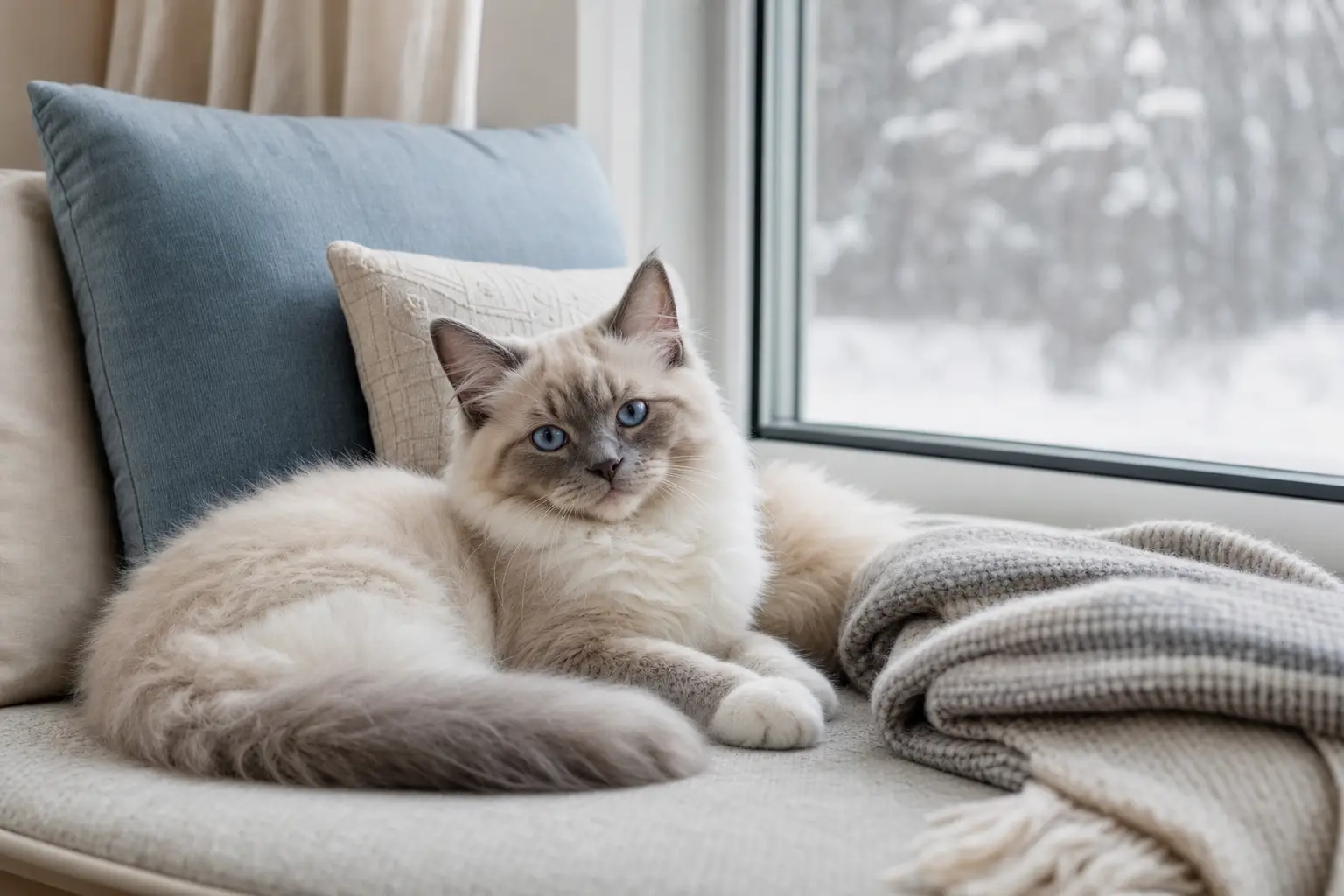
A Ragdoll kitten window seat should be more than a pretty corner. The best setup is stable, washable, comfortably warm, and positioned beside a secure closed window so your kitten can watch the light and activity outdoors without access to a fall or a dangerous draft.
Over seven days, you can turn an ordinary bench, low shelf, or purpose-built perch into a cozy winter retreat. The plan below keeps the styling simple: one dependable platform, soft layers, a few carefully chosen accents, and enough open space for your kitten to stretch, turn, and leave whenever they want.
Why a window seat works well for Ragdoll kittens
Ragdolls are known for their semi-long coats, blue eyes, and generally gentle, people-oriented temperaments. Individual cats still have individual preferences: one kitten may spend an hour watching birds, while another may prefer a quiet bed several feet away from the glass.
A window seat can support normal feline needs for observation, choice, rest, and a little vertical space. It should not replace play, interaction, scratching areas, hiding places, or access to food, water, and a clean litter box. Think of it as one useful station in a larger, kitten-friendly room.
Before day one: make the location safe
Safety is the foundation of a photo-ready setup. Inspect the area before buying cushions or decorative objects.
- Keep the window closed unless it has a genuinely secure, cat-safe opening system. A standard insect screen is not designed to bear a kitten’s weight or stop a determined climber.
- Remove dangling blind and curtain cords. Shorten, secure, or replace them so they cannot become a climbing or entanglement hazard.
- Leave space around radiators, heaters, and vents. The seat should feel comfortably warm, never hot, and should not block normal airflow.
- Plan for adult size. A small kitten may fit on almost any ledge, but the platform and brackets need to support a larger adult cat jumping onto them.
- Skip candles, essential-oil diffusers, glitter, tinsel, loose ribbon, and small ornaments. Curious kittens may chew, swallow, or knock over decorative items.
- Check plants individually. Do not assume a seasonal bouquet or houseplant is safe because it is indoors. Verify every plant through a reliable animal-poison resource or leave plants out of the area.
If the kitten is very young, unwell, newly rescued, or not yet settled in your home, keep the arrangement especially simple and ask your veterinarian about temperature and environmental needs. A decorative winter project is not a substitute for specialized care.
The seven-day Ragdoll kitten window seat plan
Day 1: Observe the room and measure the space
Watch where your kitten already chooses to rest. Is the preferred spot sunny, shaded, high, quiet, or close to people? That information is more useful than copying a staged photograph.
Measure the sill or furniture you plan to use, including the distance from the window to the nearest landing area. The finished surface should allow the kitten to lie on their side, turn around, and step away without balancing on a narrow edge. If the seat is elevated, measure the possible jump path and remove nearby objects that could make an unstable stepping stone.
Day 2: Choose and secure the base
A wide, low bench or a firmly anchored shelf is usually easier to make safe than a narrow decorative sill. Secure the base according to the manufacturer’s instructions, and test it with more than the kitten’s current weight. Account for an adult cat landing with momentum.
Press down on each corner, gently shift the furniture from different angles, and listen for creaking. If it moves, wobbles, or pulls away from the wall, fix that problem before adding soft furnishings. Do not use a pretty box, lightweight stool, or unsecured stack of books as the foundation.
Day 3: Add a washable comfort layer
Use a fitted cushion, a tightly folded fleece, or a low-pile washable mat. Choose fabric with a close weave and avoid long fringe, loose loops, exposed zippers, and knitted pieces that can catch claws. A removable cover is more practical than a permanently attached cushion because kittens track litter dust and shed as they grow.
For a winter palette, try cream, muted blue, soft gray, or warm taupe. If your Ragdoll has pale fur, a medium-tone mat creates gentle contrast in photographs without making the space look busy. Place the soft layer so it cannot slide toward the edge when the kitten jumps up.
Day 4: Style the background, not the kitten
Photo-friendly decor works best when it creates a calm frame around the cat. Hang a plain linen curtain well away from the kitten’s reach, place one textured cushion at the back, or add a simple washable basket on the floor for toys. Leave the actual resting area mostly open.
Use one visual focal point at a time. A small winter branch in a secure vase may look attractive, but it adds a tipping and chewing risk. A safer alternative is a paper-free, firmly mounted wall print outside paw range or a simple neutral curtain that softens the background.
Do not use fake snow, tinsel, ribbon, exposed wire lights, breakable ornaments, or scented decorations. Seasonal styling should never depend on an item your kitten could pull down or swallow.
Day 5: Add useful, cat-sized details
Place a scratching surface nearby, not on top of the sleeping area. A vertical scratcher works well if it is stable and tall enough for a full stretch; a flat cardboard scratcher is useful when floor space is limited. Keep a small toy basket nearby, but store string toys after supervised play.
A water bowl can sit in the same room, but it does not need to crowd the window seat. Keep food and litter resources in their own suitable locations, away from the sleeping platform. Too many objects can make the seat harder to use and can distract from the kitten in photographs.
Day 6: Test the light, temperature, and camera angle
Photograph the empty seat at different times of day. Soft side light usually shows a Ragdoll’s coat and blue eyes more naturally than direct overhead light. If the window creates a bright white patch, turn the seat slightly or use a sheer curtain to diffuse the light.
For relaxed images, position the camera near the kitten’s eye level and avoid flash. Use a short burst of photographs rather than asking the kitten to hold a pose. Leave the exit route clear, and stop if the kitten hides, flattens their ears, repeatedly tries to leave, or becomes agitated.
On this day, also check for cold drafts and hot surfaces. Put your hand on the cushion and nearby sill after the sun has been shining for a while. If the surface feels hot, move the seat or add shade; if cold air reaches the resting area, shift it farther into the room. Do not use a human electric blanket or improvised heating pad. Any supplemental heat for a vulnerable kitten should be discussed with a veterinarian and provided only with equipment designed and used for that purpose.
Day 7: Invite the kitten and refine the setup
Place one familiar blanket or toy on the finished seat and allow your kitten to investigate. You can reward curiosity with a treat or quiet praise, but do not lift the kitten onto the perch repeatedly. Some cats need several days before they trust a new object.
Once the kitten uses the seat, watch how they enter and leave. If they leap over the cushion, slide on the fabric, or knock into a nearby object, adjust the layout. The successful version is the one that works for the cat, even if it looks less symmetrical in a photograph.
How to make the window seat look good in photos
A restrained setup photographs better than a crowded one. Use this simple formula:
- Foundation: a clean, secure platform with a neutral washable cover.
- Texture: one soft throw or cushion in a contrasting but quiet color.
- Seasonal cue: natural winter light, a muted curtain, or one safe background detail.
White and cream fur can blend into a pale cushion, so add contrast with a dusty blue, slate, or warm gray textile. Keep patterns small and matte; shiny fabrics can create distracting reflections. Clean the window glass, but do not polish it with a product while the kitten is nearby. Ventilate the room and follow the product label before allowing the cat back into the area.
Most importantly, photograph the kitten behaving naturally. A resting profile, a curious glance through the glass, or a sleepy stretch will feel more genuine than a forced pose surrounded by props.
Keeping the winter seat comfortable
Vacuum or shake out the mat regularly, wash removable covers according to their care instructions, and inspect the base each week for loosened fasteners. Brush the Ragdoll’s coat as recommended for that individual cat, especially if loose fur collects on the fabric.
Recheck the window, cords, plants, and decorations whenever you change the seasonal styling. A safe arrangement can become unsafe after one new ornament, moved chair, or open window. Keep the perch optional: provide another comfortable resting place in the room so the kitten can choose sun, shade, height, or privacy.
Frequently asked questions
Can a Ragdoll kitten sit directly beside a radiator?
It is safer to leave clear space around a radiator or heater and check the seat for excessive heat. A kitten should be able to move away easily. Never place loose fabric over a heater or use a human heating blanket as part of the setup.
Should I open the window for fresh air?
A closed window is the simplest option. If you need ventilation, use a purpose-designed cat-safe window solution and supervise the kitten. Never treat a normal insect screen as a protective barrier or load-bearing surface.
What plants are safe for a winter window seat?
Check each plant by its exact name using a reputable animal-poison resource. Seasonal flowers and arrangements can contain hazardous plants, so leaving greenery out of the kitten’s reach is the lowest-risk decorative choice.
What if my kitten ignores the window seat?
That is normal. Move a familiar blanket onto it, offer a brief play session nearby, or adjust the light and height. Never force the kitten to stay. If the location remains unpopular, use the space for another safe resting option and follow the kitten’s preference.
Further safety guidance
- Feline Environmental Needs Guidelines from the American Association of Feline Practitioners and the International Society of Feline Medicine.
- ASPCA’s toxic and non-toxic plant list for checking household greenery.
- U.S. Consumer Product Safety Commission window-covering guidance for cord-safety information.
Ready to create a welcoming space for your next kitten? Explore CTkittens.com for more Ragdoll kitten care ideas and helpful home-planning inspiration.

Rachel Cohen is a journalist and producer with a passion for audio storytelling, health and science reporting, and feline companions.
A graduate of Middlebury College, Rachel spends her weekends exploring the mountains and when she isn’t outdoors or chasing a story, she can usually be found hanging out with her cats.