
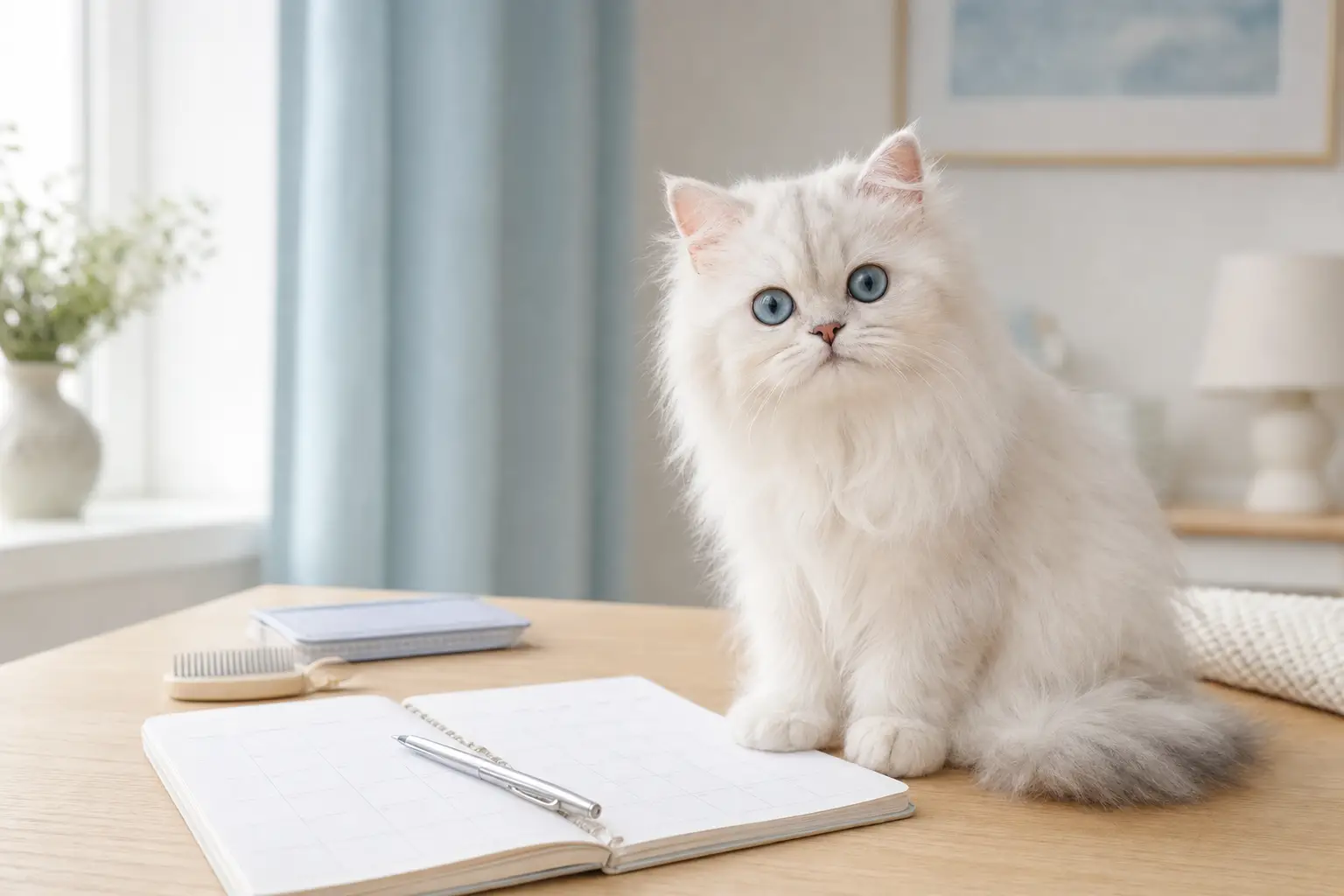
Persian Kitten Wellness Calendar: A Calm, Practical Habit
Living with a Persian kitten means paying attention to details: a damp tear track, a new mat in the coat, a change in appetite, or breathing that sounds different from yesterday. That awareness is useful, but constant checking can quickly become stressful for both kitten and family.
A Persian kitten wellness calendar offers a middle path. It gives you a place to record routine care and meaningful trends while helping you separate a small variation from a change that deserves veterinary advice. The goal is not to diagnose your kitten at home. It is to know your kitten’s normal, notice when that normal shifts, and respond at the right level of urgency.
Use the calendar as a shared memory aid for your household and a conversation tool for your veterinarian—not as a reason to worry about every entry.
Why a wellness calendar can make care calmer
Kittens change quickly as they grow. Their appetite, weight, sleep, playfulness, and coat can all look different from week to week. A single observation often lacks context. A simple record can show whether something happened once, is gradually becoming more frequent, or has stayed stable for months.
This is especially helpful with Persian cats because their facial structure and long coat can make ordinary care more visible. Tear staining, grooming needs, and occasional snoring may draw attention, but appearance alone does not tell you whether a medical problem is present. A calendar encourages you to record what you see alongside useful details such as appetite, energy, duration, and whether the change is worsening.
Keep the system small enough to use. If recording takes fifteen minutes every day, it is likely to become another source of anxiety. A two-minute daily check and a slightly fuller weekly review are usually more sustainable.
What to include in a Persian kitten wellness calendar
Daily: a brief, low-pressure check
Look at your kitten during normal life rather than interrupting every nap or play session. You are checking for broad changes, not performing a medical examination.
- Appetite and water: Is your kitten eating with usual enthusiasm? Note a clear reduction, repeated vomiting, or difficulty keeping food down.
- Energy and behavior: Is the kitten interested in play, interaction, and familiar routines? A sleepy kitten may be perfectly normal after play, while unusual weakness is different.
- Breathing at rest: Watch without handling. New effort, open-mouth breathing, or a marked increase in noise deserves prompt attention.
- Eyes and nose: Record new redness, squinting, swelling, or discharge rather than focusing only on cosmetic staining.
- Litter-box output: Notice repeated trips, straining, diarrhea, blood, or a meaningful change in urine or stool.
- Coat comfort: Look for new mats, damp skin, odor, or areas your kitten suddenly resists having touched.
A calendar entry can be as short as: Eating normally, playful, eyes unchanged, two normal litter-box visits. You do not need to document every nap or bowel movement.
Weekly: measure trends, not perfection
Once a week, weigh your kitten under similar conditions using a secure scale and a towel or container if needed. The exact number matters less than the growth pattern. A kitten who is not gaining as expected, loses weight, or has a sudden change alongside low appetite should be discussed with a veterinarian.
Use the weekly check to inspect the coat, paws, nails, ears, and mouth as tolerated. Keep it gentle and brief. If your kitten struggles, stop and ask your veterinary team to show you safer handling techniques. Forced examinations can make future grooming and carrier trips harder.
For a Persian kitten, regular combing is preventive care as well as appearance care. Work in short sessions and check areas that mat easily, including behind the ears, under the legs, around the collar, and near the hindquarters. A mat can pull on the skin and hide irritation. Do not cut close mats with household scissors; ask a groomer or veterinarian for help.
Appointments and preventive care
Add every veterinary visit, vaccine, parasite product, grooming appointment, medication, and follow-up question to the calendar. Record the product name and date, but do not create a routine medication schedule on your own. Parasite prevention depends on age, location, exposure, household risk, and the product’s label.
Kitten vaccines are commonly given in a series, and the timing of rabies vaccination is also affected by local law and the product used. The AAHA/AAFP feline vaccination guidelines explain why plans should be tailored rather than copied from a generic online chart. Your veterinarian can also advise on FeLV vaccination, sterilization timing, microchipping, and future wellness examinations.
A breed-aware way to interpret common changes
Persian kittens deserve attentive observation, but a breed tendency is not a diagnosis. The table below can help you decide what to record and what should move from observation to a veterinary call.
| What you notice | Calm next step | Contact your veterinarian promptly if… |
|---|---|---|
| Tear staining or damp fur beneath the eyes | Clean the surrounding fur gently with a veterinarian-approved approach and record whether it is stable. | There is squinting, redness, swelling, thick discharge, pain, a cloudy eye, or a sudden increase. |
| Occasional noisy breathing | Note when it happens, such as during sleep, play, heat, or stress. Capture a short video if safe. | Breathing becomes effortful, the mouth is open, the gums look blue or pale, the kitten collapses, or the noise is new and worsening. |
| A coat that mats easily | Break grooming into brief, positive sessions and record problem areas. | Mats are tight, the skin is sore or smelly, there is hair loss, or your kitten suddenly avoids touch. |
| A quieter day or a skipped meal | Check the next meal, litter-box use, hydration, and overall behavior rather than assuming the cause. | The change repeats, appetite remains reduced, or it occurs with vomiting, diarrhea, weakness, pain, or hiding. |
| More frequent litter-box visits | Record frequency and whether urine or stool is actually produced. | Your kitten strains, cries, produces little or no urine, has blood, or seems distressed. Inability to urinate is an emergency. |
These are decision-support examples, not rules that replace an examination. Kittens can become unwell faster than adult cats, so it is reasonable to call when you are uncertain—particularly if several mild changes appear together.
Build the habit in four simple steps
- Establish a baseline. During the first week, record normal appetite, usual play, breathing while relaxed, coat condition, eye appearance, and litter-box habits. Ask your veterinarian to help you assess body condition and growth.
- Use one shared location. A paper calendar, phone note, or household spreadsheet is enough. Include the date, observation, and action taken. Avoid scattered notes that no one can find during an appointment.
- Use three response levels. Green means the kitten is acting normally. Yellow means a change is mild, isolated, or unclear and should be watched with a time limit. Red means an urgent sign, such as breathing difficulty, collapse, severe pain, repeated vomiting, or inability to urinate.
- Bring patterns to the veterinarian. A short video, weight trend, medication list, or dated description can be more useful than trying to remember everything in the exam room. If a change is urgent, do not wait to complete the log before calling.
A practical calendar rhythm
| Frequency | What to do | What to record |
|---|---|---|
| Daily | Observe appetite, energy, breathing, eyes, grooming comfort, and litter-box behavior. | Only clear changes or concerns; keep the entry brief. |
| Weekly | Weigh your kitten, inspect the coat and skin, and practice gentle grooming and handling. | Weight, coat trouble spots, nail or ear concerns, and questions for the vet. |
| At every appointment | Review vaccines, parasite prevention, dental care, growth, behavior, and breed-relevant concerns. | Recommendations, due dates, prescribed products, and follow-up instructions. |
| Seasonally or when routines change | Reassess heat exposure, travel, visitors, outdoor access, grooming needs, and household hazards. | New risks and any prevention plan your veterinarian recommends. |
Do not turn the calendar into a demand for monthly veterinary treatment or a checklist of tests. Healthy kittens do not all need identical screening. A Persian kitten’s history, parents, environment, symptoms, and examination should guide decisions. If you obtained your kitten from a breeder, keep any health records and ask what is known about the parents’ medical and genetic history.
When a change needs urgent action
Seek urgent veterinary help for breathing difficulty, open-mouth breathing, blue or very pale gums, collapse, seizures, severe pain, major trauma, uncontrolled bleeding, repeated vomiting with weakness, or a kitten that cannot urinate. Eye injuries and sudden severe eye pain also warrant prompt care.
For less dramatic changes, call your regular veterinarian if a symptom persists, repeats, worsens, or appears with another symptom. A single unusual moment is not automatically a crisis, but a young kitten who stops eating, becomes weak, or behaves markedly differently should not be watched indefinitely.
When calling, describe what changed, when it started, whether it is getting worse, and what your kitten has eaten, drunk, vomited, or passed. A short, factual account helps the clinic triage the situation.
Frequently asked questions
How often should I update the calendar?
A quick daily observation and a fuller weekly review are enough for most families. Add entries whenever there is a symptom, medication, appointment, or meaningful change. The purpose is continuity, not constant surveillance.
Are tear stains normal in Persian kittens?
Tear staining can be noticeable in cats with short facial structures, but staining alone does not explain redness, squinting, pain, swelling, or thick discharge. Record whether the appearance is stable and ask your veterinarian to examine persistent or changing eye signs.
Can a wellness calendar replace veterinary visits?
No. It can support preventive care and make appointments more productive, but it cannot assess hydration, teeth, heart and lungs, growth, or other concerns as an examination can. Use the calendar to support—not postpone—professional care.
Keep the goal simple
The best Persian kitten wellness calendar is one your family can use without fear. Track a few meaningful signals, learn your kitten’s baseline, and set clear reasons to call. That approach helps you respond thoughtfully when something changes while leaving plenty of room for ordinary kitten behavior, naps, messy meals, and imperfect grooming days.
If you are preparing for life with a Persian kitten, explore CTkittens.com for more guidance on responsible kitten care and building a confident start at home.
Sources and further reading

Rachel Cohen is a journalist and producer with a passion for audio storytelling, health and science reporting, and feline companions.
A graduate of Middlebury College, Rachel spends her weekends exploring the mountains and when she isn’t outdoors or chasing a story, she can usually be found hanging out with her cats.

