Ragdoll Kittens: 11 Questions Children Can Help Ask a Breeder
When children help choose a Ragdoll kitten, the best starting point is not a favorite color or the kitten that reaches the front of the carrier first. It is a thoughtful conversation with the breeder.
This list of questions to ask a Ragdoll breeder gives children a meaningful role while helping adults check health records, living conditions, temperament, contracts, and long-term care. Children can ask some of the questions directly, draw answers on a scorecard, or help compare notes after a visit. The adults should still make the final decision and accept responsibility for the cat.
Start with one family rule
A Ragdoll may be known for affectionate, relaxed tendencies, but breed descriptions are not guarantees about an individual kitten. The Cat Fanciers’ Association and The International Cat Association offer useful breed overviews, yet every cat still has its own personality, boundaries, and needs. A kitten that appears calm during a short visit may behave differently after moving into a busy home.
Before contacting breeders, agree that the family will never rush a deposit, pass a kitten around to test its patience, or treat a cat as a toy. Children can help ask questions and learn care skills. Adults should verify the answers, read the contract, arrange veterinary care, and supervise interactions.
For general breed information, compare the CFA Ragdoll profile with TICA’s Ragdoll information. For health-screening terminology and public records, the Orthopedic Foundation for Animals’ CHIC program is another useful reference, although a database entry is not a substitute for reviewing a kitten’s actual records.
11 creative questions to ask a Ragdoll breeder
1. “What does a normal day look like for your kittens?”
This question encourages a breeder to explain the kitten’s real routine rather than give a polished sales description. Ask where the kittens sleep, how often they are handled, what household sounds they hear, and how they learn to use a carrier, litter box, scratching surface, or grooming tools.
Children can listen for details about ordinary life: vacuum cleaners, visitors, toys, gentle brushing, and quiet rest. Good socialization is not about overwhelming kittens with constant activity. It is about safe, gradual exposure and enough recovery time.
2. “If this kitten could describe its personality, what would it say?”
A thoughtful breeder should be able to describe differences between littermates without promising a perfect family pet. One kitten may be curious and busy, while another may prefer watching before joining in. Ask what the breeder has observed over time, not just during one introduction.
Children can make a simple chart with traits such as curious, cuddly, playful, cautious, and independent. The goal is not to rank a kitten as good or bad. It is to find a personality that suits the household’s noise level, schedule, and expectations.
3. “Can we meet the mother, and where have the kittens been raised?”
Meeting the mother in a clean, comfortable setting can provide useful context about her condition and temperament. The father may live elsewhere, so not seeing him is not automatically a concern. Ask whether the breeder can provide information about him and show relevant health documentation.
Notice whether the cats have space to retreat, fresh water, clean litter areas, and healthy-looking coats and eyes. A visit should feel calm rather than secretive or pressured. If distance makes an in-person visit impossible, ask for a live video tour and clear, current records.
4. “What health records will come home with the kitten?”
Ask for a written list of veterinary examinations, vaccinations, parasite treatments, microchip details if applicable, registration information, and any follow-up care. Also ask which health screening was performed on the parents, who performed it, and whether copies of results are available.
Ragdoll breeders may discuss testing for a known breed-associated hypertrophic cardiomyopathy, or HCM, variant. A DNA result can be useful, but it does not guarantee that a cat will never develop heart disease or rule out every possible cause of HCM. Ask what the result means, whether additional heart evaluation has been recommended, and how the breeder’s veterinarian interprets the records. A routine kitten exam and parent health screening answer different questions.
Adults should take these documents to the family veterinarian. Do not rely on a phrase such as “fully health tested” without asking what that actually includes.
5. “What happens when a kitten needs a break?”
This question turns a visit into a lesson about consent. Ask the breeder how the kittens show that they are tired, worried, or overstimulated, and what adults do next. A kitten hiding, flattening its ears, lashing its tail, hissing, or trying to escape should not be chased or forced into contact.
Children can learn to sit quietly, offer a toy, and let the cat approach. Never ask a breeder to hold a kitten still so a child can cuddle it, and never test a Ragdoll by trying to make it relax in someone’s arms. Calm behavior should be respected, not demanded.
6. “Can we read the contract before we pay a deposit?”
A written contract should be available before a family commits. Ask about the kitten’s placement conditions, registration status, spay or neuter requirements, health guarantee, return policy, breeding restrictions, transport arrangements, and what happens if the family can no longer keep the cat.
Clarify every fee, including deposits, delivery, registration, and required veterinary procedures. Ask whether a deposit is refundable and under what circumstances. Children can help highlight words they do not understand, but an adult should read the complete agreement and seek professional advice if a clause is unclear.
7. “Which kitten seems like the best match for our home?”
Tell the breeder the truth about your household: children’s ages, work and school schedules, other animals, noise, time available for play, and whether someone can supervise early interactions. A responsible breeder may recommend a different kitten from the one a child first notices, or suggest waiting for a future litter.
That is useful matching information, not a rejection. Color, pattern, or eye-catching photos cannot tell you whether a kitten will enjoy your family’s pace. Ask the breeder to explain the reasoning behind a recommendation rather than simply accepting a label such as “the best one.”
8. “What jobs can a child safely help with?”
Turn the answer into a family care plan before the kitten arrives. Age-appropriate tasks might include using a toy during supervised play, helping refresh a water bowl, observing a grooming routine, or recording when supplies are running low.
Adults should handle medication, litter hygiene decisions, veterinary appointments, feeding changes, and emergency care. A child’s interest may fade after the novelty wears off, so the household needs a reliable adult plan that does not depend on a child completing chores every day.
9. “How will we know when the kitten does not want to play?”
Ask the breeder to demonstrate respectful interaction without putting the kitten under pressure. Children should learn to pause when the cat walks away, hides, stops engaging, or becomes tense. Wand toys are generally safer than encouraging hands to become targets, and play should end before the kitten becomes overwhelmed.
Every child should also know that sleeping, eating, using the litter box, and hiding in a designated retreat are private times. A kitten needs places where children cannot follow.
10. “What time, supplies, and costs should our family plan for?”
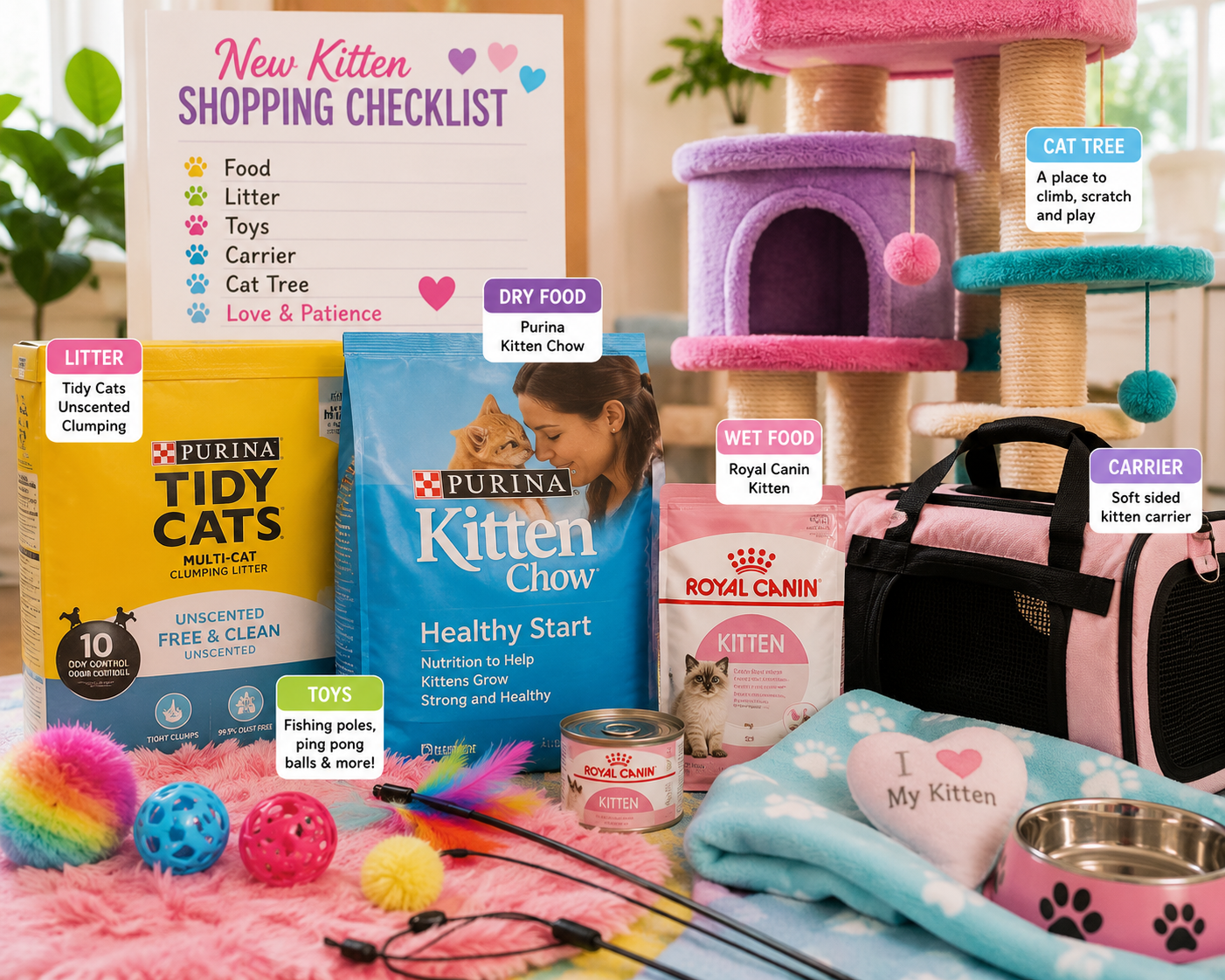
Ask for a realistic starter list: food, litter, scratching surfaces, secure carriers, grooming tools, toys, bedding, and a plan for veterinary visits. Ragdolls have semi-long coats, so ask the breeder to demonstrate the grooming routine and explain how the kitten is being introduced to it. Coat care is not the same as a guarantee that the breed is low-maintenance or suitable for people with allergies.
Adults should create a budget for routine care and unexpected veterinary treatment before choosing a kitten. A breeder can explain the kitten’s current routine, but the family veterinarian should guide medical decisions after the cat comes home.
11. “What happens if our circumstances change?”
Families move, develop allergies, change schedules, or discover that an introduction with another pet is harder than expected. Ask the breeder in advance whether the contract requires the breeder to be contacted before rehoming and what support is available.
A clear, practical conversation about returning or responsibly rehoming a cat is a sign that the breeder is thinking beyond the sale. It does not remove the family’s responsibility to plan carefully, but it gives everyone a safer option if life changes.
How to turn the answers into a family decision
After a call or visit, ask each family member to write down three things:
- One answer that increased confidence, such as specific records or a clear care routine.
- One answer that needs verification, such as a health-test result or contract clause.
- One practical concern, such as supervision, grooming time, other pets, or the household budget.
Then separate facts from impressions. “The kitten was adorable” is an impression. “The breeder provided the vaccination record and explained the next appointment” is a fact that can be checked. Do not let a child feel responsible for rejecting a kitten or choosing the perfect one. The adults can say, “We are deciding whether our home is ready,” rather than, “You picked this cat, so it is your job.”
It is also reasonable to wait. A breeder who answers carefully, provides records, explains limitations, and allows time for a decision is usually more helpful than one who creates urgency with claims about a rare color or a last chance to buy.
Signs to slow down before choosing
Pause and investigate further if a breeder refuses to discuss health history, will not provide a contract before payment, pressures you to send money immediately, makes absolute promises about temperament, or describes Ragdolls as maintenance-free and automatically perfect for children. Be cautious if you cannot see where the kittens are raised or if the breeder discourages questions about veterinary care and return arrangements.
No single warning proves that a breeder is irresponsible, and no single positive feature proves that a kitten is healthy. Look at the complete picture, verify documents with your veterinarian, and trust a decision made calmly.
FAQ
Are Ragdoll kittens automatically good with children?
No. Ragdolls may have traits many families appreciate, but individual temperament, early experiences, child behavior, and supervision all matter. Choose a kitten based on the specific home, not the breed name alone.
What is the most important health question to ask?
Ask what health screening was performed on the parents, request the results, and ask what the tests can and cannot show. Also request the kitten’s veterinary records and have your own veterinarian review them.
Should children be present when meeting a kitten?
They can be, if the visit is calm and supervised. Give the kitten an escape route, prevent grabbing or chasing, and consider having one adult focus on the children while another observes the cats and talks with the breeder.
Ready to keep researching?
Use these questions as a family discussion guide, then explore more Ragdoll kitten care and breeder guidance at CTkittens.com before making a commitment.

Rachel Cohen is a journalist and producer with a passion for audio storytelling, health and science reporting, and feline companions.
A graduate of Middlebury College, Rachel spends her weekends exploring the mountains and when she isn’t outdoors or chasing a story, she can usually be found hanging out with her cats.