Persian Kittens: Five Assumptions About a Kitten-Friendly Connecticut Weekend
A kitten-friendly Connecticut weekend does not necessarily mean bringing a Persian kitten to every family activity. In many cases, the kindest plan is to keep the kitten in a quiet, familiar space with a responsible caregiver while the family explores Connecticut.
If the weekend includes picking up a kitten, staying overnight with one, or introducing a kitten to children and other pets, the plan should be different. Persian kittens can be sensitive to travel, unfamiliar noise, heat, handling, and sudden changes in routine. Here are five common assumptions worth reconsidering before a Rhode Island family sets out.
The short answer: plan around the kitten, not the itinerary
Start by deciding which of these situations applies:
- You are sightseeing in Connecticut: Leave the kitten at home in Rhode Island with appropriate in-home care whenever possible.
- You are picking up a kitten in Connecticut: Treat the trip as transportation home, not as the first stop on a holiday itinerary.
- You are traveling with an established cat: Ask your veterinarian whether the cat is a suitable travel candidate, then build a quiet, secure plan around that advice.
A kitten’s welfare should determine the route, stops, lodging, and schedule. That may mean shortening the trip, choosing a day visit, or having one adult stay home.
Assumption 1: “Kitten-friendly” means the kitten should come everywhere
Reconsidered: A pet-friendly attraction is not automatically a good environment for a young kitten.
Busy waterfronts, restaurants, festivals, boardwalks, and family attractions bring crowds, unfamiliar animals, loud sounds, doors, traffic, and unpredictable handling. Many venues also restrict pets, and a cat should never be presented as a service animal. Even when a business permits pets, that does not mean it is appropriate for a kitten who is still settling in or completing early veterinary care.
For most young Persian kittens, a quiet room with familiar food, litter, bedding, and limited handling is more supportive than a full day of sightseeing. If your family wants to visit Mystic, Stonington, New London, or another Connecticut destination, consider making the outing an adult-and-family activity while a trusted caregiver remains with the kitten.
Children can be part of the kitten’s adjustment, but introductions should be supervised. Give the kitten a retreat that children cannot enter, and teach everyone to let the kitten approach rather than chasing, lifting, or passing it around.
Assumption 2: “Persian kittens are calm, so travel will be easy”
Reconsidered: A generally quiet breed can still find car travel and unfamiliar rooms stressful.
Persians are often associated with a gentle, laid-back temperament, but breed descriptions do not predict how one individual will respond to a carrier, motion, hotel noises, children, or a new household. A kitten that appears quiet may be relaxed—or may be hiding, overwhelmed, or conserving energy.
Persians also have shortened facial structures, with substantial variation between individuals. That matters when planning travel because breathing comfort and heat tolerance should not be assumed. A kitten who shows breathing difficulty, marked weakness, repeated vomiting, or unusual distress needs veterinary advice rather than another sightseeing stop. Never give a sedative or human medication unless a veterinarian has specifically prescribed and explained it.
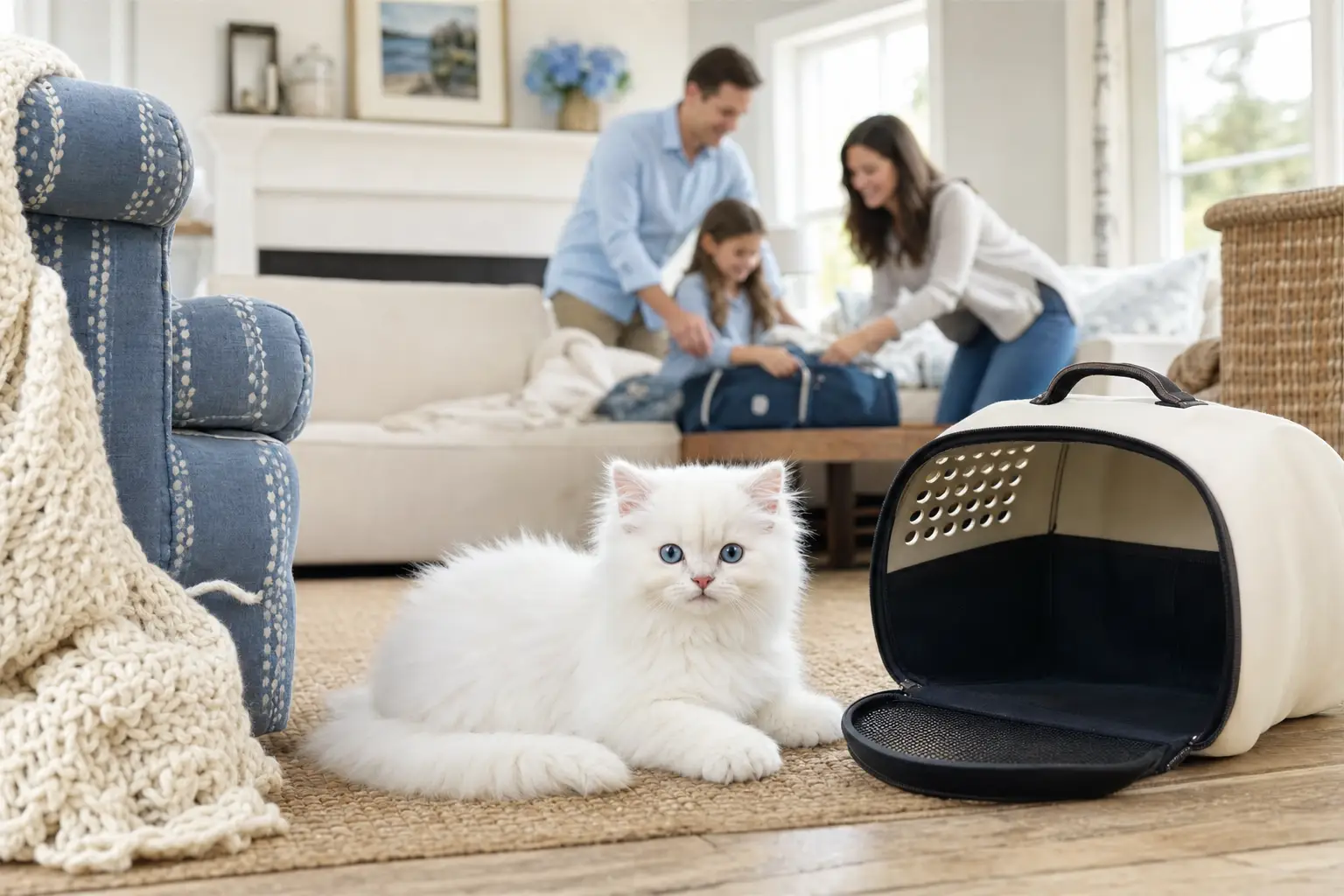
If travel is necessary, use a sturdy carrier secured in the vehicle. Do not carry the kitten loose, open the carrier in a parking lot, or leave the kitten in a parked car. The American Veterinary Medical Association offers general pet-travel guidance, but your own veterinarian is the right person to advise on an individual kitten’s readiness.
Assumption 3: “A weekend is enough time to know whether the kitten is a good fit”
Reconsidered: A short visit can be useful, but it cannot reveal everything about a kitten’s health, temperament, or future needs.
Travel can temporarily change behavior. A confident kitten at a breeder’s home may hide after a long drive. A quiet kitten may become more active after several days of safety and routine. Children may also see only the most appealing moments during a brief visit, not the daily work of feeding, litter care, grooming, play, and veterinary appointments.
Before committing, ask for written health records, the kitten’s date of birth, vaccine and parasite-treatment history, diet, registration or identification details when applicable, and the seller’s return or support policy. A responsible source should be willing to discuss known health concerns and allow time for questions.
Plan a veterinary appointment after the kitten arrives home. The appointment does not replace careful research before purchase, and a weekend meeting does not guarantee a clean bill of health. It does provide an opportunity to establish care and discuss vaccination, parasites, nutrition, grooming, and any breed-related concerns.
Assumption 4: “A pet-friendly hotel is automatically kitten-friendly”
Reconsidered: “Pets allowed” describes a policy, not the quality or safety of the environment.
Before booking, ask the property specific questions:
- Are cats accepted, or does “pet-friendly” primarily refer to dogs?
- Can a kitten stay in the room, and is it allowed to remain there without an adult?
- Are there additional fees, deposits, size limits, or restrictions on housekeeping access?
- Can the property provide a quiet room away from elevators, ice machines, and busy common areas?
- What happens if another guest’s dog is outside your door?
Even with permission, a hotel room can contain hazards such as exposed cords, open windows, reclining furniture, cleaning products, and doors that open directly to a hallway. A kitten would need a secure base area, familiar litter and food, constant supervision around children, and a plan that prevents escape during housekeeping or check-in.
For a newly acquired kitten, home is usually the better destination. If an overnight stay is unavoidable, keep the kitten in the carrier until the room is checked, then establish one quiet, closed room or bathroom area. Do not let the kitten roam while doors are being opened or closed.
Assumption 5: “Health paperwork and vaccines can be handled later”
Reconsidered: Interstate travel and kitten health records should be checked before departure, not improvised at the state line.
Requirements can depend on the animal’s age, origin, vaccination status, health certificate, and the purpose of travel. Connecticut’s Department of Agriculture publishes current animal-entry information. Review that guidance and ask the veterinarian or kitten source what documentation applies before traveling from Connecticut to Rhode Island. Do not rely on an old social-media post or a generic checklist.
A young kitten may still be completing an initial vaccination series. That can affect exposure to unfamiliar animals and public environments. The American Association of Feline Practitioners and the American Animal Hospital Association provide professional feline vaccination guidance, but the schedule for one kitten should be set by a veterinarian who can assess its age, history, and health.
Bring copies or photographs of relevant records, the source’s contact information, the kitten’s usual food, and emergency veterinary details. Keep the carrier closed in transit, and make the first stop at home—not a crowded pet store, restaurant patio, or family gathering.
A practical weekend plan for families from Rhode Island
The safest plan depends on the purpose of the trip. This simple framework can help:
| Weekend purpose | Where the kitten stays | Better planning choice |
|---|---|---|
| Family sightseeing in Connecticut | At home in Rhode Island with a capable caregiver | Use in-home care suited to the kitten’s age and needs. Keep the routine familiar and avoid a rushed return schedule. |
| Picking up a Persian kitten | In a secured carrier during the direct trip home | Schedule the pickup as the main purpose of the journey. Avoid unnecessary detours, public stops, and overnight tourism. |
| Traveling with a cat who already lives with you | With the family, only if the cat tolerates travel | Discuss the trip with your veterinarian, practice carrier time in advance, confirm lodging rules, and prepare a quiet room. |
Before leaving home
- Confirm veterinary records, entry requirements, and an emergency contact.
- Pack familiar food, litter, bedding, cleaning supplies, and a secure carrier.
- Choose one adult as the kitten’s primary handler so responsibilities are clear.
- Tell children the kitten is not a travel toy and needs uninterrupted rest.
- Have a backup plan if the kitten becomes ill, the weather turns hot, or lodging is unsuitable.
After arriving home
Give the kitten a quiet transition room with food, water, litter, a hiding place, and a comfortable resting area. Let the kitten explore gradually. If you have other cats or dogs, do not rush face-to-face introductions; use separation and gradual, supervised introductions instead. Keep grooming gentle, especially around a long coat that may tangle, and ask your veterinarian to demonstrate any eye, coat, or facial care your kitten needs.
FAQ
Can I take a Persian kitten to Connecticut attractions?
Policies vary, and many attractions do not admit pets. More importantly, admission does not mean the setting is suitable for a young kitten. Ask the venue directly, but in most cases a quiet caregiver arrangement is the better choice.
Should I stay overnight in Connecticut after picking up a kitten?
Usually, a direct trip home is less complicated than adding a hotel stay. If an overnight stop is unavoidable, confirm that cats are accepted, secure a quiet room, and ask your veterinarian for travel advice first.
How long can a kitten safely ride in a car?
There is no single ideal duration for every kitten. Age, health, temperament, weather, and the route all matter. Ask your veterinarian, plan appropriate breaks, and never leave the kitten alone in a parked vehicle.
Make the weekend kitten-friendly in the truest sense
The best family plan may be less exciting for the adults but much easier on the kitten: a direct trip, a calm room, familiar supplies, and time to adjust. If you are considering a Persian kitten, explore CTkittens.com for more information and take the time to choose a thoughtful beginning for your family.
Helpful references: AVMA pet travel guidance, Connecticut Department of Agriculture animal-entry information, and feline vaccination guidance from the AAFP. Check official pages and your veterinarian for current, situation-specific advice.

Rachel Cohen is a journalist and producer with a passion for audio storytelling, health and science reporting, and feline companions.
A graduate of Middlebury College, Rachel spends her weekends exploring the mountains and when she isn’t outdoors or chasing a story, she can usually be found hanging out with her cats.