
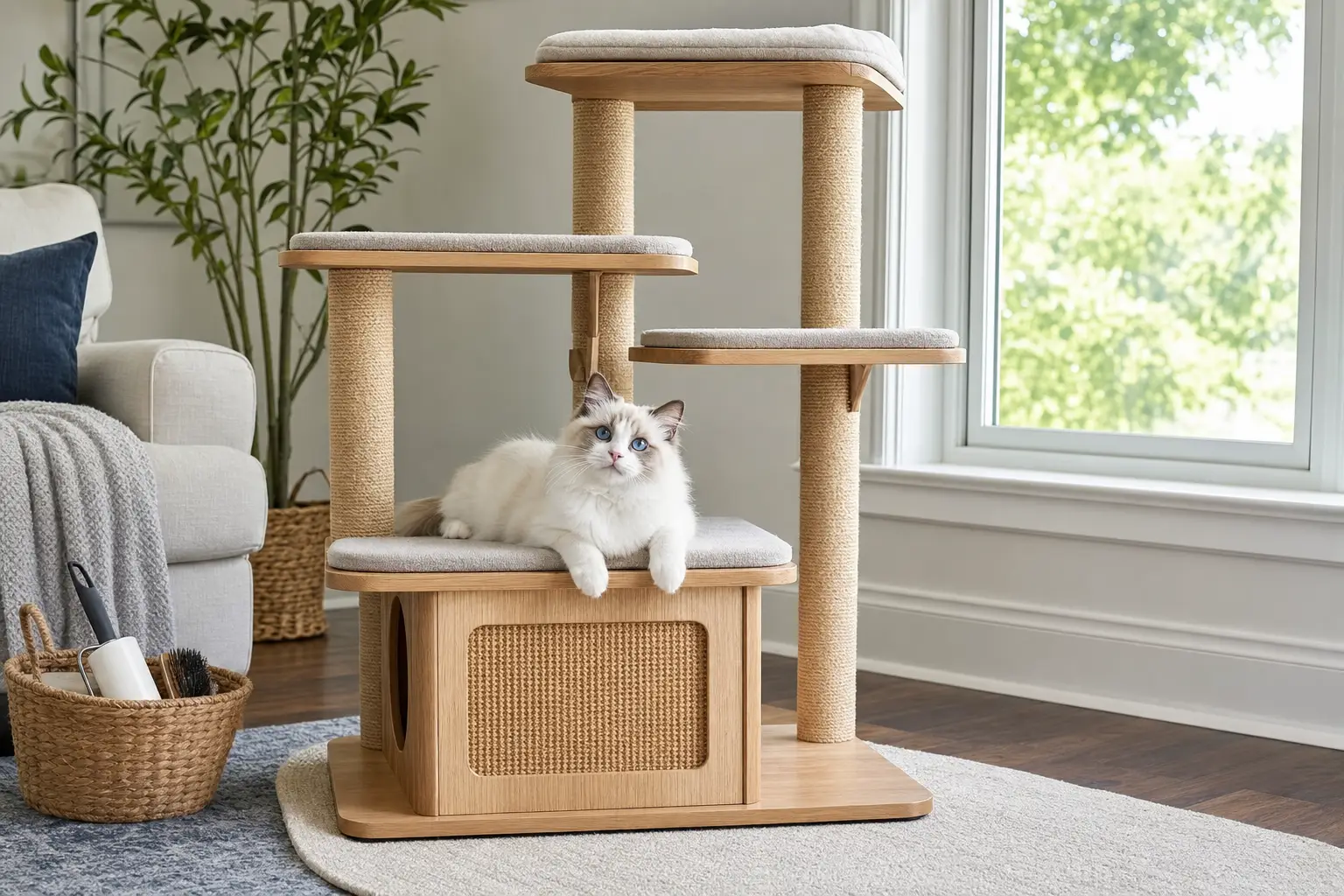
Ragdoll Kittens: Styling an Elegant Cat Tree for Easier Weekly Cleaning
A well-chosen Ragdoll cat tree should give your kitten places to scratch, climb, rest, and watch the household while remaining easy to maintain. The simplest approach is to start with a stable, generously sized structure, add only washable comfort layers, and place it where your kitten already wants to spend time.
Ragdolls often grow into substantial, semi-long-haired cats, so a small kitten tree may not remain comfortable or stable for long. Planning for the adult cat from the beginning saves money and makes weekly cleaning much less frustrating. The goal is not a showroom display. It is a practical piece of cat furniture that looks considered, survives daily use, and can be reset in minutes.
Choose the right foundation before styling
Decorative details cannot compensate for a wobbly cat tree. Look for a broad base, solid joints, platforms large enough for a stretched-out cat, and a stated weight capacity that leaves a sensible margin. A tall, narrow tower may suit a small room, but only if its base and construction provide dependable stability.
For a Ragdoll kitten, include lower access points as well as higher perches. Young cats are still developing coordination, and not every kitten should be encouraged to launch from the highest platform immediately. A lower bed, short step, or ramp can make the tree more usable while your kitten learns the layout.
- Stable base: The tree should not rock when your kitten jumps, lands, or shifts position.
- Adult-sized platforms: Choose resting areas that can accommodate a larger body and a long tail.
- Useful scratching surfaces: Sisal posts should be tall enough for a full stretch and firmly attached.
- Replaceable or washable parts: Removable cushions and covers are more practical than permanently glued-on plush.
- Safe hardware: Inspect for exposed staples, sharp edges, loose bolts, and dangling cords before use.
If the manufacturer provides an anti-tip strap, use it according to the instructions. A tall structure may also need suitable wall anchoring. Do not improvise with hardware that could damage the wall or fail under movement; ask a qualified hardware professional if you are unsure about the fixing method.
Build the cat tree in cleanable layers
The most useful styling decision is to avoid covering every surface in fabric. More fabric means more hair, more washing, and more places for dampness or food particles to hide. Instead, give each part of the tree a clear job.
| Tree area | Practical choice | Why it helps with cleaning |
|---|---|---|
| Sleeping platform | A fitted, removable cushion or thin washable mat | Hair and skin flakes stay on one replaceable layer |
| Upper perch | A nonslip pad secured without loose ties | It adds comfort without creating dangling loops |
| Scratching post | Exposed sisal or another purpose-made scratching material | It dries faster and is easier to inspect than thick plush |
| Base | A wipeable surface over a washable floor mat | It catches loose litter and makes vacuuming easier |
Use one or two washable pads in a restrained color palette rather than several blankets. Cream, oatmeal, soft gray, or muted blue can make the tree feel intentional without competing with your home. If you want extra softness, choose a fitted cover or a flat mat that cannot bunch beneath your kitten’s paws. Avoid loose ribbons, cords, or decorative ties, especially when the tree will be unattended.
Style it for an elegant, lived-in room
An elegant cat tree usually looks better when it is treated as part of the room rather than disguised with accessories. Match the main pad to an existing rug, sofa, or wall color. A small basket nearby can hold the lint roller, grooming brush, spare cover, and toy rotation. Keeping those supplies close is a design choice that also makes the weekly reset more likely to happen.
Leave the platforms mostly clear. A cat tree is not a shelf for candles, vases, framed photographs, or small ornaments. Items can fall, break, or become tempting chew toys. If you decorate around the tree, keep objects on stable furniture outside the jumping zone and secure cables from lamps, blinds, or nearby electronics.
Placement matters more than decoration. Many cats prefer a position where they can see people and observe activity. A bright room near a window may be appealing, provided the area does not become excessively hot and the window is securely screened. Avoid placing the tree directly beside a heater, in a busy doorway, or in an isolated room that your kitten rarely visits. Keep it away from the litter box if possible, because sleeping and eating areas are easier to keep pleasant when they are not next to toilet traffic.
Make weekly cleaning a short reset
A weekly routine works best when it deals with hair, crumbs, and early wear before they become a larger job. The exact schedule depends on how heavily the tree is used and how much your cat sheds. A quick spot clean may be needed more often, while a full wash can happen less frequently if the covers remain clean.
A practical 10-to-15-minute routine
- Move your kitten to a safe room. This prevents chasing the vacuum or contacting a damp cleaning product. Offer a toy or treat so the interruption feels routine.
- Remove washable layers. Shake loose hair outdoors if appropriate, then follow the care label. Washing a cover while it is heavily coated in fur can send excess hair into the machine, so remove as much loose material as possible first.
- Vacuum from top to bottom. Use a pet-hair attachment or soft brush on platforms, corners, seams, and the area beneath the tree. A lint roller is useful for final tufts on fabric.
- Wipe hard surfaces. Use a lightly damp cloth and a mild, unscented product that is suitable for the material. Never mix cleaning products, and do not saturate wood, glued joints, or compressed-board sections.
- Spot-clean accidents promptly. Blot rather than rub. An enzymatic cleaner may help with urine on a compatible washable surface, but follow the product directions and test an inconspicuous area first.
- Dry everything completely. Do not return damp cushions to the tree. Moisture trapped in padding or carpet can create unpleasant odors and may damage the structure.
- Inspect before rebuilding. Check the bolts, base, scratching rope, fabric, and any anchor. Tighten or replace parts according to the manufacturer’s instructions.
For a tree with carpeted platforms, vacuuming is usually safer than soaking. Steam cleaning, aggressive scrubbing, or applying a new product may weaken adhesives or leave residue where a cat grooms its paws. If a cushion or carpet section has absorbed urine repeatedly, cleaning may not remove the odor completely; replacing that part can be more hygienic and less time-consuming.
Choose cat-safe cleaning and decorating habits
Cats walk across surfaces and then groom their paws, so residue matters. Choose a cleaning product appropriate for the material, use only the recommended amount, and allow the surface to dry before your kitten returns. Skip essential-oil sprays, heavily perfumed deodorizers, and homemade mixtures whose ingredients or concentrations are uncertain.
Plants also deserve careful thought. Do not place a plant on or beside the cat tree simply because it completes the room’s color scheme. Some common houseplants can be dangerous if chewed. The ASPCA’s cat plant list is a useful reference, but plant identification can be difficult. Keep questionable plants out of reach and contact a veterinarian or animal poison service promptly if you think your cat has eaten a potentially toxic plant.
Check the tree regularly for frayed rope, exposed staples, loose fabric, and small pieces that could be swallowed. Replace worn scratching material before it becomes a hazard. Toys with strings, feathers, or elastic are best offered during supervised play and stored away afterward.
Help a Ragdoll kitten use the tree
The prettiest tree is not useful if your kitten prefers the sofa. Put the structure near an area your kitten already explores, then make it rewarding. Place a few treats on low platforms, play with a wand toy around the scratching post, or add a familiar-smelling blanket for a short settling-in period. Let your kitten approach at its own pace rather than carrying it repeatedly to the highest perch.
If scratching happens elsewhere, do not punish the behavior. Move an appropriate scratching surface closer to the preferred location and reward its use. Once the habit is established, you can gradually adjust the placement if needed. Keep the tree accessible even after the initial introduction; a cat is more likely to use furniture that remains part of normal household life.
A simple setup for real homes
For most households, a useful arrangement is a stable tree with one low bed, one elevated observation platform, and at least one substantial scratching post. Add a washable mat beneath it and keep a small cleaning kit nearby. That is enough to support climbing, resting, and scratching without creating a multi-part laundry project.
Think of the tree as a small system: stable structure, limited soft layers, clear access, and easy inspection. This approach keeps the room looking calm while making ordinary maintenance realistic. Your Ragdoll kitten gets a comfortable vertical space, and you get a cat tree that can be cleaned before fur and dust become part of the furniture.
FAQ
How tall should a Ragdoll cat tree be?
There is no single ideal height. Choose the tallest model that fits securely in your room, with a broad base, generous platforms, and safe access between levels. For a young kitten, prioritize lower resting areas and supervise exploration of taller sections.
Can I put a blanket on every platform?
You can, but it usually makes maintenance harder. One or two fitted, washable pads are easier to launder and inspect than a collection of loose blankets. Leave some scratching surfaces uncovered so they remain functional and simple to check.
What should I do if the tree develops an odor?
Remove the soft parts, identify whether the odor comes from hair, food, dampness, or urine, and clean only with a method suitable for the material. Dry everything completely. If urine has soaked into padding or the odor returns after cleaning, replacing the affected part may be the most practical option. Repeated accidents also warrant a conversation with your veterinarian, since elimination changes can have health or behavior causes.
How can I make the tree look less bulky?
Choose a design with a visually simple frame, use a limited neutral palette, and keep the surrounding floor clear. A nearby basket for toys and grooming supplies can make the area feel organized without adding objects to the platforms.
Ready to make your kitten’s space both beautiful and practical? Explore CTkittens.com for more guidance on welcoming and caring for Ragdoll kittens.

Rachel Cohen is a journalist and producer with a passion for audio storytelling, health and science reporting, and feline companions.
A graduate of Middlebury College, Rachel spends her weekends exploring the mountains and when she isn’t outdoors or chasing a story, she can usually be found hanging out with her cats.


Planning for the kitten’s full-grown chonk size instead of buying a tiny cute tower now is lowkey the smartest bit, saves cash and future wobble drama lol.
That little basket beside the tree for the lint roller and spare cover is lowkey the smartest detail, cuz if cleaning stuff ain’t within reach I’m 100% pretending the fur dont exist.
The bit about vacuuming top to bottom seems small but ngl thats exactly why I keep rediscovering fur on the lower perch like it spawned there lol.
Anyone renting tried a no-drill anti-tip setup for these chunky-cat towers, cuz my landlord would lose it over wall anchors lol?
Ngl the “don’t cover every platform in fabric” bit just saved future me from turning cat-tree cleanup into a whole damn laundry day lol.
Kinda wild how the “less fabric, fewer accessories” thing is basically the same rule that makes any home easier to clean, cats just expose the clutter faster lol.
Keeping the lint roller and spare cover in a basket right beside the tree is such a tiny move, but ngl thats probably what would make me actually clean it every week.