Ragdoll Kittens: 11 Creative Kitten Health Notebook Ideas
When two cats share a home, a small change in appetite, litter-box habits, or energy can be difficult to attribute to the right kitten. A well-organized kitten health notebook gives you one dependable place to record what happened, which cat it involved, and what your veterinarian recommended.
Quick answer: Use one notebook or digital folder with a shared household section and a clearly separated section for each kitten. Add identity details, weight trends, vaccines, parasite prevention, feeding notes, grooming observations, medication information, and questions for the veterinarian. The most important rule is simple: label every observation with the correct cat and date.
Set up the notebook for two cats, not one
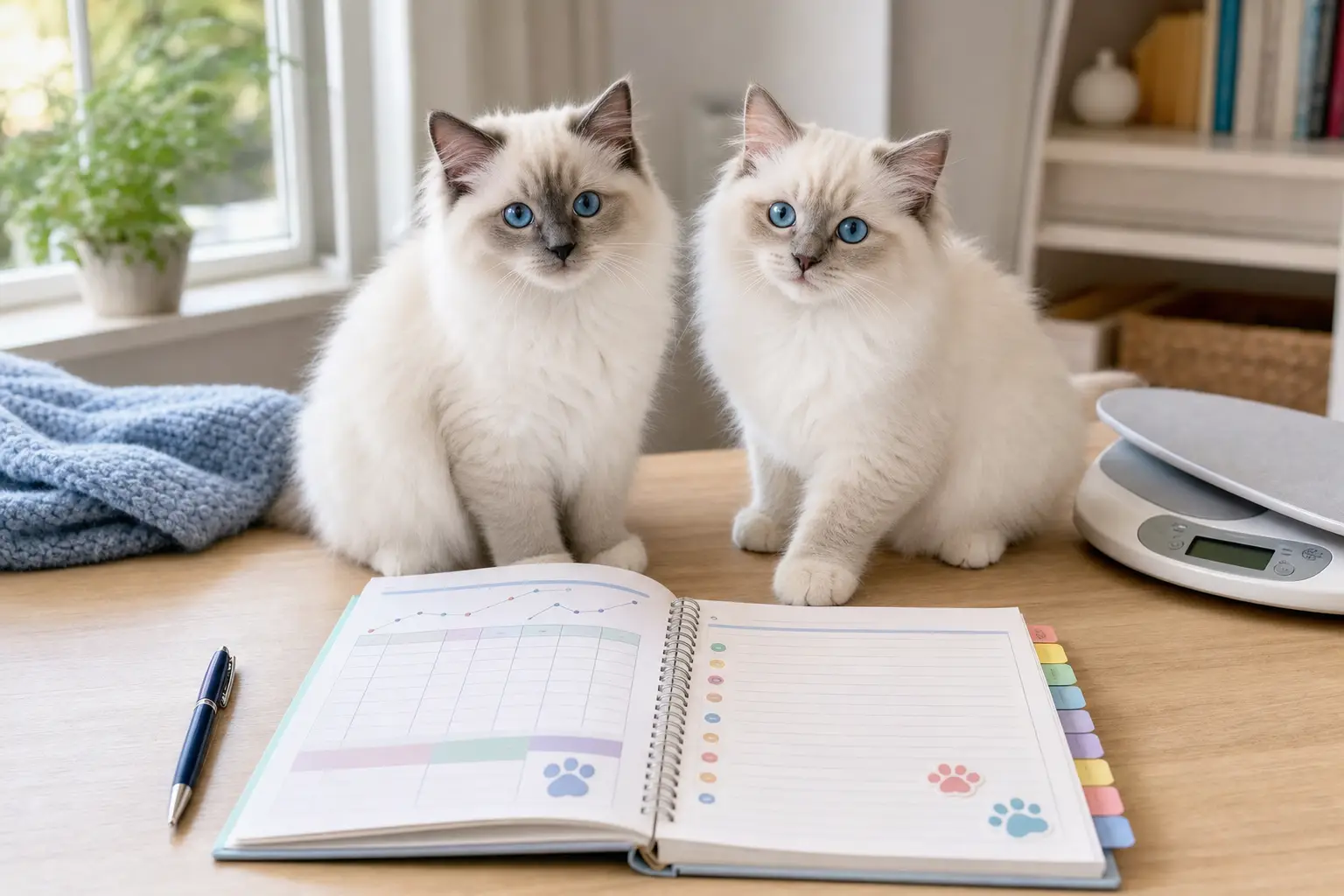
A shared notebook is convenient, but shared pages can create dangerous confusion. Give each Ragdoll kitten a color, symbol, or divider, then use the same identifier everywhere. For example, Luna might have a blue paw symbol and Milo a green one. Use current photographs as well, since collars, names, and coat markings can be misread in a hurry.
| Section | What it is for |
|---|---|
| Household dashboard | Vet contact details, emergency clinic, food brands, litter locations, and shared care routines. |
| Kitten A profile | Photo, microchip number, birth date, weight history, medical records, and individual observations. |
| Kitten B profile | The same information, kept completely separate from Kitten A’s records. |
| Visit and treatment log | Appointments, diagnoses, test results, vaccines, medications, and follow-up dates. |
| Emergency page | Clinic numbers, current medications, allergies or reactions, and transport information. |
The notebook supports your veterinarian’s medical record; it does not replace it. Keep original certificates, laboratory reports, adoption paperwork, and invoices in a labeled envelope or secure digital folder.
11 creative ideas for a kitten health notebook
1. Create a color-coded cover system
Give each kitten a color, icon, or sticker that is easy to recognize at a glance. Put the identifier on the kitten’s profile, weight chart, medication page, and appointment notes. A shared household page can use a third color.
This small design choice matters when both kittens have similar coloring or attend the same veterinary appointment. Avoid relying only on a collar, which may be removed or replaced. Pair the color system with a photograph and microchip number.
2. Make an individual identity snapshot
Reserve one page for each kitten’s basic details: registered name, nickname, sex, birth date, adoption date, current photo, microchip number, breeder or shelter contact, and primary veterinarian. Add distinctive markings, such as a darker ear, nose pattern, or paw marking, if present.
Record the microchip number from official paperwork or a veterinary scan rather than copying it from memory. If a kitten’s registration name changes, keep the former name in parentheses so older records remain understandable.
3. Add a one-page household dashboard
The front page should answer practical questions quickly. List the regular clinic, after-hours clinic, clinic phone numbers, feeding schedule, food and litter brands, insurance details if applicable, and the locations of carriers and first-aid supplies.
Include a simple home map showing litter boxes, feeding areas, water stations, and sleeping spaces. This helps you describe environmental changes to your veterinarian if one kitten begins avoiding a particular area or resource.
4. Build a first-month timeline
Use a two-column timeline beginning with adoption day. Record the kitten’s previous diet, recent deworming or parasite treatment, vaccine history, last known weight, and any advice supplied by the breeder, rescue, or previous owner. Then add your own dates for the first examination, diet changes, and settling-in observations.
Keep facts separate from assumptions. Write “soft stool twice on Tuesday” rather than “stomach problem,” unless a veterinarian has made that assessment. Clear observations are more useful than premature labels.
5. Track weight as a trend, not a competition
Give each kitten a separate weight chart. Record the date, approximate time, scale used, and weight. Weigh under similar conditions when possible, but do not compare the kittens as though they should be the same size. Genetics, age, sex, body frame, and feeding habits all affect normal growth.
A trend that concerns you is more meaningful than one isolated number. Contact your veterinary practice if a kitten is not gaining as expected, loses weight, or develops a change in appetite or energy. Ragdolls have a semi-long coat and may look larger than their actual body condition, so your veterinarian’s hands-on assessment is valuable.
6. Turn vaccines and parasite care into a calendar
Create one page per kitten for vaccines and parasite prevention. Record the product name, date given, clinic, next recommended date, and any reaction observed. For parasite products, include the date administered and the product exactly as written on the label or veterinary record.
Do not assume that two kittens need identical schedules simply because they live together. Their age, history, health, lifestyle, and local parasite risks can differ. The 2020 AAFP feline vaccination guidelines explain why vaccination plans should be individualized with veterinary guidance.
7. Use a medication and reaction card
For every prescribed medicine, write the kitten’s name, medication, strength, dose, frequency, reason, start date, stop date, and prescribing clinic. Add a checkbox for each dose if several people provide care. Never put both kittens on the same medication page without clearly marking who received it.
Record suspected side effects separately from confirmed allergies. Note what you saw, when it began, and what the clinic advised. Do not share medication between cats or give human medicine unless a veterinarian has specifically instructed you to do so.
8. Establish an appetite and litter baseline
For the first few weeks, record what each kitten normally eats, how eagerly they approach meals, stool consistency, urination observations, and general energy. You do not need to document every routine litter-box visit forever. The purpose is to learn each kitten’s normal pattern so a meaningful change is easier to notice.
In a shared home, write down which kitten you actually observed. If you are unsure, say “uncertain” rather than assigning the event to the wrong cat. A short note such as “Milo left breakfast untouched; Luna ate normally” is more useful than a vague household entry.
9. Add a Ragdoll grooming and body-check page
Ragdolls’ semi-long coats make regular notes about brushing, matting, nail trims, and skin changes practical. Record what grooming was completed and whether either kitten resisted because of pain, sensitivity, or fear. A gradual handling plan can help kittens become comfortable with paw, ear, mouth, and coat checks.
Use the page for observations, not home diagnosis. Note a new lump, persistent dandruff, bald patch, ear discharge, sore mouth, or change in movement and ask your veterinary practice for advice. Include a photo when it can show how a skin or coat change is developing.
10. Keep a question parking lot for appointments
Questions often disappear once you are in the examination room. Keep a running list for each kitten, with the date the question arose. Examples include whether a food transition is appropriate, when a booster is due, whether a genetic screening document needs interpretation, or how to introduce a new grooming routine.
Leave space for the veterinarian’s answer, follow-up instructions, and the person who gave the advice. If a breeder supplied health or genetic paperwork, file a copy and ask the veterinarian how it applies to the individual kitten. A screening result is background information, not a substitute for an examination.
11. Prepare a grab-and-go emergency page
Put the most urgent information on one removable page or inside the notebook cover. Include both kittens’ names and photos, microchip numbers, current medications, known reactions, clinic contacts, emergency clinic details, carrier locations, and a trusted backup caregiver.
Add a space for the date and time of an incident, what you observed, and who you called. If a kitten has difficulty breathing, collapses, cannot urinate, has repeated vomiting, shows severe lethargy, or may have encountered a toxin, contact a veterinarian or emergency clinic promptly rather than waiting to complete the notes. The Merck Veterinary Manual’s emergency guidance can help families recognize situations that need immediate veterinary attention.
How to keep the notebook useful
- Update it at predictable times. Add entries after veterinary visits, medication doses, weigh-ins, and major diet changes.
- Write observations before interpretations. Include time, frequency, amount when known, and the kitten involved.
- Bring it to appointments. Your notes can reveal patterns that are difficult to remember, especially when both kittens share food, litter areas, and routines.
- Back up irreplaceable records. Photograph vaccine certificates, test results, and microchip paperwork, then store the files securely.
When the notebook should become a vet call
A notebook is best for spotting patterns and communicating clearly, not for deciding whether a symptom is harmless. Call your veterinary practice when a kitten has a persistent or worsening change in appetite, vomiting or diarrhea, unusual tiredness, breathing changes, pain, sudden behavior change, or a noticeable weight concern. If both kittens become ill, mention that they share food, water, litter areas, and living space.
Write down the time symptoms began, what each kitten consumed, recent products or medications, and whether the other kitten is affected. Those details can help the clinic triage the situation more efficiently.
FAQ
Should each Ragdoll kitten have a separate notebook?
Not necessarily. One notebook can work well if each kitten has a dedicated divider, color, photo, and clearly labeled records. Separate notebooks may be easier if the kittens have different medical conditions, medications, or appointment schedules.
What if I cannot tell which kitten used the litter box?
Record only what you know. You can write “litter-box output not attributed” and continue observing. If one kitten has urinary or digestive symptoms, ask your veterinarian how to monitor that cat safely rather than guessing from shared-box evidence.
Is a health notebook a substitute for veterinary records?
No. Use it as a communication and organization tool. The clinic’s chart, laboratory reports, prescriptions, and official vaccination certificates remain the primary medical records.
Make the notebook part of everyday care
The best kitten health notebook is not elaborate; it is accurate, easy to update, and designed around the reality of two cats sharing one home. Start with identity pages, a household dashboard, and separate tracking for weight, treatments, and observations. Add creative details such as color coding, photo comparisons, and a grab-and-go emergency page only when they make the information easier to use.
For more practical guidance on welcoming and caring for Ragdoll kittens, explore CTkittens.com.
Trusted reading

Rachel Cohen is a journalist and producer with a passion for audio storytelling, health and science reporting, and feline companions.
A graduate of Middlebury College, Rachel spends her weekends exploring the mountains and when she isn’t outdoors or chasing a story, she can usually be found hanging out with her cats.