
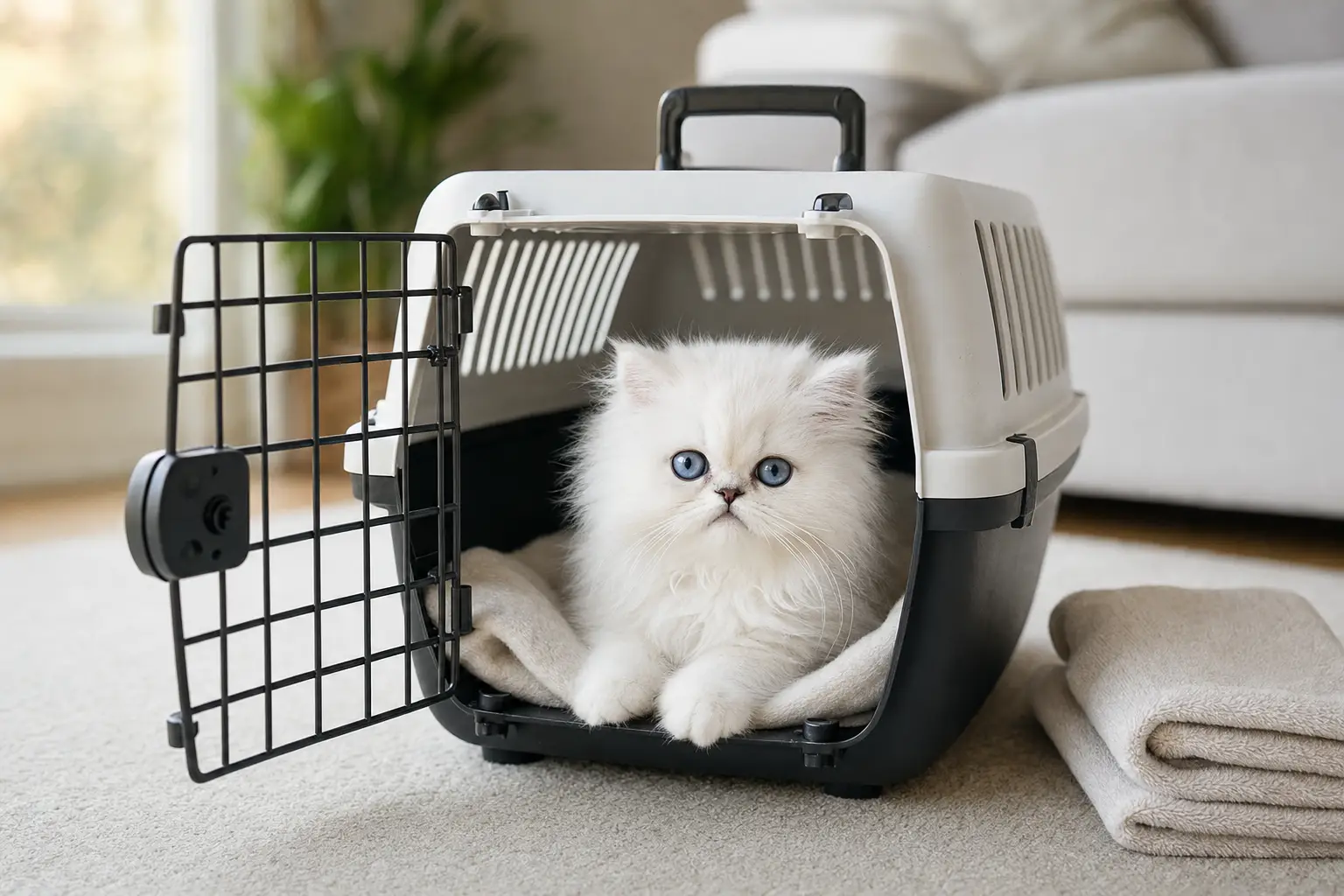
Short answer: Leave the carrier open in a quiet area, line it with a clean item that already smells like your Persian kitten, and reward relaxed exploration. Over several short sessions, build from entering the carrier to brief door closures, gentle lifts, and short car rides. Familiar scent can make the carrier feel recognizable, but it works best alongside patient, gradual training.
For a long-haired kitten, the goal is not to force the carrier to become a favorite overnight. It is to make the carrier predictable, comfortable, and unremarkable before the first veterinary appointment or journey.
Why familiar scents can help a Persian kitten
Cats experience their surroundings through scent as well as sight and sound. A carrier that smells like home, a sleeping area, or a trusted person may seem less unfamiliar than one that has been stored in a cupboard and brought out suddenly.
That does not mean a particular scent will calm every kitten. A familiar blanket cannot replace gradual exposure, and some cats become distressed by strong or unfamiliar odors. Think of scent as one piece of the carrier setup: it helps preserve continuity between the kitten’s safe home area and the carrier.
The best scent is usually the kitten’s own scent. A small washable blanket, towel, or piece of bedding from a favorite resting place is more useful than perfume, scented fabric spray, or a heavily fragranced laundry product.
Set up the carrier as a safe den
Choose a practical carrier
Pick a sturdy carrier with good ventilation, a secure latch, and enough room for your kitten to stand, turn around, lie down, and adjust position. Avoid choosing an extremely large carrier for a small kitten; excessive empty space can allow uncomfortable sliding during travel.
A carrier with a wide front opening or a removable top can be helpful. It gives a nervous kitten more than one way to enter and allows a veterinarian to examine the cat with less handling. The carrier should also be easy to clean, because accidents are more likely when a young cat is frightened or traveling for a long time.
- Use ventilation on several sides, not just a small opening at the front.
- Check that the door and fasteners close securely before every trip.
- Place a thin, non-slip layer underneath the bedding so the floor does not shift.
- Keep loose strings, ribbons, and small toys out of the carrier.
- Follow the carrier manufacturer’s instructions for securing it in the vehicle.
Start with the kitten’s own bedding
Place a clean item from your kitten’s sleeping area inside the carrier. It should carry a familiar scent without being so thick that it restricts space or traps heat. A small fleece, towel, or washable cotton blanket usually works well.
If your kitten has no bedding yet, place a clean cotton cloth in the kitten’s resting area for a day or two, then move it into the carrier. You can also use a plain cotton shirt that has been worn briefly, provided it has no loose threads, buttons, drawstrings, strong detergent, perfume, or deodorant smell.
Do not deliberately add essential oils, air fresheners, scented sprays, or cat perfume. Some fragranced products can irritate cats, and certain essential oils are unsafe around them. Familiar should mean gentle and natural, not intense.
Keep the carrier available
Put the open carrier in a room where your kitten already feels comfortable. Position it away from loud appliances, drafts, direct sun, and busy walkways. Leave the door secured open or remove it temporarily so it cannot swing and frighten the kitten.
Refresh the bedding when it becomes dirty, but do not wash every familiar item at once if you can avoid it. If your kitten has an accident, remove the soiled material, clean the carrier with an unscented cat-safe product, allow it to dry fully, and replace the bedding with another familiar item.
Persian kitten carrier training: a gradual plan
Some kittens investigate a carrier immediately; others need days or weeks. Progress should be measured by relaxed behavior, not by a deadline. Keep sessions short and stop before your kitten becomes overwhelmed.
- Make the carrier part of the room. For the first several days, simply leave it open with familiar bedding inside. Do not put your kitten in it or close the door. Quietly reward investigation with praise, gentle attention, or a small treat if your kitten enjoys food rewards.
- Move rewards closer. Place a treat near the entrance, then just inside, and eventually farther toward the back. Let your kitten choose whether to follow it. Meals can be offered near the carrier, but do not withhold food to force entry.
- Allow comfortable resting. Once your kitten enters willingly, leave the carrier undisturbed. A kitten that naps inside is building a valuable association: this is a normal resting place, not a signal that something frightening is about to happen.
- Practice the door briefly. Close the door for one or two seconds, then open it while your kitten is still calm. Gradually extend the time over multiple sessions. If your kitten paws frantically, cries intensely, presses against the door, or tries to escape, shorten the next session and return to an easier step.
- Add gentle movement. When your kitten can relax behind the closed door, lift the carrier a few inches, put it down, and reward calm behavior. Later, walk a short distance around the room. Keep the carrier level and use two hands.
- Introduce the vehicle in stages. Begin with the carrier secured in a parked vehicle and the engine off. On another day, try the engine briefly. Then take a very short drive and return home. Increase trip length slowly, using a quiet route when possible.
Never chase a kitten around the house and push them into the carrier as the regular training method. One unavoidable difficult trip will not ruin the process, but repeated force can teach the kitten that the carrier predicts restraint and fear.
Using scent on the day of travel
Use the same bedding your kitten has learned to recognize during training. Pack a second clean piece of fabric in case the first becomes wet or soiled. For longer journeys, place an absorbent pad beneath the familiar bedding, rather than putting an unstable pile of towels inside the carrier.
Keep the carrier level and out of direct sunlight. A breathable cover over part of the carrier may reduce visual stimulation, but do not cover all ventilation openings or allow the carrier to become hot. Never leave a kitten alone in a parked car, even when the windows are partly open.
For feeding before travel, follow your veterinarian’s advice, especially if your kitten becomes nauseated or the trip is long. Do not give human motion-sickness medicine, sedatives, or calming products unless a veterinarian has specifically prescribed or approved them for your kitten.
Do not open the carrier outdoors, in a parking area, or inside an unfamiliar building unless there is a genuine emergency and a professional has advised you. A frightened kitten can escape in seconds.
Long-hair and Persian-specific considerations
A Persian kitten’s coat needs a little extra planning. Brush or comb gently and regularly so the coat is free of painful mats before travel. Do not introduce an intense grooming session immediately before a trip if grooming itself is stressful. A calm, familiar routine is better than trying to complete every care task at once.
Keep the carrier comfortably cool and avoid thick bedding that takes up most of the interior. Some Persian cats have shortened facial anatomy, and breathing and heat tolerance can vary between individuals. Watch for persistent open-mouth breathing, pronounced breathing effort, weakness, collapse, or gums that look blue, gray, or unusually pale. These signs require urgent veterinary attention.
A little vocalizing during a first ride may happen, but distress that continues after the car is cool and quiet deserves attention. Ask your veterinarian about travel planning if your kitten has noisy breathing at rest, repeated vomiting, severe motion sickness, or a history of becoming extremely panicked.
Common carrier mistakes to avoid
- Bringing it out only for appointments: Keep the carrier visible and usable between trips.
- Using strong scents: Avoid perfume, fragranced cleaners, essential oils, and heavily scented laundry products.
- Forcing progress: If your kitten is frightened, return to the last step where they were relaxed.
- Overfilling the carrier: Familiar bedding should provide traction and comfort without reducing airflow or movement.
- Ignoring the carrier floor: A slippery base can make a kitten feel unstable. Use a fitted, non-slip layer beneath the bedding.
- Waiting until the first emergency: Practice calm loading before you need to travel urgently.
Frequently asked questions
Should I use my scent or my kitten’s scent?
Your kitten’s own bedding is the best starting point. A plain item carrying a trusted person’s mild scent can also help, but it should not replace the kitten’s familiar bedding or be strongly fragranced.
Can the carrier stay out all the time?
Yes. An open carrier in a quiet, familiar area can become an ordinary resting option. Add bedding, offer occasional rewards nearby, and never use the carrier as punishment.
What if my kitten refuses to enter?
Do not push or pull the kitten inside during practice. Move rewards back to the entrance, make the room quieter, and give your kitten more time. You may also remove the carrier’s top temporarily if the design allows it safely, then rebuild the association with the bottom half before replacing the top.
How long does Persian kitten carrier training take?
There is no universal timetable. A confident kitten may accept the carrier within a few days, while a cautious kitten may need several weeks. Five-minute sessions repeated regularly are usually more useful than one long session.
The goal is familiarity, not perfection
Familiar scents give your Persian kitten a recognizable starting point, while gradual practice teaches them that entering the carrier does not always lead to something frightening. Keep the carrier stable, cool, clean, and available between trips. If your kitten becomes distressed, slow down rather than adding more treats, more handling, or stronger scents.
These recommendations reflect broader feline environmental-enrichment principles described in the AAFP/ISFM Feline Environmental Needs Guidelines. Your veterinarian can adapt the plan for your kitten’s breathing, motion-sickness, temperament, and health needs.
Ready for more practical guidance? Explore CTkittens.com for additional Persian kitten care and long-hair beginner resources.

Rachel Cohen is a journalist and producer with a passion for audio storytelling, health and science reporting, and feline companions.
A graduate of Middlebury College, Rachel spends her weekends exploring the mountains and when she isn’t outdoors or chasing a story, she can usually be found hanging out with her cats.

