
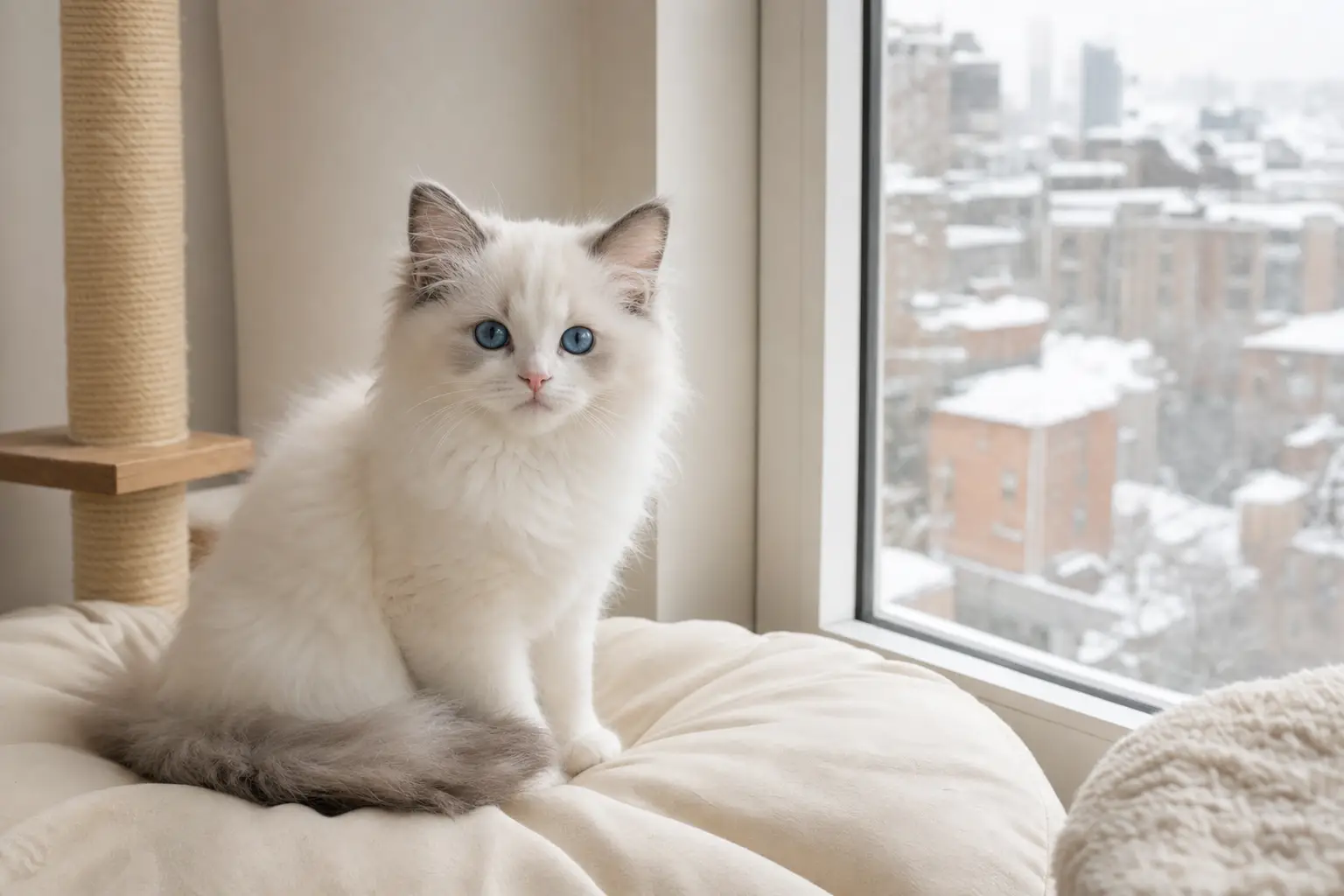
Ragdoll Kitten Window Seat: A Cozy Winter Routine
A Ragdoll kitten window seat does not need to be elaborate. In a small apartment, the best version is a stable perch beside a securely closed or properly screened window, topped with a washable layer and checked for hazards each day.
Plan for about ten minutes of maintenance daily. Use those minutes to inspect the window, refresh the bedding, remove tempting hazards, and notice whether your kitten is actually comfortable. The first setup may take several short sessions, but you do not need to complete a furniture project all at once.
The ten-minute daily reset
Consistency matters more than decoration. A simple routine keeps the seat clean, secure, and inviting while helping you spot changes in your kitten’s behavior.
| Time | Task | What to check |
|---|---|---|
| Minutes 1–2 | Inspect the window area | Confirm the window is latched, the screen is intact, and blind or curtain cords are secured out of reach. |
| Minutes 3–4 | Refresh the seat | Shake out the blanket, remove fur, and check for dampness, loose threads, or anything your kitten could chew. |
| Minutes 5–7 | Improve the view | Adjust a sheer curtain, rotate one safe toy, or move a nearby object that blocks the perch. |
| Minutes 8–10 | Observe your kitten | Look for relaxed body language, normal appetite and energy, and signs that the seat is too cold, hot, bright, or exposed. |
Put interactive toys such as wand toys, ribbons, and string away after play. They can be fun when supervised but should not be left beside a kitten that may chew or become tangled in them.
Choose the safest spot in your apartment
Start with the window, not the cushion. A beautiful bed cannot make an unsafe window safe.
Prefer a closed window or a properly secured screen
A standard insect screen is not a reliable barrier for a curious kitten. It may loosen, tear, or pop out when pushed. If you want fresh air, use a screen or window guard designed to resist pet pressure and installed according to the manufacturer’s instructions. Inspect it every day, especially after cleaning the window.
Never leave a kitten beside a wide-open apartment window, even if the sill seems too narrow to sit on. Height, curiosity, and an unexpected noise can turn a quiet moment into a fall. Tilted windows can also create dangerous gaps, so avoid leaving them open unless a suitable guard prevents access to the opening.
Keep cords, heaters, and unstable furniture away
Window blind cords and curtain loops should be shortened, secured, or replaced with cordless coverings. The U.S. Consumer Product Safety Commission provides window-covering safety guidance for reducing cord hazards.
Do not place the perch directly over a radiator, portable heater, or heating vent. Avoid positioning it where a kitten can pull down a lamp, curtain rod, plant, or tall bookcase. If the seat is on a shelf, verify that the shelf is correctly anchored and rated for the eventual adult cat, not just a small kitten.
Build a Ragdoll kitten window seat that grows with your cat
Ragdolls are often described as substantial, long-haired cats, so choose equipment with the adult cat in mind. A perch that feels roomy now may become cramped later. Look for a broad, stable surface with enough space for your cat to turn around, stretch, and settle without balancing on an edge.
For a renter-friendly setup, consider a freestanding cat tree placed beside the window, a sturdy bench with a washable cushion, or a wide, properly supported sill. Suction-mounted beds can be convenient, but they should not be your only safety measure. If you use one, follow its weight limit, clean the glass as directed, and inspect every attachment before your kitten climbs up.
A practical setup usually includes:
- A stable base that does not wobble when your kitten jumps onto it.
- A washable fleece or cotton cover with no loose loops or fraying edges.
- A non-slip layer beneath the cushion if the surface slides.
- A small amount of clearance from the glass so the bed does not become damp from condensation.
- A clear route down, without exposed cables or sharp furniture corners.
- A second resting option nearby in case your kitten prefers a darker or warmer place.
Keep the fabric warm, not heavy and restrictive. A thick blanket that bunches under the paws can make it harder for a young kitten to climb down. Wash the cover regularly and use fragrance-free detergent if your kitten has sensitive skin or dislikes strong scents.
Make winter comfort safe, not overheated
Cold glass and drafts can make a window seat uncomfortable, but more heat is not always better. Block a draft around the window frame if your building allows it, while keeping the window’s locks and emergency access unobstructed. A rolled draft stopper placed below the frame can help, provided your kitten cannot chew it or move it into the opening.
Skip human electric heating pads. They can become dangerously hot, and their cords invite chewing. If you decide to use a heated pet bed, choose a product made for animals, follow its instructions closely, protect the cord, and do not use it as a substitute for supervision. A kitten should always be able to move off the warm surface.
Watch your kitten’s choices rather than assuming the seat is comfortable because it feels cozy to you. A kitten that repeatedly leaves, crouches tightly, avoids touching the cushion, or seeks a warmer room may be telling you that the location needs adjustment. Persistent weakness, unusual sleepiness, difficulty breathing, or a body that feels unusually cold warrants prompt veterinary advice.
Use the view as enrichment
A window gives a kitten changing sights, sounds, and scents, but it should be one part of the home environment rather than the only source of stimulation. Cornell University’s guidance on feline environmental enrichment supports offering cats varied opportunities to explore, play, rest, and make choices.
For a ten-minute rotation, you could place a treat puzzle on the floor near the perch, move a scratching post into view, or offer a supervised toy after your kitten has settled. Do not crowd the seat with accessories. A clear landing area is more useful than a pile of toys.
Ragdolls are individuals. Some will spend hours watching birds and pedestrians; others may prefer being close to their person or napping in a covered bed. Never place a kitten on the perch and hold it there to create a photo. Let the seat become familiar at the kitten’s own pace. Reward calm investigation with a small treat or gentle attention if your kitten enjoys it.
Protect the window view from common apartment hazards
Review the area at least once a week in addition to the daily reset. Look for new risks created by seasonal decorations, moving furniture, or an open package left nearby.
- Plants: Check every plant within reach against the ASPCA’s list of plants toxic to cats. When uncertain, move the plant away until you can identify it.
- Small objects: Remove ornaments, rubber bands, twist ties, batteries, and dangling decorations.
- Condensation: Dry wet surfaces and wash any bedding that becomes damp. Persistent moisture may indicate a building or window problem that needs attention.
- Sun exposure: Provide shade or a retreat away from direct sun, especially if the seat warms quickly through the glass.
- Escape routes: Keep balcony doors closed unless they have a genuinely secure barrier designed to prevent access.
Long fur can collect dust and loose fibers around a perch, so include a quick brush or comb in your normal grooming routine if your kitten tolerates it. Groom gently and stop if the kitten becomes distressed. The goal is comfortable care, not forcing a session beside the window.
A simple setup plan for busy days
If ten minutes is all you have, use the first day to solve safety and the next few days to improve comfort.
- Day one: Choose the location, secure the window, remove cords, and test the base for wobbling.
- Day two: Add a washable cover and a non-slip layer. Sit beside the perch and check the temperature and draft at kitten level.
- Day three: Add one scratching option or toy, then leave the area uncluttered.
- Day four: Watch how your kitten approaches and leaves. Move the seat only if the route is awkward or the kitten avoids it.
- Ongoing: Complete the ten-minute reset and wash the cover when it needs it.
This approach is especially useful in an apartment because it avoids permanent modifications and makes problems visible early. A calm, dependable nook will usually serve your kitten better than an expensive setup that is difficult to clean or impossible to secure.
Frequently asked questions
Should a Ragdoll kitten have a heated window bed?
Not necessarily. A dry, insulated, washable bed away from drafts is often enough. If you use a heated pet bed, choose one designed for animals, follow the instructions, protect the cord, and make sure the kitten can leave the warm area freely. Never use a human heating pad.
Can I open the window for fresh air?
Only when a properly fitted, pet-resistant screen or guard prevents the kitten from reaching the opening or pushing the barrier loose. A regular insect screen should not be treated as fall protection, particularly in a high-rise apartment.
What if my kitten ignores the window seat?
That is normal. Try moving the perch closer to where the household spends time, reducing glare, or adding a nearby scratching post. Offer a treat when your kitten investigates, but do not force the kitten onto the seat. Some cats simply prefer a different resting place.
Make the window seat part of your kitten’s home
The ideal winter window seat is warm enough, washable, stable, and easy to leave. Spend ten minutes a day checking those basics, then let your Ragdoll kitten decide how to use the space.
For more guidance on welcoming and caring for a Ragdoll kitten, explore CTkittens.com and find ideas for creating a comfortable home from the first day.

Rachel Cohen is a journalist and producer with a passion for audio storytelling, health and science reporting, and feline companions.
A graduate of Middlebury College, Rachel spends her weekends exploring the mountains and when she isn’t outdoors or chasing a story, she can usually be found hanging out with her cats.


The bit about regular insect screens popping out is lowkey the most important part, cause my cat leaned on ours once and the whole thing nearly went yeet out the window.
Honestly the reminder that regular insect screens ain’t cat-proof was the real MVP here, cause my little dude launches at pigeons like rent is due.
Anyone else think the “build for the adult cat, not the kitten” bit is lowkey the smartest advice here, cause Ragdolls get huge way faster than ya expect?
Kinda wild how the smartest bit is buying the perch for the future chonky adult instead of the tiny kitten, cause otherwise you’re replacing the whole setup in like six months lol.
Only bit I’d push back on is the daily toy rotation, cuz my Ragdoll ignores every “enrichment” item and just beefs with pigeons through the glass lol.
Honestly, planning the perch for a full-grown Ragdoll instead of their tiny kitten size is the bit most folks gonna forget, those fluffy dudes get huge lol.
Sizing the perch for the eventual chonky adult instead of the tiny kitten is such an easy detail to miss, saved me buying the same setup twice lol.