Ragdoll Kittens: 9 Easy-Clean Water-Bowl Styles to Try
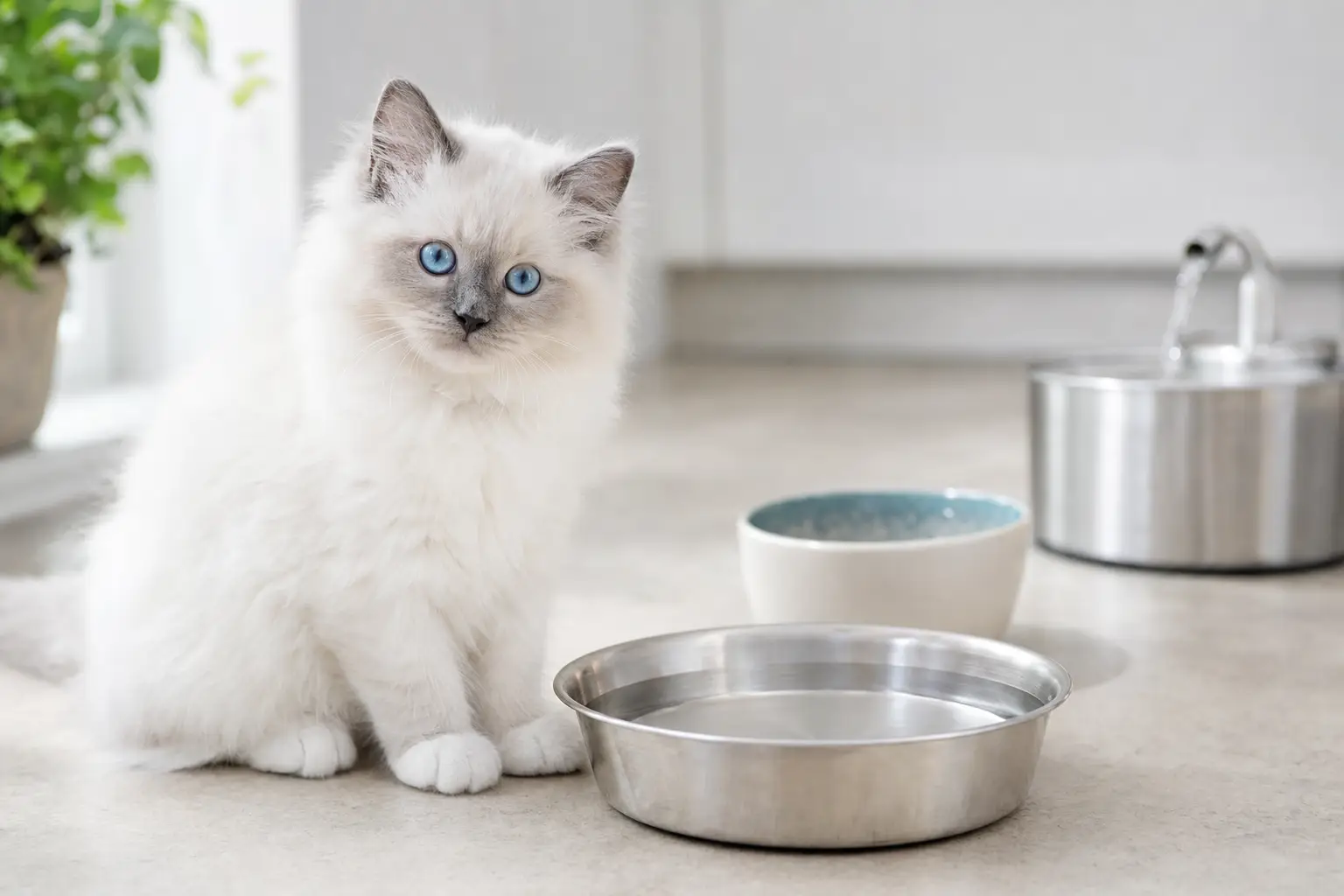
If you want a reliable Ragdoll kitten water bowl, start with a wide, low stainless steel bowl that has a heavy, non-slip base. Stainless steel is durable, smooth, and usually simple to wash. From there, you can test whether your kitten prefers ceramic, glass, a raised bowl, or moving water from a fountain.
There is no single bowl that every Ragdoll will choose. The best option is the one your kitten can reach comfortably, does not tip easily, stays fresh, and fits your cleaning routine. Because Ragdolls grow into large, semi-longhaired cats, it is sensible to plan for stability and wet fur around the chin or chest without assuming that every kitten needs a deep or elevated bowl.
What makes a good water bowl for a Ragdoll kitten?
Look for a bowl that is easy for a small kitten to approach and easy for you to clean every day. A useful starting checklist includes:
- A wide opening: A broad bowl gives your kitten room to drink without pressing its face against the sides. Some cats also prefer a low, saucer-like shape.
- A stable base: Choose a heavy bowl or one with a non-slip ring so enthusiastic paws are less likely to send water across the floor.
- A smooth, intact surface: Stainless steel, sound glazed ceramic, and glass are generally straightforward to rinse and scrub. Avoid chipped glaze, cracks, rust, or deep scratches.
- A comfortable height: Kittens should not need to stretch or climb. A raised design can be tested, but it is not automatically better.
- Simple parts: Fountains and dispensers should come apart easily, including the pump and any narrow channels where residue can collect.
Water intake also depends on diet. A kitten eating wet food may drink less visibly from a bowl than one eating dry food, so bowl visits alone do not tell the whole hydration story. Cornell University’s Feline Health Center explains that a cat’s water needs can vary with food, activity, environment, and health. You can read its cat hydration guidance for more context.
9 water-bowl styles worth trying
These options are not ranked from universally best to worst. They cover different preferences, homes, and cleaning priorities.
| Style | Best for | Cleaning consideration |
|---|---|---|
| Shallow stainless steel | Most homes and first trials | Durable and dishwasher-friendly when labeled |
| Wide glazed ceramic | A quiet, heavy bowl | Inspect regularly for chips and cracks |
| Glass | Owners who want a smooth, visible surface | Easy to rinse but can break |
| Enamel-coated metal | A stable alternative to plain steel | Discard if the coating chips |
| Low raised stainless steel | Kittens that prefer a slightly higher rim | Choose a removable, washable bowl |
| Stainless steel fountain | Cats attracted to moving water | Requires pump and filter maintenance |
| Ceramic fountain | Homes needing a heavier, quieter fountain | More weight; pump still needs cleaning |
| Silicone travel bowl | Trips and temporary use | Dry the folds completely after washing |
| Gravity dispenser with steel insert | Keeping a reserve available | Reservoirs can collect stale water and residue |
1. Wide, shallow stainless steel bowl
This is the most practical first choice for many kittens. A wide opening makes the water easy to access, while a heavy base helps prevent spills. Stainless steel does not absorb odors, and many bowls can go in the dishwasher. Select a food-grade bowl with smooth seams, a level base, and no rough edges. Avoid very deep containers that force a small kitten to lean over the rim.
2. Wide glazed ceramic bowl
Ceramic is heavy, quiet, and available in stable, low-profile shapes. An intact, well-glazed surface is easy to wash, and the weight can be useful for kittens that push bowls around. Look closely at the glaze each time you clean it. Hairline cracks and chips are difficult to clean thoroughly and can create sharp edges, so replace damaged bowls rather than continuing to use them.
3. Tempered glass bowl
Glass offers a smooth surface and makes it easy to see the water level and any debris. A heavy, pet-safe glass bowl can work well in a quiet feeding area, especially if your kitten dislikes the sound of a metal bowl. The trade-off is breakage. Put it on a stable mat away from edges, and do not use it if it becomes chipped or cracked.
4. Enamel-coated metal bowl
An intact enamel coating combines some of the stability of metal with a smooth, easy-clean surface. It can be a useful choice if you prefer a colorful or traditional-looking bowl. Check the rim and interior for chips, especially after drops or rough handling. Once the coating is damaged and the underlying metal begins to rust, replace the bowl.
5. Low raised stainless steel bowl
A modestly raised bowl may suit a kitten that seems more comfortable with the water a little higher off the floor. It can also help keep the bowl from sliding if the stand is broad and heavy. Do not choose a tall feeder simply because Ragdolls become large cats; a kitten should be able to drink without stretching, climbing, or standing awkwardly. Look for a removable steel insert and a stand that can be washed around the base.
6. Stainless steel drinking fountain
Some cats are interested in moving water, and a fountain may encourage more visits. Stainless steel is a sensible fountain material for the drinking basin because it is durable and easy to wipe clean. The pump is the part that demands extra attention. Hair, food particles, and biofilm can collect in the intake and narrow channels. Keep a plain bowl available during introduction, and never assume that a fountain is self-cleaning because it has a filter.
7. Ceramic drinking fountain
A ceramic fountain has a substantial base and may be quieter or harder for a playful kitten to move. The glazed basin is usually easy to wash when it is intact. Its disadvantages are weight and hidden pump components. Before buying, confirm that the basin, spout, pump housing, and tubing can be separated and cleaned. A fountain that looks attractive but has inaccessible channels can become a frustrating long-term choice.
8. Food-grade silicone travel bowl
Silicone bowls are lightweight and useful for car trips, visits, or carrying a backup water dish. Choose one made for food or pet use, with a firm rim and no strong chemical odor. Wash it after travel and dry the folded areas completely. Flexible silicone is usually better as a portable option than as the only everyday bowl, particularly if your kitten likes to chew, flip, or fold it.
9. Gravity dispenser with a stainless steel insert
A gravity station can keep water available for longer periods and may suit a home where a kitten empties a small bowl quickly. Choose a model with a removable stainless steel drinking area and a reservoir that opens wide enough to scrub. It still needs frequent cleaning: standing water can become stale, and the reservoir may collect slime even when the drinking area looks clear. A dispenser should not replace fresh checks, especially for a young kitten.
How to find your kitten’s favorite style
Preference testing works best when you change one feature at a time. Start with a stable stainless steel bowl in a quiet location. Once your kitten is using it comfortably, place a second option nearby for several days. Keep the water the same in both bowls and observe which one is visited, tipped, pawed at, or ignored.
Try these adjustments if needed:
- Switch from a deep bowl to a wide, low one if the kitten hesitates or gets its chin wet.
- Use a heavier bowl or a washable non-slip mat if spills are the main problem.
- Move the station away from a litter box, loud appliance, or busy walkway if your kitten seems watchful while drinking.
- Offer a fountain beside the regular bowl rather than removing the familiar option immediately.
- Keep water fresh and use multiple stations if your home has more than one floor or your kitten spends time in separate rooms.
Do not force a kitten to use a fountain or raised bowl. A simple bowl that is used consistently is more useful than an elaborate design that makes your cat uncomfortable.
Easy-clean care that keeps water fresher
Refresh the water at least daily, and wash the bowl whenever it feels slick, develops an odor, or contains visible debris. Hot water and dish soap are usually appropriate for washable pet bowls; rinse thoroughly so no soap remains. The U.S. Food and Drug Administration offers safe pet-food handling guidance that recommends washing pet-food bowls and utensils with hot, soapy water after use. Applying that same careful routine to a water bowl is a sensible habit.
Dishwasher-safe does not mean maintenance-free. Check the manufacturer’s instructions, remove any rubber feet before washing if required, and dry the bowl before refilling it. Wash silicone mats regularly as well, since spilled water and fur can collect underneath the bowl.
For fountains, wash the basin frequently and clean the pump and impeller on the schedule provided by the manufacturer. Replace filters as directed, but do not rely on the filter to remove every surface buildup. If cleaning the pump feels difficult, a plain stainless steel bowl may be the better choice for your household.
When a change in drinking deserves attention
A kitten’s water habits can change with weather, food, activity, and stress. However, a sudden refusal to drink, repeated vomiting or diarrhea, marked tiredness, difficulty urinating, or other signs of illness should not be treated as a bowl-preference problem. Contact your veterinarian promptly, particularly if the kitten is very young. Fresh water and a better bowl are helpful care choices, but they cannot diagnose or treat dehydration or illness.
FAQ
Is stainless steel or ceramic better for a Ragdoll kitten?
Neither is best for every cat. Stainless steel is usually the simplest starting point because it is durable and easy to replace. Ceramic is heavier and quieter, but it must remain free of chips and cracks.
Does a Ragdoll kitten need a water fountain?
No. A fountain is an optional trial for a cat that seems interested in moving water. A clean, stable bowl is perfectly reasonable, and some kittens prefer it.
How often should a kitten’s water bowl be cleaned?
Refresh the water daily and wash the bowl daily or whenever it becomes slimy, dirty, or odorous. Fountains need additional pump and filter care according to their instructions.
Why does my kitten keep tipping the bowl?
The bowl may be too light, the kitten may be playing, or the location may feel uncomfortable. Try a wider, heavier bowl on a washable mat. If the behavior begins suddenly alongside other changes, ask your veterinarian for advice.
Final recommendation
Begin with a low, wide stainless steel bowl, then offer one alternative such as glazed ceramic or a stainless steel fountain. Watch your kitten’s behavior for several days, keep the option that is used comfortably, and choose a design you can clean consistently. For more practical kitten-care guidance and Ragdoll resources, explore CTkittens.com.

Rachel Cohen is a journalist and producer with a passion for audio storytelling, health and science reporting, and feline companions.
A graduate of Middlebury College, Rachel spends her weekends exploring the mountains and when she isn’t outdoors or chasing a story, she can usually be found hanging out with her cats.