
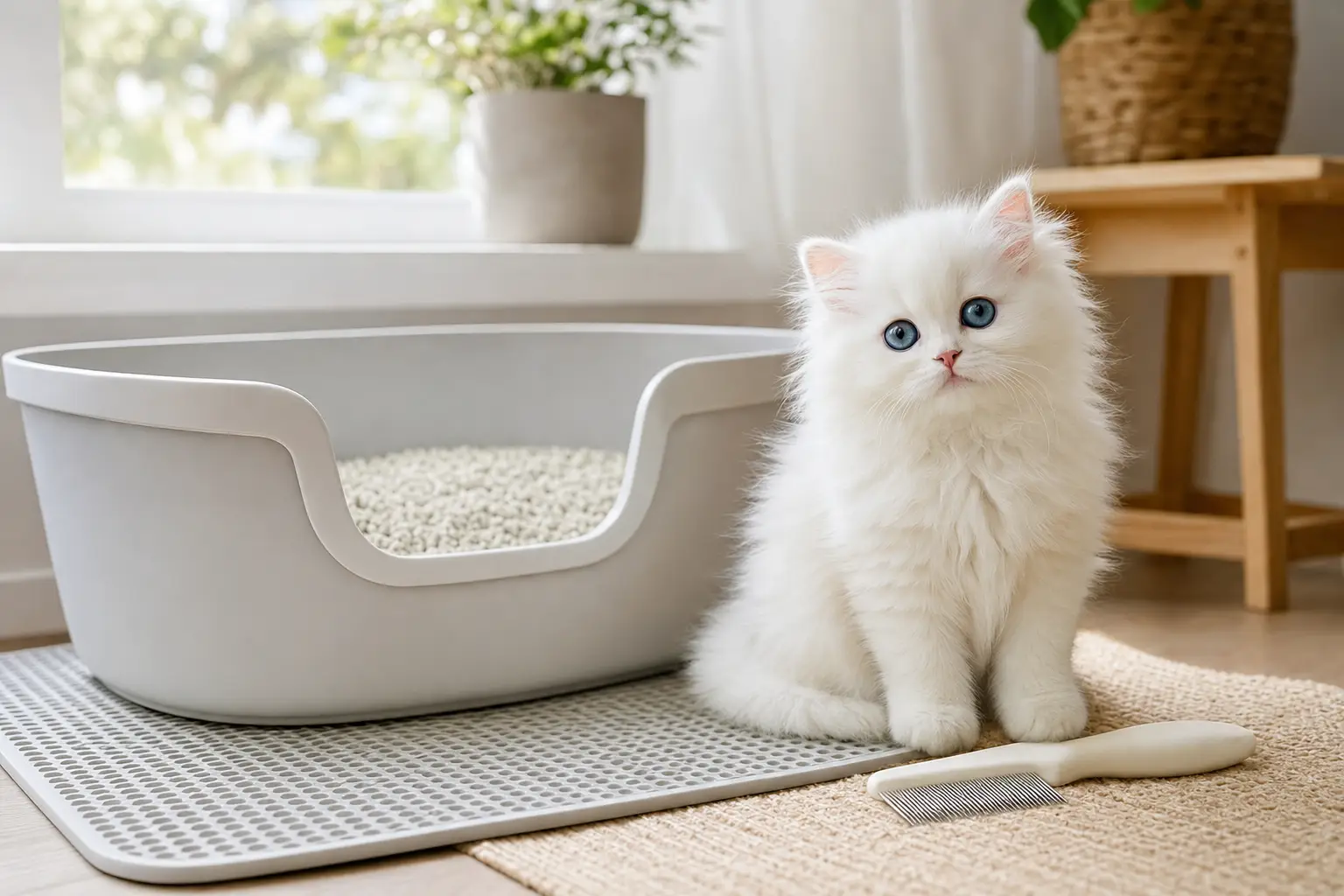
Persian kitten care
Persian Kittens: Choosing a Kitten-Friendly Litter Box
A Persian kitten needs a litter box that is easy to enter, large enough to turn around in, and simple to keep clean. Because long fur can carry damp litter or catch stool, the best setup combines the right box with sensible litter, regular scooping, and gentle grooming.
Bottom line: Start with a stable, open litter box with a low front entrance and roomy interior. Use the unscented litter your kitten already knows when possible, place the box somewhere quiet and accessible, and check the kitten’s paws and hindquarters regularly. A box alone will not keep a long coat tidy, but a thoughtful setup can prevent many avoidable messes.
What makes a litter box kitten-friendly?
The ideal box is not necessarily the smallest one sold for kittens. Small boxes become cramped quickly, and a kitten that cannot comfortably turn around may step in waste or choose another location. A useful starting guideline is a box roughly one and a half times the cat’s body length, measured from the nose to the base of the tail. For a young kitten, choose an adult-sized box only if the entrance is easy to reach and the kitten can use it confidently.
- Low front entry: A short entrance helps small legs get in and out without climbing. A box with a lower front and taller back or sides can offer a practical balance between access and litter scatter.
- Room to turn: Your kitten should be able to circle, dig, squat, and leave without brushing against every wall. Reassess the size as the kitten grows.
- Stable construction: A box that slides, tips, or flexes can make a kitten wary. Place it on a level surface and use a non-slip, washable mat underneath if needed.
- Smooth, washable material: Hard plastic with no deep scratches is easier to clean than porous or damaged surfaces. Replace a box if lingering odors remain after washing.
- Comfortable visibility: An open box is a sensible starting point because you can monitor use and it allows good ventilation. Some cats like covered boxes, while others dislike the confined space or trapped odor.
If you try a covered box later, begin with the lid or flap removed. Let your kitten demonstrate a preference rather than assuming a covered design is automatically cleaner.
Choosing litter for a Persian kitten’s long fur
There is no single litter that every cat will accept. Many kittens do best when their new home initially uses the same litter provided by the breeder, foster home, or rescue. Once bathroom habits are reliable, you can change products gradually if necessary. Sudden changes in texture or scent can lead to avoidance.
For a long-haired kitten, an unscented, relatively low-dust litter is often a practical choice. Strong perfumes and deodorizing additives can cling to fur and may make the box less appealing. Avoid adding air fresheners, essential oils, or fragranced powders around the tray. Cats depend heavily on familiar scent cues, and a box that smells intensely of a human cleaning product may not feel inviting.
Clumping and non-clumping litter each have advantages. Clumping litter can make daily removal easier, but very young kittens may mouth or eat litter. If your kitten is especially young, tries to consume litter, or has a breeder or veterinary care plan, ask a veterinarian which type is appropriate. Do not assume that a product labeled for kittens solves every ingestion risk.
Keep the litter layer moderate rather than filling the box to the rim. About 2 to 5 centimetres is a reasonable starting point for many products, but follow the litter manufacturer’s instructions and watch your kitten’s digging habits. Excessively deep litter is more likely to reach long belly or leg fur, while too little may leave waste on the bottom of the box.
Set up the box to protect the coat
Placement can matter as much as the box itself. Choose a quiet area that is easy for a kitten to reach at all times. Avoid placing the tray beside food and water, next to a noisy washing machine, or in a location where a dog, child, or another cat can block the exit. A kitten should not have to cross a frightening or busy room to use the bathroom.
In a multi-level home, a box on each frequently used floor can prevent urgent searches. In a multi-cat household, the commonly recommended starting point is one box per cat plus one extra, distributed around the home rather than lined up together. Even with one kitten, two boxes can help if the home is large or the kitten spends time in separate areas.
Use a flat, washable litter mat outside the entrance. Mats with large loops or loose fibers may catch claws, so a low-profile design is preferable. The mat should catch stray granules without becoming a new source of dust or tangled hair.
A simple grooming routine for Persian kittens
Most Persian coats need frequent combing, and short daily sessions are usually easier than waiting for tangles to become tight mats. Use a gentle comb suitable for a kitten and work in small sections. Pay particular attention to the chest, armpits, belly, legs, and the hair around the hindquarters.
After bathroom use, look for damp litter or stool caught in the rear coat. If the fur is clean and dry, a gentle comb-through may be enough. If material has formed a hard mat, do not pull it. Avoid cutting close to the skin with household scissors; feline skin can be pulled into a mat and cut more easily than it appears. A veterinarian or experienced cat groomer can remove difficult mats and discuss a safe sanitary trim.
If stool is repeatedly sticking to the coat, grooming is only part of the answer. Soft stool, diarrhea, constipation, or a change in toileting posture can make the problem worse. Keep notes about what you see and speak with your veterinarian if it continues.
Quick fixes for common litter-and-fur problems
| What you notice | What to try |
|---|---|
| Litter between the toes | Use a low-dust litter, keep the box at a moderate depth, clean the paws gently, and ask a groomer or veterinarian about trimming excess paw hair if needed. |
| Clumps stuck to leg or belly fur | Scoop more often, check whether the box is overfilled, and make sure the kitten is not stepping into damp waste. Remove stuck material gently rather than pulling. |
| Stool on the rear coat | Check the coat after toileting, keep it combed, and seek professional help for mats. Persistent soft stool deserves veterinary attention. |
| Kitten avoids the box | Try an open, low-entry box with familiar unscented litter in a quieter location. Do not punish accidents; sudden avoidance can also signal pain or illness. |
Keep the litter box clean without overwhelming the kitten
Scoop waste at least once daily, and more often if the box is heavily used. Remove wet litter according to the product’s directions and wash the tray with mild, unscented soap and water when it needs a full refresh. Rinse and dry it thoroughly before adding fresh litter.
A strong-smelling cleaner is not a substitute for frequent scooping. Avoid products that leave heavy fragrance, and never mix cleaning chemicals. Keep a spare box available if possible so you can clean one without leaving your kitten without a familiar toilet.
For more guidance on box placement, cleanliness, and sudden litter-box problems, see the Cornell Feline Health Center’s litter box guidance and the ASPCA’s litter box troubleshooting advice.
When a litter problem needs a veterinarian
Not every accident is a training problem. Contact your veterinarian if your kitten suddenly stops using the box, cries while toileting, has blood in the urine or stool, develops ongoing diarrhea or constipation, or repeatedly licks the genital area. Straining, making frequent attempts, or producing little or no urine requires urgent veterinary attention; inability to pass urine is an emergency.
Do not punish or frighten a kitten for an accident. Clean the area thoroughly, make the box easier to reach, and consider whether a medical problem, a frightening event, a dirty tray, or a change in litter caused the behavior.
A practical Persian kitten litter box checklist
- Choose an open, stable box with a low front entrance.
- Give the kitten enough room to turn and grow into the box.
- Start with familiar, unscented litter and change gradually.
- Keep the litter at a moderate depth and scoop every day.
- Place the box away from food, loud appliances, and ambush points.
- Use a washable, low-profile mat outside the entrance.
- Comb the long coat regularly and check the hindquarters after messy toileting.
- Ask a veterinarian or groomer for help with mats rather than cutting them with scissors.
FAQ
Should a Persian kitten use a covered litter box?
Not necessarily. An open, low-entry box is usually the easiest starting point because it is accessible, ventilated, and simple to monitor. A covered box can work if your kitten enters willingly and the lid does not trap odor or make cleaning less frequent.
How can I stop litter tracking through long fur?
Use a low-dust litter, keep the litter layer moderate, scoop promptly, and inspect the paws and leg fur regularly. A flat washable mat can catch loose granules. If tracking is heavy despite good maintenance, review the box size and litter texture rather than relying only on grooming.
Can I cut the fur around my kitten’s bottom?
Only do so with guidance from a veterinarian or experienced cat groomer. Mats can hide skin, and scissors can cause serious injury when used close to the body. A professional can recommend whether a sanitary trim is suitable.
For more practical guidance on Persian kitten care, grooming, and everyday supplies, explore the helpful resources at CTkittens.com.
Trusted references

Rachel Cohen is a journalist and producer with a passion for audio storytelling, health and science reporting, and feline companions.
A graduate of Middlebury College, Rachel spends her weekends exploring the mountains and when she isn’t outdoors or chasing a story, she can usually be found hanging out with her cats.

