
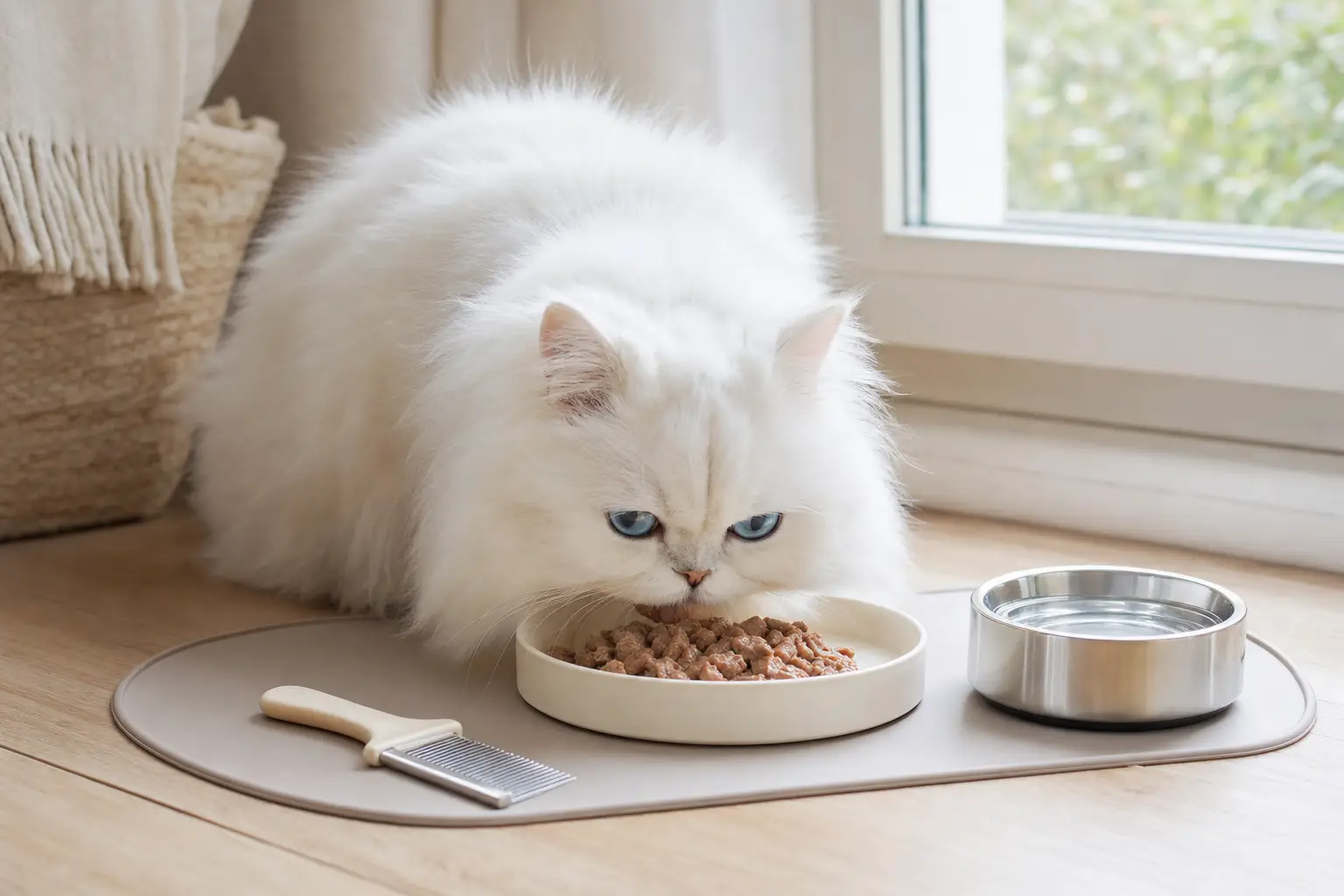
Persian Kitten Feeding Station: Protecting a Long Coat
Yes, a Persian kitten feeding station can be an excellent choice for your household if you are prepared for two ongoing responsibilities: keeping the eating area clean and maintaining the kitten’s developing long coat. The setup does not need to be expensive or elaborate. A quiet corner, a stable shallow dish, fresh water, and a washable mat can solve many everyday problems.
Persian kittens bring a particular challenge to mealtimes. Food and water can collect around the chin, chest, and facial hair, especially when a kitten has a short facial profile or a full, soft coat. Damp fur can become tangled, and residue left on the skin may contribute to irritation. At the same time, the feeding area should feel calm rather than restrictive. The goal is not to force a “perfect” feeding position; it is to make eating easy, hygienic, and comfortable for the individual kitten.
Why create a dedicated feeding station?
A dedicated station gives your kitten a predictable place to eat. That can be useful in a busy home with children, visitors, dogs, or other cats. A kitten that is repeatedly interrupted, crowded, or watched over by another pet may eat too quickly, leave food unfinished, or become reluctant to approach the bowl.
The station also creates a simple daily checkpoint. When you serve food in the same location, it is easier to notice whether your kitten is eating normally, dropping food, rubbing at the mouth, or leaving an unusual amount behind. Those observations can matter because a change in appetite or eating behavior may indicate a health problem rather than a bowl problem.
For a long-haired Persian, the station is also a coat-management tool. It can reduce how often the bib and chin drag through wet food, but it will not eliminate grooming. A bowl cannot prevent mats, eye discharge, dental discomfort, or skin disease.
Begin with nutrition, not accessories
Choose a complete and balanced kitten food labeled for growth or for all life stages. The right portion depends on the kitten’s age, size, activity, health, and the calorie content of the food. Your veterinarian can help you create a feeding plan, particularly if the kitten is very young, underweight, gaining weight rapidly, or has difficulty chewing or swallowing.
Wet food, dry food, or a combination can work when the diet is nutritionally appropriate and the kitten eats comfortably. Wet food may leave more residue on facial hair, while dry food is not a substitute for dental care and does not automatically keep a coat clean. If you change foods, make the transition gradually over several days unless your veterinarian gives different instructions.
Offer fresh water at all times. Some cats drink more readily from a second water bowl placed away from the food, so it is reasonable to test that arrangement. A fountain may appeal to some kittens, but it requires regular disassembly and cleaning; moving water is not hygienic if the reservoir is neglected.
Avoid improvising a homemade diet or feeding raw food without professional guidance. Growing kittens have precise nutritional needs, and raw animal products can introduce food-safety risks to pets and people. Do not use cow’s milk as a routine drink, and keep treats small enough that they do not displace a balanced kitten diet.
How to design a Persian kitten feeding station
1. Choose a quiet but accessible location
Place the station away from the litter box, noisy appliances, doorways, and the busiest path through the home. It should be easy for a small kitten to reach without crossing an intimidating space or climbing a steep step.
Quiet does not mean isolated. Your kitten should still be able to leave easily and should not be trapped in a corner by a dog, child, or another cat. In a multi-cat home, separate feeding points can reduce competition. Several bowls lined up side by side may not provide much privacy if one cat guards the whole area.
2. Select a wide, shallow, stable dish
A broad, shallow plate or bowl usually gives a Persian kitten more room to approach food without pushing the chin and cheek fur into the sides. It also lets you see whether the kitten is picking food up normally. The best shape is individual: watch your kitten eat and adjust rather than assuming one breed-specific bowl will suit every cat.
Stainless steel and intact glazed ceramic are practical choices because they are nonporous and easy to wash. Choose a dish with enough weight or a nonslip base that a kitten cannot chase across the floor. If you use plastic, replace it when it becomes scratched, warped, or difficult to clean.
A raised feeder is not automatically better. Some kittens seem more comfortable with a slightly elevated dish, while others prefer to eat from the floor. If you try a low platform, make sure it is stable, easy to clean, and low enough that the kitten can approach without stretching or losing balance. Comfort and safe access matter more than a particular height.
3. Protect the floor without trapping moisture
Put the dish on a washable silicone mat or another non-slip surface. The mat should be large enough to catch crumbs and splashes, but it must be lifted and dried regularly. Moisture trapped beneath a mat can damage flooring and create an unpleasant, dirty area.
Keep towels and grooming supplies nearby if they help your routine, but do not place loose fabric where a kitten can drag it into the food or water. Store food in its original packaging or a clean, sealed container, following the product’s storage directions.
A simple routine for keeping the coat cleaner
Good design helps, but the daily routine makes the biggest difference. Before serving a meal, check the kitten’s chin and chest. If the fur is already damp or clumped, gently clean and dry it rather than allowing another meal to build on the residue.
- Serve manageable portions on a shallow dish so food is less likely to smear across the face.
- After a wet meal, look for food on the chin, lips, and front of the chest.
- Use a soft cloth or gauze lightly dampened with lukewarm water, then pat the fur dry.
- Do not use essential oils, hydrogen peroxide, harsh disinfectants, or human facial wipes on the kitten.
- Wash food dishes after wet meals and wash water bowls at least daily, or more often if they become slimy or contaminated.
- Remove leftover food according to the food label and safe food-handling practices rather than leaving perishable food out indefinitely.
- Comb the developing coat gently and regularly, using short sessions so the kitten learns that grooming is routine.
Never cut a kitten’s whiskers to make feeding easier. Whiskers are sensory structures, not excess hair. If a mat forms close to the skin, do not pull it or use scissors against the body. A veterinarian or experienced cat groomer can remove difficult mats safely.
Persian coats often need frequent attention, sometimes daily gentle combing as the coat becomes fuller. Start with a few calm strokes and reward cooperation. Grooming immediately after an exciting play session may be harder than grooming when the kitten is relaxed, but stop if the kitten becomes distressed. A calm, consistent routine is more useful than one long struggle.
When mess may signal a health issue
Food on the chin is often a management problem, but persistent mess deserves closer attention. Contact your veterinarian if your kitten drools, drops food, chews only on one side, paws at the mouth, cries while eating, has bad breath, or suddenly avoids the dish. Those signs can occur with oral pain or other problems that a different bowl will not fix.
Regularly wet fur, redness, odor, crusting, hair loss, or sores beneath the chin also warrants veterinary advice. Do not assume that every dark mark is food staining. Skin irritation, infection, allergies, parasites, and other conditions can look similar at home.
Eye discharge is another area where owners can mistakenly blame food. Some Persians have facial anatomy that makes tear overflow more noticeable, but persistent discharge, squinting, redness, cloudiness, or rubbing should be assessed by a veterinarian. Clean the area gently if advised, but avoid medicated eye products unless they were prescribed or specifically recommended for that kitten.
Breathing trouble, repeated gagging, marked difficulty picking up food, vomiting, diarrhea, or a refusal to eat should not be managed by changing bowls alone. Kittens can become unwell quickly, so contact your veterinary practice promptly for guidance.
A practical starter setup
You can create a useful station with a small number of carefully chosen items:
- One wide, shallow, stable food dish
- One separate water bowl, with an optional second bowl elsewhere
- A washable, nonslip floor mat
- A sealed food-storage container used according to the label directions
- A soft cloth or gauze for gentle post-meal cleanup
- A kitten-appropriate comb kept clean and away from food surfaces
Set the station up before your kitten arrives and observe the first few meals. Does the kitten have to lean over a high edge? Is the dish sliding? Is another pet hovering nearby? Is the chin wet after every meal? Small changes to placement, dish shape, or food texture can be more valuable than buying a specialized product.
Is this setup right for your household?
A Persian kitten feeding station is a good fit if your household can provide a quiet eating area, clean dishes, fresh water, regular coat care, and prompt veterinary attention when something changes. It is especially helpful when your home is busy or when a kitten’s long facial hair repeatedly becomes soiled.
It may require more planning if you work long hours, have several pets that compete for food, or cannot reliably clean bowls and check the coat each day. That does not automatically rule out a Persian kitten, but it is worth building a realistic care plan before bringing one home. The breed’s beautiful coat is part of the commitment, not just an appearance feature.
The right station should make care easier without turning mealtime into a performance. Let the kitten eat in a natural, comfortable position, monitor the coat, and adjust the setup as the kitten grows.
Frequently asked questions
Do Persian kittens need a special bowl?
No specific bowl is required for every Persian kitten. A wide, shallow, stable dish is a sensible starting point because it may reduce contact between food and facial hair. Your kitten’s comfort, eating ability, and the dish’s cleanliness matter more than a breed label.
Should I feed wet food to keep a Persian kitten hydrated?
Wet food can contribute water to the diet, but it is not the only way to support hydration. A complete kitten food, accessible fresh water, and a feeding plan suited to the individual kitten are the priorities. Ask your veterinarian if your kitten drinks very little or has a health condition.
How often should I clean a Persian kitten’s face?
Check the face after meals and clean visible residue gently when needed. Avoid vigorous rubbing and avoid products not intended for cats. If the face is persistently wet, irritated, smelly, or painful, arrange a veterinary examination rather than increasing cleaning alone.
Ready to plan for life with a Persian kitten? Explore CTkittens.com for more practical Persian kitten guidance and resources to help you prepare a comfortable, well-organized home.

Rachel Cohen is a journalist and producer with a passion for audio storytelling, health and science reporting, and feline companions.
A graduate of Middlebury College, Rachel spends her weekends exploring the mountains and when she isn’t outdoors or chasing a story, she can usually be found hanging out with her cats.

