Ragdoll Kitten Toys: 9 Options Worth Rotating on Rainy Days
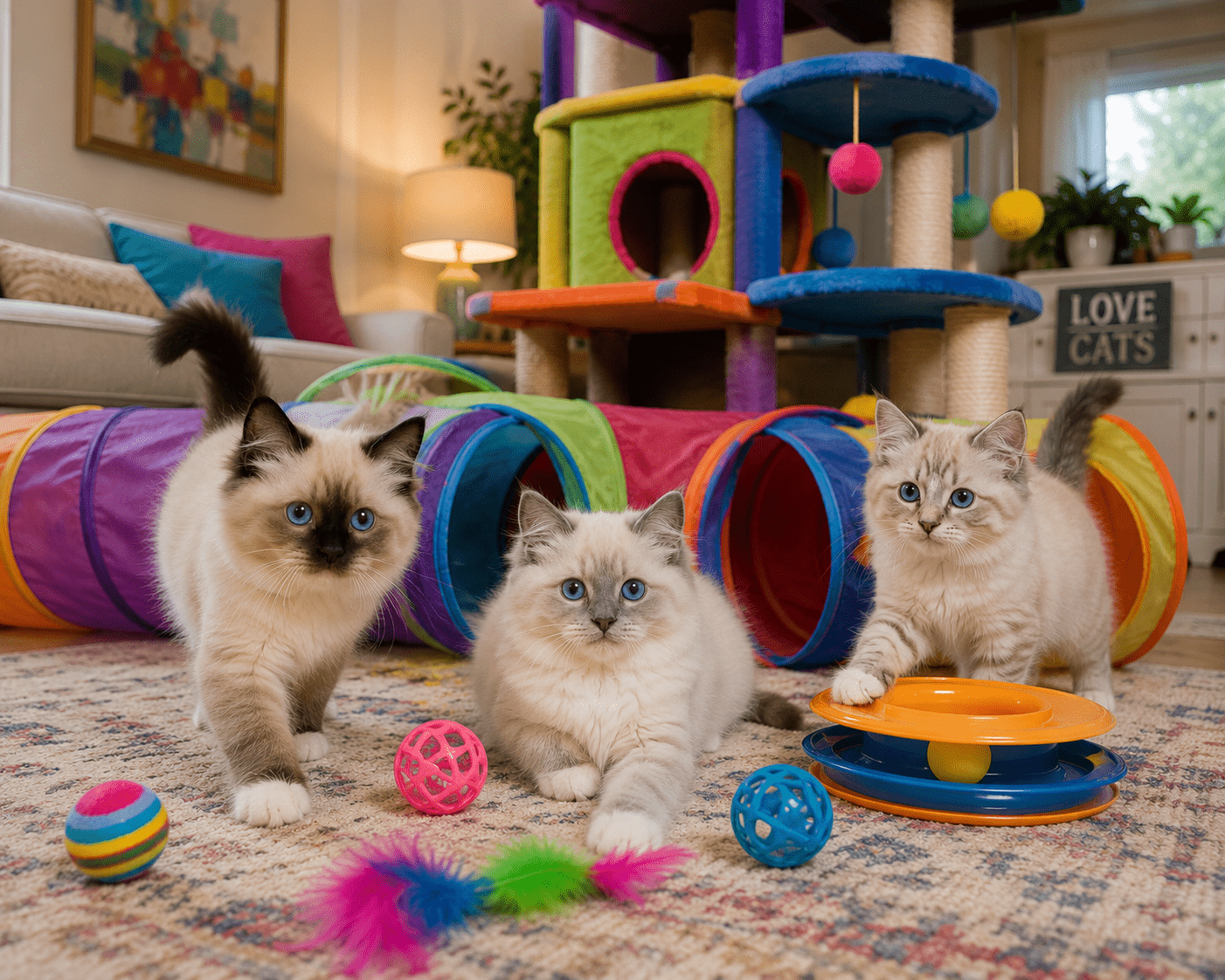
When outdoor time is limited, the best Ragdoll kitten toys are not necessarily the fanciest ones. A small rotation of toys that encourage stalking, pouncing, batting, carrying, and problem-solving can make an indoor day much more interesting.
Instead of leaving nine toys on the floor at once, keep two to four available and store the rest. Swap them every few days, or sooner if interest fades. This preserves a little novelty while giving your kitten familiar favorites to return to.
Why rotating toys can help on rainy days
A large pile of toys can quickly become background furniture. Rotation gives each item more attention and helps you notice what your individual kitten actually enjoys. One Ragdoll kitten may chase a feather wand, while another may prefer pushing a ball through a track or investigating a food puzzle.
Think in terms of play styles rather than breed stereotypes. Watch whether your kitten likes to stalk, leap, bat, chew, carry, forage, or hide. Then build the rotation around those behaviors. Several short play periods are usually more realistic for a young kitten than expecting one long session to provide all the day’s activity.
9 Ragdoll kitten toys worth trying
1. Wand or fishing-pole toy
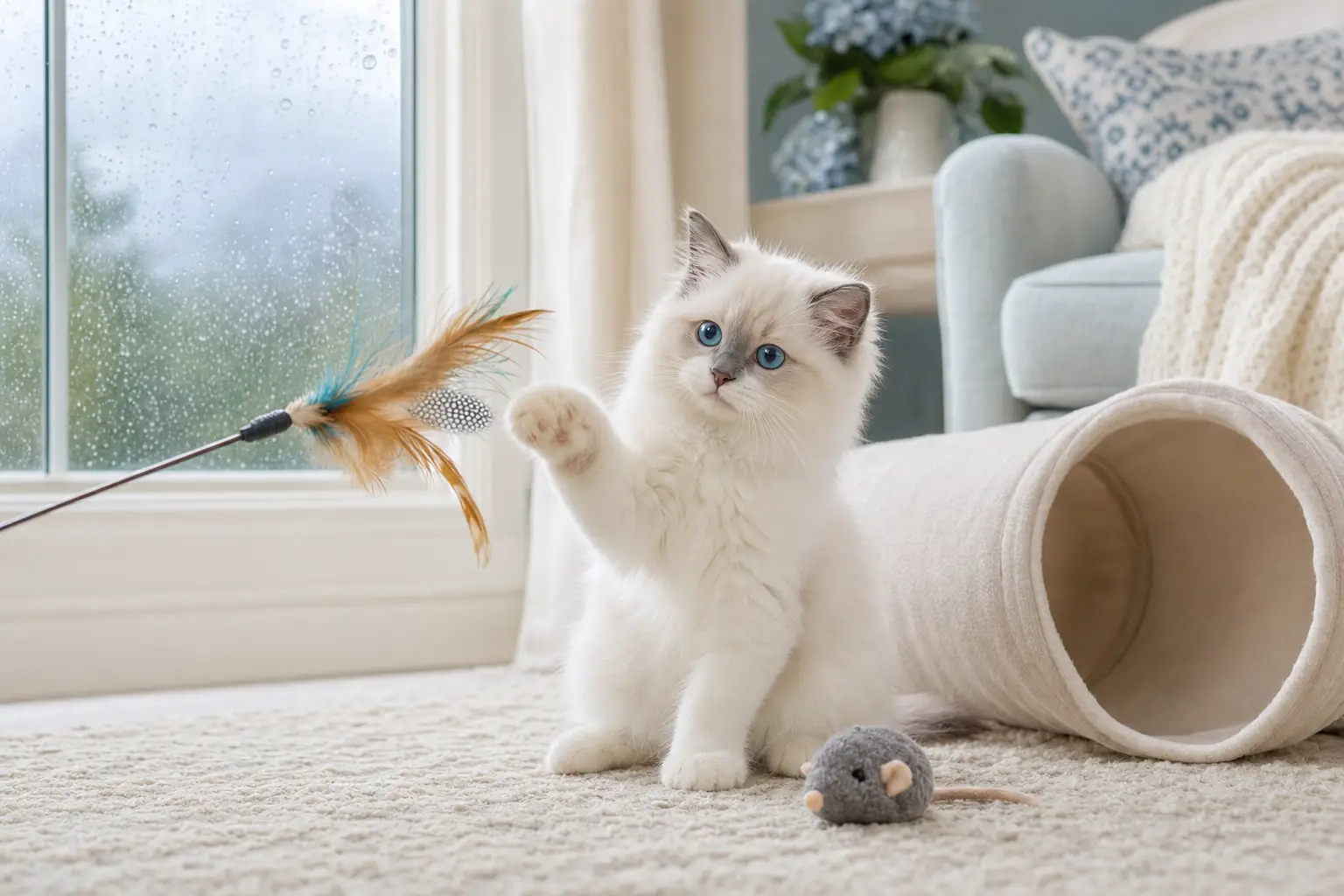
A wand toy is one of the most versatile choices because you control the speed, direction, and distance. Drag it slowly behind furniture, pause it beside a tunnel, or make it skitter across the floor like prey. Let your kitten catch it regularly so the game includes a satisfying physical finish rather than only missed pounces.
Use wand toys only during supervised play. Store the wand, string, ribbon, and attachments away afterward. Loose strands can become a choking or intestinal hazard if chewed or swallowed.
2. Tunnel with a chase toy
A collapsible fabric tunnel creates hiding, ambushing, and exploring opportunities without requiring a large room. Roll a lightweight ball past the entrance, move a wand along the outside, or briefly hide a plush toy inside.
Choose a tunnel that is stable, free from exposed wire, and large enough for comfortable movement. Check the seams regularly, especially if your kitten bites or claws at the fabric.
3. Ball track or sturdy rolling balls
Ball tracks are useful for independent batting because the ball stays contained while your kitten moves it around the circuit. Simple rolling balls can work just as well if they are appropriately sized and cannot be swallowed.
Try balls with different textures, such as smooth plastic, soft fabric, or a gentle rattle. If a sound makes your kitten retreat, remove that option. A toy is not enriching if it creates more alarm than curiosity.
4. Plush mice and carry toys
Small, lightweight plush toys can suit kittens who like to pick up, carry, and toss their “catch.” Rotate several shapes and textures rather than buying a large collection of nearly identical toys. A toy with a durable seam and securely attached features is preferable to one with glued-on eyes, long fibers, or loose decorations.
Some kittens show interest in catnip-filled toys, while others ignore them. That response varies, and a young kitten may prefer movement or texture instead. Catnip is not required for a good play session.
5. Kicker toy
A long, soft kicker gives a kitten something to grab with the front paws and bunny-kick with the back feet. It can be a good outlet after an energetic chase game, especially for kittens who enjoy wrestling larger toys.
Choose a size your kitten can comfortably hold and inspect it for torn fabric or exposed filling. Because Ragdolls grow into substantial cats, durable construction matters, but the toy should still be manageable for a small kitten right now.
6. Food puzzle or treat-dispensing toy
A food puzzle adds mental work to a rainy afternoon. Start with an easy design that lets your kitten see or smell the food. Once the basic idea is understood, you can try a slightly more challenging puzzle with cups, sliding covers, or rolling compartments.
Use part of your kitten’s normal daily food allowance rather than adding large quantities of treats. Supervise the first few uses, clean the puzzle as directed, and choose a cat-specific product without small parts that can break off.
7. Crinkle toy
Crinkle toys offer sound and texture without requiring batteries. They can be especially interesting when tucked beside a tunnel or under the edge of a blanket, where your kitten can investigate and paw at them.
Sound preferences are individual. If your kitten startles, flattens the ears, or avoids the toy, put it away and try a quiet fabric toy instead. Inspect crinkle toys for tears and remove them if the inner material becomes accessible.
8. Motion-activated or battery-powered toy
A motion toy can add variety when you are busy nearby. Look for a model with a slow, adjustable movement rather than a loud or frantic mechanism. It should have a secure battery compartment and no detachable pieces that your kitten can chew loose.
Use electronic toys as supervised enrichment, not as an all-day substitute for interaction. If the toy seems to frustrate your kitten, switch it off and offer a play style with a clearer catch, such as a plush mouse or wand toy.
9. Cardboard box and paper hideout
A clean cardboard box can become a hiding place, lookout, or launch point for a chase game. A plain paper bag with the handles removed can also provide a temporary rustling hideout. Place the box on the floor, check it for staples and sharp edges, and replace it when it becomes damp or shredded.
Keep this option simple. Avoid plastic bags, ribbons, tape, staples, and small pieces that could be chewed or swallowed. You can refresh the experience by changing the box’s position or placing a familiar toy inside.
A simple rainy-day toy rotation
You do not need a complicated schedule. Try this flexible system:
- Choose three active categories: one interactive toy, one movement toy, and one quiet or food-based activity.
- Put away the rest: Store unused toys in a closed container so strings, feathers, and small parts are not available without supervision.
- Change one item at a time: Keep a favorite available while introducing a different texture or play style.
- Follow your kitten’s energy: Use a wand or tunnel when your kitten is alert, and offer a puzzle or plush toy during calmer periods.
- End play positively: Let your kitten catch a toy, finish a food puzzle, or settle with a kicker before putting interactive items away.
For example, a morning rotation might include a wand toy, a ball track, and a few pieces of the regular meal in a puzzle feeder. Later, replace the ball track with a tunnel and swap the wand for a plush carry toy. The next day, bring back the ball track while rotating out the tunnel.
Safety checks before leaving toys out
Every toy needs a quick inspection, even if it was sold for kittens. Remove anything that has loose parts, unraveling thread, torn stuffing, sharp edges, or a damaged battery compartment. Toys with string, ribbon, elastic, feathers attached by weak fittings, or small bells should be interactive-only items.
- Choose a size that cannot fit fully into your kitten’s mouth.
- Do not leave wand toys, string, ribbon, hair ties, or elastic items out unattended.
- Supervise new toys until you know how your kitten uses them.
- Stop play if your kitten appears frightened, excessively overstimulated, or unable to disengage.
- Wash fabric toys when the label allows, and discard them if they cannot be cleaned safely.
If you suspect your kitten swallowed string, ribbon, elastic, or part of a toy, contact a veterinarian promptly. Do not pull on material that is visible from the mouth or rear, because pulling can cause further injury.
For additional general guidance, see the ASPCA’s cat toy advice and International Cat Care’s guidance on play.
Frequently asked questions
How often should I rotate kitten toys?
There is no universal schedule. Try changing one or two toys every few days, or whenever your kitten stops investigating them. Keep a favorite in the rotation rather than removing every familiar item at once.
Can my kitten play with a laser pointer?
If you use one, keep the beam away from the eyes and finish by directing your kitten to a toy or treat that can actually be caught. Some cats become frustrated when a chase never has a physical reward. A wand or rolling toy is often easier to make satisfying.
What if my kitten ignores every toy?
Try changing the movement rather than buying more products. Move a toy slowly, add pauses, play at a quieter time, or hide it partly under a box edge. If your kitten has a sudden, persistent loss of interest in play along with changes in appetite, energy, or behavior, contact your veterinarian.
Make rainy days more engaging
The most useful Ragdoll kitten toys are the ones that match your kitten’s natural play style and can be used safely. Start with a wand, tunnel, rolling toy, puzzle, and a couple of sturdy soft toys. Rotate them thoughtfully, observe what earns a pounce or curious sniff, and let those observations guide your next choices.
For more practical kitten-care ideas and advice on creating a comfortable home environment, explore CTkittens.com.

Rachel Cohen is a journalist and producer with a passion for audio storytelling, health and science reporting, and feline companions.
A graduate of Middlebury College, Rachel spends her weekends exploring the mountains and when she isn’t outdoors or chasing a story, she can usually be found hanging out with her cats.