
Persian Kitten First Night: Your Pickup-Day Plan
If you are wondering what to do the night before pickup day, keep the goal simple: prepare a quiet, secure room and make your kitten’s first few hours predictable. A Persian kitten may hide, cry, eat less than usual, or seem cautious after leaving its familiar home. That does not automatically mean something is wrong.
The best Persian kitten first night is calm rather than busy. Use the food and litter your kitten already knows, limit visitors, avoid forced handling, and give the kitten a small safe space before introducing the rest of the house.
What to do the night before pickup day
Prepare the home before you leave to collect your kitten. A little planning prevents the common mistake of arriving home with a tired kitten and realizing that the litter box, carrier, or food is still in the car.
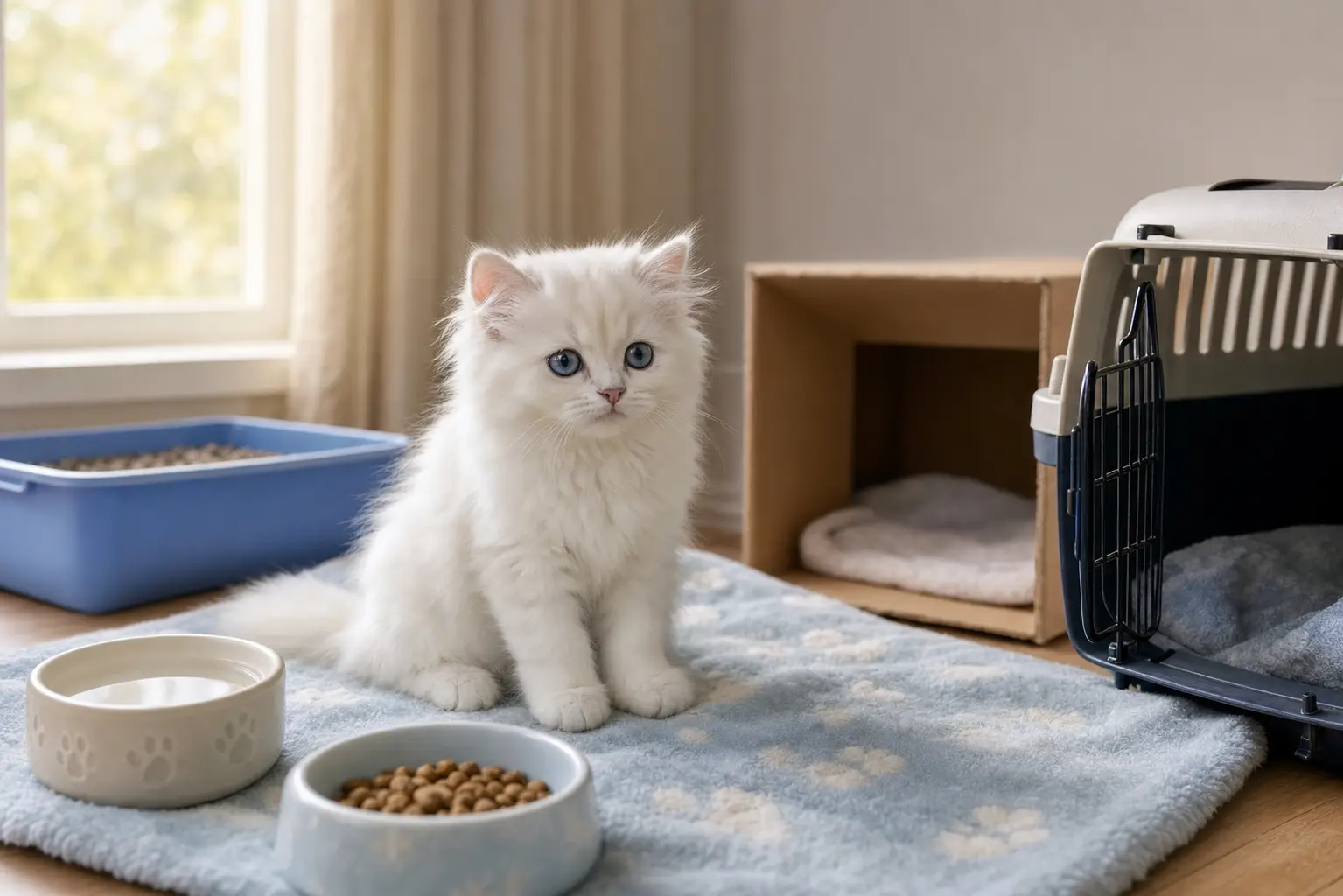
- Choose a safe room: A quiet bedroom, office, or other small room with a closable door works well. Remove cords, small objects, toxic plants, open windows, and places where a kitten could become trapped.
- Set up three separate areas: Place the bed or hiding box in one area, food and water in another, and the litter box as far from the feeding area as the room allows.
- Buy familiar supplies: Ask the breeder what food, litter, bowls, and grooming tools the kitten is currently using. Avoid changing everything on the first day.
- Prepare a secure carrier: Line it with a washable towel or a familiar blanket. Check that the door latches properly and that the carrier is large enough for the kitten to sit, turn, and lie down comfortably.
- Book a veterinary appointment: Arrange a health check promptly and follow any timing requirements in your purchase or health contract. Bring vaccination, deworming, microchip, and health records.
- Plan a quiet evening: Ask family members to keep voices and activity low. Delay parties, introductions, baths, and a full-house tour.
A low-sided litter tray may be easier for a young kitten to use. Choose an unscented product unless the breeder or your veterinarian recommends something different. If your home has several floors, add additional boxes later so the kitten never has to search far for one.
How to arrange the first-night safe room
The safe room is not a punishment or permanent confinement. It is a decompression space where your kitten can learn the new smells and routines without facing a large, unfamiliar house all at once. International Cat Care and the ASPCA both recommend a gradual, low-stress introduction for a new cat.
Give your Persian kitten a secure hiding option, such as a cardboard box on its side or a covered cat bed. Make sure you can reach the kitten if necessary, but do not pull it out of hiding. A hiding place helps the kitten feel in control.
Keep windows shut or fitted with secure screens, and check behind furniture, inside closets, and around appliances. Kittens can squeeze into surprisingly small spaces. Keep other animals out of the room at first, even if they are normally friendly.
Do not place a kitten directly beside a radiator, heater, air conditioner, or drafty window. Persian cats have long coats, and many have shorter facial structures that can make heat and breathing concerns more significant. A comfortably ventilated room is safer than a warm, stuffy one.
Pickup day: make the journey home safely
Ask the breeder for a small amount of the kitten’s usual food and litter if possible. Also confirm when the kitten last ate, whether it has used the litter box, and whether there have been any recent changes in appetite, stool, energy, or breathing. Those details help you tell normal travel stress from a developing problem.
Keep the kitten inside the closed carrier for the entire car journey. Do not carry the kitten loose, open the carrier in a parking lot, or allow a curious kitten to wander around the vehicle. Secure the carrier so it cannot slide, and keep it away from direct sun and extreme temperatures. Never leave the kitten alone in a parked car.
When you arrive, carry the closed carrier directly to the safe room. Close the door before opening it. Put the carrier on the floor, open the door, and let the kitten come out when ready. Some kittens walk out immediately; others remain inside for several hours. Both reactions can be normal after a stressful trip.
What should happen during a Persian kitten’s first night?
The first 15 minutes
Sit quietly on the floor for a few minutes if the kitten seems receptive. Speak softly, avoid reaching over its head, and allow it to sniff your hand. Do not pass the kitten from person to person. If it retreats, let it settle.
Show the kitten where the litter box and water are, but do not repeatedly place it in the box. A kitten that is tired or frightened may not explore immediately. Keep the room dim and calm, especially if you arrive late in the day.
The first meal
Offer the same complete kitten food the breeder has been feeding. A small meal is usually less overwhelming than a large serving. Keep fresh water available and avoid cow’s milk, sudden diet changes, rich treats, and table scraps.
Stress can temporarily reduce appetite, but a very young kitten should not simply be ignored if it will not eat. Contact your veterinarian promptly if the kitten repeatedly refuses food, is unusually weak, vomits, develops repeated diarrhea, or seems to be getting worse. Ask the breeder which emergency clinic serves your area before pickup day.
Bedtime
For the first night, a secure room is generally safer than allowing the kitten to sleep loose in your bedroom or bed. A tiny kitten can fall, become trapped, chew a cord, or be accidentally covered while someone sleeps. You can visit quietly to check the kitten, but avoid turning the night into constant handling.
Some crying is common when a kitten is separated from its mother and littermates. Check that the room is safe, the kitten can reach water and the litter box, and there are no signs of illness. Then offer calm reassurance rather than repeatedly moving the kitten or introducing new toys and people.
Persian kitten care details to handle gently
Eyes and facial folds
Persian kittens can have tear residue around the eyes, particularly because of their facial structure. If your veterinarian or breeder has shown you how, use a clean, damp cotton pad or soft gauze to wipe visible residue gently. Use a fresh pad for each eye, avoid scrubbing, and do not use human eye drops or unapproved products.
Redness, swelling, squinting, cloudiness, obvious pain, or thick yellow or green discharge deserves veterinary advice. Do not assume every eye problem is simply tear staining.
Coat and grooming
The first night is not the time for a long grooming session unless there is an urgent problem. A short, gentle introduction to a kitten-safe brush can be useful, but stop if the kitten becomes frightened. Ask the breeder to demonstrate the current grooming routine and show you any areas that tend to mat.
Never cut close to the skin with scissors to remove a mat. A veterinarian or professional groomer can safely deal with tight mats or skin irritation. Keeping grooming sessions brief and positive now makes regular coat care easier later.
Breathing and room temperature
Persians are a short-nosed breed, so pay attention to breathing effort rather than assuming every sound is normal. A kitten should not be struggling to breathe, breathing with its mouth open, collapsing, or showing pale, gray, or blue gums. Those signs require emergency veterinary care.
Common first-night questions
Should I let my Persian kitten explore the whole house?
Usually, start with one prepared room. Once the kitten is eating, using the litter box, and approaching people comfortably, you can open another area under supervision. A gradual expansion is easier to manage than chasing a frightened kitten under furniture.
Should children hold the kitten?
Only when an adult is actively supervising. Teach children to sit on the floor, keep the kitten close to the ground, support its body, and stop when the kitten tries to leave. No hugging, chasing, waking, or carrying the kitten around the house on the first night.
When can my other pets meet the kitten?
Do not begin with a face-to-face meeting. Keep the kitten in its own room and ask your veterinarian how to manage introductions, particularly if the kitten’s health history is incomplete. You can later exchange bedding scents and use brief, controlled visual introductions. Rushing this step can create fear that takes much longer to resolve.
What if the kitten hides all night?
Hiding can be a reasonable response to travel and a new environment. Leave food, water, and the litter box within easy reach, sit quietly for short periods, and avoid dragging the kitten out. Call your veterinarian if hiding is accompanied by breathing difficulty, extreme lethargy, repeated vomiting, severe diarrhea, or other concerning signs.
Should I bathe the kitten after pickup?
No, not unless your veterinarian has advised it for a specific reason. A bath can add stress, chill a young kitten, and remove familiar scent. Ask the breeder about the kitten’s most recent grooming and bathe only with an appropriate plan and product.
When to seek urgent veterinary help
Contact an emergency veterinarian immediately for open-mouth breathing, visible breathing effort, collapse, unresponsiveness, blue or gray gums, uncontrolled bleeding, suspected poisoning, or serious injury. For less dramatic concerns, call your regular veterinarian promptly if the kitten will not eat, cannot keep water down, has repeated diarrhea, seems unusually weak, or has painful or abnormal eyes.
Before pickup, save your regular clinic and emergency clinic numbers in your phone. Also ask the breeder what symptoms they want reported under the health guarantee. Having that information ready is far better than searching for it while worried.
A calmer start for you and your kitten
The first night does not need to be perfect. Your priorities are safety, familiar food and litter, quiet observation, and a prompt response to genuine health concerns. Let your Persian kitten set the pace, and build trust through predictable care rather than constant attention.
For broader preparation guidance, see the ASPCA guide to bringing home a new cat and International Cat Care’s advice on bringing a cat home. For breed-specific questions, your kitten’s veterinarian and breeder remain the most useful sources because they know the individual kitten’s health history.
Planning for a new Persian kitten? Explore CTkittens.com for more helpful guidance on choosing and caring for your kitten.

Rachel Cohen is a journalist and producer with a passion for audio storytelling, health and science reporting, and feline companions.
A graduate of Middlebury College, Rachel spends her weekends exploring the mountains and when she isn’t outdoors or chasing a story, she can usually be found hanging out with her cats.

