
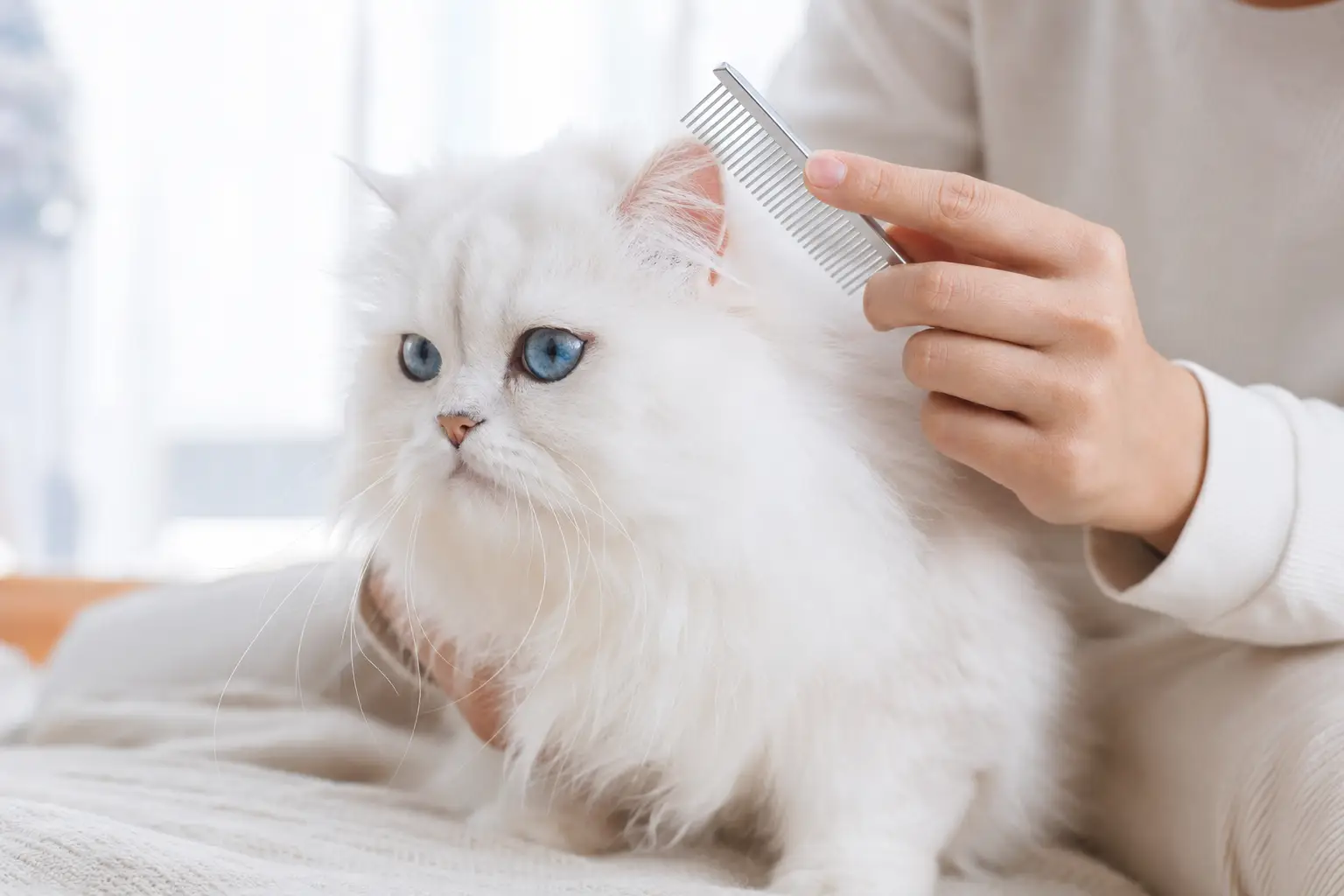
Quick answer: If you mean the first week after bringing an older Persian kitten home, you do not need to wait seven full days before checking or gently combing behind the ears. A calm, very short session may be helpful once the kitten is settled enough to eat, use the litter box, and interact normally. If you mean the kitten’s first week of life, do not apply a routine grooming plan without veterinary guidance; newborn care is different, and warmth, feeding, and health monitoring come first.
Persian kitten grooming is often discussed as though every kitten should accept a complete brushing session immediately. In reality, the first week is less about achieving a flawless coat and more about preventing small tangles while building trust. The hair behind the ears is easy to overlook, yet it can tangle quickly because the area moves, rubs against the neck, and is difficult for a kitten to groom thoroughly.
First, clarify which “first week” you mean
For a kitten newly arrived at your home, begin with observation. Give the kitten a quiet place to settle and watch for normal eating, drinking, litter-box use, alertness, and comfortable movement. There is no universal rule that grooming must begin on day one or be postponed until day seven. The right time is when the kitten is relaxed enough for a few seconds of gentle handling.
For a kitten in its first week after birth, the advice is different. The mother normally provides much of the routine grooming, while orphaned or unwell neonates need a carefully managed care plan. Young kittens can become chilled easily, and a struggling or cold kitten should not be subjected to a routine combing session. Contact a veterinarian or qualified neonatal-care provider if the mother is absent or the kitten is not thriving.
Five assumptions about combing behind the ears
1. “I should wait until the kitten is completely comfortable with everything.”
Reconsider it: Waiting for total confidence can allow a small tangle to become a tight mat. Instead, introduce grooming in tiny steps when the kitten is calm. You might touch the cheek, stroke the neck, briefly touch the fur behind one ear, and then stop. If the kitten remains relaxed on another occasion, let a suitable comb pass through a small section of loose hair.
This does not mean chasing a frightened kitten with a comb. If the kitten is hiding, hissing, repeatedly trying to escape, or showing signs of illness, pause the grooming lesson. A short, successful interaction is more useful than a long session that teaches the kitten to fear your hands.
2. “The hair behind the ears is only a cosmetic issue.”
Reconsider it: A tangle in this area can pull on the skin and may hide redness, scabs, parasites, moisture, or a sore spot. A dense mat can also become painful when it is tugged during later grooming. That does not mean every clump indicates a medical problem, but it does make the area worth checking regularly.
Use your eyes and fingertips gently. Look at the skin around the base of the ear and feel whether the hair is loose or forming a compact knot. Do not pull to test it, and do not insert a comb into the ear opening. Combing the hair behind the ear is not the same as cleaning inside the ear canal.
3. “If the comb meets resistance, I should simply make more passes.”
Reconsider it: Repeated pulling can hurt, break the coat, and make the kitten associate grooming with discomfort. A comb should move through loose hair with little resistance. If you find a small, loose tangle, separate the surrounding hair with your fingers and work from the outer ends toward the skin in tiny sections. Support the hair close to, but not directly against, the skin so you are not pulling the skin itself.
Stop when a knot is tight, close to the skin, or making the kitten flinch. Never try to force a comb through a solid mat. Do not use scissors near the ear or skin; a sudden movement can cause a serious cut. A veterinarian or experienced cat groomer can decide whether the area should be carefully clipped and can examine the skin underneath.
4. “Any brush or comb will do.”
Reconsider it: Tools behave differently. A brush may smooth the surface while missing a small knot underneath. A cat-safe metal comb with smooth, undamaged teeth can help you check whether the coat is actually free of tangles. A wider-toothed comb is often a gentler starting point for longer hair, while a smaller comb may be useful for detail work if it moves easily and does not snag.
The tool should be clean, comfortable to hold, and free from sharp or bent teeth. Use light pressure, particularly around the thin skin near the ear. Avoid human hair products, essential oils, and household detanglers. Cats can lick residue from their coat, and products that are acceptable for people may not be appropriate for cats.
5. “The kitten needs to tolerate a full grooming session right away.”
Reconsider it: During the first week at home, the goal is cooperation, not perfection. Begin with a few seconds. If the kitten stays relaxed, you can gradually extend the session over future days. Offer calm praise or a tiny age-appropriate reward, and finish before the kitten becomes restless.
Watch the whole body, not just the face. Flattened ears, a lashing tail, skin twitching, sudden stillness, repeated vocalizing, swatting, or attempts to flee are signs to stop. Do not pin the kitten down or continue because a mat seems more important than the kitten’s growing trust. If the coat needs urgent attention, professional help is safer than a wrestling match at home.
A gentle first-week routine
For a healthy kitten that is settling in well, this simple approach keeps the session focused:
- Choose a quiet moment. Try when the kitten is calm and awake, rather than during energetic play or when the household is noisy.
- Prepare the tool first. Have a smooth, cat-appropriate comb and a reward ready. Do not make the kitten wait while you search for supplies.
- Start with touch. Stroke the cheek, neck, and outer fur around the ear. Let the kitten sniff the comb before it touches the coat.
- Comb only loose hair. Make one or two gentle passes through a small section behind the ear. Keep the comb outside the ear canal and away from the eye.
- Stop while it is still easy. End after a calm success, even if you groomed only one side. The next session can address the other side.
- Check the skin without picking. Look for redness, swelling, discharge, scabs, odor, or a tender response. Do not scrape or dig at anything attached to the skin.
A quick daily look can help you notice a developing tangle early. The rest of the Persian coat will need its own regular grooming routine, but the first week is a good time to teach the kitten that hands near the head can be gentle and predictable.
When to call a veterinarian or groomer
Seek professional advice if the mat is tight against the skin, covers a large area, or cannot be loosened without pulling. A professional can also help if the kitten becomes unusually painful, fearful, or difficult to handle during grooming.
Contact a veterinarian if you notice persistent scratching, frequent head shaking, a bad smell, discharge, swelling, bleeding, open skin, significant hair loss, or dark debris inside the ear. Those signs may reflect an ear or skin problem rather than a simple grooming issue. Do not apply ear drops or insect treatments unless they are recommended for that kitten; age, weight, and health status affect which products are safe.
Frequently asked questions
Can I use a flea comb behind a Persian kitten’s ears?
A flea comb has very narrow teeth and can catch on tangles, so it is not usually the best first tool for removing knots in long fur. If fleas are a concern, ask a veterinarian about a kitten-safe plan rather than applying an over-the-counter product without checking the label and the kitten’s age and weight.
Should I clean the kitten’s ears while I comb the fur?
Not automatically. External coat grooming and ear cleaning are separate tasks. Do not put cotton swabs, comb teeth, or liquid into the ear canal unless a veterinarian has instructed you to do so.
How often should a Persian kitten be groomed?
The exact schedule depends on coat length, density, age, activity, and how quickly that individual kitten tangles. A brief daily check of the high-friction areas is sensible, while longer grooming sessions can be built gradually. The best routine is one that keeps the coat comfortable without creating a struggle.
The practical takeaway
Behind-ear combing during the first week does not need to be an all-or-nothing decision. Check the area gently, begin only when the kitten is settled, use a suitable tool, and stop at the first sign of pain or rising stress. A loose tangle can often be handled with patient, minimal grooming; a tight mat or irritated skin deserves professional help.
For broader guidance on routine feline coat care, consult the Merck Veterinary Manual’s grooming guidance and the ASPCA’s cat-grooming information. These general resources do not replace an examination when a kitten has pain, skin changes, or ear symptoms.
Preparing for life with a Persian kitten? Explore CTkittens.com for more helpful kitten-care guidance.

Rachel Cohen is a journalist and producer with a passion for audio storytelling, health and science reporting, and feline companions.
A graduate of Middlebury College, Rachel spends her weekends exploring the mountains and when she isn’t outdoors or chasing a story, she can usually be found hanging out with her cats.

