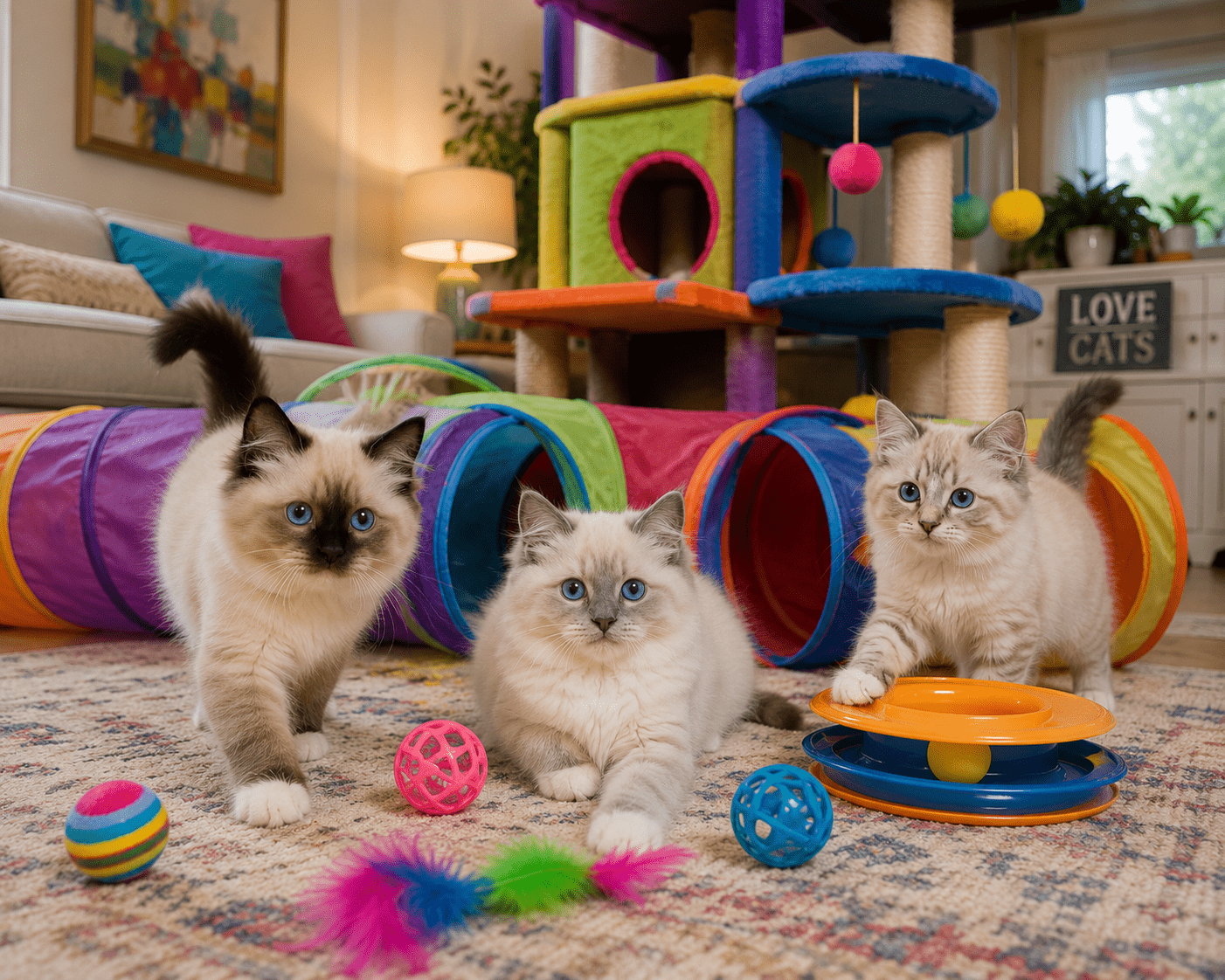

When a Ragdoll kitten approaches its first birthday, the household may notice a subtle shift. The cat still races through the hallway and bats at toys, but its routines, body, coat, and personality are beginning to look more mature. In a multigenerational family, that transition can become a lovely reason to pause and celebrate together.
A Ragdoll kitten to young adult weekend reset does not need a noisy party or a themed photo shoot. The most useful celebration is a calm review of the cat’s health, home, relationships, and daily care. By Sunday, everyone should understand what has changed, what still needs attention, and how to help the cat feel secure as it grows.
Ragdoll Kitten to Young Adult: A Weekend Reset
What changes around the first birthday?
Veterinary life-stage categories commonly place cats in the young-adult stage from about one year onward, although individual development varies. A Ragdoll may continue filling out after its first birthday, and playful kitten behavior can remain part of its personality for years. Age is a helpful guide, not a deadline that tells a family exactly how a cat should act.
Ragdolls are known for blue eyes and a color-point coat, meaning the face, ears, legs, and tail are usually darker than the body. Their semi-long coat may need more consistent combing as it grows. Breed traits can offer clues, but they do not guarantee a particular temperament. Some Ragdolls love being near people without wanting to be carried, and even a social cat needs the ability to retreat.
The weekend’s goal is not to make the cat perform adulthood. It is to adjust the environment and family expectations to match the cat it is becoming.
Before the weekend: gather the right information
Choose a quiet weekend rather than a busy holiday. Ask every household member to bring observations, not assumptions. A grandparent may notice a change in sleeping habits; a child may know which toy reliably starts a game; a parent may have the latest vaccination record. Putting those details together can reveal small needs before they become larger problems.
Have these items ready:
- Recent veterinary records, microchip details, and medication information, if applicable.
- The current food name, feeding schedule, treat habits, and a simple body-condition observation.
- A metal comb or grooming tool suited to the cat’s coat, plus a towel for calm handling.
- A list of household rules for doors, windows, plants, string toys, and child supervision.
- A notebook or shared phone note for questions to discuss with the veterinarian.
Do not weigh the cat’s health by appearance alone. Ragdolls can be large cats, but a large frame does not automatically mean a cat should gain more weight. A veterinarian can assess body condition, muscle, teeth, and growth more reliably than a family comparison or an internet chart.
Friday evening: make the home feel predictable
Begin with observation. Let the cat follow its normal evening routine while the family quietly reviews what is working. Is the litter box easy to reach? Does the cat have a high resting place and a low, hidden retreat? Are food and water positioned away from noisy appliances and heavily trafficked walkways?
A useful family exercise is to create a one-page household agreement:
- Who feeds the cat, and who checks that meals were actually eaten?
- Which adults handle medication, nail trimming, or veterinary appointments?
- How should children approach the cat, and when should they leave it alone?
- Where are wand toys stored, and who puts them away after play?
- Which doors, windows, balconies, and plants require special attention?
This is especially helpful when grandparents, parents, and children share responsibility. Cats tend to do better with consistent cues. If one person allows counter access, another repeatedly removes the cat, and a third offers food from the counter, the cat receives a confusing lesson. A shared plan is kinder than repeated correction.
Saturday morning: schedule a young-adult health review
If the cat is due for a wellness visit, use the weekend to schedule it rather than trying to diagnose problems at home. Ask the veterinary team to review weight and body condition, vaccination needs, parasite prevention, dental health, microchip registration, and whether spaying or neutering has been completed or should be discussed. The AVMA’s guidance on spaying and neutering explains why timing and care should be discussed with a veterinarian.
Bring specific observations. Changes in appetite, thirst, litter-box use, mobility, grooming, breathing, or energy deserve attention, particularly if they are sudden or persistent. A cat that stops eating, strains in the litter box, has difficulty breathing, or appears painful should not wait for a celebratory weekend appointment; contact a veterinary practice promptly.
Food is another useful conversation. Around the first birthday, many cats transition from kitten food to a diet labeled complete and balanced for adult maintenance. The best timing depends on the individual cat, health status, body condition, and the food itself. Make changes gradually and ask the veterinary team whether a longer kitten diet is appropriate. The AAFCO consumer guide to pet-food labels can help families understand nutritional adequacy statements, but it does not replace individualized veterinary advice.
Saturday afternoon: turn grooming into a trust ritual
Ragdoll grooming should be calm and brief rather than a marathon makeover. Start when the cat is relaxed. Let it sniff the comb, stroke one easy area, and stop before the cat becomes restless. Over several sessions, work toward checking behind the front legs, around the collar, under the chest, and along the hind legs, where tangles can hide.
For many Ragdolls, a weekly combing routine is a reasonable starting point, with more frequent checks if the coat tangles or the cat is shedding heavily. A comb that reaches through the coat without scraping the skin is generally more useful than hurried brushing of only the top layer. Never cut out a tight mat with household scissors. Ask a veterinary professional or experienced groomer for help.
Give each generation a safe role. An adult can do the actual combing while a child counts gentle strokes, offers a treat, or records the date. An older family member might sit nearby and read aloud. The cat is not required to tolerate every task from every person; stopping at relaxed body language teaches trust better than finishing a checklist.
Saturday evening: celebrate without overwhelming the cat
Make the celebration about shared attention, not forced contact. A short play session with a wand toy, followed by dinner and a quiet rest, is often more cat-friendly than a room full of visitors. Keep string, ribbon, and small detachable toy parts supervised and stored away after play.
Children can make a simple milestone card describing the cat’s favorite nap spot, toy, or greeting. Adults can take one natural photograph instead of repeatedly repositioning the cat. If the Ragdoll walks away, hides, flattens its ears, swishes its tail sharply, or resists handling, respect the message. A social breed is still an individual animal with boundaries.
The feline environmental-needs guidance from the American Association of Feline Practitioners and International Society of Feline Medicine emphasizes access to safe places, separated resources, opportunities for play and predatory behavior, and predictable human interaction. Those principles matter more than the decorations.
Sunday: build the next-year care plan
Use Sunday for a short household meeting. Record the practical decisions in a place everyone can access:
| Area | Weekend decision |
|---|---|
| Meals | Food, portions, water locations, and who monitors appetite |
| Health | Next veterinary visit, preventive-care questions, and emergency contact details |
| Coat care | Comb frequency, preferred tool, and signs of a developing mat |
| Enrichment | Daily play times, rotating toys, climbing options, and safe window views |
| Family life | Quiet hours, child boundaries, guest introductions, and retreat spaces |
Review the home from the cat’s perspective. Can it reach a litter box without crossing a loud gathering? Is there a resting space that children know is off-limits? Are food and water protected from dogs or other cats? Does someone check doors before the cat explores a new room?
For a multigenerational household, a rotating enrichment calendar can work well. One person handles a morning play session, another refreshes puzzle feeders, and another provides calm companionship. The duties should be simple enough to continue after the weekend. Consistency is more valuable than an ambitious schedule that disappears in two weeks.
What this milestone should—and should not—mean
Moving into young adulthood does not mean the cat must become less playful, more affectionate, or willing to be held. It also does not mean the family should suddenly change everything. Keep familiar beds, litter, feeding times, and safe spaces while making gradual improvements.
Think of the reset as a change in attention. The family is no longer caring only for a rapidly growing kitten; it is learning the adult cat’s patterns. That may include noticing which kind of play prevents nighttime restlessness, which grooming areas need regular checks, and which interactions the cat chooses rather than tolerates.
It is also a chance to correct a common misconception: a Ragdoll’s reputation for being gentle does not make rough handling safe. Children should be supervised, should never chase or carry a reluctant cat, and should learn to support the front and rear of the body if an adult decides the cat is comfortable being lifted. A retreat is not rejection. It is part of a healthy home.
FAQ
Is a one-year-old Ragdoll still a kitten?
In everyday language, many families will still call it a kitten. In veterinary life-stage terms, a cat around one year may be entering the young-adult stage. Behavior and physical development do not change overnight, so care should be adjusted gradually.
How often should a Ragdoll be groomed?
Weekly combing is a practical starting point for many Ragdolls, with extra checks during periods of heavier shedding or if tangles develop. The right schedule depends on the individual coat and how well the cat accepts grooming.
Should we throw a party for the milestone?
Only if the cat enjoys the activity. A quiet family ritual, short play session, favorite meal, and calm photograph are usually less stressful than unfamiliar guests, loud music, or repeated handling.
What if the cat’s habits have changed?
Write down what changed, when it began, and whether appetite, thirst, litter-box use, grooming, or energy changed too. Contact your veterinarian for guidance, especially when the change is sudden, persistent, or accompanied by signs of pain or illness.
A small reset with lasting value
The best Ragdoll kitten to young adult celebration is not a perfect photograph or an elaborate event. It is a shared understanding of how the cat eats, rests, plays, communicates, and asks for space. In a family with several generations, that understanding gives everyone a way to participate without overwhelming the animal.
For more guidance on Ragdoll kittens, responsible care, and finding the right fit for your household, explore CTkittens.com.

Rachel Cohen is a journalist and producer with a passion for audio storytelling, health and science reporting, and feline companions.
A graduate of Middlebury College, Rachel spends her weekends exploring the mountains and when she isn’t outdoors or chasing a story, she can usually be found hanging out with her cats.