From Hesitant to Happy: A Ragdoll Kitten’s First Safe Room
Quick answer: A Ragdoll kitten safe room should be a quiet, closed, thoroughly cat-proofed room with food, water, a roomy litter box, a comfortable hiding place, a scratching surface, and a few safe toys. It gives a new kitten a manageable starting point before the rest of an apartment is introduced gradually.
Even a friendly kitten may hide after leaving a familiar home. New smells, unfamiliar voices, traffic sounds, and a different daily rhythm can be a lot to process at once. A safe room is not a punishment or a place to shut a kitten away indefinitely. It is a calm home base where the kitten can eat, sleep, use the litter box, and begin building confidence.
The story below is a representative apartment scenario rather than a claim about one particular family. Every kitten has a different temperament, so let behavior—not a strict timetable—guide the next step.
A representative apartment story: one small room, one big change
Imagine a young Ragdoll arriving at a compact one-bedroom apartment. The carrier is placed in a quiet bedroom, the door is closed, and the kitten immediately disappears behind the carrier. The temptation is to reach in, pull the kitten out, and offer a tour of the entire apartment. That usually creates more pressure, not more trust.
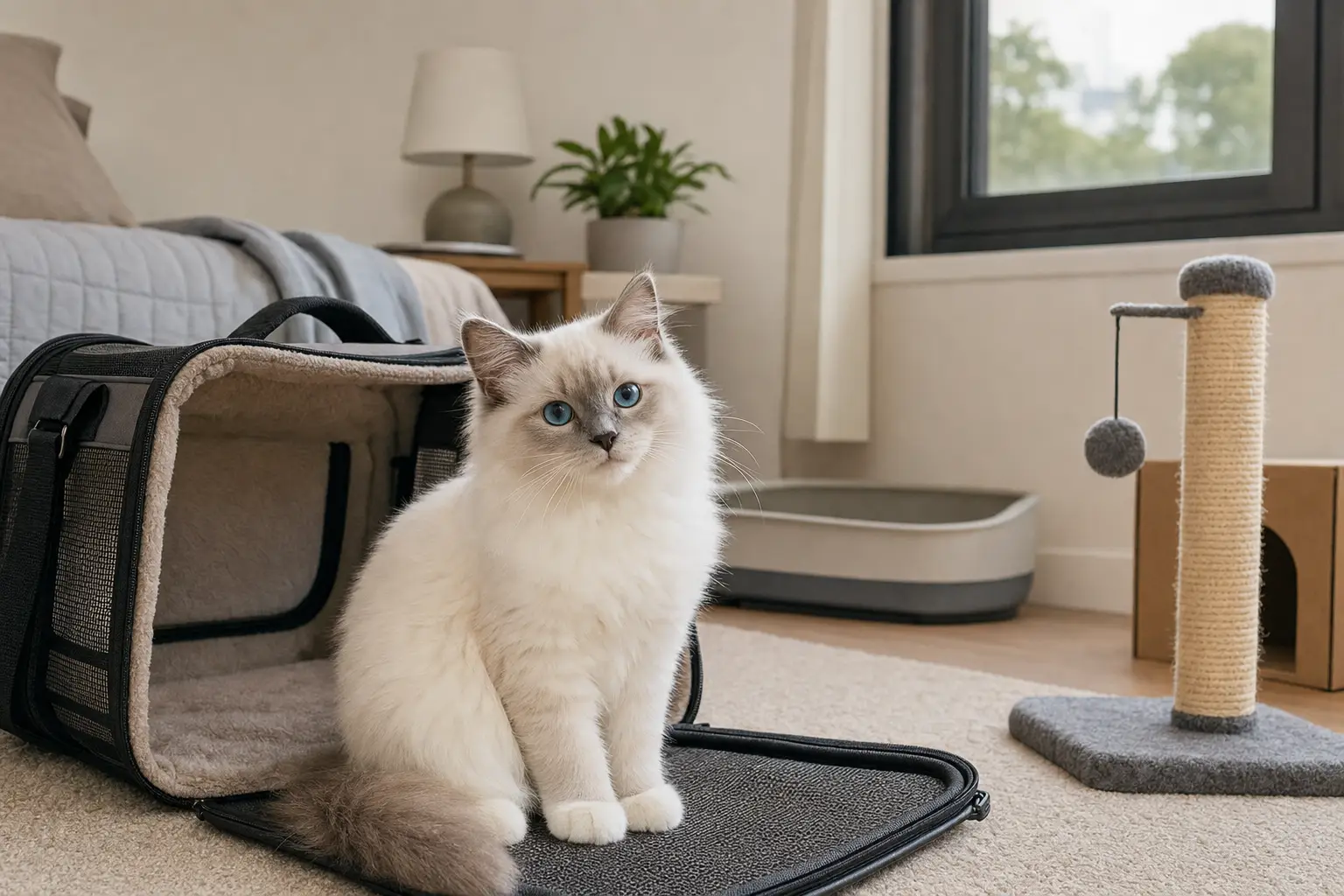
Instead, the room stays quiet. The carrier door remains open, with a soft blanket inside. Food and water sit at one end of the room, while the litter box is placed as far away as the space allows. A cardboard box offers another hiding option, and a sturdy scratching post stands nearby.
During the first visit, the person sits on the floor at an angle rather than leaning over the kitten. There is no staring, chasing, or repeated coaxing. After a while, the kitten peeks out. Later, it sniffs the food, uses the litter box, and returns to its hiding place. Those small actions are progress.
By the next day, the kitten may be eating while someone is quietly present. It may stretch, groom, play with a soft toy, or approach for a brief touch. The door to the hallway does not need to open yet. Confidence grows more reliably when the kitten can retreat to a familiar room whenever the wider apartment feels like too much.
How to set up a Ragdoll kitten safe room
Choose a room with a solid door and as little unpredictable noise as possible. A spare bedroom or home office often works well. A bathroom can be a temporary option if it is clean, warm, free of chemicals, and not heavily used. Laundry rooms are usually less suitable because of appliance noise, heat, detergent, and gaps behind machines.
Place the essentials before the kitten arrives
- A secure hiding place: Use the open carrier, a sturdy cardboard box, or a covered cat bed. The hiding place should be accessible, stable, and large enough for the kitten to turn around comfortably.
- A roomy litter box: Use the litter the kitten already knows when possible, and avoid sudden changes during the first few days. Ragdolls grow into substantial cats, so a box that is only barely large enough will soon need replacing.
- Food and fresh water: Start with the food provided by the breeder, rescue, or previous caregiver if it is appropriate for the kitten. Sudden diet changes can add unnecessary stomach upset during an already stressful transition.
- A soft bed or blanket: A familiar scent can make the room feel less strange. Avoid loose threads, frayed edges, or small pieces a kitten could chew.
- A sturdy scratching surface: A small vertical post or horizontal scratcher gives the kitten an appropriate outlet and helps make the room more interesting.
- Simple toys: Soft balls, lightweight toys, and a supervised wand toy can encourage play. Remove string, ribbon, feathers, and wand toys when no one is watching.
- A low, stable perch: If the room has a secure window screen, a stable perch can offer safe visual enrichment. Never rely on an open window or an unsecured screen.
Keep the litter box away from food and water, but do not place it so far away that a nervous kitten cannot find it. In a small room, opposite corners may be the most practical arrangement. Leave clear pathways between the hiding place, resources, and door.
Apartment safety checks people often miss
A kitten can fit through surprisingly small gaps and may investigate anything that moves, dangles, smells interesting, or makes a sound. Before arrival, get down to floor level and inspect the room from a kitten’s perspective.
- Close or block gaps behind wardrobes, bookcases, beds, and appliances where a kitten could become trapped.
- Secure electrical cords, blind cords, phone chargers, and loose cables.
- Remove medications, cleaning products, essential oils, cosmetics, and small objects such as rubber bands or plastic packaging.
- Check plants against a reliable toxic-plant reference, such as the ASPCA’s cat plant list. When in doubt, keep the plant out of the room.
- Keep windows closed or use properly fitted, pet-resistant screens that cannot be pushed out. An apartment balcony is not safe by default, even if it has a railing or ordinary screen.
- Close toilet lids and keep buckets, sinks, and tubs empty when not in use.
- Check that heaters, radiators, fans, and other appliances cannot burn, trap, or frighten the kitten.
If other pets live in the apartment, the safe room also provides a controlled starting point for introductions. Scent swapping and gradual visual contact are safer than placing unfamiliar animals together immediately. If the room is being used for medical isolation, follow your veterinarian’s instructions rather than relying on a standard settling-in plan.
The first 24 hours: observe more than you intervene
Once the carrier is inside the room, close the door and let the kitten choose when to come out. Sit quietly for a few minutes at a time, speak softly, and avoid reaching into a hiding place unless the kitten is in danger. A calm person who respects distance is easier to trust than someone who repeatedly tries to force contact.
Do not invite visitors for a meet-and-greet on the first night. Avoid baths, loud play, furniture rearranging, and an immediate apartment tour. Keep the kitten’s routine simple: rest, food, water, litter, and brief low-pressure interaction.
Some kittens eat or explore within hours. Others wait until the room is quiet. Check the resources regularly without hovering. If a young kitten refuses food, seems weak, has repeated vomiting or diarrhea, has trouble breathing, or shows any other concerning change, contact a veterinary practice promptly. Difficulty breathing, collapse, serious injury, or suspected poisoning should be treated as urgent.
How to know when your kitten is ready to explore
There is no universal number of hours that every Ragdoll should spend in a safe room. A kitten is usually better prepared for a larger area when it is consistently eating, drinking, grooming, using the litter box, moving around the room, and recovering quickly after a small surprise.
Look at the whole body rather than one signal. Purring can occur during stress as well as contentment, so also consider relaxed muscles, normal movement, curious sniffing, playful behavior, and a willingness to approach or settle nearby.
Open one additional area at a time. Keep the safe room available, leave its door open, and allow the kitten to return there. In an apartment, this gradual expansion is especially useful because a single hallway may connect several rooms, windows, entry doors, and hiding spots. Close off unsafe areas before giving access.
Ragdolls are often described as gentle and sociable, but breed reputation is not a guarantee of confidence. The individual kitten’s history, age, socialization, and current stress level matter more than a label. A hesitant kitten is not failing, and a bold kitten still needs supervision.
Common safe-room mistakes in small apartments
- Using a busy utility room: Choose the quietest practical room instead of the room that is merely available.
- Providing too many hiding places: Offer safe, accessible retreats rather than deep gaps behind furniture where you cannot monitor the kitten.
- Putting the litter box beside the food: Separate the resources as much as the room allows.
- Opening the whole apartment after one brave interaction: A kitten that accepts one gentle touch may still feel overwhelmed by several rooms.
- Leaving string toys out: Use interactive toys only with supervision and put them away afterward.
- Assuming a quiet kitten is automatically relaxed: Hiding, refusing food, flattened ears, tense posture, or rapid breathing can signal stress.
The AAFP and ISFM feline environmental-needs guidelines describe safe places, separated resources, opportunities for play, and predictable positive interaction as important parts of a cat-friendly environment. Those principles fit a studio apartment just as well as a large house.
When to contact your veterinarian
Arrange an initial veterinary visit according to the kitten’s age, health records, breeder or rescue guidance, and your veterinarian’s recommendation. Bring vaccination, deworming, microchip, diet, and previous medical records if you have them.
Contact the veterinary practice if the kitten is not eating, appears unusually sleepy or weak, develops persistent digestive symptoms, cannot urinate, or behaves as though it is in pain. Do not give human medication unless a veterinarian specifically instructs you to do so.
FAQ about a Ragdoll kitten safe room
How long should a Ragdoll kitten stay in the safe room?
Stay with the room until the kitten is using its resources and showing growing comfort, then expand access gradually. That may take a day for a confident kitten or longer for a shy one. The safe room should remain available as a retreat after exploration begins.
Can a bathroom be used as a kitten safe room?
Yes, for a short period, if it is quiet, warm, clean, free of chemicals, and carefully kitten-proofed. Keep the toilet lid closed, remove medications and toiletries, and make sure the kitten cannot get behind plumbing or appliances. A bedroom or office is often more comfortable for a longer stay.
Should I pull my kitten out of hiding?
Usually not. If the hiding place is safe, let the kitten come out voluntarily. Sitting quietly nearby, offering food, and using a soft voice are better ways to build trust. Move the kitten only if there is an immediate safety or medical concern.
A small room can make a big beginning
The goal is not to make a kitten fearless overnight. It is to create enough predictability that curiosity can gradually replace caution. A quiet door, familiar food, a clean litter box, a safe hiding place, and patient human behavior can turn the first uncertain hours into the beginning of a secure relationship.
For more guidance on welcoming a Ragdoll into your home, explore CTkittens.com.

Rachel Cohen is a journalist and producer with a passion for audio storytelling, health and science reporting, and feline companions.
A graduate of Middlebury College, Rachel spends her weekends exploring the mountains and when she isn’t outdoors or chasing a story, she can usually be found hanging out with her cats.