
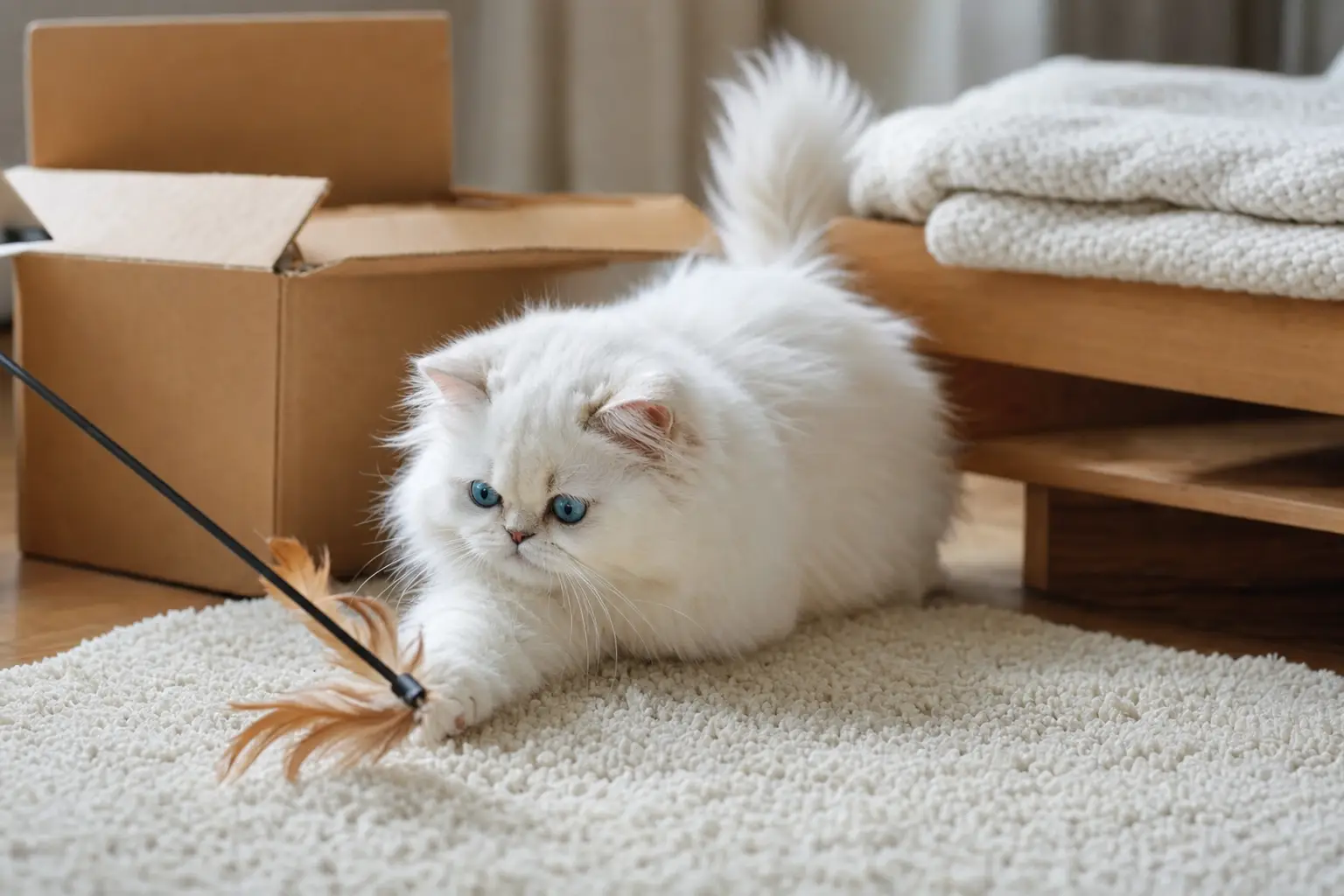
Short answer: Persian kittens can be happy in an apartment or a house. The better choice is not the home with the most square footage; it is the home that offers secure windows, comfortable resting areas, regular interaction, suitable grooming, and short, enjoyable play sessions.
A house gives you more rooms, but a kitten does not automatically get more enrichment from unused space. An apartment can work beautifully when the kitten has a safe base area, places to hide and climb, and a predictable routine. The same principle applies to play: a simple wand toy used thoughtfully can be more valuable than a large collection of expensive equipment.
Persian kittens: apartment or house?
Think about the kitten’s usable territory rather than the size of the property. A Persian kitten needs enough room to walk, turn, explore, rest, and play without being overwhelmed. A compact home can provide that. A large house can also work, but it should be introduced gradually rather than opened all at once.
| Consideration | Apartment | House |
|---|---|---|
| Play space | Use a clear section of floor and vary the direction of the chase. | Choose one or two rooms for supervised play instead of sending the kitten through the entire house. |
| Vertical space | A securely fitted perch or stable piece of furniture can add useful territory. | Windows, shelves, and furniture can provide variety, but every climbing route must be stable. |
| Safety | Check balcony doors, windows, cords, appliances, and building noise. | Check stairs, open doors, fireplaces, garages, plants, and access to outdoor hazards. |
| Routine | Short sessions can fit easily around work and neighbors. | Keep play purposeful so the kitten does not become overstimulated by too much space. |
In either home, secure windows with properly fitted screens. Do not assume a kitten will avoid a balcony, open stairwell, or high ledge. Young cats are curious, quick, and still learning how to judge distance.
What a Persian kitten needs in either home
A calm starting area
When a kitten arrives, begin with one quiet, kitten-proofed room or section of the home. Include food and water, a clean litter tray, a comfortable bed, a hiding place, and a scratch-safe surface. This gives the kitten somewhere familiar to return to while new rooms are introduced at a manageable pace.
Cardboard boxes are useful hiding places, provided they are clean and free from staples, loose tape, and sharp edges. A folded blanket beside a piece of furniture can create another low-cost retreat. Never block every hiding option; the ability to withdraw is part of feeling secure.
Regular coat care
Persian coats need more maintenance than short coats. Plan to introduce gentle combing early, using brief sessions and rewards so grooming becomes a normal part of the day. Many Persian cats need frequent, sometimes daily, coat care to reduce tangles and mats, although the exact schedule depends on the individual coat.
Grooming should not be treated as an optional extra when comparing homes. A household that can calmly provide regular coat care may suit a Persian kitten better than a larger home where handling is rushed or neglected.
Comfortable air and moderate activity
Persians have a short, broad facial structure, and some may be more affected by breathing or heat-related problems than cats with longer faces. Keep play areas cool and well ventilated. Avoid forcing a kitten to continue when it is tired, distressed, or struggling to breathe.
Open-mouth breathing, marked breathing effort, collapse, or pale or blue gums requires urgent veterinary attention. Repeated coughing, wheezing, noisy breathing, or unusually poor tolerance for gentle play should also be discussed with a veterinarian.
How to design a wand-toy routine without expensive gear
The useful part of a wand-toy session is not the price of the toy. It is the sequence: movement, pauses, stalking, a chance to pounce, and a satisfying finish. A modest commercially made wand toy is usually safer than improvising with loose string, but you do not need a premium cat tree, automated toy, or large playroom.
1. Prepare a small, safe play zone
Clear the floor of breakable objects, plastic bags, dangling cords, and anything the kitten could swallow. Choose a room with enough space for several steps of movement. In an apartment, move a lightweight box or chair occasionally to create a different route. In a house, close most doors and make the session feel intentional rather than turning it into an uncontrolled chase.
2. Start slowly
Let the kitten notice the toy before moving it. Drag it gently along the floor, pause beside a box, then move it away in a small curve. Many kittens respond better to a toy that behaves like something trying to hide than to a toy waved constantly in their face.
Keep the wand away from the kitten’s eyes and do not jab toward the nose or face. Low, smooth movements are usually easier to follow and place less demand on a young kitten’s developing coordination.
3. Use short bursts and real pauses
A young kitten may only need a few minutes at first. As tolerance develops, you can offer several short sessions during the day rather than one exhausting workout. A practical starting pattern is two to four brief sessions, adjusted for age, energy, health, and the kitten’s response.
Try this simple sequence:
- Move the toy slowly along the floor.
- Hide it partly behind a box or furniture leg.
- Pause long enough for the kitten to watch and plan.
- Make a short escape movement so the kitten can chase.
- Let the kitten catch the toy several times.
- Finish calmly, then put the wand away.
Watch the kitten rather than following a timer rigidly. Tail lashing, flattened or sideways ears, repeated hard swats, hiding, or walking away can mean the session has become frustrating or overstimulating. Pause and try again later.
4. End with a successful catch
Do not end every session by pulling the toy away indefinitely. Let the kitten catch and hold it briefly, then offer praise or a planned meal according to your normal feeding schedule. A predictable wind-down helps distinguish exciting play from constant agitation.
Apartment adaptations for wand play
Limited floor space is not a serious disadvantage if you vary the route. Move the wand around the edge of a rug, behind a cardboard box, under the safe edge of a chair, and across a short open stretch. A few changes in direction can make the same room feel more interesting.
Prioritize low, controlled movement for a small or flat-faced kitten. You do not need to encourage dramatic leaps from furniture. A kitten can stalk, crouch, turn, and pounce at floor level. If you use a shelf or window perch, it must be stable and positioned away from an easy fall or escape route.
Apartment kittens may also need protection from sudden building noise. Let the kitten retreat to its base area if a vacuum, visitor, or loud hallway sound interrupts play. Do not pull a frightened kitten out of hiding to finish the session.
House adaptations for wand play
A larger home can tempt owners to make the kitten run from room to room. That is rarely necessary. Start in one familiar room and use the same short routine you would use in an apartment. Once the kitten is confident, you can occasionally add a second room, but keep doors, stairs, and exits under control.
Check the house for hazards that may not exist in an apartment: open fireplaces, unsecured utility rooms, toxic plants, exposed garage chemicals, loose stair rails, and doors leading outdoors. A house also needs a clear rule about exterior access. Do not let an energetic play session end with a kitten rushing through an open door.
Low-cost alternatives to expensive cat gear
- Cardboard boxes: Use them as tunnels, hiding spots, or corners to play around. Remove staples, packing tape, and damaged edges.
- Paper bags: Remove the handles before offering one for supervised exploration.
- Blankets and towels: Create a low tunnel or cover part of a box, but check for loose threads and do not leave damaged fabric available.
- Furniture you already own: A sturdy chair, sofa edge, or open floor can provide changes in direction without buying an obstacle course.
- Toy rotation: Keep only a few safe toys available and store the rest. Bringing out a familiar toy after a few days can renew interest.
- A basic wand toy: Choose one with secure construction, inspect it regularly, and replace it if the attachment loosens or breaks.
Never leave a kitten alone with a wand, ribbon, yarn, thread, elastic band, hair tie, or similar item. These materials can become tangled or swallowed. Put stringed toys away after every session. If a kitten may have swallowed string or another non-food item, contact a veterinarian promptly rather than waiting for symptoms.
A simple daily routine
Consistency matters more than an elaborate schedule. For example, you might offer a three-to-five-minute session after a morning nap, another short session later in the day, and a slightly longer calm session before an evening meal. Some kittens will need less; others will enjoy more frequent bursts.
Pair play with the rest of the day’s care. A quiet grooming session, a nap in a secure bed, and predictable meals help create a balanced routine. The goal is not to tire the kitten out at any cost. It is to provide safe opportunities to move, think, interact, and settle.
Frequently asked questions
Do Persian kittens need a house rather than an apartment?
No. A Persian kitten can thrive in an apartment when it has enough safe floor space, stimulation, rest areas, grooming, and daily interaction. A house is suitable too, but its extra rooms do not replace supervision or a thoughtful routine.
How long should a Persian kitten play with a wand toy?
Begin with a few minutes and stop while the kitten is still engaged and comfortable. Several short sessions are generally more practical than one demanding session. Reduce intensity in warm conditions or if the kitten shows fatigue, stress, or breathing difficulty.
Can I make my own wand toy?
It is safer to use a well-made, inexpensive wand toy and reserve it for supervised play. If you use household objects as enrichment, avoid loose string, wire, ribbon, elastic, and anything small enough to swallow. No homemade toy should be left with the kitten unattended.
For broader cat-care information, consult the ASPCA cat-care guidance and the Cornell Feline Health Center. Breed-specific breathing, grooming, or health questions are best reviewed with your veterinarian.
The best home for a Persian kitten is the one that can provide calm supervision, regular care, and daily connection. If you are preparing for a new kitten, explore CTkittens.com for more Persian kitten care and preparation guidance.

Rachel Cohen is a journalist and producer with a passion for audio storytelling, health and science reporting, and feline companions.
A graduate of Middlebury College, Rachel spends her weekends exploring the mountains and when she isn’t outdoors or chasing a story, she can usually be found hanging out with her cats.

