
The Ragdoll Route Map: What Your Kitten’s Daily Path Reveals
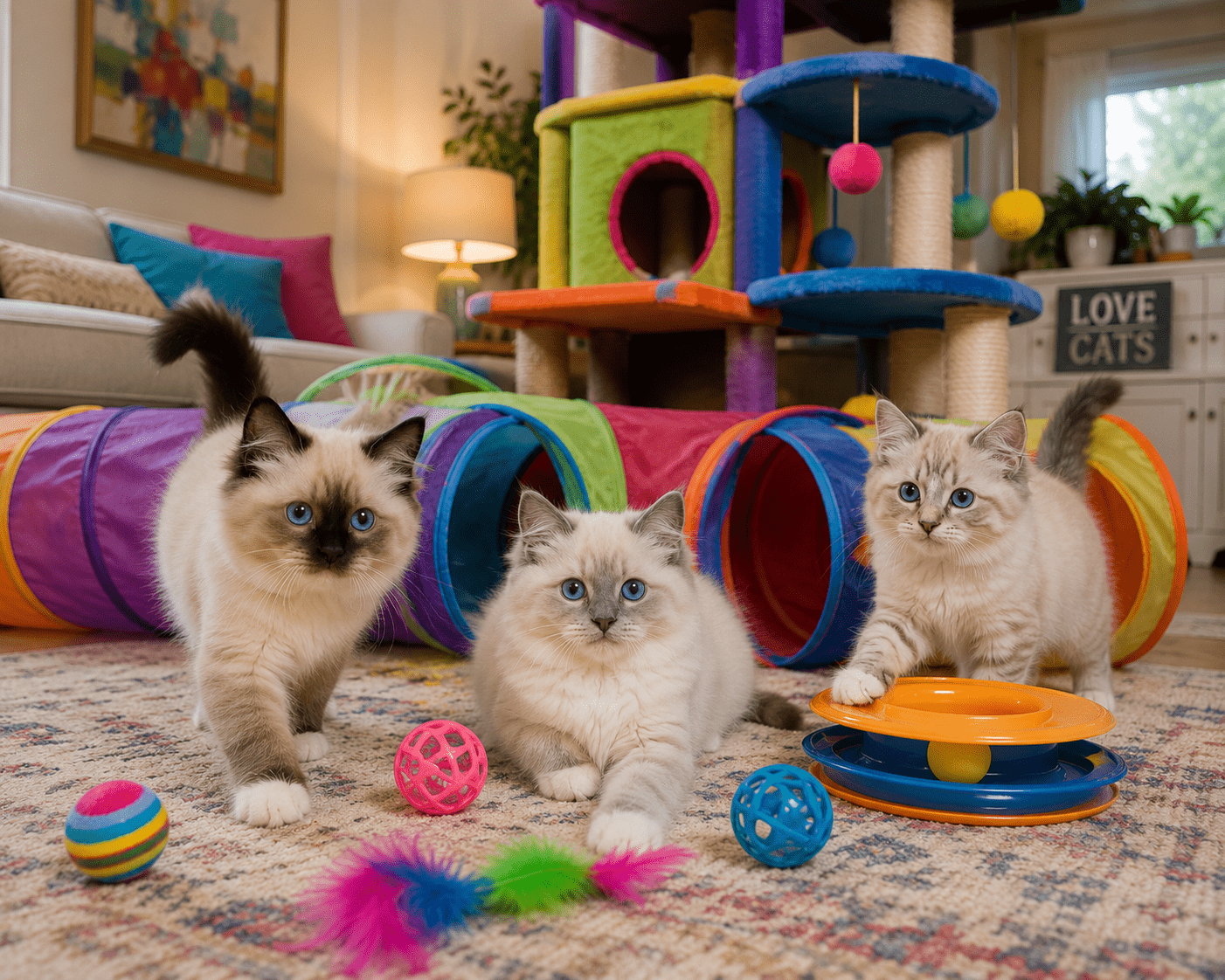
A Ragdoll kitten may appear to wander without a plan. One minute, the kitten is watching you make coffee; the next, it is padding beneath a chair, pausing beside a doorway, and settling beside the desk as if following an invisible trail.
That trail is worth noticing. A kitten’s daily route can show which parts of the home feel inviting, which transitions seem uncertain, and how human routines shape exploration. Instead of rearranging the entire room, you can turn ordinary movement into a small observation project: the Ragdoll Route Map.
What Is a Ragdoll Route Map?
A Ragdoll Route Map is a simple sketch or written record of the paths your kitten chooses during familiar household moments. You are not tracking steps or trying to control movement. You are looking for repeated connections between places.
For example, your kitten might travel from the living-room rug to the hallway, pause at the kitchen entrance, then follow you back to the sofa. Another kitten may move from a low perch to the nearest quiet corner whenever the vacuum cleaner appears. A third may use the same route every evening: window, bookcase, desk chair, blanket.
These patterns can make the home feel less like a collection of rooms and more like a kitten-sized landscape.
The 12-Minute Household Trail
Choose one predictable part of the day when your Ragdoll kitten is awake and interested in its surroundings. It could be your morning tea, a work break, or the few minutes before dinner. For three or four days, observe without encouraging the kitten to follow a toy.
Draw a rough floor plan on paper. Mark:
- where the kitten begins
- each pause or change of direction
- places where the kitten watches rather than walks
- the final resting or observing spot
- any human activity that seems to influence the route
Give each location a short name, such as “blue rug,” “doorway pause,” or “desk shadow.” The names make the map memorable and help you notice details that a list of rooms would miss.
During one observation, a Ragdoll kitten may ignore an open path across the center of the room. Instead, it may hug the edge of the sofa, cross behind a footstool, and approach its owner from the side. That is useful information. The kitten may simply prefer a route with nearby objects rather than a wide, exposed crossing.
Read the Pauses, Not Just the Destinations
The most revealing points on a Ragdoll kitten’s route are often the pauses. A pause does not automatically mean fear or discomfort. It may mean the kitten is listening, watching a moving person, deciding whether a doorway is worth investigating, or enjoying a particular view.
Notice the quality of the pause:
- Open pause: the kitten sits or stands loosely, perhaps grooming, blinking, or watching the room.
- Investigation pause: the kitten leans forward, sniffs, looks around an object, or touches the floor before continuing.
- Retreat pause: the kitten turns back, lowers its body, or chooses a familiar resting place after a sudden sound or movement.
- Social pause: the kitten stops because you stopped, then watches what you do next.
This distinction prevents a common mistake: treating every interruption as a problem to solve. Sometimes a pause is simply part of how a young kitten gathers information.
Three Useful Changes to Make After Mapping
1. Build a “bridge” across exposed spaces
If your kitten repeatedly travels around the edge of a room, create a gentle visual bridge using existing furniture. A low ottoman, a sturdy side table with clear space around it, or a folded blanket beside the sofa can make the route feel more connected.
The goal is not to create a maze. It is to give the kitten a sequence of recognizable landmarks. Keep pathways stable for a while so the kitten can learn the layout instead of encountering a new arrangement every day.
2. Protect the favorite observation point
Many Ragdoll kittens enjoy participating from a comfortable distance. If your map shows a repeated stop near your desk, kitchen doorway, or reading chair, treat that spot as a small viewing station. A washable mat or firm cushion can define the area without forcing the kitten to stay there.
Do not be surprised if the kitten chooses the floor beside the cushion instead. The map records preferences; it does not issue orders.
3. Add one safe detour, not five
Once the main route is familiar, introduce a single new feature near—but not blocking—the path. This might be a paper shopping bag laid on its side with handles removed, a low cardboard tunnel, or a different textured mat. Observe whether the kitten investigates immediately, circles it first, or ignores it until the next day.
One change at a time makes the result easier to understand. It also keeps the room from becoming visually busy for a kitten that prefers predictable surroundings.
The Human Factor in Ragdoll Kitten Behavior
Your kitten’s route may be organized around you more than around the furniture. A Ragdoll kitten might leave a sunny spot when you stand, follow you halfway down the hall, then return to the exact place where you were sitting. Another may wait near the bathroom door because that is where your morning routine reliably pauses.
Try a “human landmark” observation: record what you do immediately before the kitten changes direction. Standing up, opening a laptop, carrying laundry, or turning on a lamp may become signals in the kitten’s internal map.
This can also explain why a route changes on weekends. A kitten accustomed to following footsteps toward a home office may explore more widely when those footsteps lead to different rooms. Rather than assuming the kitten is being inconsistent, look for the household schedule behind the pattern.
Persian vs. Ragdoll: How the Routes May Differ
For this particular activity, Persian and Ragdoll kittens may create noticeably different maps. A Ragdoll kitten may show interest in routes that keep it near people, especially paths connecting resting places with areas of household activity. A Persian kitten may favor shorter, quieter circuits between comfortable surfaces, secluded corners, and low viewpoints.
These are tendencies, not rules. A confident Persian may investigate every new doorway, while a Ragdoll may prefer one carefully chosen corridor. The useful comparison is not which breed explores more, but what each kitten seems to value in a route: social proximity, quiet control, familiar textures, or a particular view.
What Your Map Can Tell You Over Time
Keep the first map and make another one a few weeks later. The changes can be surprisingly subtle. A kitten may stop circling the sofa and cross the room directly. A once-ignored doorway may become part of the evening loop. A favorite sunlit patch may move with the season, taking the kitten’s route with it.
You may also discover that the most important feature is not a destination but a transition. The narrow space beside a bookcase, the shaded area beneath a table, or the patch of floor where two rooms meet may provide a sense of continuity.
That is the real value of the Ragdoll Route Map. It encourages you to design around observed behavior instead of decorating for an imaginary kitten. A small adjustment—a clearer corner, a stable landmark, a quieter passage—can make the home easier to read from ground level.
Start Your Own Indoor Observation
Tonight, watch one familiar household route for 12 minutes. Sketch it, name three pauses, and change only one environmental detail afterward. Then wait and see what your Ragdoll kitten does with the new possibility.
For more thoughtful ideas about living with Persian and Ragdoll kittens, explore the rest of CTkittens.com.

Rachel Cohen is a journalist and producer with a passion for audio storytelling, health and science reporting, and feline companions.
A graduate of Middlebury College, Rachel spends her weekends exploring the mountains and when she isn’t outdoors or chasing a story, she can usually be found hanging out with her cats.