Ragdoll Kitten Paw Handling: A Gentle Vet Prep Guide
Short answer: Begin Ragdoll kitten paw handling with a single calm touch, reward it, and stop while your kitten is still comfortable. Over several short sessions, gradually progress from touching the shoulder and leg to holding the paw, looking at the pads, and gently separating a toe. The goal is not to make your kitten tolerate being pinned down. It is to make ordinary handling familiar and predictable before a veterinary team needs to examine the feet.
A relaxed routine can make a veterinary visit easier, but it cannot guarantee that your kitten will need no restraint. A veterinarian may still use gentle, appropriate support for a nail examination, blood draw, imaging, or treatment. Practice simply gives your kitten a better starting point.
Why paw handling helps before a veterinary visit
During a checkup, a veterinarian may look at the nails, paw pads, skin between the toes, and the way your kitten walks. A sore nail, small cut, swelling, or foreign material can also make a normally easygoing kitten pull away. If your kitten already knows that a hand near the paw predicts something pleasant, that part of the examination may feel less unfamiliar.
The useful behavior is cooperation, not passive surrender. A kitten who freezes, holds the body rigid, flattens the ears, or tries to escape may be stressed even if the kitten is quiet. Cat-friendly handling focuses on reducing fear, using the least restraint needed, and giving the cat time to respond. Those principles are consistent with guidance from the American Association of Feline Practitioners.
What to consider with a Ragdoll kitten
Ragdolls are typically semi-longhaired cats with blue eyes and a soft, substantial coat. Their calm reputation can make them pleasant companions, but breed temperament does not replace individual personality. Some kittens enjoy handling; others need a slower introduction.
Long fur can also make the feet harder to inspect. Hair around the toes may hide bits of litter or a small tangle, so handling practice is useful for routine observation. Do not pull at tangled fur, cut toe hair with household scissors, or assume that a fluffy paw is healthy simply because your kitten is not limping.
Before the first paw-handling session
Choose a time when your kitten is awake, settled, and not intensely focused on play or food. A quiet room and a non-slip surface are usually easier than a busy household or a slippery tabletop. Keep a few small, high-value cat treats nearby, or use a favorite toy if food is not motivating.
- Wash your hands and avoid strong fragrances that may make your touch unfamiliar.
- Let your kitten approach rather than reaching suddenly from above.
- Keep the first session to seconds, not minutes.
- Use a calm voice and release the paw before your kitten struggles.
- Practice when no one is rushing to leave for an appointment.
Reward-based handling is a form of gradual desensitization and counterconditioning. In plain language, you introduce a small version of the situation and pair it with something your kitten likes. If your kitten reacts, the step was too large, too long, or poorly timed.
Step-by-step Ragdoll kitten paw handling
1. Make your hand predictable
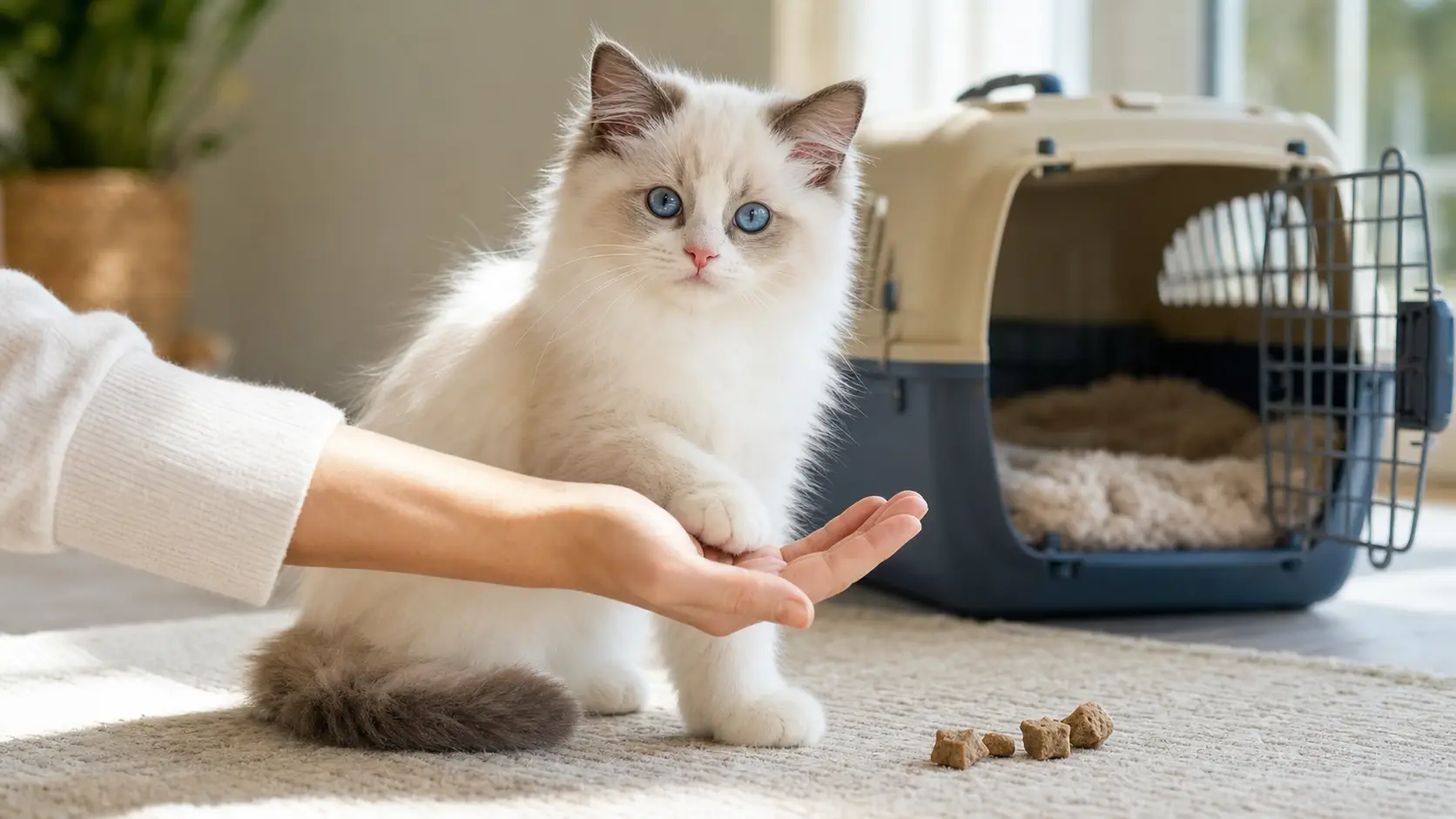
Sit beside your kitten and offer the back of your hand to sniff. If your kitten stays relaxed, give a treat or brief play. Repeat this on different days so a hand moving nearby does not automatically signal restraint.
2. Start above the paw
Stroke the shoulder once, then the upper leg, and reward. On another repetition, move a little farther down the leg. Do not reach directly for the toes on the first attempt. Your kitten should learn that contact travels gradually and ends before it becomes uncomfortable.
3. Touch the paw briefly
When your kitten accepts gentle strokes down the leg, touch the top of the paw with one finger for about one second. Remove your hand, then reward. Several successful one-second touches are more valuable than one long hold.
4. Add a light hold
Place your open fingers around the paw without squeezing. Hold for one or two seconds, release, and reward. Keep the paw in a natural position. Avoid pressing hard on the pads or stretching the toes apart before your kitten is ready.
5. Look at the pads and toes
Once a light hold is routine, lift the paw only slightly and glance at the pads. You can gently separate one toe for a moment, then release it. There is no need to inspect every toe in one session. Alternate paws rather than turning practice into a long examination.
6. Introduce veterinary-style cues
Let your kitten see a nail clipper from a safe distance, hear it open and close, or stand on a towel similar to one used in a carrier. Pair each new cue with a reward, but do not bring the clipper to the nail yet. These small details can help the real appointment feel less novel.
Turn practice into a comfortable routine
Think in stages rather than following a strict calendar. One kitten may move through the steps in a few days; another may need a couple of weeks. Progress when your kitten remains loose, interested in the reward, and able to return to normal behavior immediately afterward.
- Early sessions: Touch the shoulder and leg once or twice, then finish.
- Middle sessions: Touch the paw, hold it briefly, and inspect one pad.
- Later sessions: Handle both paws for a few seconds and add the sound or sight of grooming tools.
- Maintenance: Revisit the skill once or twice a week rather than practicing only before appointments.
A useful stopping rule is to finish after a successful repetition, not after your kitten has had enough. Ending on a calm response helps preserve trust and gives you a clear starting point for the next session.
Read your kitten’s signals
Good signs include a loose body, normal breathing, soft eyes, ears in a neutral position, and willingness to take a treat or resume play. Your kitten does not need to be motionless. Shifting position, sniffing your hand, or choosing to walk away after release can all be normal.
Pause and return to an easier step if you see a tense body, repeated paw withdrawal, tail lashing, flattened ears, wide pupils, growling, hissing, or attempts to hide. A kitten who becomes still may be uncertain rather than comfortable. Never punish a warning signal; it is useful information that you need to reduce the pressure.
What not to do
- Do not chase your kitten around the room to begin a session.
- Do not scruff, pin, squeeze, or hold the body down for practice.
- Do not keep holding the paw until your kitten stops resisting.
- Do not use nail clippers as a test of obedience.
- Do not pull mats, debris, or hair from a painful paw.
- Do not use a food reward to distract from handling that is already frightening.
Forced handling can make the next session harder and may teach your kitten that a human hand predicts loss of control. If you need to complete an urgent health check, contact your veterinary clinic rather than trying to train through a struggle.
Paw handling is not the same as nail trimming
Your first objective is comfortable examination, not a complete manicure. Nail trimming introduces another sensation, tool, sound, and degree of control. Keep it separate until your kitten reliably accepts a brief paw hold.
When you eventually learn to trim, ask your veterinarian or an experienced veterinary professional to demonstrate where the sensitive quick is and how much to remove. One nail tip may be enough for the first attempt. If your kitten has dark nails, you are unsure about the anatomy, or the nails are overgrown, ask for help instead of guessing.
During paw practice, look without probing. Redness, swelling, bleeding, a broken nail, discharge, heat, a new limp, or sudden refusal to let you touch a previously comfortable paw is a reason to contact your veterinary clinic. Training should never delay care for a painful problem.
Preparing for the actual appointment
Tell the clinic that you have been working on gentle paw handling and describe what your kitten accepts. This gives the veterinary team useful context, especially if your kitten is comfortable with a touch but not yet with a sustained hold.
- Bring a familiar towel or small blanket for the carrier.
- Take treats your kitten already enjoys, unless the clinic gives different feeding instructions.
- Secure your kitten in a carrier rather than carrying the kitten loose.
- Ask the clinic where to wait if your kitten becomes nervous around dogs or busy foot traffic.
- Do not give calming medication unless it has been prescribed or specifically recommended by your veterinarian.
Follow the clinic’s instructions if your kitten is scheduled for a procedure that requires food restrictions. For a routine visit, do not create extra stress by withholding food without a reason.
Frequently asked questions
How often should I practice paw handling?
Short sessions once a day or every few days are usually more useful than occasional, lengthy sessions. Even 30 seconds of calm practice can be enough for a young kitten. Stop sooner if your kitten loses interest.
What if my kitten pulls the paw away?
Release immediately and make the next attempt easier. Go back to touching the leg, use a better reward, or practice when your kitten is calmer. Pulling away is a request for more space, not bad behavior.
What if the veterinary visit is tomorrow?
Do not rush through every step in one evening. Practice one or two gentle touches, then tell the clinic that paw handling is new. Veterinary staff can adjust their approach and advise you if the examination needs to be completed promptly.
Will a Ragdoll naturally stay calm at the veterinarian?
Not necessarily. Ragdolls can be affectionate and relaxed, but every cat responds differently to travel, unfamiliar smells, restraint, and handling. Preparation helps, but your kitten’s signals should guide the pace.
For broader appointment planning, consult pet-owner resources from the American Veterinary Medical Association and cat-friendly veterinary guidance from the American Association of Feline Practitioners. This article supports preparation at home and does not replace veterinary advice.
Ready to build a calm start with your new companion? Explore CTkittens.com for more practical guidance on welcoming, caring for, and understanding Ragdoll kittens.

Rachel Cohen is a journalist and producer with a passion for audio storytelling, health and science reporting, and feline companions.
A graduate of Middlebury College, Rachel spends her weekends exploring the mountains and when she isn’t outdoors or chasing a story, she can usually be found hanging out with her cats.