Persian Kitten Eye Cleaning: Making the Morning Routine Gentle
Persian kitten eye cleaning is usually easiest when it is brief, predictable, and focused on the surrounding fur rather than scrubbing the eye. Start by checking for signs of pain or illness, soften any dried material with sterile ophthalmic saline, wipe gently with a fresh pad for each eye, and reward your kitten before ending the session. If the eye is red, cloudy, painful, swollen, or producing thick discharge, cleaning at home is not enough; arrange a veterinary examination.
A calm routine can keep ordinary dried tears from becoming a stressful daily battle. It cannot, however, correct a blocked tear duct, infection, scratch, eyelid problem, or other medical cause of ongoing discharge.
Why Persian kitten eye cleaning can feel unusually difficult
Persian kittens often have a short, broad facial shape and abundant coat around the cheeks and eyes. Depending on the individual kitten, tears may overflow onto the fur instead of draining neatly. Moisture can then dry into a crust that catches on fine hairs and feels much harder to remove than it first appears.
There is also a learning curve. A kitten may dislike the sound of a packet opening, the sensation of a damp pad near its whiskers, or the feeling of a crust being pulled. If each attempt turns into prolonged restraint, the kitten can begin to anticipate the routine and resist before you even touch the face.
The goal is not a perfectly white coat after every cleaning. The goal is comfortable skin, clean surrounding fur, and a kitten that learns eye-area handling is short and safe.
First separate routine residue from a health problem
A small amount of dry, clear-to-brown material after sleep can occur without an eye disease, especially when the eye is open normally and the surrounding skin is not irritated. Brown or reddish staining is not a diagnosis by itself; dried tear pigments, moisture, and trapped debris can all change the appearance of pale fur.
Discharge color alone also cannot tell you whether an infection is present. Use the whole picture: your kitten’s comfort, the appearance of the eye, whether one or both eyes are affected, and whether the problem keeps returning.
| What you notice | What to do |
|---|---|
| A small amount of dried residue, with no redness, swelling, squinting, or behavior change | Clean the surrounding fur gently and monitor. |
| Repeated wetness, an unpleasant odor, persistent staining, or discharge that returns quickly | Book a veterinary appointment to look for irritation, drainage problems, infection, or another cause. |
| Yellow or green discharge, marked redness, swelling, or one eye becoming suddenly worse | Contact your veterinarian promptly rather than relying on cleaning. |
| Squinting, holding the eye closed, rubbing, obvious pain, a cloudy or blue-looking surface, bulging, or injury | Seek same-day veterinary care. Eye problems can worsen quickly. |
Kittens with eye discharge may also have sneezing, nasal congestion, reduced appetite, or low energy. Those additional signs make a veterinary assessment more important.
Prepare a simple, low-stress cleaning station
Have everything ready before bringing your kitten over. Searching for supplies while holding a squirming kitten usually makes the interaction longer and less predictable.
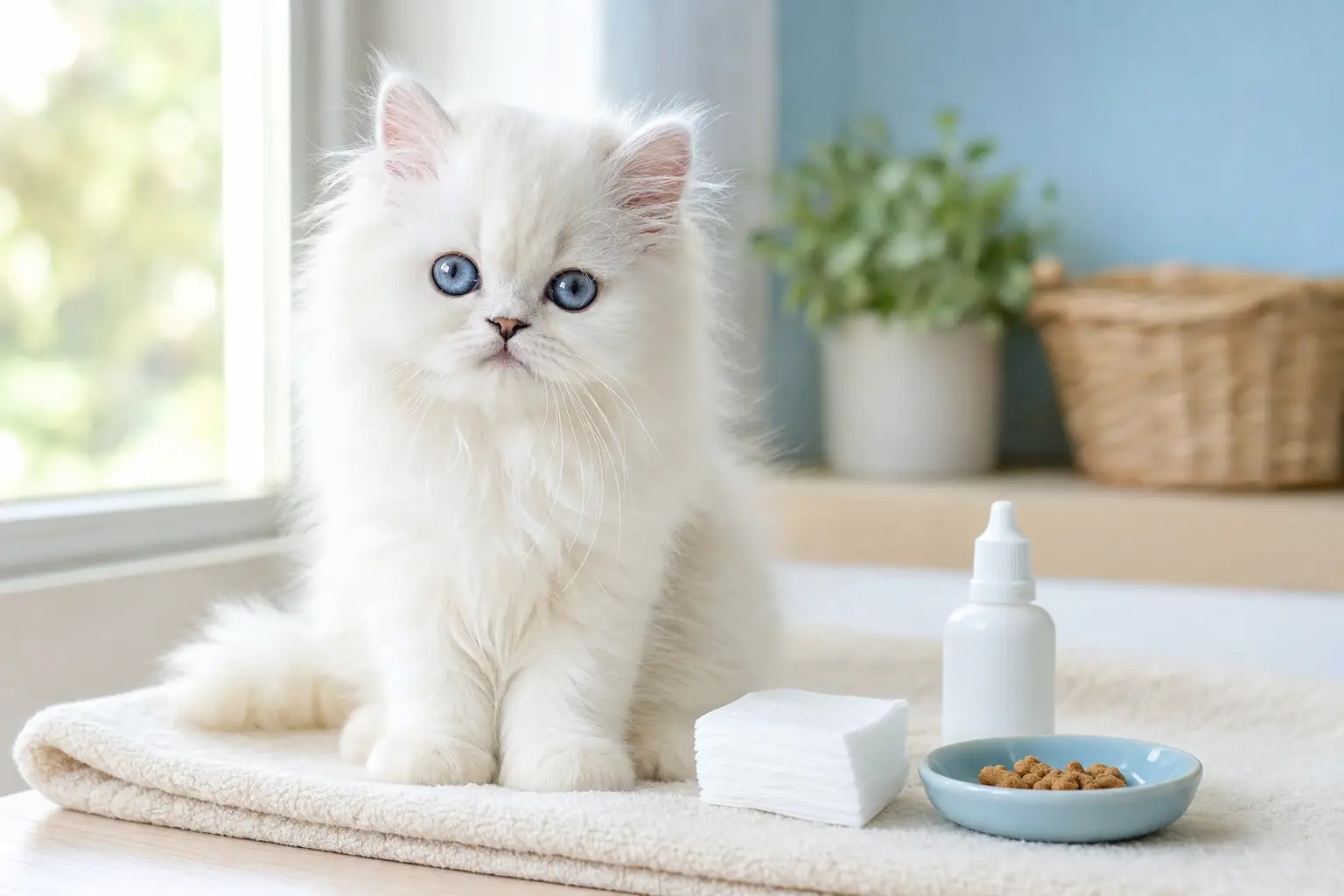
- Clean, soft gauze or lint-free cotton pads
- Sterile, preservative-free saline labeled for ophthalmic use, if appropriate for your kitten
- A small towel for gentle body support, if needed
- A favorite kitten-safe treat or a small portion of the normal meal
- Good lighting, without shining a bright light directly into the eyes
Do not make homemade salt water for use around the eyes. Concentration and cleanliness are difficult to control. Avoid baby wipes, fragranced wipes, hydrogen peroxide, alcohol, essential oils, whitening products, and human eye drops unless a veterinarian has specifically instructed you to use a particular product.
A gentle Persian kitten eye cleaning routine
- Observe before touching. Look at both eyes while your kitten is relaxed. Notice whether the eyes are equally open, whether the surface looks clear, and whether there is fresh discharge. This quick check helps you spot a change before routine cleaning hides it.
- Choose a calm moment. A quiet morning can work well, but the clock matters less than your kitten’s mood. Avoid starting immediately after an energetic play session or when the kitten is already trying to escape.
- Let the supplies be ordinary. Place the pad and saline nearby and allow your kitten to sniff them. Speak normally. A short pause is better than moving suddenly toward the face.
- Soften, do not pull. Dampen a pad with sterile saline and hold it against the dried material on the surrounding fur for several seconds. The aim is to loosen the crust. If it remains stuck, re-wet the pad and wait again. Pulling can hurt the skin and teach your kitten to fear the routine.
- Wipe away from the eye. Use one gentle outward pass along the fur near the inner corner. Do not rub across the eyeball or press on the eyelid. Use a new section of the pad for each pass and a separate clean pad for the other eye.
- Dry the surrounding fur. Pat, rather than scrub, to remove excess moisture. Damp, tangled fur is more likely to mat and can make the next cleaning harder.
- Finish immediately. Offer a treat, praise, or a favorite calm interaction, then stop. A 30-second successful session is more useful than a five-minute struggle.
If the crust will not soften, leave it for the moment and try again later rather than escalating force. A veterinary nurse or groomer can also show you how to manage coat around the eyes safely.
Teach cooperation separately from cleaning
Many kittens need to learn handling before they can tolerate eye-area care. During a separate session, touch the shoulder, cheek, or side of the head for one second, give a reward, and stop. Gradually work closer to the face over several days. Do not practice directly on an irritated eye.
You can build a predictable sequence such as: say the kitten’s name, touch the shoulder, show the pad, touch the cheek, clean if needed, and reward. Repeating the same order helps the kitten understand what will happen next.
Keep your hands supporting the body rather than pinning the head. If another adult is available, one person can provide steady support while the other cleans. A towel may help keep claws away, but it should be wrapped loosely around the body, never used to force the head into position, and removed if the kitten becomes distressed.
Common mistakes that make the routine harder
- Trying to remove every stain: Stained hair may not return to its original color immediately. Repeated rubbing can irritate the skin without solving the underlying cause.
- Cleaning on a schedule when nothing is present: Inspect daily, but clean only when there is residue or moisture to remove unless your veterinarian has recommended a specific frequency.
- Using the same pad for both eyes: Separate pads reduce the chance of transferring discharge or irritants.
- Cutting facial hair at home: Scissors near a moving eye are risky. Ask a professional groomer or veterinary team about safe trimming.
- Using leftover medication: Antibiotic or steroid eye products are not interchangeable, and the wrong product can delay proper care or worsen some eye conditions.
- Holding on through a full fight: Struggling can create fear and may injure the eye. Pause, reward calm behavior, and try a shorter step later.
When a veterinarian should examine your kitten
Arrange an appointment for discharge that is persistent, recurrent, one-sided, foul-smelling, or accompanied by redness or irritated skin. A veterinarian may need to check the tear drainage system, eyelids, hair contact, conjunctiva, and cornea. Some causes require tests or prescription treatment, and routine wiping will not resolve them.
Seek urgent care for squinting, a closed eye, severe pain, a cloudy surface, a visible wound, sudden swelling, bulging, or a significant change in vision. Do not wait for a tear stain to become dramatic before asking for help; eye discomfort can be subtle in cats.
For general background on feline eye disorders, the Merck Veterinary Manual’s cat-owner eye-disorder guidance is a useful starting point. It does not replace an examination of your kitten.
Frequently asked questions
How often should I clean a Persian kitten’s eyes?
Check the eyes once a day so you notice changes early, but clean only the residue that is actually present. Some Persian cats need more frequent care because of their anatomy or coat. If you are wiping several times a day or the fur is constantly wet, ask your veterinarian why before increasing the cleaning.
Can I use a baby wipe on the fur beneath the eye?
It is safer to avoid baby wipes. Fragrance, preservatives, and cleansing ingredients may irritate delicate facial skin or accidentally enter the eye. Use a clean pad moistened with an appropriate sterile ophthalmic product instead.
Will gentle cleaning remove brown tear stains?
It can remove fresh residue, but established staining may remain until the affected hair grows out or is safely trimmed. Persistent staining should still be discussed with a veterinarian because cleaning cannot correct every cause of tear overflow.
What if my kitten has discharge from only one eye?
One-sided discharge can result from local irritation, a foreign object, a scratch, or a drainage issue. If it persists or your kitten squints, rubs the eye, or seems uncomfortable, arrange a prompt examination rather than treating both eyes at home.
The simplest routine is the one your kitten can tolerate
Persian kitten eye cleaning does not need to be an elaborate grooming project. Check first, soften rather than pull, use a fresh pad for each eye, keep the session short, and reward cooperation. Most importantly, treat repeated discharge or discomfort as a reason to investigate the cause, not as a cue to clean more forcefully.
For more guidance on Persian kitten care, grooming, and choosing a healthy companion, explore CTkittens.com.

Rachel Cohen is a journalist and producer with a passion for audio storytelling, health and science reporting, and feline companions.
A graduate of Middlebury College, Rachel spends her weekends exploring the mountains and when she isn’t outdoors or chasing a story, she can usually be found hanging out with her cats.