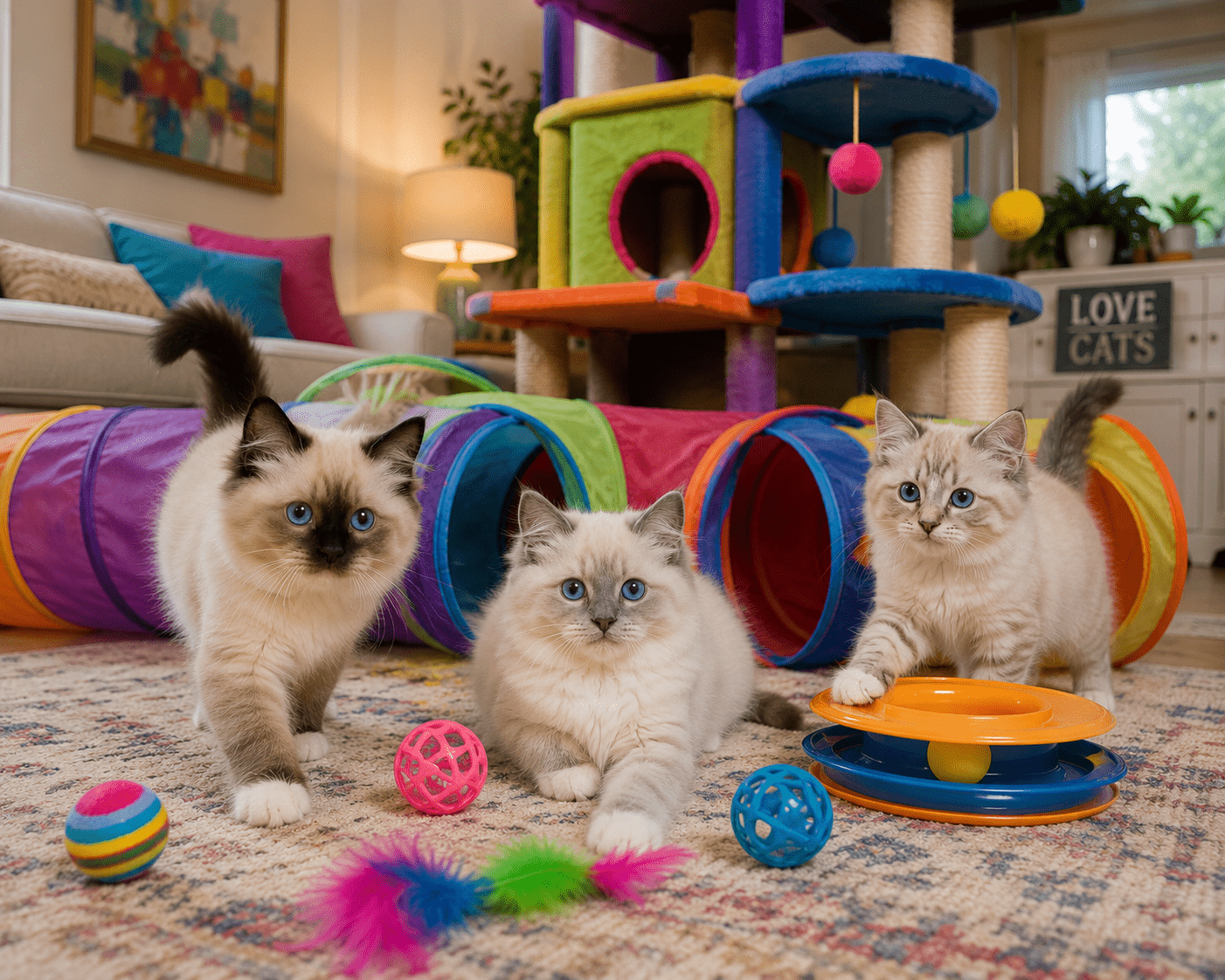

Ragdoll Kitten Morning Cuddle Ritual: A Month-One Guide
The best Ragdoll kitten morning cuddle ritual is not a fixed amount of time in your arms. It is a predictable, gentle sequence in which your kitten can approach, be touched, or walk away without being chased. That choice is what turns a morning greeting into trust.
Ragdolls are often described as social and relaxed, but breed tendencies do not determine an individual kitten’s personality. Some will climb into your lap immediately; others need days or weeks before they enjoy being held. During the first month, aim for calm consistency rather than a picture-perfect cuddle.
Many kittens arrive home between eight and twelve weeks, although the right timing depends on the breeder, shelter, local requirements, and veterinary advice. The plan below begins on the day your kitten comes home and can be adjusted to suit its age, health, confidence, and appetite.
What the morning ritual should accomplish
A morning routine gives your kitten useful information: the household is predictable, people are safe, and handling ends before it becomes overwhelming. It also gives you a daily opportunity to notice changes in appetite, energy, litter habits, eyes, breathing, and movement.
Cuddling is only one part of the ritual. For a young kitten, a successful morning may look like a quiet greeting, breakfast, a few minutes of play, and a brief stroke beside you. If your kitten chooses to curl up against your leg instead of being picked up, that still counts as connection.
Do not wake a sleeping kitten to create a cuddle opportunity. Young cats need substantial rest, and an interrupted nap can make a new home feel less secure. Wait until your kitten wakes naturally or begins looking for you.
Three principles for gentle Ragdoll kitten handling
- Let the kitten start contact. Sit nearby, turn slightly sideways, and offer one relaxed hand. Avoid reaching quickly over the head or pulling a kitten out of a hiding place.
- Keep early sessions short. One to five calm minutes is enough during the first few days. You can gradually extend the time when your kitten remains relaxed.
- Stop while it is still going well. Put the kitten down or pause petting at the first clear sign of discomfort. Ending positively teaches the kitten that contact is predictable and temporary.
Stroke the cheeks, chin, shoulders, and back if your kitten welcomes it. Avoid assuming that a soft belly is an invitation; many cats dislike belly handling even when they are affectionate. Never lift a kitten by the scruff. When you pick it up, support the chest and hindquarters, keep the body close to yours, and lower it as soon as it begins to struggle.
Prepare the room before the first morning
Set up the essentials before your kitten arrives so the ritual does not compete with household chaos. Keep food, water, a clean litter box, a bed or covered retreat, and a few safe toys in familiar locations. Use the food your kitten was already eating at first, unless your veterinarian advises otherwise; any change can be made gradually later.
Keep windows screened, cords secured, small objects removed, and toxic plants or chemicals out of reach. Wand toys should be stored after play, and kittens should not be encouraged to bite or chase moving fingers. A quiet room or kitten-proofed area can be especially helpful during the first several nights.
A practical morning sequence
There is no requirement to make every morning identical to the minute. A consistent order is more useful than a rigid schedule.
- Greet without grabbing. Use the same soft phrase each morning and allow your kitten to see you. If it approaches, offer your fingers for a sniff. If it stays in its bed or retreat, speak gently and give it space.
- Check basic needs. Offer a clean litter box, fresh water, and the kitten’s normal meal. A hungry kitten may not be interested in cuddling, and food should take priority over your preferred routine.
- Invite a little play. Use a wand toy or another kitten-safe toy for a few minutes. Keep the game low to the ground and let the kitten catch the toy occasionally. Play can help a busy kitten settle, but skip it if the kitten is tired or overstimulated.
- Offer contact. Sit on the floor or on a stable chair. Place a soft blanket over your lap if desired, then invite your kitten beside you rather than placing it there automatically. Begin with slow strokes and pause regularly.
- End with choice. When the kitten climbs down, turns away, or begins exploring, let it leave. The ritual is complete even if the cuddle lasted only thirty seconds.
Some kittens prefer a short greeting before breakfast and a longer lap session afterward. Others are most affectionate when they are sleepy. Follow the kitten’s natural pattern rather than treating cuddling as a test of whether it likes you.
The first-month progression
Days 1 to 3: Build security
Keep mornings quiet and uncomplicated. Spend time near the kitten’s safe area without reaching in repeatedly. Offer a hand to sniff, speak softly, and use brief strokes only if the kitten leans toward you. A kitten that eats, uses the litter box, explores for a little while, and then rests may be having a perfectly good first few days.
Do not pass the kitten from person to person or invite visitors to handle it. If you have children, show them how to sit still and let the kitten approach. Supervise every interaction.
Days 4 to 7: Add brief holding
If your kitten is eating normally and becoming more curious, introduce a very short lift. Support the front and back of the body, hold it close to your torso, and place it down before it wriggles hard. Pair handling with a calm voice or a small portion of its normal food, never with restraint that continues after the kitten is frightened.
You can also touch one paw, look briefly at the ears, or run your hand along the coat. These tiny exercises help your kitten become familiar with ordinary care, but they do not need to happen every morning.
Week 2: Make the ritual flexible
Move the cuddle to a lap, a chair, or the floor and let the kitten choose among safe options. Gradually introduce normal household sounds at a comfortable distance. If your kitten leaves, reduce the pressure rather than following it with more petting.
This is a good time to notice preferences. Perhaps your kitten enjoys cheek rubs but dislikes being carried, or wants contact after play but not before breakfast. Record those patterns mentally and respect them.
Weeks 3 and 4: Strengthen trust, not dependence
By the end of the first month, your kitten may settle beside you for several minutes, accept gentle lifting, or still prefer contact on the floor. All three can be normal. Practice short handling sessions in different safe places, but preserve the kitten’s ability to retreat and nap undisturbed.
The goal is a cat that approaches because contact feels safe, not a cat that remains still because it has learned that struggling does not help.
How to read your kitten’s body language
Relaxed behavior can include a loose body, soft eyes, forward or neutral ears, gentle kneading, leaning into a hand, purring, or choosing to remain nearby. Purring is not a guarantee of comfort, so look at the whole body rather than relying on one signal.
Pause or end the session if you see flattened or sideways ears, a rapidly swishing tail, tense muscles, crouching, wide pupils, repeated lip licking, turning away, growling, hissing, or attempts to escape. A kitten may tolerate a few strokes while becoming increasingly tense; stopping early is more useful than waiting for a scratch or bite.
If the kitten mouths your hand, calmly replace it with a toy. Do not punish, shout, or hold the mouth closed. Young cats are still learning how to play, and calm redirection is clearer than fear.
When your kitten is not a cuddler
A less demonstrative kitten is not necessarily unhappy or poorly bonded. Affection can look like following you from room to room, sleeping near your chair, greeting you with a tail held upright, bringing a toy, or accepting a few strokes before walking away.
Use a contact ladder: sitting nearby, offering a hand, stroking once, stroking several times, and eventually lifting briefly. Advance only when the kitten stays relaxed at the current step. If it retreats, return to the last comfortable step for a few mornings.
Do not compare your kitten with videos or photographs of unusually cuddly Ragdolls. Socialization history, genetics, age, health, and the environment all influence how a cat responds to handling.
Health and safety checks
Arrange a veterinary examination soon after bringing your kitten home and follow the veterinarian’s advice about vaccinations, parasite control, nutrition, and future appointments. Keep the kitten indoors and separate from unfamiliar animals until your veterinarian explains what is appropriate for its health and vaccination status.
Contact a veterinarian promptly if your kitten refuses food, is unusually weak or difficult to wake, has repeated vomiting or diarrhea, develops discharge from the eyes or nose, or shows a sudden change in behavior. Breathing difficulty, collapse, severe injury, or possible poisoning warrants emergency care. Young kittens can become unwell quickly, so a morning ritual should include observation, not just cuddling.
For general background, the Cornell Feline Health Center’s kitten health guidance and the AAFP feline-friendly handling guidelines are useful starting points. Your own veterinarian should be the source for advice tailored to your kitten.
FAQ
Do Ragdoll kittens naturally like being held?
Some do, but no breed guarantees a preference for being carried. Treat a Ragdoll’s relaxed reputation as a possibility, not a promise. Let the individual kitten show you what feels comfortable.
How long should a morning cuddle last?
Start with seconds or a few minutes and stop while your kitten is still relaxed. Over time, the session may become longer, but a brief voluntary cuddle is more valuable than a prolonged forced one.
Should I cuddle my kitten before or after breakfast?
Either can work. If your kitten wakes hungry, feed it first. Many kittens enjoy a short play session and then settle for contact, while sleepy kittens may prefer a quiet greeting before they eat.
What if my kitten hides every morning?
Check that food, water, litter, temperature, and the room setup are suitable, then reduce noise and handling. Hiding is common during adjustment, but persistent hiding combined with poor appetite, lethargy, or other symptoms deserves a veterinary call.
Make mornings feel safe
A successful Ragdoll kitten morning cuddle ritual is built from small choices: the same calm greeting, gentle handling, a reliable end, and permission to walk away. Over the first month, those repeated experiences can create a warm daily habit without asking your kitten to behave like a stuffed toy.
Ready to learn more about welcoming and caring for a Ragdoll? Explore CTkittens.com for more practical kitten guidance and breed-focused resources.

Rachel Cohen is a journalist and producer with a passion for audio storytelling, health and science reporting, and feline companions.
A graduate of Middlebury College, Rachel spends her weekends exploring the mountains and when she isn’t outdoors or chasing a story, she can usually be found hanging out with her cats.