
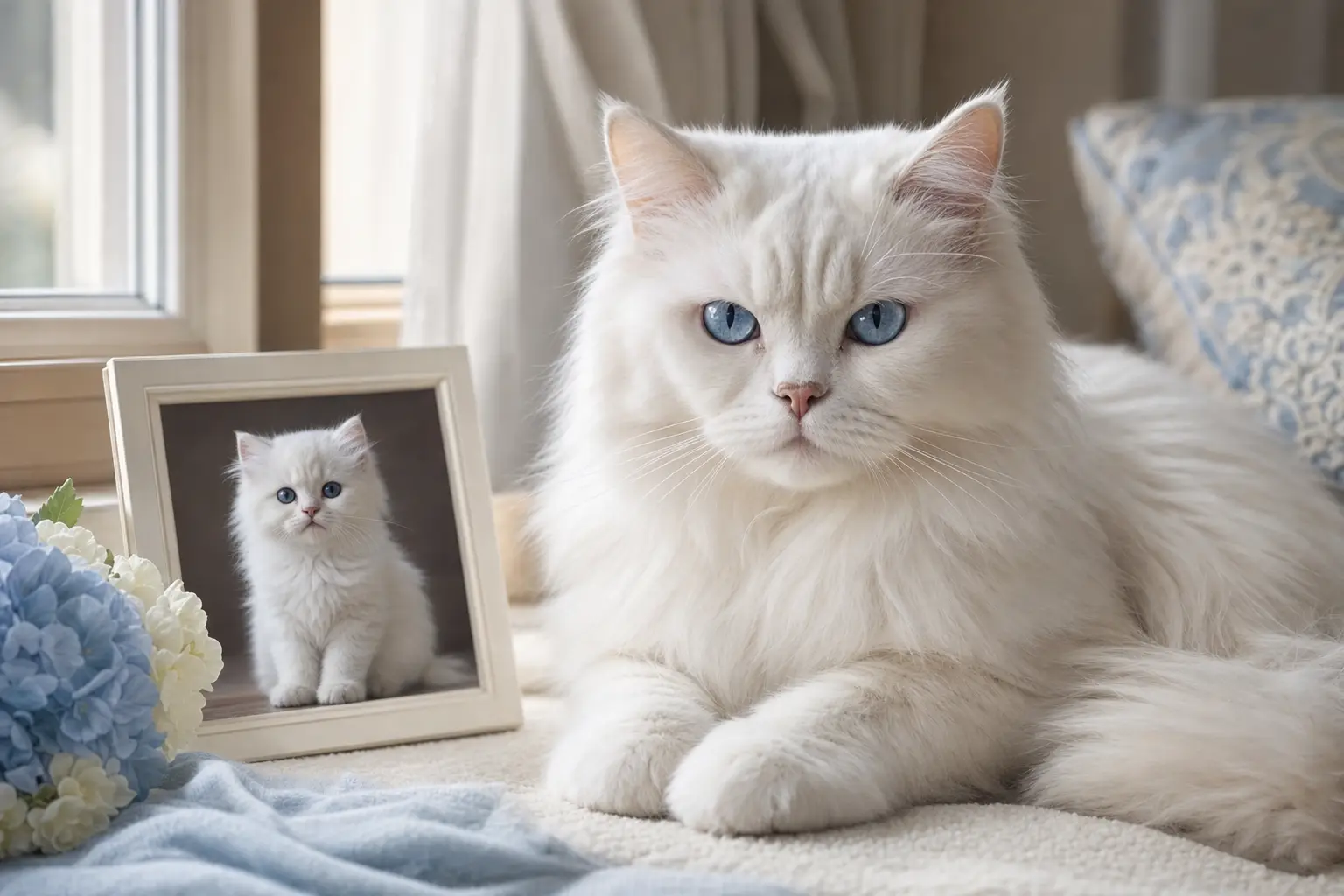
Persian Kitten to Young Adult: Photos, Stories, and Calm Care
The move from a Persian kitten to a young adult is not one dramatic birthday. It is a gradual shift: the baby-soft face becomes more defined, play becomes more purposeful, and your cat may ask for affection on slightly different terms.
The best way to celebrate is to document the changes without rushing them. Take simple, consistent photos, write down small stories, and adjust care routines gradually. At the same time, learn which changes are ordinary and which deserve a call to your veterinarian.
What changes as a Persian kitten grows?
Young adulthood is a useful everyday label, not a precise biological milestone. Cats mature at different rates, and a Persian may continue filling out after the first year. Some cats become reproductively mature while they still look very young, so your veterinarian can advise you about spaying or neutering and other age-appropriate care.
During this stage, you may notice:
- A longer-looking body and legs, followed by a gradual return of a more balanced adult shape.
- A coat that becomes fuller, denser, or easier to tangle as the adult hair develops.
- More confident climbing, jumping, and independent exploration.
- Shorter bursts of kitten chaos mixed with longer, calmer rest periods.
- A changing relationship with handling: one day your cat may enjoy a lap, and the next day a nearby spot is preferred.
None of these changes needs to be measured against another Persian. Genetics, health, early socialization, nutrition, environment, and personality all affect the pace of development. A healthy timeline is usually more useful than a comparison photo from the internet.
How to create a meaningful photo story
A monthly portrait can show growth, but the most memorable record includes ordinary moments too. A Persian kitten’s story is not only about a perfect face or a dramatic coat. It is also about the first confident jump onto a chair, the favorite sleeping position, or the day grooming stopped feeling like a negotiation.
Use a repeatable setup
- Choose one safe location. A carpeted floor, low sofa, or quiet room is better than a high perch or slippery table.
- Keep the light consistent. Soft window light usually shows white fur more naturally than a harsh flash. Avoid shining a flash directly toward the eyes.
- Photograph at the same distance. Wide-angle phone lenses can make a face or paw look larger than it really is. Step back slightly and use a normal camera view when possible.
- Let the cat choose the pose. Offer a familiar toy or treat, but do not restrain, stretch, or repeatedly reposition a reluctant cat for a picture.
- Add a simple date. A small card placed beside the cat is safer than clothing, props, or anything that can be chewed.
Capture the story behind the portrait
Try collecting five images at each stage: a relaxed face, a full-body view, a favorite activity, a quiet resting moment, and a photo with a familiar object for scale. Add two or three sentences explaining what was happening that week.
A useful caption might be: At seven months, the window perch became more interesting than the camera. The coat around the chest is filling out, and grooming now works best in two short sessions after play. This kind of note preserves personality and routine, not just appearance.
Keep the camera out of the way when your cat is eating, using the litter box, sleeping deeply, or showing signs of stress. A good photo record should never come at the expense of comfort.
Care priorities during the transition
Make grooming predictable
Many Persian cats need frequent grooming because their long, dense coats can mat close to the skin. The exact routine depends on coat type and the individual cat, but short, calm sessions are usually easier than waiting until the coat is tangled.
- Use a suitable comb or brush and work in small sections.
- Part the fur so you can see whether you are reaching the undercoat rather than brushing only the surface.
- Check behind the ears, under the front legs, around the collar area, and at the hindquarters.
- Stop if the skin looks sore or your cat becomes distressed.
- Do not cut tight mats with scissors close to the skin. A veterinarian or experienced cat groomer can remove difficult mats safely.
Persian faces can also need gentle cleaning around the eyes. Use a soft, clean, damp cloth and a separate area of the cloth for each eye. Avoid human eye drops, fragranced products, and forceful rubbing. Tear staining can be related to facial structure, but persistent discharge, squinting, swelling, cloudiness, or obvious discomfort should be assessed by a veterinarian.
Adjust food and activity gradually
Growing cats need nutrition appropriate for growth, while young adults may need a different calorie balance as growth slows. There is no universal date for changing food. Ask your veterinarian when a transition makes sense for your cat, and change foods gradually rather than replacing one diet suddenly.
Use play to support coordination and confidence. Wand toys, lightweight balls, and food puzzles can provide activity without encouraging rough play with hands. Keep jumping surfaces stable, especially for a young cat still learning how to judge distance.
Regular body-condition checks are more useful than trying to make a Persian look round and plush. Your veterinarian can show you how to assess body condition and decide whether portions need adjustment.
Expect personality to keep developing
A kitten that once followed you everywhere may become more selective without becoming less attached. Some young adults prefer sitting beside you rather than on you. Others become more vocal, energetic, or interested in territory.
Keep daily routines steady: similar meal times, a clean litter area, predictable play, and a quiet place to retreat. If your cat walks away from handling, let that boundary stand and try again later. Trust grows faster when a cat can end an interaction safely.
A calm troubleshooting guide
Small changes are easier to understand when you look at the whole picture: appetite, energy, litter-box habits, breathing, coat condition, and behavior together. The table below is a starting point, not a diagnosis.
| What you notice | What may help at home | Contact your veterinarian when |
|---|---|---|
| New tangles or a coat that feels different | Shorten grooming sessions, use a comb that reaches the coat, and check the skin beneath the fur. | Mats are tight, the skin is red or painful, or your cat suddenly resists grooming. |
| More independence or less interest in cuddling | Offer affection without holding your cat in place. Keep play and rest routines predictable. | The personality change is sudden or comes with hiding, poor appetite, weakness, or signs of pain. |
| Watery eyes or staining on the face | Wipe gently with clean water and a soft cloth; keep the facial area dry afterward. | There is squinting, thick discharge, swelling, cloudiness, rubbing, or a noticeable change in one eye. |
| Occasional snoring or noisy breathing | Keep the room cool and avoid smoke, sprays, and strenuous activity in heat. Observe rather than assuming it is normal. | Breathing is labored, your cat breathes with an open mouth, gums look bluish or gray, or breathing changes suddenly. Emergency care may be needed. |
| Zoomies, pouncing, or play biting | Redirect to a toy, add short interactive play sessions, and avoid using hands as toys. | Aggression is new, intense, difficult to interrupt, or accompanied by sensitivity to touch or other illness signs. |
| More frequent litter-box visits or accidents | Keep boxes clean, easy to reach, and placed in quiet locations. Note what you see rather than punishing the cat. | Your cat strains, cries, produces little or no urine, has blood in the urine, or stops using the box. Lack of urination is urgent. |
Flat-faced breeds can have particular eye, dental, and airway considerations, but noisy breathing, chronic discomfort, or difficulty eating should not be dismissed as simply typical for a Persian. A breed label is useful context; it is not a substitute for an examination.
A simple monthly Persian kitten to young adult ritual
Choose a quiet day once a month and spend ten minutes recording the basics:
- Take one relaxed portrait and one full-body photograph in the same safe location.
- Write down a new behavior, favorite activity, and any change in grooming tolerance.
- Check the coat, eyes, ears, nails, and mouth only to the extent your cat comfortably allows.
- Review appetite, water intake, energy, and litter-box habits.
- Save the notes with the date and share concerning changes with your veterinarian rather than waiting for the next photo milestone.
This ritual turns a camera roll into a practical record. It may help you notice gradual changes that are easy to miss when you see your cat every day. It also gives your veterinarian clearer information if a problem develops.
When routine veterinary care belongs in the story
Growing cats need preventive care as well as photographs. Your veterinarian can create a schedule for vaccinations, parasite prevention, dental assessment, nutrition, body condition, and spaying or neutering. The right timing depends on age, health history, lifestyle, and local risks.
Bring your notes or a few dated photos to appointments. A picture cannot diagnose a condition, but it can show how coat density, posture, facial appearance, or activity has changed over time. Seek prompt veterinary advice for sudden appetite loss, repeated vomiting or diarrhea, marked lethargy, pain, breathing difficulty, eye changes, or urinary problems.
For general pet-care guidance, the American Veterinary Medical Association’s pet-care resources, the Cornell Feline Health Center, and International Cat Care offer useful background. Your own veterinarian remains the right source for decisions about an individual Persian.
FAQ
When does a Persian kitten become a young adult?
There is no single date. Many cats look and behave more adult during the first year, while their body, coat, and confidence continue developing afterward. Treat young adulthood as a gradual stage and follow your veterinarian’s advice for nutrition and preventive care.
How often should I photograph my growing Persian?
Once a month is enough for a useful growth record. More frequent photos are fine if your cat enjoys them, but consistency matters more than quantity. Use the same lighting, distance, and safe setting so the images are easier to compare.
Should I be worried if my Persian is less cuddly?
Not necessarily. Young cats often become more independent as they gain confidence. Offer choice and watch the wider pattern. A sudden withdrawal, especially with appetite, litter-box, energy, breathing, or pain changes, deserves veterinary advice.
Let the ordinary moments count
The most valuable Persian kitten to young adult memories may not be the polished portraits. They may be the slightly crooked whisker photo, the first successful grooming session, or the quiet evening when your cat chose the chair beside you.
Record those small moments, keep care routines calm, and let your cat’s own pace guide the celebration. When you are ready for more Persian cat care ideas and kitten resources, explore CTkittens.com.

Rachel Cohen is a journalist and producer with a passion for audio storytelling, health and science reporting, and feline companions.
A graduate of Middlebury College, Rachel spends her weekends exploring the mountains and when she isn’t outdoors or chasing a story, she can usually be found hanging out with her cats.

