
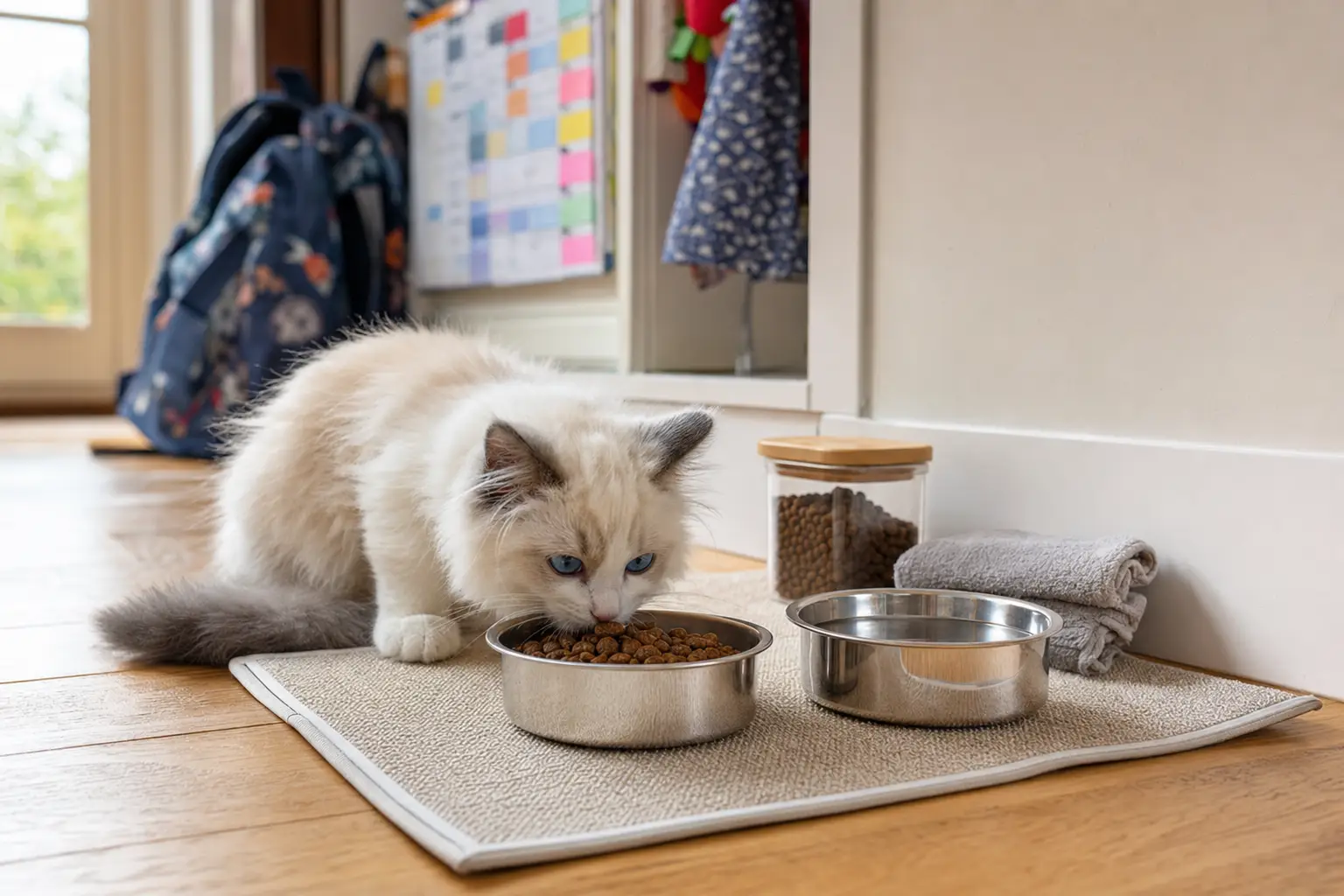
Ragdoll Kitten Feeding Station for Busy Families
A good Ragdoll kitten feeding station does not need to be elaborate. The best setup is quiet, easy to clean, separate from the litter box, and simple enough for every member of the household to use consistently.
For a busy family, the goal is not only to put food in a bowl. It is to create a predictable place where your kitten can eat without being startled, crowded, or accidentally overfed. A measured feeding routine also makes it easier to notice changes in appetite, digestion, or behavior.
What a peaceful feeding station should provide
Think of the station as your kitten’s small dining area. It should support four basic needs:
- Security: Your kitten can see the room without being trapped in a corner.
- Consistency: Food and water stay in familiar places.
- Hygiene: Bowls and the surrounding floor are easy to wash.
- Observation: An adult can quickly see what was eaten and when.
Ragdolls are often described as sociable and easygoing, but personality varies from kitten to kitten. A relaxed breed reputation should not be treated as a reason to put the feeding area in the middle of a loud kitchen or a busy hallway. Even a confident kitten may eat less comfortably when people, children, or other animals continually pass by.
Choose the right location
Look for a low-traffic spot with good visibility. A dining room corner, a quiet section of the kitchen, or a family room wall can work well if the area is not beside a refrigerator, dishwasher, washing machine, or frequently opening door.
Avoid placing the bowls directly next to the litter box. Cats generally prefer to eat away from toileting areas, and separating the two also reduces the chance of litter being tracked into food or water.
The ideal station lets your kitten approach and leave easily. Do not wedge the bowls behind furniture or place them in a narrow passage where a child, dog, or another cat could block the exit. If your home is open-plan, a low piece of furniture or a washable mat can visually define the area without making it feel enclosed.
Water does not have to sit directly beside food. Some cats drink more readily when water is placed a short distance away. Try both arrangements and watch your kitten’s preference. Fresh water should always be available, including overnight.
Keep the equipment simple and washable
You can start with a few practical items rather than buying a complete matching set.
- Two or three shallow bowls: Stainless steel or glazed ceramic is durable and easy to clean. A wide, shallow shape can make it easier for a kitten to reach food without pressing its face against the sides.
- A stable, washable mat: Choose one that lies flat and can be wiped or rinsed. It protects the floor from splashes and makes small spills less disruptive.
- A separate water bowl or fountain: Use whichever your kitten accepts comfortably. If you choose a fountain, introduce it gradually and keep a quiet bowl available while your kitten learns the sound.
- A sealed food container: Keep food in its original packaging when possible, placed inside an airtight container. This preserves label information and helps prevent mix-ups between foods.
- A measuring scoop or kitchen scale: Consistent portions are more useful than estimating by eye, particularly when several family members feed the kitten.
Wash food and water bowls regularly. Wet food bowls should be cleaned after each meal, while water bowls need frequent freshening and washing so they do not develop a slippery film. Replace any bowl that is chipped, cracked, or difficult to clean.
Build a kitten feeding schedule that fits real life
Kittens generally need more frequent meals than adult cats because they are growing and have small stomachs. The exact amount and number of meals depend on age, body size, activity, the food’s calorie content, and your veterinarian’s advice. Use the feeding instructions on a complete and balanced kitten food as a starting point, then adjust with veterinary guidance as your kitten grows.
Many families find that three or four small meals are easier on a young kitten than one or two large servings. The schedule below is an example, not a prescription:
| Time | Routine | Family-friendly detail |
|---|---|---|
| 7:00 a.m. | Measured breakfast | An adult feeds the kitten before the morning rush and records the portion. |
| 11:30 a.m. | Small midday meal | A timed feeder may help if everyone is away, provided it has been tested first. |
| 4:30 p.m. | Afternoon meal | A child may help refresh water, but an adult should oversee portions. |
| 9:00 p.m. | Evening meal | Clean the bowls and mat so the station is ready for the next morning. |
If your kitten is younger, unusually small, recovering from illness, or eating a veterinary diet, ask your veterinarian whether this pattern is appropriate. Keep a note of the food brand, recipe, portion, and time. A shared phone note or paper chart on the refrigerator prevents two people from feeding the same meal twice.
Make the station work with children and visitors
A peaceful feeding area depends as much on household habits as on the bowl itself. Teach children three simple rules:
- Do not touch or move the bowl while the kitten is eating.
- Do not pick up, hug, or chase the kitten at the feeding station.
- Ask an adult before offering treats or adding more food.
These rules protect the kitten from interruptions and help children participate safely. A child can refill a water bowl with supervision, place a clean mat under the dishes, or mark a meal on the schedule. Portioning food should remain an adult responsibility until everyone reliably understands the plan.
When guests arrive, especially if they bring children or dogs, keep the feeding area accessible but quiet. If the kitten hides or abandons a meal, give it space rather than coaxing it with repeated handling. A predictable retreat nearby, such as a cat tree or open carrier, can help the kitten settle after a noisy event.
Managing other pets and automatic feeders
If another cat or dog can reach the kitten’s bowl, feed the animals in separate areas. Competition can make it difficult to tell who ate what, and a kitten may rush through food or avoid the station altogether. A baby gate, closed door, elevated surface, or microchip-activated feeder may help, depending on the animals and their sizes.
Automatic feeders can be useful for measured dry meals when a family is away. Test the device for several days before relying on it, check that the portion is accurate, and make sure the kitten cannot tip it over or chew its cord. An automatic feeder does not replace fresh water, bowl cleaning, observation, or attention to a kitten who suddenly stops eating.
Wet food needs more careful handling. Do not leave a perishable meal sitting out all day, particularly in a warm room. Follow the product’s storage instructions, refrigerate unused portions promptly, and discard food that has been left out or looks and smells abnormal.
Use the station to monitor health
One advantage of measured meals is that they give you a simple daily health check. You will notice whether your kitten eats eagerly, picks at food, drinks normally, or leaves more behind than usual.
Contact your veterinarian promptly if your kitten repeatedly refuses meals, has vomiting or diarrhea, seems unusually tired, loses weight, has trouble chewing, or shows a clear change in drinking or urination. Young kittens can become unwell quickly, so do not wait several days to seek advice when the change is significant.
Choose food labeled as complete and balanced for kitten growth, and avoid making major diet changes without a plan. If you are considering homemade or raw food, discuss the risks and nutritional requirements with your veterinarian first. Growing kittens can be especially vulnerable to an unbalanced diet.
Common setup mistakes to avoid
- Leaving food out without measuring: Free access may make intake difficult to track and can lead to stale or spoiled food.
- Moving the bowls every day: A consistent location is easier for a young kitten to learn.
- Putting the station beside noisy appliances: Sudden sounds can make meals feel unsafe.
- Using one shared bowl for several pets: Individual bowls make portions and appetite changes easier to monitor.
- Changing foods abruptly: When a change is necessary, ask your veterinarian how to transition it.
Frequently asked questions
Should a Ragdoll kitten have food available all day?
Not automatically. Some kittens need frequent meals, but measured servings usually make appetite and weight easier to monitor. Your veterinarian can recommend the right daily amount and meal frequency for your kitten’s age, weight, and food.
Is the kitchen a good place for a feeding station?
It can be, if the station is away from hot surfaces, cleaning chemicals, rubbish bins, loud appliances, and heavy foot traffic. A quieter nearby room may be better for a timid kitten or a home with frequent activity.
How can I tell whether the feeding routine is working?
Your kitten should be able to approach meals calmly, maintain an appropriate body condition, and show normal energy and bathroom habits. Keep a simple record during the first few weeks. It gives your veterinarian useful information if appetite, stool, or weight becomes a concern.
A thoughtful Ragdoll kitten feeding station turns a potentially chaotic part of family life into a repeatable routine. Start with a quiet location, washable supplies, measured portions, and one shared schedule. Then adjust the setup around your kitten’s behavior rather than trying to force every household into the same arrangement.
For additional guidance on feline nutrition, review the Cornell Feline Health Center nutrition overview, and speak with your veterinarian about your kitten’s individual needs. When you are ready to learn more about welcoming and caring for a Ragdoll, explore CTkittens.com.

Rachel Cohen is a journalist and producer with a passion for audio storytelling, health and science reporting, and feline companions.
A graduate of Middlebury College, Rachel spends her weekends exploring the mountains and when she isn’t outdoors or chasing a story, she can usually be found hanging out with her cats.


Honestly the shared phone note idea hit me hard, cuz my family would 100% feed the lil dude three breakfasts and wonder why he’s getting chunky lol.
Keeping the food in its original bag inside an airtight container is such a sneaky-smart detail, cause nobody remembers the label info till they suddenly need it lol.
Keeping the food in its original bag inside the airtight bin is such a lowkey smart detail, cause nobody remembers the brand info once that bag gets tossed lol.
That shared phone note idea is lowkey the smartest bit, cause in a busy house nobody remembers who fed the lil dude already.
That shared phone note tip is lowkey the smartest part, cuz our cat has absolutely finessed two dinners by acting starving to different people lol.
Honestly the shared phone note for meals is the real MVP here, cuz my family would 100% feed the lil dude three breakfasts otherwise.
Honestly the shared phone note is the bit I’d actually use, cause my family would 100% feed the lil dude three breakfasts otherwise lol.