
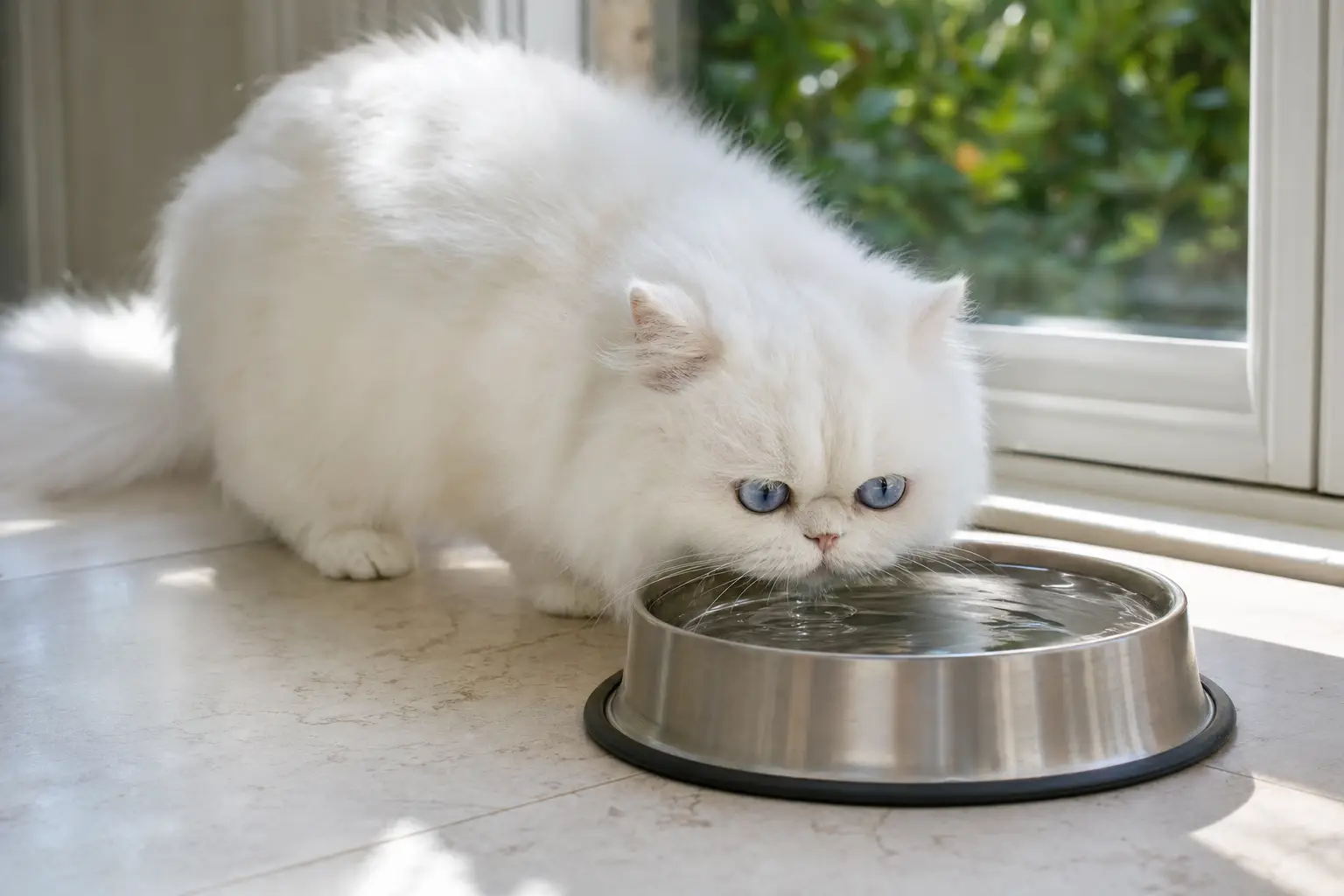
Short answer: The best water bowl for Persian cats is usually the simplest one your kitten uses comfortably and consistently. Start with a wide, low-sided, stable bowl made from an easy-to-clean material. If your Persian kitten shows more interest in moving water, add a fountain as an experiment—not as a requirement.
During a warm Connecticut summer, fresh water, sensible placement, and regular cleaning matter more than choosing the fanciest design. Persian kittens do not all have the same preferences. One may drink happily from a plain ceramic dish, while another may prefer a stainless-steel fountain or several small bowls around the home.
The goal is not to find a bowl that looks perfect in a photo. It is to find a setup your kitten can reach easily, does not avoid, and can use without getting its face or long fur unnecessarily wet.
Start with a simple bowl before buying elaborate equipment
A plain bowl gives you a useful baseline. It is quiet, does not require electricity, and makes it easy to see whether your kitten is interested in the water itself rather than the sound or movement of a fountain.
For a Persian kitten, look for these practical features:
- A wide opening: A broad bowl gives your kitten room to approach without pressing its face against narrow sides. This can be especially worth trying for a flat-faced or long-haired cat.
- Low to moderate sides: The water should be easy to reach without forcing the kitten to push its face deep into the bowl. Avoid a design so shallow that water evaporates or spills immediately.
- A heavy, stable base: Kittens play, paw, and bump into things. A bowl that slides across the floor may become a toy rather than a water source.
- A smooth, intact surface: Stainless steel, glass, and well-made glazed ceramic are practical choices when they are food-safe and free of chips or cracks.
- A size that suits the kitten: The bowl does not need to be enormous. It should hold enough water for regular refreshing without becoming awkward to clean.
The term whisker fatigue is often used to sell unusually shaped bowls, but you do not need to diagnose a problem to make a sensible choice. If your kitten avoids a narrow or deep bowl, try a wider one and see whether its behavior improves. The observed preference is more useful than a label.
Water-bowl styles compared
There is no universal winner. The right choice depends on your kitten’s habits, your home, and how reliably you can keep the equipment clean.
| Style | Why it may work | What to watch for |
|---|---|---|
| Wide, shallow dish | Quiet, easy to reach, inexpensive, and simple to clean | Lightweight versions can slide or tip; water may collect fur and dust |
| Heavy ceramic, glass, or stainless-steel bowl | Stable and generally straightforward to wash | Ceramic must be intact and food-safe; glass can break if dropped |
| Water fountain | May attract a kitten that likes movement or the sound of running water | Noise, power cords, filters, and hidden buildup require regular attention |
| Several still-water stations | Useful in larger homes or when a kitten ignores water in one location | Every station still needs fresh water and routine cleaning |
A fountain is not automatically more hydrating than a bowl. Some cats like flowing water; others dislike the motor, vibration, or reflection. If you try one, keep a clean still-water bowl available too. That backup matters during a power outage, while traveling, or when a filter needs changing.
How to find your kitten’s favorite water-bowl style
Instead of changing everything at once, run a small, low-stress comparison. This makes your observations more meaningful and avoids teaching a kitten that water appears only as an exciting new object.
- Establish a baseline. Offer one clean bowl for two or three days in a quiet, shaded place. Notice whether your kitten approaches it, drinks comfortably, and returns to it without coaxing.
- Introduce one alternative. Place a second style nearby, using the same fresh water in both. A side-by-side comparison helps separate bowl preference from location preference.
- Keep the variables steady. Use similar water levels and refresh both bowls at the same time. Do not compare a freshly washed bowl with one containing floating fur or food crumbs.
- Watch for a pattern. One paw dip or playful splash does not prove a preference. Look for repeated, relaxed drinking over several days. A kitten that approaches, drinks, and walks away calmly is giving you more useful information than one that only investigates the bowl.
- Choose reliability over novelty. Once a style seems preferred, keep it available and continue offering a second clean option if practical. The winning bowl is the one you can maintain every day.
Measuring water from the bowl can be misleading. Evaporation, spills, wet food, and water left in the dish all affect the number. A kitten that eats wet food may obtain a meaningful amount of water from its meals, so visible bowl intake is not the whole hydration picture.
Set up water for a warm Connecticut summer
Good placement can matter as much as bowl design. Water that sits in direct sun, beside a warm appliance, or next to a noisy machine may be less appealing and become unpleasant faster.
- Place the main bowl in a cool, shaded area away from direct sunlight.
- Keep water separate from the litter box. Some cats also prefer water away from food, so offer that option if your kitten hesitates to drink beside its meal.
- Consider a second station in another quiet room, especially in a multilevel home.
- Refresh the water at least daily, and more often when it contains hair, dust, food, or debris.
- Wash bowls regularly rather than simply topping them up. Warm conditions can make residue and slippery buildup appear sooner.
- If using a fountain, follow the manufacturer’s cleaning instructions, wash the pump and basin, and replace filters on schedule. A filter does not replace cleaning.
- For outdoor use, choose a shaded location and check the bowl frequently. Do not rely on puddles, plant saucers, or standing water as a safe substitute.
Do not add milk, salty broth, sports drinks, or flavored products to make water more tempting. Ingredients such as onion, garlic, excess salt, or sweeteners can be unsafe for cats. If your veterinarian recommends a flavoring strategy for a specific medical reason, follow that individualized advice.
Persian kittens, heat, and when a bowl is not the real issue
A water bowl cannot prevent heat illness. Some Persian cats have shortened facial anatomy that can make breathing more difficult, and individual risk varies. Keep your kitten indoors in a cool environment during very hot or humid weather, provide ventilation without creating a hazard, and ask your veterinarian about heat management if your kitten has breathing concerns.
Contact a veterinarian promptly if a kitten suddenly drinks much less, stops eating, vomits, has diarrhea, seems unusually weak, or produces noticeably less urine. Do not force water into the mouth with a syringe unless a veterinarian has specifically shown you how; liquid can enter the airway.
Panting or open-mouth breathing, heavy drooling, marked weakness, vomiting, confusion, or collapse during hot weather can signal an emergency. Move the cat to a cooler area, avoid ice-cold immersion, and contact an emergency veterinarian immediately. The correct response is medical care, not a different bowl.
A practical recommendation for most Persian homes
If you are preparing for a Persian kitten, begin with two matching or similar wide, stable bowls in separate quiet locations. Stainless steel or intact glazed ceramic are sensible starting materials. Add a fountain only if your kitten repeatedly shows interest in moving water or drinks more comfortably from it.
For a long-haired kitten, check the fur around the chin after drinking. If the face becomes repeatedly soaked, try a wider, lower-sided design, adjust the water level, or ask your groomer or veterinarian for coat-care advice. Comfort and cleanliness should guide the decision—not the price or appearance of the bowl.
FAQ
Do Persian cats need a special water bowl?
No single bowl is required for every Persian cat. A wide, stable, easy-to-clean bowl is a good starting point, particularly if a kitten dislikes narrow or deep dishes. Individual behavior should determine the final choice.
Is a fountain better than a regular bowl?
Not automatically. A fountain may appeal to a cat that likes moving water, but it can also be noisy and requires careful cleaning. Keep a still-water option available and choose the setup your kitten uses consistently.
How often should I clean a cat water bowl?
Refresh the water at least daily and wash the bowl regularly, sooner if you see hair, food, slime, or debris. In warm weather, frequent inspection is especially worthwhile. Fountain pumps, basins, and filters need attention as well.
Reliable guidance for cat hydration and heat safety
For additional guidance, see International Cat Care’s advice on encouraging cats to drink, the VCA overview of heat stroke in cats, and the ASPCA’s hot-weather safety guidance.
Ready for more practical Persian kitten care tips? Explore CTkittens.com for more guidance as you prepare your home for a healthy, comfortable companion.

Rachel Cohen is a journalist and producer with a passion for audio storytelling, health and science reporting, and feline companions.
A graduate of Middlebury College, Rachel spends her weekends exploring the mountains and when she isn’t outdoors or chasing a story, she can usually be found hanging out with her cats.


Gonna try the two-bowl side-by-side test before dropping cash on a fountain, cuz my fluffy dude might just want a wider dish that dont soak his whole face.
Kinda funny how this is basically the cat version of good UX—fancy features dont mean squat if the user avoids it lol.
Kinda wild how cat gear gets marketed like rocket science when this really proves the broader rule that simple, clean, and actually usable beats fancy most of the time lol.
Only bit I’d push back on is fountains being treated as extra, cuz for some stubborn lil Persians moving water might legit be the only setup they’ll use enough.
Only bit I’d push back on is putting the test bowls side by side, cuz my Persian ignores water near her food but drinks loads from the exact same bowl upstairs lol.
Honestly the side-by-side bowl test is kinda genius, my cat ignored a pricey fountain but drinks from a chunky ceramic dish like its fine dining lol.
That side-by-side bowl test with the same water level is lowkey clever, cause cats be changing their minds over the tiniest random thing lol.