
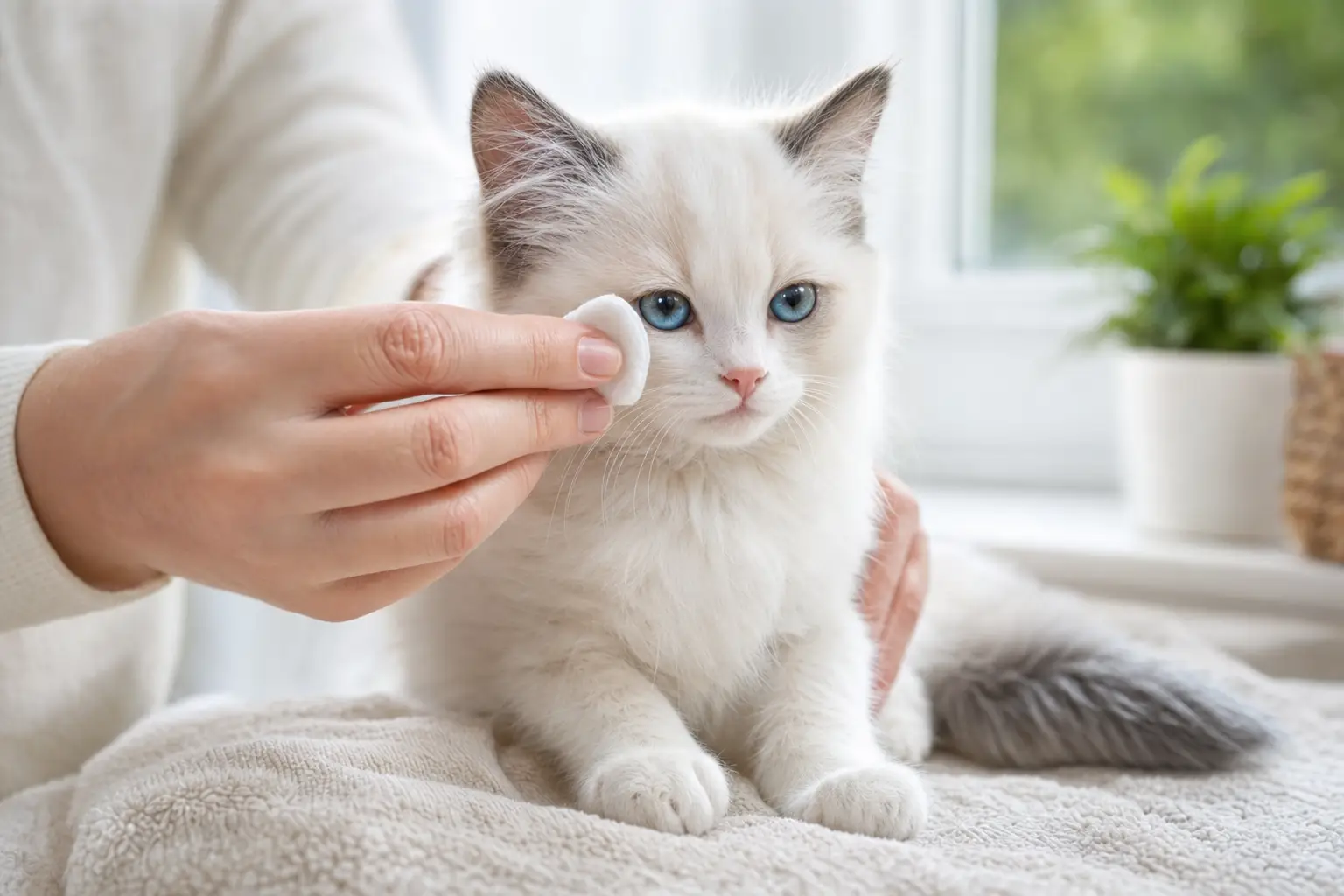
Ragdoll Kitten Eye Cleaning: A Gentle Daily Routine
For most kittens, Ragdoll kitten eye cleaning should be brief, gentle, and limited to visible debris on the fur around the eyes. Start with a calm morning check, soften any crust instead of pulling it, and repeat a quick inspection in the evening only if the area needs it. You should never scrub hard, force an eye open, or use a stain-removing product to hide a possible health problem.
Ragdolls often have pale, plush coats and prominent blue eyes, so a small amount of tear residue can be easy to notice. That does not automatically mean something is wrong, but new, persistent, or uncomfortable-looking discharge deserves attention.
Before cleaning: separate normal residue from a problem
A tiny amount of clear moisture or dry brown material at the inner corner after sleep can occur in an otherwise comfortable kitten. Reddish-brown staining is associated with pigments in tears, commonly called porphyrins, and cleaning will not instantly remove fur that is already stained.
Eye discharge is not always cosmetic, though. Irritation, a blocked tear-drainage pathway, infection, injury, or another eye disorder can all cause changes around the eye. Watch your kitten’s behavior as well as the fur. A kitten that is squinting, pawing at the face, or holding an eye closed needs more than grooming.
Gather a small, safe cleaning kit
Prepare everything before you bring the kitten over. A short session is easier when you are not searching for supplies while a wiggly youngster tries to leave.
- Soft, lint-free cotton pads or a clean, soft washcloth
- Warm water, or sterile saline or eyewash specifically labeled for use in eyes
- A small towel for gentle support if needed
- A few tiny, age-appropriate treats
- A bin or bag for used pads
Use a fresh pad for each eye and a clean section for every wipe. The water should feel comfortably warm, never hot. Avoid household disinfectants, hydrogen peroxide, vinegar, essential oils, fragranced wipes, and products marketed as tear-stain removers. Do not use human medicated eye drops or leftover pet medication unless your veterinarian has prescribed it for this kitten and this problem.
The morning routine: check first, clean only when needed
1. Choose a calm moment
Try the routine after a gentle play session or when your kitten is relaxed, not when it is already overtired and racing around. Sit on the floor or in a secure chair so a sudden wiggle does not lead to a fall.
2. Look before you touch
Take a few seconds to compare both eyes. Look for blinking, squinting, redness, swelling, cloudiness, a change in pupil size, or discharge that is thick, yellow, green, or bloody. If you see any of these signs, skip home cleaning and call your veterinary clinic for advice.
3. Let the kitten inspect the supplies
Offer a treat while you show the kitten the towel and damp pad. Touch the cheek briefly, reward, and stop. This small pause helps the kitten learn that eye-area care predicts something pleasant rather than restraint.
4. Soften the residue
If there is a dry crust on the surrounding fur, hold a warm, damp pad against the residue for several seconds. Do not scrape or pull. Softening gives the material time to loosen and reduces tugging on delicate skin.
5. Wipe away from the eye
Using light pressure, wipe the loosened material from the inner corner outward along the fur. Keep the pad on the surrounding fur rather than rubbing across the eyeball. Use one gentle pass, replace the pad, and repeat only if needed. If the kitten begins to struggle, pause rather than tightening your grip.
6. Finish quickly
Give a treat, release the kitten, and let the session end. A clean eye area is not a reason to keep wiping until every faint mark has disappeared. Over-cleaning can irritate the skin and make future handling harder.
A midday training habit for a wiggly youngster
Training does not need to happen at the same time as cleaning. Once or twice during the day, spend 10 to 20 seconds practicing the movements without a damp pad:
- Touch the shoulder, then offer a treat.
- Touch the cheek, then offer a treat.
- Briefly lift the chin or touch beside the nose, then reward.
- Show the pad, touch the cheek once, and stop before the kitten pulls away.
Progress one small step at a time. The goal is not to immobilize the kitten; it is to make calm cooperation familiar. If the kitten walks away, let it go and try later. Ending before a struggle is usually more productive than holding on until everyone is frustrated.
The evening routine: inspect, refresh, and stop
In the evening, repeat the same visual check. If the fur is clean and the eyes look comfortable, leave them alone. If a small amount of residue has collected, use the same soften-and-wipe method from the morning.
For a particularly active kitten, a second person can offer treats while the other cleans. If you are alone, a loose towel wrap can support the body while leaving the head uncovered. The towel should never press on the neck or chest, and it should not be used to overpower a kitten that is panicking. Stop if breathing, struggling, or distress increases.
A short routine is usually better than a long one. One eye, one or two gentle passes, and a reward may be enough. You can always try again later if the debris is not causing discomfort and the kitten is otherwise well.
What to do about persistent tear staining
Cleaning removes fresh residue from the coat; it does not cure ongoing tearing or bleach fur that has already changed color. If the area is repeatedly wet, the skin becomes irritated, or staining keeps returning on one or both sides, arrange a veterinary examination rather than escalating your cleaning products.
Long fur can hold moisture close to the skin. Brush the rest of the coat regularly, but do not use scissors close to the eyelids at home. A frightened kitten can move suddenly, and an accidental cut to the eye is an emergency. Ask your veterinarian or an experienced professional groomer about trimming if fur is repeatedly matting near the eyes.
Do not give antibiotics, use eye ointment, or try supplements based only on photographs or online advice. The right treatment depends on what is causing the tearing, and some eye conditions become worse when care is delayed.
When a Ragdoll kitten needs a veterinarian
Contact your veterinary clinic promptly if discharge is persistent, increasing, thick, yellow, green, or bloody, even if your kitten still seems playful. Seek urgent veterinary care for:
- Squinting, frequent blinking, or holding the eye closed
- Marked redness, swelling, pain, or repeated face rubbing
- A cloudy, blue-gray, bulging, or visibly injured eye
- Different-looking pupils or a sudden change in vision or behavior
- Trauma, a foreign object, or chemical exposure near the eye
- Eye symptoms combined with poor appetite, lethargy, sneezing, or breathing difficulty
These signs are not problems to solve by cleaning harder. A veterinarian can examine the eye and surrounding structures, identify whether the cornea is affected, and recommend kitten-safe treatment. For background on common feline eye disorders, see the Cornell Feline Health Center’s eye problems guide and the Merck Veterinary Manual overview of eye disorders in cats.
Common questions about Ragdoll kitten eye cleaning
How often should I clean my kitten’s eyes?
Check the eye area in the morning and evening, but clean only when there is visible residue. A comfortable kitten with clean eyes does not need repeated wiping.
Can I use baby wipes or makeup remover pads?
Do not use fragranced baby wipes or cosmetic products around the eyes. A soft pad moistened with warm water or a suitable sterile ophthalmic saline is a simpler, safer choice.
Is brown discharge always normal?
No. A small, dry amount can be harmless, but brown material that is wet, recurring, increasing, or accompanied by redness or squinting should be discussed with a veterinarian.
What if my kitten will not hold still?
Break the task into smaller training steps, use rewards, and stop before the kitten becomes distressed. A veterinary nurse or professional groomer can demonstrate safe positioning if you are unsure.
A calm routine protects trust
The best eye-area routine is not the one that removes every speck of staining. It is the one that keeps the surrounding fur comfortable, helps you notice changes early, and teaches your kitten that handling can be brief and predictable. Use gentle supplies, clean only visible residue, and treat pain or unusual discharge as a health concern rather than a grooming problem.
For more guidance on welcoming and caring for a Ragdoll kitten, explore CTkittens.com.

Rachel Cohen is a journalist and producer with a passion for audio storytelling, health and science reporting, and feline companions.
A graduate of Middlebury College, Rachel spends her weekends exploring the mountains and when she isn’t outdoors or chasing a story, she can usually be found hanging out with her cats.


Kinda wild how this tiny eye-cleaning routine is really teaching the bigger lesson that pet care works better with trust and patience than forcing em to cooperate.
Kinda wild how stopping before the kitten struggles turns basic eye cleaning into trust-building, thats honestly the bit most pet-care guides miss lol.
Using a fresh pad for each eye is such a small thing I’d never thought about, but yeah spreading mystery eye gunk around would be pretty dumb lol.
Kinda glad this says to leave clean eyes alone, cause checking twice a day could easily turn into over-cleaning when anxious pet parents get a bit too fixated lol.
Never thought over-cleaning could make things worse, so the whole “check twice but wipe only if needed” rule is def going on my kitten-care cheat sheet lol.
Never occured to me that using the same pad on both eyes could spread gunk around, so yeah, separate pads is def going into the kitten-care kit.
Honestly the “stop before they struggle” bit applies to basically all kitten handling, cuz trust is way easier to build than fix later lol.