
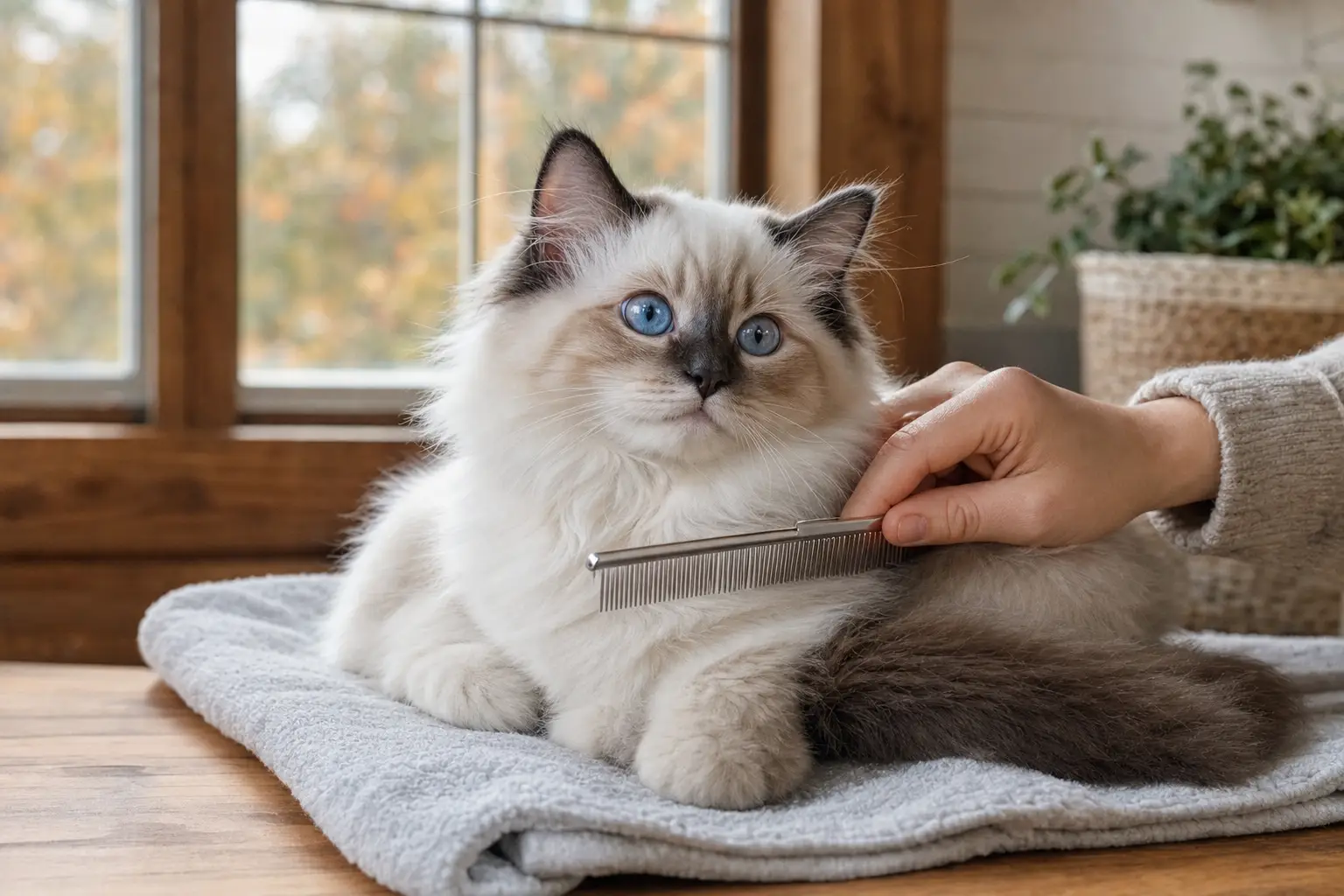
Ragdoll Kitten Chest Ruff Grooming for Humid New England
Short answer: Brush a Ragdoll kitten’s chest ruff in brief, gentle sessions several times a week, paying special attention after rain, damp outdoor play, wet food, or messy drinking. Use a metal comb and a soft brush on a completely dry coat, work in small sections from the ends of the fur toward the skin, and never cut a tight mat with scissors.
Autumn in New England can mean humid mornings, rainy afternoons, wet leaves, and indoor heating later in the season. That combination makes the fluffy ruff under a kitten’s chin especially easy to overlook. A calm routine keeps small tangles from becoming painful mats while helping your kitten learn that grooming is a normal part of life.
Why the chest ruff needs extra attention in humid weather
A Ragdoll’s semi-long coat is soft and often silky, but coat density varies from one cat to another. The chest ruff can collect moisture, food residue, dust, and tiny bits of leaves. It also moves against the kitten’s collar, bedding, or front legs. Humidity does not automatically cause mats; moisture combined with friction and debris is the more practical concern.
When a damp tangle dries, the hairs can cling together near the skin. Brushing a wet, clumped coat may pull at the skin and make the knot tighter. After a rainy outing or a spill, gently blot the fur with a towel, remove visible debris with your fingers, and wait until the coat is dry before doing a thorough comb-through.
Ragdoll kittens may not have their full adult ruff yet, and their coats can change as they mature. Starting with short, positive sessions now is more useful than waiting until the chest hair becomes long and difficult to manage.
A simple autumn grooming setup
Choose a warm, draft-free room with good light. A towel on your lap or a nonslip mat on a low surface gives your kitten secure footing. Keep the session cozy, but avoid strong fragrances, essential oils, and scented grooming products around the cat.
Have these supplies within reach:
- A stainless-steel comb with both wider and finer teeth
- A soft pin brush or gentle slicker brush
- A dry towel for blotting rain or spills
- A few small treats or a favorite food reward
- A phone light or small lamp for checking the skin beneath the ruff
A comb is the most useful tool for finding knots close to the skin. A brush smooths the outer coat, but it can glide over a hidden tangle. Avoid human detangling sprays, conditioners, and fragranced products unless your veterinarian specifically recommends a cat-safe product.
How to brush a Ragdoll kitten’s chest ruff
1. Start with a quick hands-on check
Let your kitten sniff the comb, then stroke the neck and chest with your fingers. Feel for rough spots, clumps, dampness, crusts, or areas where the kitten flinches. Check under the chin, down the breastbone, and where the ruff meets the front legs.
Do not force the head upward or hold the neck tightly. If your kitten turns away, paws at the comb, or becomes tense, pause and offer a reward. Several calm one-minute sessions are more effective than one long struggle.
2. Separate the ruff into small sections
Use your fingers to divide the chest hair into narrow sections. Support the hair near the skin with one hand so the comb does not tug directly on the skin. Start with the wider teeth of the comb and work on the lower, outer ends of the fur first.
Use short, light strokes from the tips toward the skin. Once a section is clear, comb from the skin outward to confirm that no knot remains. Avoid dragging repeatedly over the same spot; friction can irritate delicate kitten skin even when the coat looks smooth.
3. Finish with a soft brush
When the comb passes through easily, use a soft brush to neaten the ruff. Keep pressure light around the throat and breastbone. The goal is not to create a dramatic plume in one session. The goal is a comfortable coat and a kitten that remains relaxed.
Reward your kitten immediately after the session. Stop while the experience is still positive, even if you planned to brush another part of the body.
A practical humid-weather routine
| Situation | What to do |
|---|---|
| Normal dry coat | Do a fingertip check daily and use a comb or brush for a few minutes two to four times a week, adjusting for your kitten’s coat. |
| After rain or damp leaves | Blot the chest and legs, remove debris by hand, and wait for the coat to dry before combing thoroughly. |
| After wet food or a water spill | Wipe residue with a clean, damp cloth if needed, then dry the fur gently. Inspect the ruff once it is dry. |
| A small, loose tangle | Use your fingers and the wide teeth of a comb. Work from the ends in tiny sections rather than pulling from the skin outward. |
| A tight mat or several mats | Stop brushing if the kitten seems painful. Arrange help from a cat-experienced groomer or veterinarian. |
This routine is a starting point, not a rule for every Ragdoll. Some kittens need only a few sessions each week, while a kitten with a denser or changing coat may need a quick daily check during periods of shedding or damp weather.
What not to do with a chest mat
- Do not use scissors close to the skin. Cat skin can be pulled up into a mat and cut more easily than expected.
- Do not keep pulling through a painful knot. Repeated tugging can make grooming frightening and may damage the skin.
- Do not brush a soaked, tightly clumped coat. Dry the coat first unless a veterinarian has given you different instructions.
- Do not shave the ruff as a routine solution. A professional may need to clip severe mats, but clipping should be done safely and with the cat’s comfort in mind.
- Do not restrain a kitten by the scruff or collar. Use calm handling, a secure surface, and short sessions instead.
If a mat is small and loose, a professional groomer may be able to loosen it safely. If it is tight against the skin, widespread, foul-smelling, wet underneath, or clearly painful, a veterinarian is the safer choice. A severe mat can hide irritated or injured skin.
When a grooming problem may be a health problem
Contact your veterinarian if you notice redness, swelling, scabs, discharge, a bad odor, bleeding, persistent scratching, or a sudden change in grooming behavior. A kitten that stops grooming, becomes unusually sensitive around the chest, or develops repeated tangles may need an examination rather than more brushing.
Coat changes can have several causes, including skin irritation, parasites, pain, or another medical problem. Grooming can remove surface debris, but it cannot diagnose or treat those conditions.
Making autumn grooming feel cozy
Choose a predictable time, such as after a nap rather than after energetic play. Keep the room comfortably warm, place a soft towel under your kitten, and use a quiet voice. A lickable treat or a few pieces of the kitten’s regular food can help build a positive association.
Keep the session separate from stressful tasks whenever possible. Do not combine the first chest-brushing practice with nail trimming, a bath, or a trip in the carrier. If your kitten is wet from the rain, focus first on gentle blotting and warmth. A thorough grooming session can wait until the coat is dry and the kitten is calm.
Frequently asked questions
How often should I brush a Ragdoll kitten’s chest ruff?
For many kittens, a brief comb-through two to four times a week plus a quick daily fingertip check works well. Increase the checks when the coat is growing, shedding, or frequently getting damp. Let the condition of the coat guide the schedule rather than brushing aggressively every day.
Can I brush the ruff while it is wet?
It is better to blot the coat and let it dry before thorough brushing. Wet or damp tangles can tighten as you work on them. If the fur is contaminated with something sticky, ask your veterinarian for safe cleaning advice rather than applying household products.
Why does my kitten’s chest mat before the rest of the coat?
The ruff is exposed to food, water, drool, friction, and movement from the front legs. Its longer strands can also conceal a small knot. Checking under the chin and along the breastbone with your fingers often finds trouble before a brush does.
Should I take my kitten to a groomer for one mat?
A professional is a good option when the mat is tight, close to the skin, painful, or too difficult to reach without wrestling your kitten. Choose someone experienced with cats and ask your veterinarian for a referral if the skin looks abnormal.
Trusted grooming references
For general veterinary guidance on feline coat care and grooming, see the Merck Veterinary Manual’s guide to grooming and coat care and the ASPCA’s cat grooming guidance.
With a warm towel, a gentle comb, and a few minutes of patience, autumn chest-ruff care can become an easy part of your Ragdoll kitten’s routine. For more guidance on welcoming and caring for Ragdoll kittens, explore CTkittens.com.

Rachel Cohen is a journalist and producer with a passion for audio storytelling, health and science reporting, and feline companions.
A graduate of Middlebury College, Rachel spends her weekends exploring the mountains and when she isn’t outdoors or chasing a story, she can usually be found hanging out with her cats.

