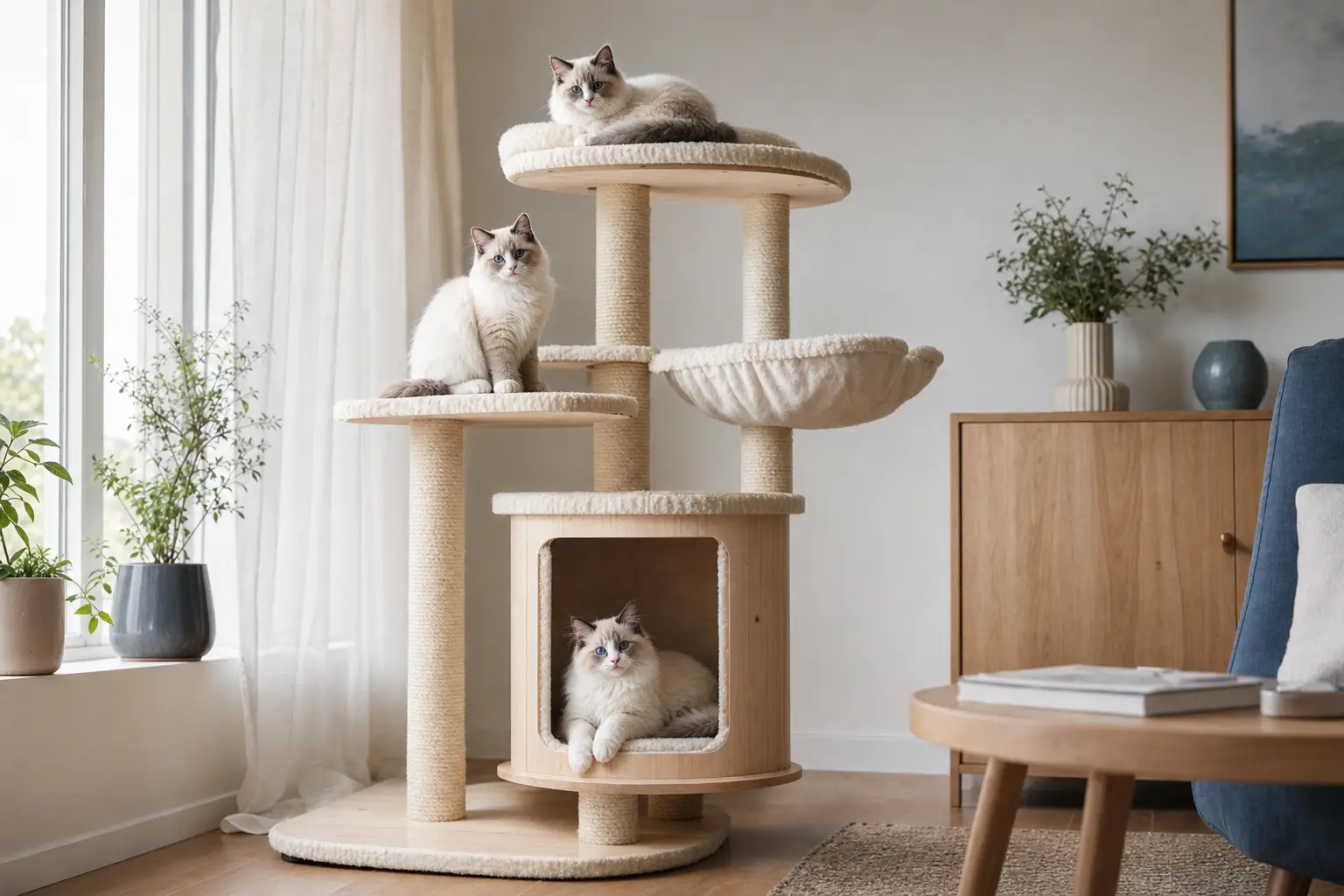
For beautiful photos of Ragdoll kittens in a multi-cat home, style the cat tree as real cat furniture first and a photo setting second. The best setup is stable, spacious, easy to leave, and visually calm, with more than one perch or retreat so each kitten can choose where to be. Once the cats are comfortable, soft window light, a restrained color palette, and a simple shooting plan can create elegant images without forcing a pose.
This approach matters because a shared cat tree has two jobs. It should support normal climbing, scratching, resting, and observation, while also giving you a clean, layered background. The following plan helps you prepare both sides of the setup.
Start with a cat tree for multiple cats that works every day
Ragdolls can grow into substantial cats, so choose a tree with a broad, steady base and platforms that are genuinely roomy. Check the manufacturer’s weight guidance, inspect the fasteners, and anchor the structure if the instructions recommend it or if the tree could wobble during climbing. A beautiful photograph is not worth using furniture that shifts beneath a kitten.
For a multi-cat household, think in terms of options rather than one perfect perch. A useful arrangement usually includes:
- Two or more resting levels, ideally with different heights and views.
- At least one enclosed or partly sheltered space where a kitten can retreat.
- Multiple scratching surfaces with materials such as sisal or sturdy fabric.
- Enough room for cats to pass without one blocking the only route down.
- A low, easy-to-reach level for young kittens, tired cats, or a cautious newcomer.
Several cats may enjoy resting together, but they should not have to share every resource. The AAFP/ISFM Feline Environmental Needs Guidelines describe the value of safe places, separated resources, opportunities for play, and predictable human interaction. Applied to a photo tree, that means providing alternatives rather than arranging every kitten on one narrow shelf.
Plan the tree’s position before styling it
Place the tree near a bright window, but not where direct sun turns the platform into a hot spot or creates harsh, patchy shadows. Keep it away from heating vents, dangling blind cords, and doors that open suddenly. If the tree is close to a window, confirm that the screen is secure and that the kittens cannot push through a gap.
Leave a clear route around the tree. Do not place a chair, reflector, camera bag, or decorative basket where it blocks a cat’s way down. A kitten that can leave the scene easily is more likely to remain relaxed, and a relaxed kitten produces better photographs anyway.
Use an elegant, cat-friendly styling palette
Ragdoll coats often photograph beautifully against quiet, warm neutrals. Consider light oak, oatmeal, soft gray, ivory, muted blue, or natural sisal. These colors complement blue eyes without competing with the cats’ faces. A slightly darker platform or woven texture can also help pale fur stand out from the background.
Keep the visual story simple. One cat tree, one nearby surface, and a small number of coordinated materials are usually more effective than a room filled with props. Natural wood and matte fabrics tend to look more refined than shiny plastic or strongly patterned accessories, especially when the window creates reflections.
Before the cats enter, remove visual clutter from the camera’s view:
- Loose cables, chargers, and remote controls.
- Packaging, food bowls, litter supplies, and laundry.
- Bright logos or strongly contrasting patterns.
- Unsecured vases, framed glass, candles, and small objects that could be knocked down.
- Anything with ribbons, threads, elastic loops, or detachable parts.
Do not add decorative plants simply because they look good beside the tree. If a plant or flower will be within reach, verify its safety first using a reliable reference such as the ASPCA’s cat plant list. When in doubt, leave it out. A clean wall, a curtain, or a piece of neutral furniture can provide enough background interest without introducing a chewing hazard.
Create depth without overcrowding the frame
An elegant cat tree photograph benefits from layers. Put the tree a little away from the wall if the room allows, then use the distance between the foreground, cats, and background to create separation. A sheer curtain can soften the window, while a plain wall or lightly textured fabric keeps attention on the kittens.
Try to keep some negative space around the tallest platform. That gives the image breathing room and prevents ears or tails from appearing to touch the frame. Photograph from the kittens’ eye level rather than looking sharply down from above. A lower camera position makes the tree feel more substantial and keeps the cats’ faces prominent.
Textiles can add warmth, but use only fitted or securely placed blankets that do not create loops or loose strands. A washable neutral cushion on a broad platform may be practical; a trailing throw draped over the entire tree is less useful and can obscure the structure or become something a kitten pulls down.
Shape natural light for blue eyes and pale coats
Start with the window to the side of the tree, roughly 45 to 90 degrees from the kittens’ faces. Side light reveals the texture of a Ragdoll’s coat and gives the eyes a small, attractive catchlight. If the sunlight is hard, draw a sheer curtain or move the tree slightly farther from the window. Bright indirect light is easier to control than a narrow beam of direct sun.
Turn off overhead lights if they create a green, yellow, or blue cast. Mixing daylight with household bulbs can make white fur look uneven and skin tones appear unnatural. Take a test frame of the empty tree and inspect the brightest platform before bringing in the kittens.
Pale fur can lose detail when the camera exposes for a darker room. On a phone, tap on the face or eyes and lower the exposure slightly if the coat looks like a blank white shape. On a camera, watch the highlight warning or histogram and protect detail in the brightest fur. A small amount of shadow is easier to lift later than clipped white highlights are to restore.
For resting kittens, a shutter speed around 1/250 second may be enough. For play, grooming, or a kitten turning toward the window, try 1/500 second or faster. Use eye autofocus when available, and take several frames when the expression is right rather than relying on a single photograph. Avoid flash unless you already know the cats are comfortable with it; natural light keeps the atmosphere softer and reduces the chance of startling them.
Use a low-pressure workflow for several kittens
Do not place every kitten on the tree at the beginning. Let them investigate the room and the furniture in their own time. A short play session followed by a quiet pause can help them settle, but the goal is familiarity, not exhaustion. Have treats available if they are part of the kittens’ normal routine, and use a helper to watch the cats while you handle the camera.
A reliable sequence for a multi-cat shoot is:
- Photograph the setting empty. Check the background, exposure, and composition before the cats arrive.
- Begin with one kitten. Capture simple portraits on a low or middle platform while the kitten explores.
- Add a second kitten only if both are relaxed. Leave a clear exit route and avoid placing them shoulder to shoulder on a narrow perch.
- Try interaction rather than arrangement. A shared glance, gentle grooming, or natural rest often looks better than two faces turned toward the lens on command.
- Finish with details. Photograph paws on sisal, whiskers in side light, a tail over the edge, or a kitten looking through a hideaway opening.
Use a toy or sound briefly to direct attention, but do not leave a wand, string, or small toy on the tree unattended. Never hold a kitten in place for a photograph or block the route to a hiding place. Stop if you see persistent crouching, flattened ears, repeated attempts to escape, hissing, growling, tail lashing, or other clear signs of distress. Let the kitten retreat and try another day.
It is also fine if the final image shows only one cat. A shared cat tree does not require every resident to appear in every frame, and forcing a group portrait usually creates more stress and less natural expression.
Make the final images look polished but believable
In editing, start with small corrections: straighten the frame, adjust white balance, reduce highlights, and lift shadows enough to show the tree’s texture. Keep the kittens’ blue eyes, coat color, and markings natural. Over-brightening white fur or increasing eye saturation can make a gentle image look artificial.
Crop around the composition you created rather than cutting through ears, whiskers, or paws. If a distracting object entered the edge of the frame, a modest crop is preferable to heavy retouching. Preserve small signs of real life, such as a slightly uneven tuft of fur or a relaxed paw over the platform. Those details make the photograph feel warm rather than staged.
Quick pre-shoot checklist
- Is the tree stable, intact, and suitable for the cats’ size?
- Can every kitten reach a resting place and leave without being cornered?
- Are window screens, cords, plants, and nearby objects secure?
- Have you removed unsafe or visually distracting props?
- Is the light soft enough to preserve detail in pale fur?
- Are the camera and exposure ready before the kittens enter?
- Can you stop immediately if a kitten becomes uncomfortable?
FAQ
Can two Ragdoll kittens share one cat tree?
They can, provided the tree is stable and offers enough space, levels, and escape routes for both kittens. They should still have access to separate resting, feeding, water, and litter resources elsewhere in the home. Watch their individual preferences rather than assuming they always want to share.
How can I make white or cream fur stand out?
Use a background with gentle contrast, such as pale gray, warm wood, or muted blue. Place the kittens in soft side light, expose carefully for the brightest fur, and avoid a white blanket directly behind a white coat unless you want a very airy, low-contrast effect.
Should the cat tree be placed in direct sun for brighter photos?
Usually not. Direct sun can create harsh shadows, blown highlights, and uncomfortable heat. Bright indirect window light or sunlight softened by a sheer curtain is easier on the kittens and more flattering in photographs.
A well-styled cat tree should still be a useful part of the cats’ everyday environment after the camera is put away. Build in stability, choice, and room to retreat; then let the natural light and the kittens’ own personalities do the creative work. To learn more about Ragdoll kittens and explore CTkittens.com, visit CTkittens.com.

Rachel Cohen is a journalist and producer with a passion for audio storytelling, health and science reporting, and feline companions.
A graduate of Middlebury College, Rachel spends her weekends exploring the mountains and when she isn’t outdoors or chasing a story, she can usually be found hanging out with her cats.