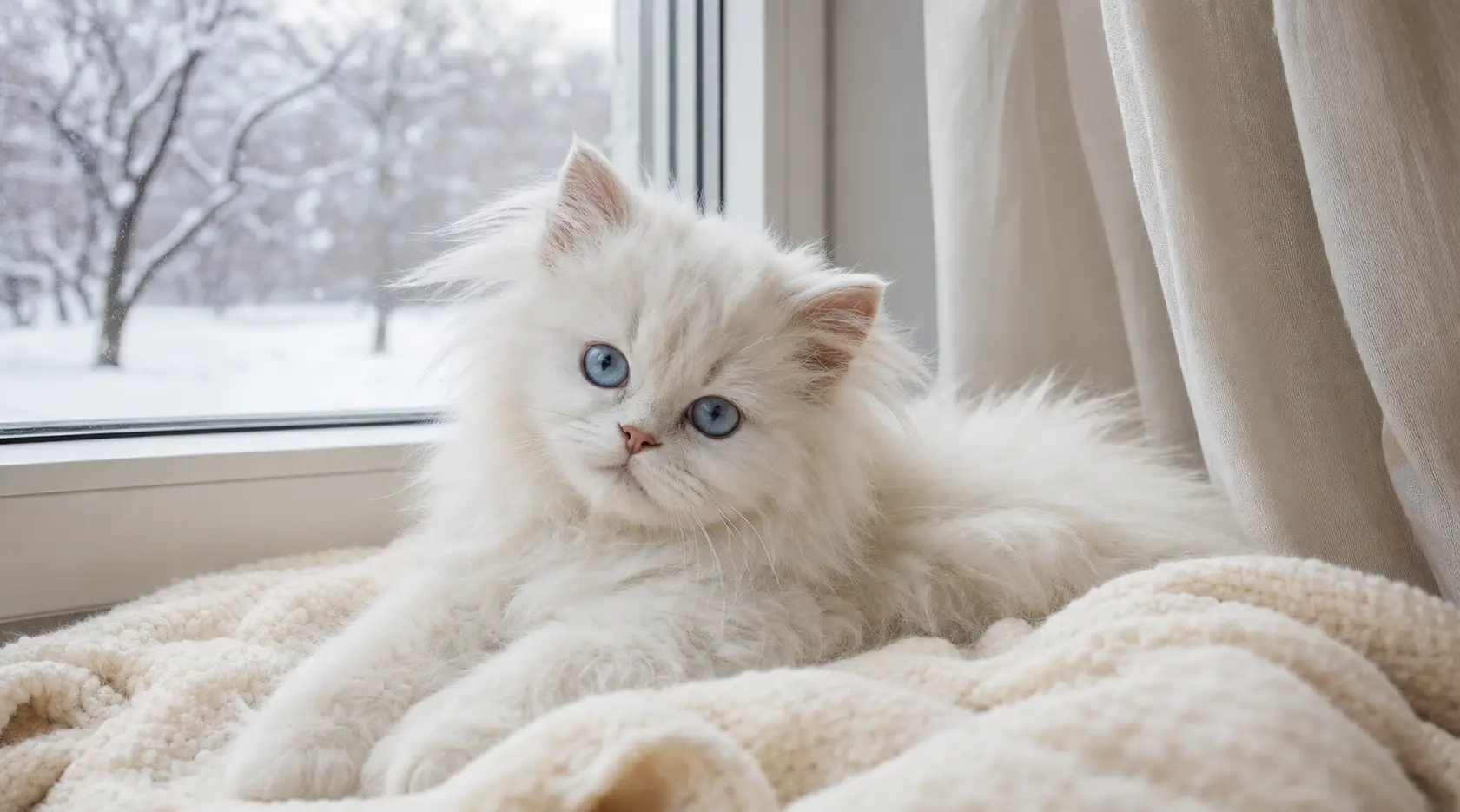
A Cozy Winter Window Seat for a Persian Kitten—Without the Stress
Short answer: The best winter window seat for a Persian kitten is stable, washable, comfortably warm rather than hot, and positioned away from open windows, cords, flames, toxic plants, and busy foot traffic. Let your kitten approach it by choice. A quiet family ritual—such as reading nearby or taking one calm photo—should support the kitten’s comfort, not turn the seat into a stage.
Persian kittens often enjoy watching birds, weather, and household activity from a protected perch. Yet a beautiful seasonal setup can become stressful if it is wobbly, crowded, overdecorated, or too close to a radiator. The goal is a small retreat your kitten can use on their own terms.
Start with the kitten, not the decorations
Persian cats have long coats, and many have shortened facial structures. Individual kittens differ, but a soft bed and a sunny view do not replace good airflow, an easy escape route, or regular observation. Avoid making the window area stuffy or intensely hot, particularly if your kitten has noisy, effortful, or otherwise unusual breathing.
A young kitten may also be less coordinated than an adult cat while still being remarkably curious. A narrow sill, unsecured bench, or pile of cushions can become a fall risk. Choose a low, broad surface with traction rather than relying on height to create a good view.
Think of the seat as an invitation. Your kitten should be able to leave it, hide elsewhere, drink water, and reach the litter tray without having to pass a crowd of people or squeeze behind furniture.
How to set up a winter window seat for a Persian kitten
1. Choose a secure, quiet location
Keep the window closed or use a properly fitted, securely fastened screen. A screen is not automatically strong enough to stop a climbing kitten, and an open window can create a fall or escape risk. If your home has tilt-and-turn windows, do not leave a kitten unattended near an open tilted window; the narrow opening can be dangerous if a cat becomes trapped.
Place the seat far enough from a radiator, fireplace, space heater, or heat vent that the bedding cannot overheat or ignite. Also avoid a location where cold air constantly leaks through the frame. The ideal spot feels comfortable to you in normal indoor clothing, without the kitten pressed against the glass or a heat source.
If the window looks onto unfamiliar cats, heavy traffic, or a noisy outdoor area, your kitten may find the view alarming rather than entertaining. A sheer curtain or removable privacy film can soften the view while preserving daylight.
2. Build a stable base
A low cat platform, sturdy bench, or wide section of a cat tree can work well. Test it before your kitten arrives: push from several directions, check for wobbling, and make sure it cannot slide when a kitten launches onto it. Anchor tall furniture according to the manufacturer’s instructions.
Cover the surface with a tightly woven, washable blanket or cushion that has no loose loops, frayed edges, or exposed zippers. A folded towel can provide traction during the trial period, but do not create a tall stack of bedding that could shift beneath a small kitten.
Leave a clear route down. Do not surround the seat with boxes, tangled decorations, or furniture that forces your kitten to leap farther than necessary.
3. Manage light and warmth
Winter sunshine can still make a small enclosed area surprisingly warm. Check the seat at different times of day, including the brightest afternoon period. Use a sheer shade or move the bed back from the glass if the surface becomes hot. For a white Persian kitten, it is sensible to avoid making strong direct sun on the ears and nose the only comfortable resting option. Ask your veterinarian about any persistent redness, crusting, or sores on lightly pigmented skin.
Most kittens do not need a heated bed to enjoy a sunny window. Avoid human heating pads, hot-water bottles, and improvised electrical warmers, which can cause burns, chewing injuries, or overheating. If a pet-rated heated bed is being considered for a very young, frail, or medically vulnerable kitten, discuss it with your veterinarian and follow the product instructions closely.
4. Add interest without clutter
A view, a soft blanket, and a nearby hiding option may be enough. You can rotate one quiet toy, such as a sturdy soft toy or a treat puzzle approved for your kitten’s diet. Store wand toys, ribbon, string, and elastic when you are not actively supervising play; these items can be swallowed or become wrapped around a kitten.
Keep food and water accessible but not directly beside the litter tray. If the window seat is part of a larger room, your kitten should still have a separate retreat where people cannot reach in unexpectedly.
Gentle fixes for common window-seat problems
| What you notice | Try this first |
|---|---|
| The kitten avoids the seat | Leave it unoccupied for a few days, add familiar bedding, and place a treat or toy nearby rather than on the seat. Never put the kitten on it and hold them there. |
| The seat wobbles or slides | Move it to the floor temporarily, add a non-slip base, or replace it with a sturdier platform. Stability matters more than height. |
| The kitten seems too warm | Open a shade, move the bed away from the glass, and provide a cooler resting option in the same room. |
| The kitten reacts to outdoor activity | Reduce the view with a sheer curtain or privacy film and offer a covered bed farther from the window. |
| The kitten chews seasonal decorations | Remove the item and offer a safe toy. Do not rely on supervision alone for tinsel, ribbon, thread, or small ornaments. |
Make the family tradition calm and repeatable
A tradition works best when the kitten is not required to perform. Try a short daily or weekly window-seat ritual: one person sits nearby, reads quietly, looks outside, or takes a photograph from a respectful distance. Other family members can contribute without crowding the kitten—for example, by refreshing the washable cover or checking that the window is latched.
Keep voices low and movements predictable. Young children should learn three simple rules: approach slowly, do not pull the kitten from the seat, and stop touching when the kitten walks away. A cat leaving is communication, not bad behavior.
Family members can decorate the human side of the room instead of the kitten’s perch. Paper snowflakes placed well out of reach, a seasonal blanket without loose threads, or a shared story can create the feeling of an occasion without costumes, forced cuddles, or a noisy gathering around the window.
If visitors are coming, preserve a separate quiet room or covered retreat. Your kitten should never be passed from person to person as part of the celebration. A tradition that can continue even when the kitten chooses to nap elsewhere is a genuinely low-pressure tradition.
Winter and holiday hazards to remove
Before adding seasonal details, scan the entire window area at kitten level. The ASPCA’s cat-safe plant list is a useful reference, especially because lilies can cause serious poisoning in cats. Do not place lilies or unfamiliar greenery near the seat simply because they look festive.
- Keep cords and lights secured. Hide electrical cables, protect plugs, and unplug decorative lights when the area is unattended. Do not leave a kitten alone with dangling wires.
- Skip tinsel, ribbon, and small ornaments. Shiny, string-like objects are tempting but can cause serious problems if swallowed. Choose large, sturdy decorations only when they are well out of reach.
- Keep flames away. Candles, fireplaces, and incense can burn a curious kitten or ignite fur and bedding. Never place them on or beside the window seat.
- Avoid essential-oil diffusers in the kitten’s space. Concentrated oils and fragrance products are not automatically safe for cats. Good ventilation and an unscented room are the simpler choice.
- Protect the kitten from holiday foods. Keep chocolate, alcohol, onions, garlic, rich leftovers, and unfamiliar treats out of reach. Offer only food that is appropriate for the kitten and approved by the owner or veterinarian.
The ASPCA also provides broader holiday safety guidance for pets. If you suspect your kitten has chewed a cord, swallowed a decoration, or eaten a potentially toxic plant, contact a veterinarian or an appropriate animal poison service promptly rather than waiting for symptoms.
What to do if the kitten seems stressed
Stress can look like crouching, hiding, flattened ears, a tucked tail, wide pupils, hissing, growling, or repeatedly trying to escape. Some of these signs can also occur with pain or illness, so do not assume every behavior is simply a dislike of the new bed.
Use a simple three-step reset:
- Stop the activity. Lower the noise, stop reaching, and give the kitten a clear path away from the window.
- Restore a safe retreat. Make sure a covered bed, open carrier, or quiet room is available. Do not pull the kitten out of hiding.
- Reintroduce the seat gradually. Leave the furniture in place without asking the kitten to use it. Later, reward calm investigation with a familiar toy or a small, suitable treat.
Keep feeding, play, grooming, and sleep routines as consistent as possible. Persian coats also need regular, gentle grooming, but the window-seat ritual is not the right time to introduce brushing if your kitten already feels uncertain. Build trust in small, separate sessions.
Contact your veterinarian if hiding, appetite changes, vomiting, diarrhea, lethargy, or unusual vocalizing continues. Seek urgent veterinary help for open-mouth breathing, obvious breathing effort, collapse, or pale or bluish gums. Cats with shortened facial structures may have particular breathing concerns, and a seasonal setup should never delay medical care.
A quick setup checklist
- The window is closed or securely screened.
- The platform is broad, stable, and non-slip.
- Bedding is washable and free of loose threads.
- The kitten has shade, ventilation, and a cooler alternative.
- Cords, flames, plants, oils, ribbon, and small ornaments are out of reach.
- A quiet escape route and separate hiding place remain available.
- The first visits are supervised and entirely voluntary.
FAQ
Can a Persian kitten sit by a window in winter?
Yes, if the kitten stays indoors, the window is secure, and the area is comfortable rather than drafty or overheated. Provide shade and another resting place so the kitten can choose where to settle.
Should I put a heated pad in the window seat?
Usually, a soft washable bed in a comfortable room is sufficient. Avoid human heating pads and improvised warmers. Ask your veterinarian before using a pet-rated heated bed for a very young or medically vulnerable kitten.
Why will my kitten not use the new seat?
The location may be too exposed, too warm, too noisy, or unfamiliar. Move it lower or farther from the glass, add familiar bedding, and give your kitten time. Forcing a kitten onto the seat can make the area less appealing.
Can children dress the kitten for a winter photo?
Most kittens are better photographed naturally. Clothing and costumes can restrict movement, catch on furniture, or cause stress. If clothing is ever needed for a medical or practical reason, get veterinary guidance and supervise closely.
A warmer tradition starts with choice
The most successful winter window seat is not the fanciest one. It is a dependable place where your Persian kitten can watch the season, retreat when the room becomes busy, and join the family only when they want to. Keep the setup stable, the decorations minimal, and the ritual gentle. That is how a cozy corner becomes a lasting tradition.
Want more thoughtful ideas for life with a Persian kitten? Explore the gentle kitten-care resources at CTkittens.com.

Rachel Cohen is a journalist and producer with a passion for audio storytelling, health and science reporting, and feline companions.
A graduate of Middlebury College, Rachel spends her weekends exploring the mountains and when she isn’t outdoors or chasing a story, she can usually be found hanging out with her cats.