Ragdoll Kittens: A Wellness Calendar for Connecticut Multi-Cat Homes
A Ragdoll kitten wellness calendar works best as a simple household habit, not a rigid list of appointments. In a Connecticut multi-cat home, combine a monthly routine with kitten-specific veterinary visits, seasonal safety checks, and an individual record for every cat.
The goal is to notice small changes early, keep preventive care organized, and make sure a quieter cat is not overlooked just because another cat is more demanding. Your veterinarian should tailor vaccines, parasite prevention, nutrition, and screening to each cat’s age, health, lifestyle, and exposure risk.
How to use a Ragdoll kitten wellness calendar
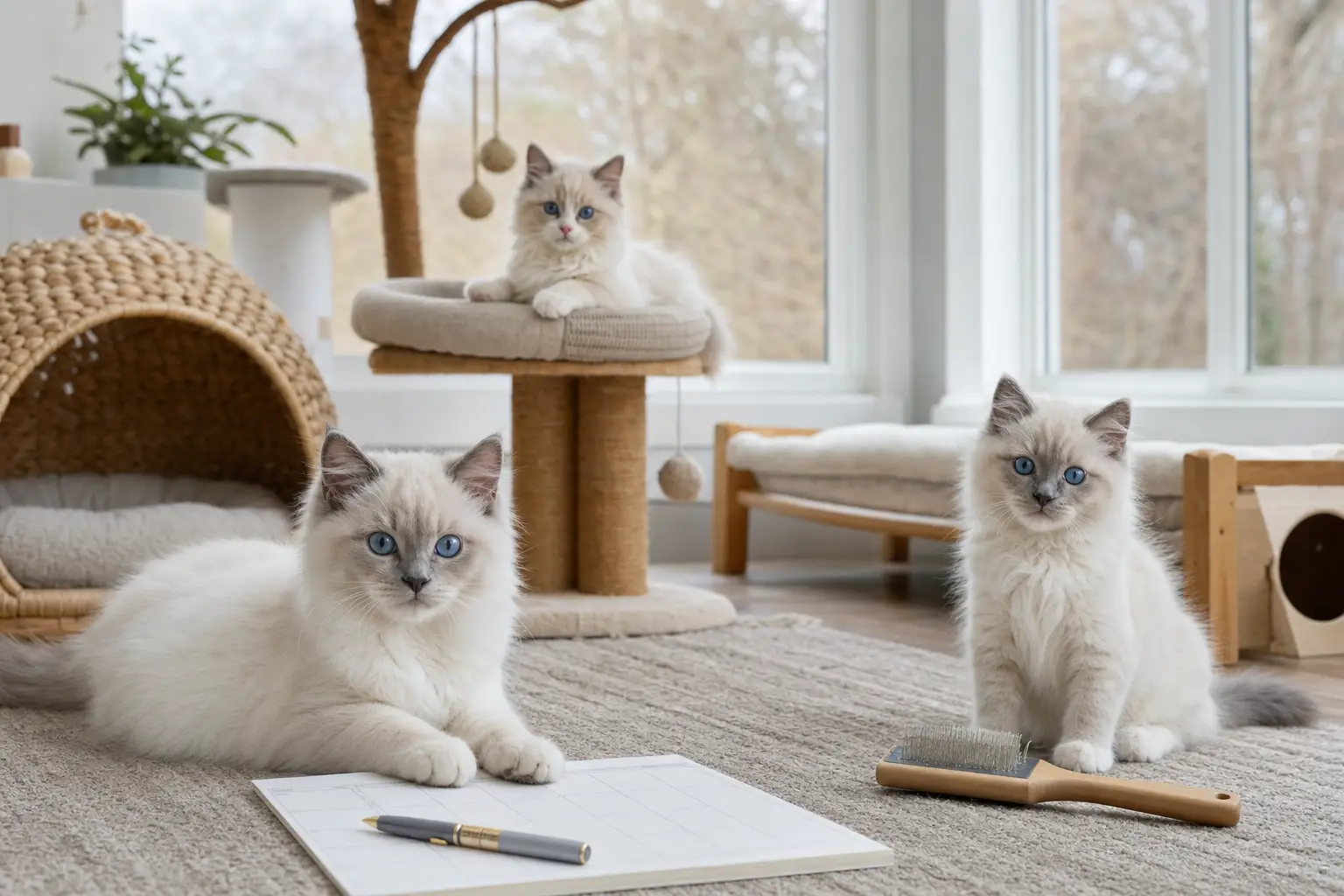
Start with one page, spreadsheet, or phone note for each cat. Record the cat’s name, birth date or estimated age, microchip number, weight history, medications, vaccine dates, parasite products, diet, and your veterinarian’s recommendations. In a multi-cat family, individual records matter because cats may share a home but have different medical needs.
Once a month, set aside a calm ten-minute check-in for each cat. Avoid turning it into a forced examination. A cooperative, low-stress routine is more useful than trying to inspect everything at once.
- Check the trend in body weight. Use the same scale and similar conditions when possible. Growing kittens may need more frequent weigh-ins than adult cats.
- Watch eating, drinking, litter-box use, energy, and social behavior. A change from one cat’s normal pattern can be more meaningful than a single isolated observation.
- Look at the coat and skin. Check for mats, dandruff, fleas, ticks, scabs, or excessive licking.
- Practice gentle handling. Briefly touch paws, ears, and the mouth area so nail trims, grooming, and veterinary examinations are less startling.
- Review medications and preventives. Never share products between cats unless your veterinarian has confirmed the product and dose for each animal.
- Inspect the environment. Refresh litter areas, check screens and carriers, and make sure every cat can reach food, water, resting places, and hiding spots without being blocked.
Seasonal overview for Connecticut
| Season | Calendar focus | Connecticut household check |
|---|---|---|
| Winter | Indoor enrichment, routine review, cold-weather hazards | Antifreeze, ice-melt products, dry heated air, secure windows |
| Spring | Parasite-risk review and outdoor access planning | Fleas, ticks, mosquitoes, screens, lilies and garden products |
| Summer | Heat, travel, identification, and hydration | Ventilation, window safety, cars, boarding arrangements |
| Fall | Annual records and holiday safety preparation | Rodenticides, open doors, decorations, heating equipment |
These seasons are planning prompts rather than substitutes for medical advice. Connecticut weather can change quickly, and parasite exposure can continue indoors and throughout the year.
Winter: build the indoor foundation
Winter is a useful time to make the home routine reliable. Ragdolls have semi-long coats, so short, positive brushing sessions several times a week can help you find tangles before they become tight mats. Pay particular attention to areas behind the ears, under the front legs, around the collar, and along the belly. Do not shave a cat simply because the coat is long; ask a veterinary professional or qualified groomer for help with significant matting.
Indoor cats still need movement and mental stimulation. Rotate wand toys, food puzzles, climbing options, and safe viewing spots instead of leaving every toy available all the time. In a multi-cat home, provide more than one route to popular areas so a confident cat cannot control access to food, litter, or resting spaces.
Keep cats away from antifreeze and from ice-melt products that may irritate paws or cause illness if licked. Store chemicals in closed cabinets and wipe up spills immediately. Check that windows are fitted with secure screens; a tilted or partially opened window can still create a dangerous gap.
Winter is also a good time to review the emergency plan. Save your veterinarian’s regular and after-hours contact details, identify the nearest emergency hospital, and keep a carrier for every cat if possible. A familiar blanket and occasional carrier practice can make an urgent trip less stressful.
Spring: reassess parasites and outdoor exposure
As temperatures rise, review flea, tick, and mosquito exposure with your veterinarian. Connecticut cats may encounter parasites through outdoor access, other animals, open doors, or objects brought inside. Even a cat that lives indoors should not automatically be assumed to have zero risk. The Companion Animal Parasite Council offers general parasite information, but the correct product and schedule depend on the cat and the product label.
Never use a dog flea or tick product on a cat unless a veterinarian has specifically confirmed that it is safe and appropriate. Products containing permethrin can be dangerous to cats. Do not combine preventives without professional guidance, and keep a written record of the date and product used for every cat.
Inspect window screens, porch enclosures, and doors before opening the home to spring air. If your cats spend time outdoors, discuss identification, rabies vaccination, parasite control, and whether outdoor access is appropriate for each individual cat. A secure enclosure or supervised outdoor time can reduce some risks without requiring free roaming.
Review plants before bringing bouquets or garden clippings indoors. Lilies are especially dangerous to cats, and even small exposures can require urgent veterinary advice. The ASPCA’s cat plant list is a useful starting reference, but contact a veterinarian or animal poison service promptly after suspected ingestion rather than waiting for symptoms.
Summer: manage heat, hydration, and travel
Provide several clean water stations in quiet locations. Some cats drink more readily from a wide bowl, a fountain, or water placed away from food; observe what each cat prefers. Wet food may contribute to overall water intake, but diet changes should be gradual and appropriate for the cat’s age and health.
Never leave a cat in a parked car, even for a short errand. Keep indoor spaces ventilated and offer cool resting areas away from direct sun. A thick coat does not automatically mean a Ragdoll needs to be shaved. Watch for heavy panting, weakness, collapse, vomiting, or unusual confusion, and seek urgent veterinary help for signs of overheating.
Summer is also a good time to check identification. Confirm that microchip registration, phone numbers, and emergency contacts are current. If a cat will stay with a sitter or boarding facility, provide written feeding instructions, medication details, veterinary information, and a recent photo of each cat. Separate instructions are safer than a single note describing the household generally.
Keep doors, balconies, and windows secure. A cat that is normally calm indoors may bolt when startled by visitors, storms, or moving equipment. Give each cat a quiet room or protected retreat during gatherings and home repairs.
Fall: complete the annual review
Fall is a practical checkpoint for reviewing veterinary records and preparing for colder months. Kittens commonly need several visits during the first year for examinations and vaccine doses. The 2020 feline vaccination guidelines from the American Association of Feline Practitioners describe a kitten vaccine series that generally begins around six to eight weeks and repeats at intervals determined by the veterinarian, often continuing through at least 16 weeks. Rabies timing follows the licensed product and applicable Connecticut requirements.
Ask your veterinarian which vaccines are appropriate for each cat. FVRCP is commonly considered a core feline vaccination. Rabies is required in many jurisdictions, and Connecticut cat owners should confirm current requirements with their veterinarian or local authorities. FeLV vaccination is commonly considered for kittens and young cats, with later decisions based on lifestyle and exposure risk.
Before holiday decorations arrive, secure ribbons, thread, tinsel, candles, electrical cords, and small ornaments. Do not leave food, alcohol, medication, or medication packaging where cats can reach it. Rodenticides are another serious concern; if pest control is needed, use a plan that prevents cat access and tell the pest professional that cats live in the home.
Veterinary milestones for Ragdoll kittens
The first examination
Arrange an initial veterinary examination promptly after bringing a kitten home, following any breeder or adoption contract. The visit can cover overall health, age estimation, vaccine history, fecal or parasite concerns, nutrition, litter habits, microchipping, and the timing of spay or neuter surgery. Bring all available records and a fresh list of questions.
Vaccines and preventive care
Do not judge vaccine or parasite needs by the calendar alone. A kitten’s age, previous records, travel, outdoor access, household animals, and health status all matter. Use your calendar to prompt a conversation, then record the plan your veterinarian gives you.
Ragdoll-specific health questions
Ragdolls are one of the breeds associated with a known mutation linked to hypertrophic cardiomyopathy, or HCM. If you are choosing a kitten, ask for clear information about the parents’ health history and any relevant genetic testing. The UC Davis Veterinary Genetics Laboratory explains that a test for the known Ragdoll-associated mutation does not rule out every possible cause of HCM. Genetic information is helpful, but it does not replace a physical examination or other screening recommended by a veterinarian.
Seek urgent veterinary care for breathing difficulty, collapse, sudden severe weakness, repeated vomiting, suspected toxin exposure, or straining to urinate. If a cat may have swallowed a chemical, plant, medication, or string, do not induce vomiting unless a veterinary professional directs you to do so.
Designing a calmer multi-cat wellness routine
A shared calendar should organize the household, not force every cat into the same plan. Use color-coded records, separate food scales if needed, and one appointment reminder per cat. Feed cats separately when you need to monitor appetite or prevent one cat from eating another’s portion.
For litter boxes, a commonly used starting point is one box per cat plus one extra, placed in separate, quiet locations rather than all together. Some homes need more or fewer based on layout and the cats’ preferences. Scoop frequently and treat a sudden change in urine or stool as a health observation, not merely a behavior problem.
Give each cat brief one-on-one time. In a busy household, a quiet five-minute grooming session, play session, or weighing routine can reveal changes that are easy to miss in a group. Keep notes factual: for example, appetite reduced at dinner, hiding more often, or weight changed from the previous check. Specific observations help your veterinary team decide what matters next.
FAQ
How often should a Ragdoll kitten see a veterinarian?
Kittens usually need more frequent visits than healthy adults because of examinations, vaccine series, parasite concerns, and reproductive planning. After the first year, many healthy cats have at least an annual wellness examination, while senior cats or cats with medical conditions may need more frequent care. Your veterinarian should set the interval.
Can an indoor cat skip parasite prevention?
Not automatically. Risk varies with screens, other pets, outdoor access, travel, local parasite activity, and household circumstances. Ask your veterinarian to assess each cat rather than applying the same assumption to the whole family.
Is a negative Ragdoll HCM genetic test a complete guarantee?
No. It addresses a known mutation and does not exclude every form or cause of heart disease. Keep regular veterinary examinations and discuss any family history or symptoms with your veterinarian.
What is the most useful item on a multi-cat calendar?
An individual record for each cat, including weight trend, appetite, litter habits, medications, vaccine dates, and the next recommended veterinary visit. Shared household reminders are helpful, but individual observations are what make the system clinically useful.
Keep your calendar simple enough to use. For more guidance as you prepare for life with a Ragdoll kitten in Connecticut, explore CTkittens.com.
Trusted references
- 2020 AAFP Feline Vaccination Advisory Panel Report
- UC Davis Veterinary Genetics Laboratory: Ragdoll HCM test
- Companion Animal Parasite Council
- ASPCA: Toxic and non-toxic plants for cats
- American Veterinary Medical Association: Vaccinations
This article is educational and does not replace an examination or individualized advice from a licensed veterinarian.

Rachel Cohen is a journalist and producer with a passion for audio storytelling, health and science reporting, and feline companions.
A graduate of Middlebury College, Rachel spends her weekends exploring the mountains and when she isn’t outdoors or chasing a story, she can usually be found hanging out with her cats.