Ragdoll Kitten Carrier Training That Builds Confidence
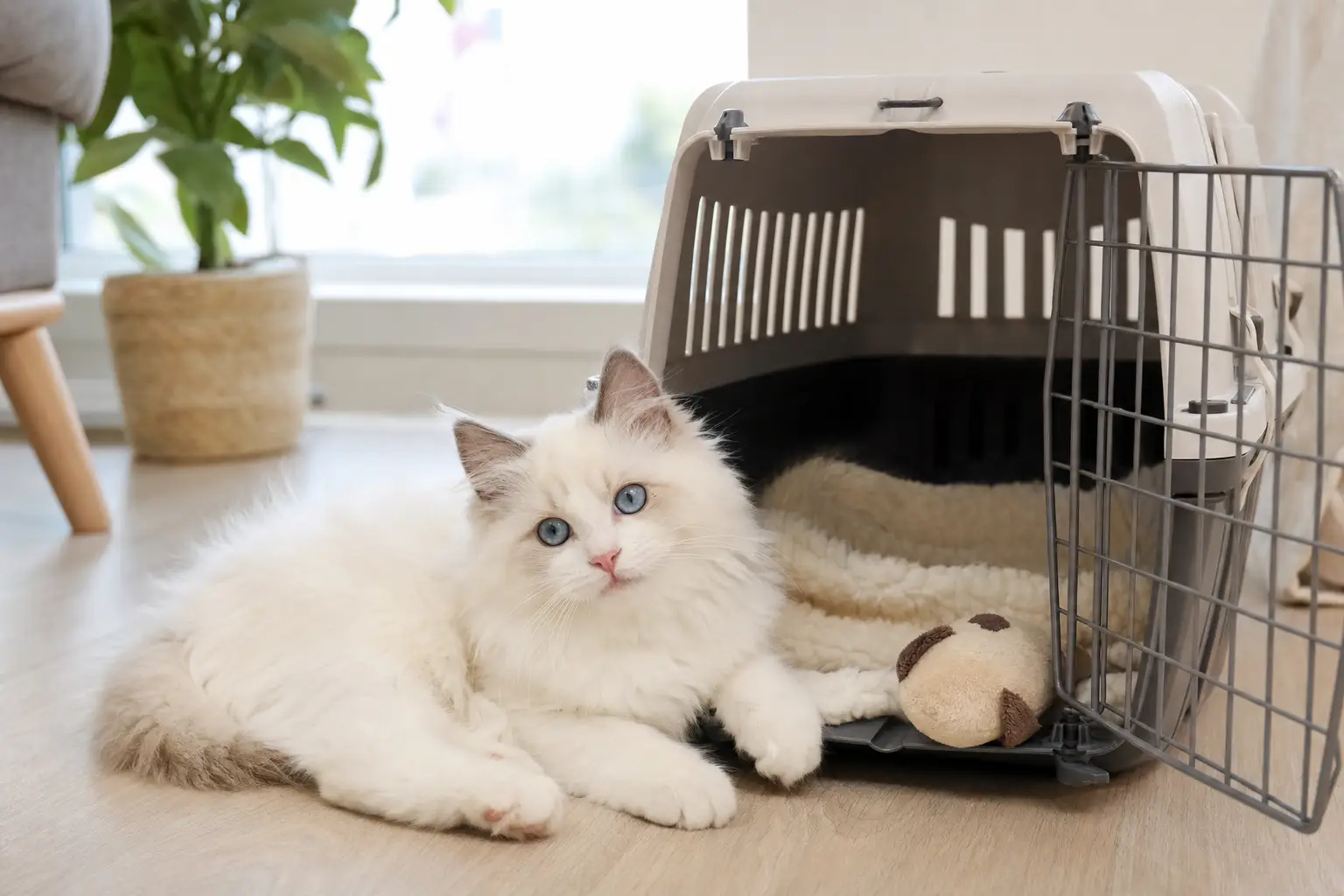
The most useful change in Ragdoll kitten carrier training is not a new treat or a different command. It is changing what the carrier means. Instead of appearing only before a vet visit, the carrier becomes an open, familiar den where a kitten can rest, play, and leave whenever it chooses.
Adding a familiar travel companion, such as a washable blanket or safe soft toy, can make that den feel more recognizable away from home. This approach does not guarantee a relaxed passenger, and it cannot solve every problem, including motion sickness or severe fear. It does give a kitten more time to learn that the carrier is predictable, comfortable, and not a trap.
What changes when the carrier becomes a den?
A carrier that lives in a closet has one powerful association: something unusual is about to happen. An accessible carrier offers many ordinary associations instead. The kitten may see it during a quiet afternoon, smell familiar bedding inside it, or receive a treat there without being taken anywhere.
That shift matters because a kitten has more opportunities to approach the carrier voluntarily. Voluntary exploration is different from being pushed inside at the last moment. It also gives the household useful information: does the kitten dislike the carrier itself, the closing door, being lifted, the car, or the destination?
The experiment is simple: make the carrier available before travel, reward calm curiosity, and increase difficulty in small steps. If the kitten becomes frightened, return to the last stage that felt easy.
Choose a carrier that supports calm handling
Training cannot compensate for a carrier that is cramped, unstable, or difficult to open. Many Ragdolls grow into large, long-bodied cats, so consider the kitten’s likely adult size when choosing a model. The carrier should allow the cat to stand, turn around, and lie down naturally without pressing against the sides.
A sturdy carrier with good ventilation and a secure door is essential. A hard-sided design with a removable top or a wide top opening can also help at veterinary appointments because the kitten may be examined in the bottom half instead of being pulled out.
- Size: Choose enough room for natural repositioning, but not so much empty space that the kitten slides around during movement.
- Stability: The base should remain level when lifted and should not flex under the cat’s weight.
- Access: Top and front openings give you options if the kitten is reluctant to walk out.
- Ventilation: Openings should provide steady airflow without creating sharp edges or escape gaps.
- Cleaning: A removable, washable base is valuable after accidents or travel sickness.
Introduce the carrier with the door secured open or removed if the design allows it. A door that swings unexpectedly can turn an early exploration into a startling experience.
Build the den in gradual stages
There is no prize for completing carrier training quickly. Some kittens investigate within an hour; others need repeated low-pressure opportunities. Move forward only when the current stage looks ordinary rather than tense.
1. Start with an open invitation
Place the carrier in a quiet part of the home where the kitten already spends time. Put a familiar blanket inside, with the entrance facing into the room. Do not carry the kitten over and place it inside. Let the carrier become part of the furniture.
You can drop a treat near the entrance, then just inside, and later farther toward the back. A toy can invite exploration, but never shake it directly at a frightened kitten or block the exit.
2. Add meals and rest
Once the kitten enters comfortably, offer a few treats or part of a meal inside. If the kitten will only eat beside the carrier, that is still useful progress. Move the bowl gradually rather than withholding food until the kitten complies.
Leave the bedding in place between sessions. A den works best when it is available for ordinary naps, not reserved for training exercises.
3. Practice the door without leaving
Touch the door, reward calm behavior, and release it. Later, close the door for a second or two while the kitten is relaxed, then open it before distress begins. Extend the time in small increments.
Do not open the door only after frantic scratching or loud vocalizing if you can safely avoid it; doing so may make panic the behavior that ends the exercise. At the same time, never leave a distressed kitten trapped for the sake of a lesson. The answer is to shorten the next repetition and make it easier.
4. Add movement in tiny amounts
After the kitten can remain calm with the door closed, lift the carrier briefly and set it down. Next, walk a few steps around the home. Later, carry it outside, place it in a stationary car, and return indoors.
Only when those steps are uneventful should you try a very short drive. Increase one variable at a time: duration, traffic, unfamiliar surroundings, or the length of the appointment. If several variables change together, it becomes difficult to know what caused a setback.
Use a familiar travel companion safely
A travel companion does not have to be another animal. For most kitten journeys, the safest companion is a familiar-smelling item:
- A small fleece blanket used during naps
- A washable towel that smells like home
- A simple, sturdy plush toy with no loose eyes, ribbons, strings, feathers, or batteries
- A spare piece of familiar bedding in case the first one becomes wet or soiled
Smell can provide continuity when the surroundings change, but the item should never crowd the carrier or obstruct ventilation. Check it regularly for pulled threads or damaged parts. During car travel, avoid anything that can become a choking hazard or shift against the kitten’s face during sudden braking.
If by travel companion you mean a second kitten or cat, use separate carriers in most situations. Even bonded cats can react unpredictably when frightened, and sharing a confined space can prevent either animal from moving away. A carrier intended for one cat should not be used for two. Ask your veterinarian about any exception, especially for a very young littermate pair or a long journey.
Make travel different from a veterinary emergency
A den can lose its value if it is used only when the kitten is chased, grabbed, and taken somewhere unfamiliar. Keep using it at home for naps, treats, and quiet play after a successful trip. That maintenance is part of Ragdoll kitten carrier training, not an optional extra.
On travel day, keep the routine calm. Place the familiar bedding inside, secure the carrier according to the manufacturer’s instructions, and keep it level. In a vehicle, do not place the carrier in the front passenger seat where an airbag could injure the cat. Never allow a kitten to ride loose, and never open the carrier outdoors or in a parking area.
A light cover over part of the carrier may reduce visual stimulation, but leave adequate ventilation and watch the kitten’s response. Some cats settle with a cover; others become more anxious when visibility is reduced.
Do not give a sedative or human medication without veterinary direction. If the kitten drools, vomits, pants, cries continuously, or becomes extremely agitated during travel, tell your veterinarian. The problem may involve motion sickness, fear, pain, or another medical issue that training alone will not address. Open-mouth breathing, collapse, or marked difficulty breathing requires urgent veterinary attention.
Signs the approach is working
Success does not necessarily look like a kitten that sleeps through a six-hour journey. More useful signs include:
- The kitten enters the carrier without being placed inside.
- It rests, grooms, or accepts a treat there.
- It remains responsive when the door is briefly closed.
- It recovers quickly after being carried around the home.
- It returns to normal eating, play, and sleep after a short trip.
A kitten that still dislikes the car may nevertheless feel comfortable in the carrier. That is meaningful progress. Work on the car separately instead of deciding that the entire training plan has failed.
Common mistakes to avoid
- Bringing out the carrier only on appointment day: This preserves its association with surprise and disruption.
- Forcing the kitten inside: It may solve one departure while making future handling harder.
- Moving too quickly: Closing the door, lifting the carrier, and driving away are separate skills.
- Using an unsafe comfort item: Strings, loose parts, and damaged toys can create preventable hazards.
- Assuming a calm breed label guarantees calm travel: Individual history and personality matter more than stereotypes.
- Skipping carrier maintenance: Bedding with urine, vomit, or strong cleaning odors can make the space less inviting.
Frequently asked questions
Should the carrier stay out all the time?
Usually, yes, if you have a safe, quiet place for it. Keeping it open and comfortable gives the kitten repeated chances to use it without pressure. If space is limited, bring it out regularly and begin practice well before a planned journey.
What if my Ragdoll kitten refuses to enter?
Move the reward back to the entrance, remove pressure, and check the setup. The carrier may be unstable, too small, too exposed, or associated with a recent frightening event. A new blanket and several short sessions may help. Persistent fear is a good reason to ask your veterinarian or a qualified behavior professional for individualized advice.
Can I train a kitten to enjoy car rides?
You can build tolerance by pairing a secure carrier with brief, gradual trips, but not every cat will enjoy driving. Start with the parked car, then the engine, then a very short route. Stop before the kitten becomes overwhelmed and discuss repeated vomiting or severe distress with your veterinarian.
The lasting lesson
The biggest improvement from making the carrier a den is a change in predictability. The kitten gets a familiar place, a known scent, and practice before an important journey. The household gets more options than a last-minute chase.
That is the practical goal of Ragdoll kitten carrier training: not perfection, but a safer and less frightening way to move a cat when movement is necessary.
For more guidance on raising confident, well-supported Ragdoll kittens, explore CTkittens.com.
Further reading
For broader feline welfare guidance, see the AAFP and ISFM Feline Environmental Needs Guidelines, which discuss predictable resources, safe spaces, and reducing stress in the home.

Rachel Cohen is a journalist and producer with a passion for audio storytelling, health and science reporting, and feline companions.
A graduate of Middlebury College, Rachel spends her weekends exploring the mountains and when she isn’t outdoors or chasing a story, she can usually be found hanging out with her cats.