
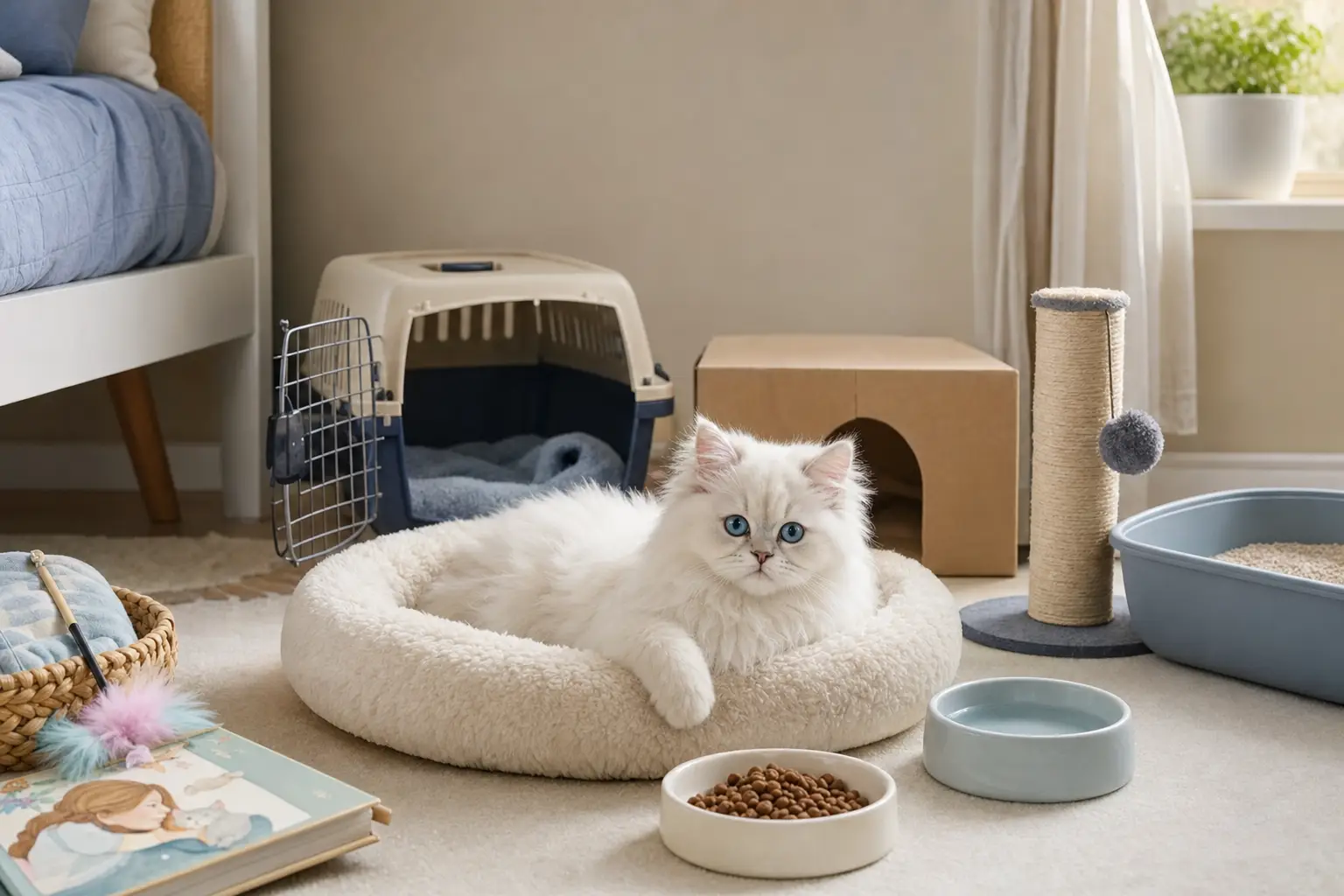
When a Persian kitten arrives, the best first step is not opening the whole house at once. A Persian kitten safe room should be a quiet, closed, kitten-proofed space with food, water, a litter tray, hiding places, scratching options, and a comfortable bed. Children can absolutely help, but their role should be calm, predictable, and supervised by an adult.
This arrangement gives the kitten time to learn where essential resources are, reduces escape hazards, and lets your family notice whether the kitten is eating, drinking, using the litter tray, and resting normally. It is not a punishment room. Think of it as a temporary home base.
What is a safe room, and why does a kitten need one?
A safe room is a small, secure room where a new kitten can decompress before exploring the rest of the home. A spare bedroom is often ideal. A quiet office or appropriately prepared bathroom can also work, provided cleaners, medicines, toilet lids, cords, and small objects are removed.
New surroundings can be overwhelming. A safe room limits the number of unfamiliar sights, sounds, people, and smells the kitten must process at one time. It also makes the first few days easier for adults to supervise. You can quickly see whether the kitten is interested in food, using the litter tray, and becoming more comfortable.
Keep the room available even after the kitten begins exploring. A familiar retreat is useful when visitors arrive, household activity becomes noisy, or the kitten needs a break from children or resident pets.
How do you set up a Persian kitten safe room?
Before the kitten comes home, get down to the kitten’s eye level and look for hazards. Kittens can squeeze into surprisingly small gaps, chew flexible materials, and swallow objects that seem harmless to adults.
Use this basic room checklist
- A door that closes securely: Children should not be able to enter and pick up the kitten without an adult present.
- A comfortable hiding place: Use a cardboard box, covered cat bed, or the kitten’s open carrier. Avoid hiding spots behind appliances or inside furniture where the kitten could become trapped.
- Food and fresh water: Place them away from the litter tray. Continue the kitten’s familiar food at first unless your veterinarian recommends a change.
- An easy-to-reach litter tray: A low-sided tray may be easier for a small kitten. Scoop it regularly, and choose a quiet location that is not beside food.
- A scratching surface: A stable cardboard scratcher or short scratching post gives the kitten an appropriate outlet.
- Safe toys: Soft toys and sturdy balls can be left out. Wand toys, string, ribbon, and fishing-pole toys should be used only with an adult and stored away afterward.
- A washable bed or blanket: Familiar-smelling bedding from the breeder, foster home, or shelter may help the transition.
- Basic grooming supplies: Keep a soft brush nearby, but introduce grooming in short, gentle sessions rather than making the first day a grooming marathon.
Remove common hazards before arrival
Secure window screens, blind cords, electrical cables, and dangling decorations. Remove rubber bands, hair ties, plastic packaging, sewing supplies, medication, cleaning products, and anything small enough to swallow. Keep essential-oil diffusers and unknown plants out of the room.
If you have houseplants, check each one by its botanical name. The ASPCA’s cat plant list is a useful starting point, but keeping unidentified plants away from a kitten is the safest choice. Contact a veterinarian or animal poison service promptly if a kitten chews a potentially toxic plant.
Persians often have long coats that need regular care, and some have shortened facial structures that can contribute to eye or breathing concerns. Keep the room cool and well ventilated, but avoid drafts and extreme temperatures. A kitten that is struggling to breathe should never be left to simply rest and recover.
How can children help without overwhelming the kitten?
Children are often excited to welcome a kitten, but excitement can look frightening from a small animal’s perspective. Several people reaching into a carrier, loud voices, chasing, or repeated attempts to pick up the kitten can delay trust-building.
Give children specific jobs rather than unlimited access. For example:
- Make a quiet welcome sign for the door that says “Kitten resting.”
- Read a book softly while sitting on the floor, without reaching toward the kitten.
- Help an adult choose a safe toy or refill a water bowl under supervision.
- Use a wand toy only when an adult is present, keeping the toy low and allowing the kitten to stop whenever it wants.
- Help an adult keep a simple daily record of eating, drinking, litter use, play, and any unusual behavior.
An adult should handle litter-box cleaning, medication, food changes, and any grooming around the face. Children should wash their hands after touching the kitten and should not handle litter without close adult guidance.
Teach the family the kitten’s boundaries
Let the kitten approach rather than pulling it from a hiding place. Pet gently on the head, cheeks, or back if the kitten welcomes contact. Do not grab the tail, hold the kitten tightly, disturb it while sleeping or eating, dress it up, or carry it around from person to person.
Young children should not be responsible for lifting the kitten. Even a gentle child can drop a wiggling kitten or hold it in a way that restricts breathing. If a child is old enough to hold the kitten, an adult should remain close, support the kitten’s body, and end the interaction before the kitten becomes restless.
Signs that the kitten needs space include crouching, hiding, flattened ears, a tucked or rapidly flicking tail, hissing, growling, repeated attempts to escape, or sudden stillness. Stop the interaction and let the kitten retreat. Never punish hissing; it is useful communication that the kitten feels unsafe.
What should happen during the first 24 hours?
Carry the kitten directly to the safe room in a secure carrier. Close the room door before opening the carrier, then place the carrier on the floor and allow the kitten to come out on its own. Some kittens explore immediately. Others remain in the carrier or hide for a while. Both responses can be normal during the initial adjustment.
Keep the first introduction small. One quiet child at a time is better than the entire household gathering around the kitten. Sit nearby, speak softly, and avoid staring or reaching. If the kitten hides, children can still participate by reading quietly outside the hiding place or helping maintain a calm room.
Ask the breeder, rescue, or previous caregiver what food, litter, feeding schedule, and daily routine the kitten already knows. Keeping those details consistent at first can make the transition easier. Arrange a veterinary appointment and bring any vaccination, deworming, microchip, and health records you received.
When can the kitten leave the safe room?
There is no universal number of hours or days. Begin offering more of the home when the kitten is reliably eating and drinking, using the litter tray, resting, and showing curiosity rather than spending all of its time distressed or hiding.
Open access gradually. Let the kitten investigate one additional area while the safe room remains available. Keep doors to unsafe rooms closed and supervise children during every early exploration session. If the kitten retreats, allow it to return without following or pulling it out.
Resident cats and dogs need a separate introduction plan. Do not place them together immediately. Start with separation, scent exchange, and calm interaction through a closed door, then progress slowly under adult supervision. A new kitten should also receive veterinary guidance before close contact with resident pets, particularly if its health history is incomplete.
What extra care do Persian kittens need?
Persian kittens can require more coat and facial care than short-haired kittens. Once the kitten is comfortable, introduce a soft brush for a few seconds at a time, reward calm behavior, and stop before the kitten struggles. Gradually build the session length. Daily checks can help prevent small tangles from becoming painful mats, but your veterinarian or a qualified professional groomer can show you the safest technique for the individual coat.
Some flat-faced cats have watery eyes because of their facial anatomy. Do not assume that every discharge is harmless. Redness, squinting, swelling, thick or yellow discharge, rubbing at the eye, or obvious pain deserves veterinary advice. Do not use human eye drops or leftover medication unless a veterinarian specifically directs you to do so.
Seek urgent veterinary help for open-mouth breathing, persistent panting, blue or gray gums, collapse, severe weakness, repeated vomiting, serious injury, inability to urinate, or marked eye pain. For a very young kitten, contact your veterinarian promptly about refusal to eat or drink rather than waiting to see whether it improves.
Common questions about a kitten safe room
Should the child sleep in the safe room?
It is usually better for an adult to manage the first nights. A child may accidentally leave the door open, disturb a sleeping kitten, or miss signs that the kitten is unwell. Children can have short, calm visits instead.
Can the kitten stay in the safe room all day?
A properly equipped room is appropriate for the settling-in period, but the kitten still needs social interaction, play, observation, and veterinary care. Gradually increase supervised access when the kitten is ready rather than treating the room as long-term isolation.
What if the kitten hides whenever children enter?
Reduce the number of visitors and ask children to sit quietly without reaching into the hiding place. Let the kitten choose the distance. If hiding is accompanied by poor appetite, diarrhea, breathing changes, or worsening lethargy, contact a veterinarian.
Should children brush a Persian kitten right away?
Not necessarily. The first priority is security and trust. An adult can introduce a soft brush gradually once the kitten is relaxed. Children may watch or help hold treats, but an adult should control the brush and stop at the first sign of stress.
The simplest rule for a successful first week
Give the kitten control over contact, provide predictable routines, and make children part of the calm routine rather than the source of constant attention. A secure room, patient introductions, and early veterinary planning create a much better foundation than rushing the kitten into a busy household.
For more guidance on welcoming and caring for Persian kittens, explore the resources at CTkittens.com.

Rachel Cohen is a journalist and producer with a passion for audio storytelling, health and science reporting, and feline companions.
A graduate of Middlebury College, Rachel spends her weekends exploring the mountains and when she isn’t outdoors or chasing a story, she can usually be found hanging out with her cats.


Lowkey the tip about getting down to kitten eye level is genius, cause thats when you notice all the tiny cords and gaps us tall humans totally miss lol.
Kinda wondering if leaving the carrier open as a hideout makes kittens settle faster, since mine trusted that thing way more than the fancy bed lol?
Kinda wondering if keeping the carrier open as a hideout long-term would make future vet trips less scary, since the lil dude already sees it as home base?
Only bit I’d push back on is calling bathrooms a safe option, cuz my tiny gremlin found gaps under the vanity I didnt even know existed lol.
That “get down to kitten eye level” tip is legit smart, cause tiny gaps and hair ties dont look dangerous till your lil fluffball decides they’re snacks lol.
Only thing I’d add is some folks get so worried about “safe” they barely visit the kitten, when calm company is kinda the whole point too imo.
Only thing I’d add is bathrooms can echo like crazy and spook a nervous kitten, so a quiet bedroom seems way better if ya got one.