
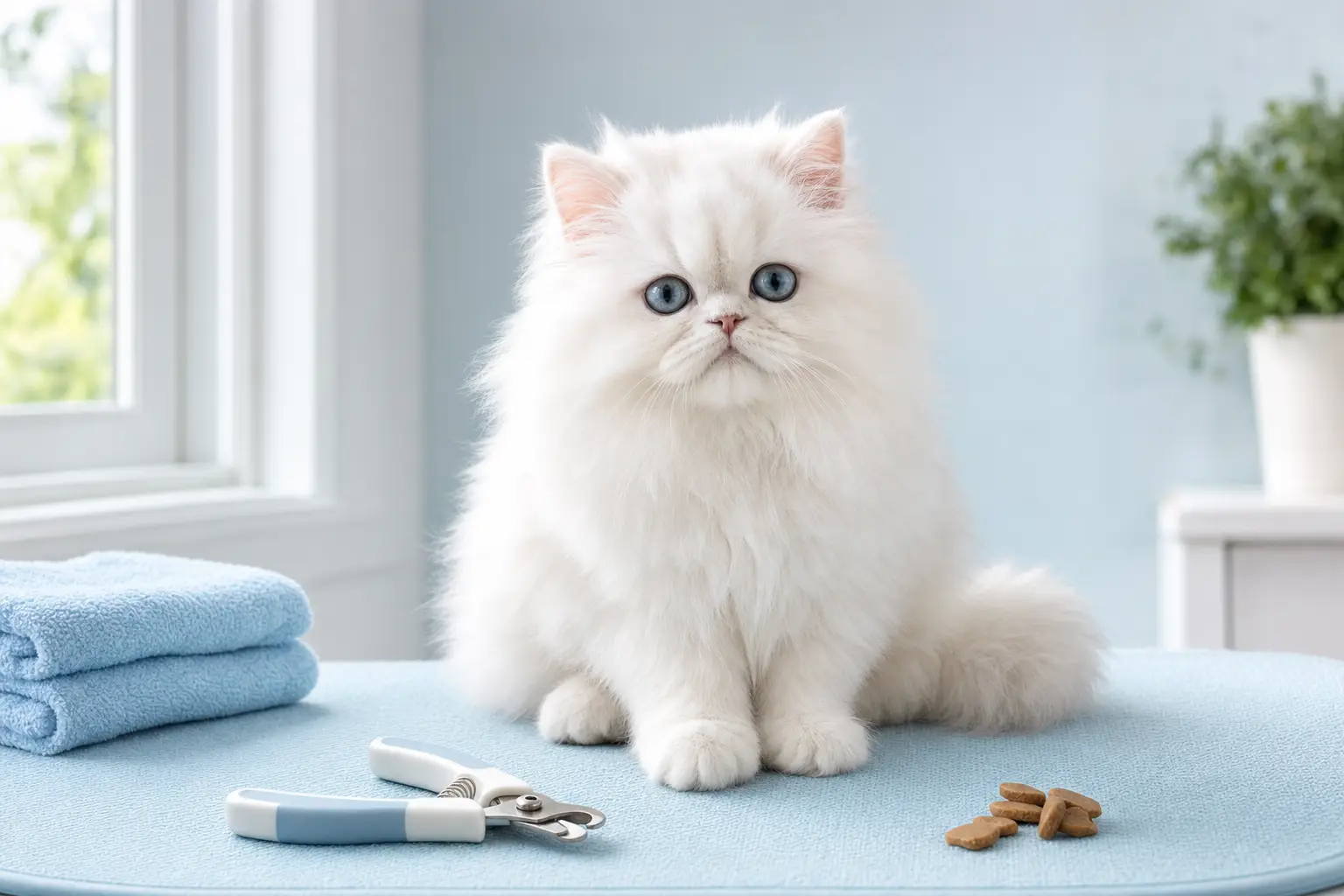
Persian Kitten Nail Trim: A Five-Minute Checklist
Short answer: the first Persian kitten nail trim does not need to include every claw. Spend up to five quiet minutes helping your kitten accept paw handling, then clip only one or two sharp tips if the kitten remains relaxed. A successful first session may involve no clipping at all.
Persian kittens have thick, luxurious coats that can make their paws and claws harder to see. That is one reason a small, repeatable routine is more useful than trying to finish the job in one sitting. The goal is to teach your kitten that a gentle paw touch, a brief toe press, and the sound of a clipper are safe and predictable.
What to prepare before the first trim
Choose a quiet time when your kitten is awake but naturally settled, such as after gentle play or a meal. Use a stable, nonslip surface with good light. A familiar towel can help your kitten feel secure, but it should never be used to force the paws out or pin the body down.
- A small cat nail clipper with sharp, clean blades
- A towel or nonslip mat, if your kitten likes one
- A few small, high-value treats or a lickable reward
- Commercial styptic powder within reach in case a nail bleeds
- A calm helper only if that person can offer gentle support without restraining the kitten
Keep the clipper beside you before you begin. Searching for supplies halfway through can turn a calm lesson into a stressful one. Do not use scissors to cut mats around the toes. If tangled fur is hiding the paws, ask a veterinary professional or an experienced cat groomer for help.
The illustrated five-minute checklist
Move down this checklist only while your kitten’s body language stays loose. A relaxed kitten may have soft muscles, a normal breathing pattern, ears in a neutral position, and an interest in treats. Turning away, pulling the paw back repeatedly, freezing, flattening the ears, growling, hissing, or trying to escape means the session should end or return to an easier step.
| Visual step | What you do | Move on when… |
|---|---|---|
| Settle | Place your kitten on the mat and offer a treat. Let the kitten sniff the clipper without bringing it toward the paws. | Your kitten can remain near the clipper without backing away. |
| Touch | Stroke from shoulder to leg, then briefly touch one paw. Reward and release the paw. | A paw touch no longer causes an immediate pullback. |
| Press | Gently press the toe pad so one claw extends. Look at the nail, reward, and let go. | Your kitten accepts a short toe-pad press. |
| Sound | Make one clipper snip several inches away from the paw. Pair the sound with a treat. | The sound does not produce a fearful reaction. |
| Trim | Clip only the sharp, curved tip of one claw. Reward immediately and stop if needed. | Your kitten stays relaxed after the first real clip. |
These steps may take a single session or several days. Do not feel behind if the first session ends at step two. For a young kitten, learning that you will release the paw promptly is part of the training.
How to clip the first claw safely
Support the paw lightly rather than gripping it. Hold the toe between your fingers and press the paw pad just enough to extend the claw. For a pale claw, the quick may be visible as a pink area inside the nail. The quick contains blood vessels and nerves, so the cut should stay well in front of it.
Clip the narrow, hooked tip only. Do not try to shorten the entire nail in the first session. One tiny sliver is enough to create a positive experience. If the nail is dark or the quick is difficult to identify, make no guess: ask your veterinarian to demonstrate the safe cutting point.
Remember the dewclaw on the inside of each front leg. It does not contact the ground in the same way as the other claws and can become sharp or overgrown. Check it separately, but do not rush to trim it if your kitten has already reached the session limit.
What to do if the nail bleeds
Stay calm and apply gentle, direct pressure with clean gauze or a tissue. A small amount of commercial styptic powder can help stop bleeding. Avoid alcohol and hydrogen peroxide, which can irritate the tissue. If bleeding does not stop after several minutes, the nail is badly split, or your kitten appears very painful, contact a veterinarian.
A practical first-week plan
There is no need to schedule a complete manicure on day one. This sample plan gives your kitten repeated, predictable practice while keeping the emotional load low.
- Session one: Introduce the mat, treats, and clipper. Touch a leg and paw, then finish.
- Session two: Briefly press one toe pad and extend a claw. Do not clip unless your kitten is completely comfortable.
- Session three: Practice one clipper sound away from the paw, followed by a reward.
- Session four: Clip one front-claw tip. End on that success.
- Session five and onward: Add one or two claws at a time, stopping before your kitten becomes worried.
If your kitten resists at any point, go back one step at the next session. Progress is not measured by the number of claws cut. It is measured by whether your kitten can remain calm enough to learn.
How often should a Persian kitten’s nails be checked?
Check the claws about once a week so you can notice sharp tips, snagging, or an overgrown dewclaw early. Many cats need a trim every few weeks, but the interval varies with age, activity, scratching habits, and the individual growth rate. A kitten who climbs and scratches frequently may still need regular tip trims.
Do not rely on scratching alone to keep every claw at a comfortable length. Scratching is normal enrichment and helps maintain the claws, but it does not guarantee that the dewclaw or every front claw is short enough. A weekly visual check is more reliable than following a fixed calendar.
When a home trim is not the right choice
Pause the plan and contact your veterinarian if a claw is curled into the paw pad, cracked, swollen, bleeding, or surrounded by discharge. Limping, persistent paw licking, or a sudden refusal to bear weight also deserves professional attention.
Ask for a veterinary demonstration if your kitten has dark claws, becomes highly distressed, or has a history of biting during handling. A groomer may be able to help with routine clipping, but medical problems and severe fear are best assessed by a veterinary team. Never force a trim, scruff the kitten, pin the body down, or continue through hissing and struggling. Fear can make future grooming harder and increases the chance of injury.
Frequently asked questions
Can I trim all of the claws in one five-minute session?
You can if your kitten is genuinely relaxed, but you do not need to. One to three claws may be the right amount for the first few sessions. Divide the work across days and reward each calm step.
Should I trim the back claws too?
Check all four feet, but trim only claws that need it. The front claws and front dewclaws often deserve closer attention because they can become sharp or overgrown. Your veterinarian can help you identify what is normal for your kitten.
What if my kitten bites the clipper or my hand?
Stop moving the clipper and give your kitten space. Biting, repeated swatting, or frantic escape attempts are signs that the step is too difficult. Return to treat-based handling another day, or ask a professional to show you a safer approach.
Reliable grooming references
For additional background, review the claw-care and grooming guidance from International Cat Care and the ASPCA cat-grooming guide. These general resources cannot replace an examination or a hands-on demonstration from your veterinarian.
Ready to make grooming easier? Explore more Persian kitten care guidance and practical preparation tips at CTkittens.com.

Rachel Cohen is a journalist and producer with a passion for audio storytelling, health and science reporting, and feline companions.
A graduate of Middlebury College, Rachel spends her weekends exploring the mountains and when she isn’t outdoors or chasing a story, she can usually be found hanging out with her cats.

