
Persian Kitten Eye Cleaning: Gentle Fixes Without the Stress
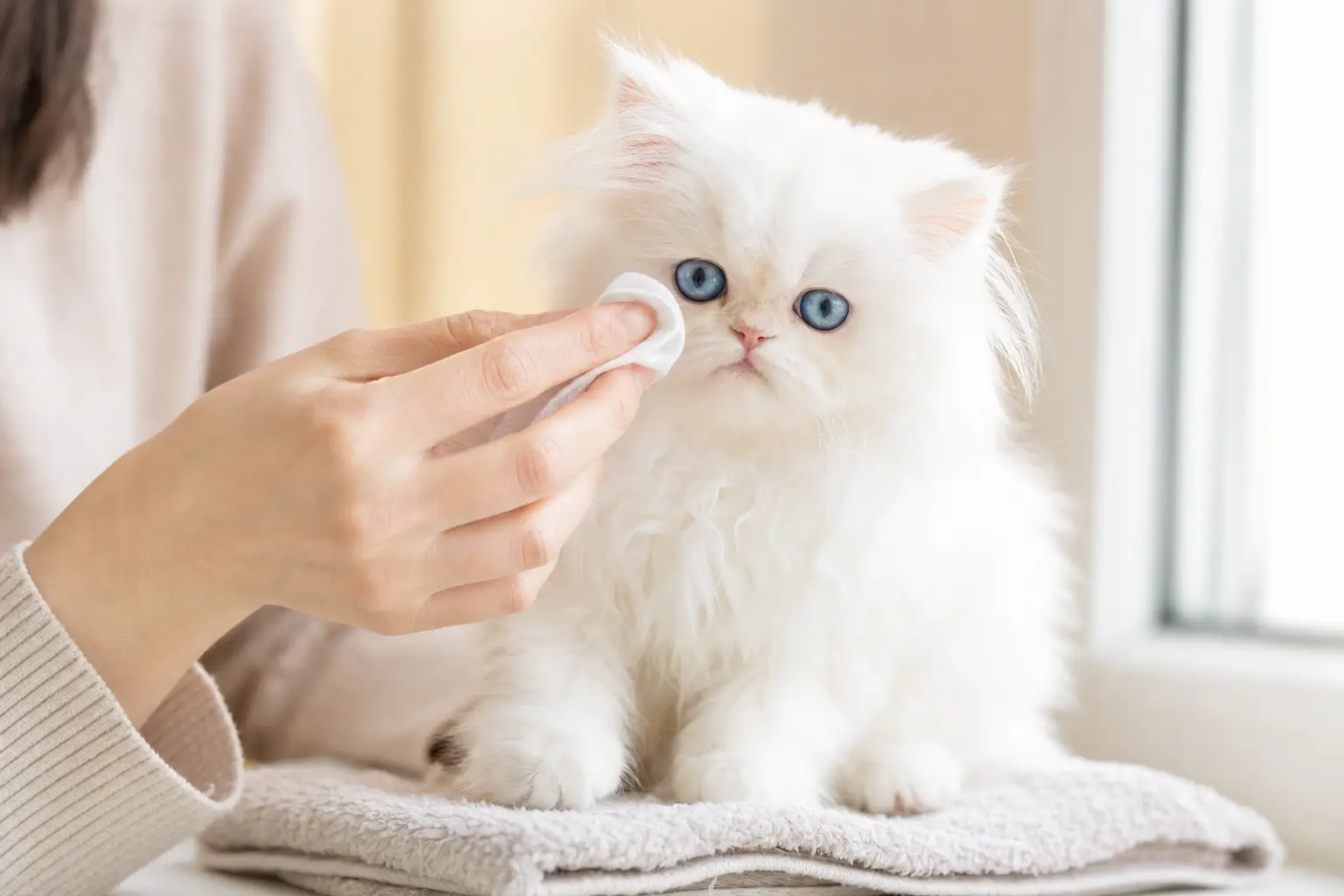
For most Persian kittens, the least stressful approach is simple: soften the buildup with sterile ophthalmic saline or a clean lukewarm damp pad, wipe the fur gently from the inner corner outward, use a fresh pad for each eye, and reward your kitten before they become overwhelmed.
That routine can keep the eye area comfortable and reduce crusting on the fur. It cannot, however, treat an eye infection, blocked tear duct, eyelid problem, or corneal injury. Persistent discharge or any sign of pain deserves a veterinary examination.
Why Persian kittens often have wet tear tracks
Persians have a short, broad facial shape. In some cats, that anatomy makes tears less likely to drain neatly through the normal tear ducts and more likely to overflow onto the face. Facial folds and hair around the eyes can also hold moisture against the skin.
On white fur, dried tear fluid may leave reddish-brown staining that looks dramatic even when the eye itself is healthy. A small amount of clear moisture can occur, but tear staining should not automatically be dismissed as cosmetic. Redness, thick discharge, swelling, squinting, rubbing, cloudiness, or a sudden change can indicate a medical problem.
Young kittens can also develop conjunctivitis or respiratory infections that affect the eyes. Entropion, in which an eyelid turns inward, and irritation from facial hair are other possibilities. Cleaning the fur may make your kitten look tidier, but finding and treating the cause is what protects the eye.
Gather the safest supplies first
Keep everything within reach before bringing your kitten over. A session is easier when you do not have to search for supplies while holding a wriggly cat.
- Plain sterile saline or sterile eyewash that is specifically labeled for ophthalmic use
- Clean, soft gauze squares or lint-free cotton rounds
- A clean towel for a loose, gentle lap wrap if needed
- A small favorite treat or a lickable treat suitable for kittens
- A clean, dry cloth for patting the surrounding fur afterward
For light residue on the fur, a clean pad moistened with lukewarm water may be enough. Do not squirt homemade mixtures into the eye. If a product does not clearly say it is intended for use in or around the eyes, ask your veterinarian before using it.
A calm Persian kitten eye cleaning routine
1. Choose a quiet moment
Try after a nap, a meal, or gentle play rather than when your kitten is already racing around the room. Wash your hands, place the supplies nearby, and sit somewhere stable with the kitten supported against your body.
If your kitten is frightened by the sight of a pad, begin with a few short practice sessions. Touch the cheek with a dry pad, offer a reward, and stop. This teaches your kitten that face handling does not always lead to restraint.
2. Let the crust soften
Dampen a gauze pad with sterile ophthalmic saline or lukewarm water. Hold it lightly against the crust on the surrounding fur for about 20 to 30 seconds. The goal is to soften the material, not scrub it away.
Never pull at a dry crust. Pulling can tug on delicate eyelid skin and make your kitten more defensive the next time. Re-dampen the pad and repeat if necessary.
3. Wipe away from the eye
Once the residue is soft, make one gentle pass from the inner corner outward, staying on the fur and eyelid area rather than rubbing across the eyeball. Use a new section of the pad for the next pass.
Use a separate clean pad for the other eye. If one eye is more affected, clean the clearer eye first and avoid carrying discharge from one side to the other.
4. Pat the fur dry
Moisture left in facial folds can make the skin uncomfortable. Pat the cleaned fur dry with a soft cloth; do not rub. Avoid putting powders, creams, oils, or other products near the eyes unless your veterinarian has prescribed them.
5. Finish while the experience is still positive
Offer the reward immediately and release your kitten. A 30-second calm session is more useful than a long struggle. If the buildup needs more attention, try again later instead of turning grooming into a wrestling match.
Ways to make eye-area grooming easier
- Use gradual handling: Touch the cheek, lift the chin briefly, and show the damp pad on separate days before expecting a full cleaning.
- Keep the hold gentle: A loose towel wrap can prevent sudden scrambling, but never tighten it around the neck or chest and never cover the nose.
- Use a second person carefully: One person can offer a treat while the other performs a single wipe. Both people should stay calm and stop if the kitten panics.
- Keep sessions predictable: The same quiet location and sequence can help your kitten understand what will happen.
- Do not chase: If your kitten runs away, pause and reset. Chasing usually makes the next attempt harder.
- Ask for help with facial hair: Hair that touches the eye may need careful trimming by a veterinarian or experienced professional groomer. Do not use scissors close to a moving kitten’s eye.
There is no universal cleaning schedule. Some kittens need a quick wipe when moisture appears; others may need a veterinarian-guided routine. Begin with the least frequent cleaning that keeps the fur reasonably dry, and avoid repeatedly wiping healthy skin simply to remove every trace of color.
What not to use near a kitten’s eyes
| Product or approach | Why to avoid it |
|---|---|
| Hydrogen peroxide, alcohol, bleach, or essential oils | These can irritate or injure the eye and surrounding skin. |
| Human redness-relief eye drops | They are not a general treatment for cats and may mask important signs. |
| Human or leftover antibiotic and steroid eye medicine | The wrong medicine can delay proper treatment, and steroid products can be dangerous with some corneal injuries. |
| Multipurpose contact-lens solution | It may contain cleaning agents or preservatives that are not appropriate for a kitten’s eye. |
| Scented wipes, baby wipes, powders, or tear-stain removers | Ingredients can irritate the eye or be transferred into it when the kitten rubs. |
| Cotton swabs or forceful scraping | They can shed fibers, poke the eye, or make a frightened kitten jerk suddenly. |
Products marketed to remove tear stains may change the appearance of the fur without addressing why the tears are overflowing. Healthy eyes matter more than making white fur look perfectly uniform.
When eye discharge needs a veterinarian
Arrange a prompt veterinary appointment if discharge keeps returning, becomes yellow, green, thick, or foul-smelling, or is accompanied by redness, swelling, irritated skin, sneezing, or nasal discharge. Repeated problems in only one eye also deserve attention because a blocked drainage pathway, foreign material, eyelid abnormality, or localized injury may be involved.
Seek same-day or urgent care for any of the following:
- Squinting, holding the eye closed, or obvious pain
- Cloudiness, a blue or gray haze, a visible mark, or a change in the surface of the eye
- Bulging, bleeding, severe swelling, or a sudden change in vision
- Repeated pawing or rubbing at the eye
- Trauma or possible chemical exposure
- A kitten that is unusually tired, not eating, or showing significant breathing or respiratory symptoms along with eye discharge
Do not pry open an eye that is sealed by discharge or force a resistant kitten to continue. You may soften material on the outer lids with a damp pad, but pain or persistent closure is a reason to call the veterinary clinic. A veterinarian may examine the cornea, eyelids, tear drainage, and surrounding tissues to determine whether the issue is simple overflow or something that needs treatment.
A simple way to judge the routine
After cleaning, your kitten should settle quickly and the skin should look comfortable rather than raw. The eye should remain open normally, without repeated rubbing or squinting. If cleaning seems to make the area redder, if the kitten becomes increasingly distressed, or if the staining returns almost immediately, stop treating it as a grooming-only issue and ask for advice.
Think of cleaning as maintenance: it removes softened residue from the fur and helps you notice changes early. It is not a substitute for diagnosis, prescription medicine, or a professional trim when facial anatomy is causing irritation.
Frequently asked questions
Can I use a warm washcloth on my Persian kitten’s eye?
A clean, lukewarm, damp cloth or gauze pad can be used gently on the surrounding fur to soften residue. Use a fresh, clean area for each eye, avoid pressing on the eyeball, and do not use a hot cloth or a homemade solution inside the eye.
How often should I clean my Persian kitten’s eyes?
Clean only as often as needed to remove visible moisture or crusting without irritating the skin. Some kittens need occasional wiping, while others need a daily routine or veterinary guidance. A sudden increase in frequency is a reason to look for an underlying cause.
Are tear stains always harmless?
No. Facial anatomy can contribute to tear overflow, but persistent staining may occur alongside infection, irritation, eyelid problems, or blocked drainage. Clear, comfortable eyes are reassuring; pain, redness, thick discharge, or a sudden change is not.
Further reading
For additional veterinary background, see the Cornell Feline Health Center’s overview of feline eye disorders and the Merck Veterinary Manual overview of eye disorders in cats. These resources can help you understand common warning signs, but an examination is needed to diagnose an individual kitten.
Ready for more practical kitten-care guidance? Explore CTkittens.com for helpful information as you prepare to care for your Persian kitten.

Rachel Cohen is a journalist and producer with a passion for audio storytelling, health and science reporting, and feline companions.
A graduate of Middlebury College, Rachel spends her weekends exploring the mountains and when she isn’t outdoors or chasing a story, she can usually be found hanging out with her cats.
Using separate pads for each eye is such a small thing but tbh I never would’ve thought about cross-contamination, def changing my routine now.